Breaking the Paycheck-to-Paycheck Cycle: Your First 30 Days
You’re three days from payday with $47 in your account. Again. The gas light’s on, there’s nothing in the fridge, and you’re wondering how you’re going to make it through another week. Sound familiar?
“The secret of getting ahead is getting started.”
– Mark Twain
If you’re living paycheck to paycheck, you’re not alone—and you’re definitely not failing. Nearly 60% of Americans are stuck in this exact cycle, including plenty of men in their 40s and 50s who thought they’d have it all figured out by now. The good news? You can break the paycheck to paycheck cycle in just 30 days with a simple plan that doesn’t require a finance degree or a six-figure salary.
Disclosure
This article contains affiliate links. If you choose to make a purchase through these links, we may earn a commission at no additional cost to you.
Why the Paycheck-to-Paycheck Cycle Keeps You Stuck

This isn’t about complex investment strategies or cutting out every small pleasure in your life. This is about getting real with your money, understanding where it’s actually going, and creating some breathing room so you can finally stop living in survival mode. Whether you’re earning $35,000 or $75,000 a year, these principles work—because the paycheck-to-paycheck cycle isn’t always about how much you make. It’s about how you manage what you have.
Let’s break this down into four manageable weeks that will help you escape paycheck to paycheck living for good.
Before we dive into the solution, let’s talk about why this cycle is so hard to break. Understanding the problem is half the battle.
The paycheck to paycheck cycle works like this: Your money comes in, it immediately goes out to cover bills and expenses, and you’re left with nothing—or worse, you’re short and have to use credit cards or borrow money. Then next payday, you’re not just covering current expenses; you’re also trying to catch up from last time. It’s like running on a treadmill that keeps speeding up.
Here’s what keeps most guys trapped:
- No visibility: You don’t actually know where your money goes each month
- Reactive spending: You handle expenses as they pop up instead of planning ahead
- No buffer: One unexpected expense (car repair, medical bill) throws everything off
- Debt creep: Small debts pile up without you realizing the total damage
- Lifestyle inflation: As you earn more, you automatically spend more
The mental and emotional toll is real too. Financial stress affects your sleep, your relationships, your health, and your confidence. You might feel like you’re failing, but here’s the truth: the system isn’t designed to help you win. Nobody taught us this stuff in school, and the credit card companies certainly aren’t rooting for you to get ahead.
But you can change this. Starting today. And it begins with one simple concept: awareness.
Week 1
Getting Real About Your Money (Days 1-7)
The first week is all about debt awareness and understanding your actual financial situation. No judgment, no shame—just facts. You can’t fix what you don’t measure, and most guys living paycheck to paycheck are operating blind.
Day 1-2: The Money Snapshot
Grab a notebook or open a simple spreadsheet. You’re going to write down three things:
- Your monthly income (after taxes): This is your take-home pay—the actual amount that hits your bank account. If you get paid weekly or bi-weekly, multiply it out to get your monthly number.
- Example: $2,400 bi-weekly = $5,200 monthly
- Example: $1,200 weekly = $5,200 monthly
- Your fixed expenses: These are bills that stay the same every month—rent or mortgage, car payment, insurance, phone bill, streaming services, gym membership.
- Your debts: List every single debt you have—credit cards, personal loans, car loans, medical bills. Write down who you owe, how much you owe, the minimum payment, and the interest rate.
This exercise alone is powerful. One guy discovered he was paying for three streaming services he forgot he had and a gym membership he hadn’t used in eight months. That’s $87 a month he got back immediately!

Day 3-5: Track Every Dollar
For the next three days, you’re going to practice expense tracking. This means writing down every single thing you spend money on—and I mean everything. That $4 coffee, the $12 lunch, the $8 convenience store run, the $45 you spent on takeout because you were too tired to cook.
Expense tracking is like keeping a diary of your purchases. It shows you patterns you didn’t know existed.
Use whatever method works for you:
- Notes app on your phone
- Small pocket notebook
- Free apps like Mint or EveryDollar
- Simple spreadsheet
Don’t change your behavior yet—just observe. You’re gathering intelligence.
Here’s what this typically reveals:
- The $30-50 you’re spending on convenience store runs adds up to $150-250 monthly
- Those “small” food delivery orders are costing $300+ per month
- Impulse purchases at Target or Walmart happen more than you think
- Subscription services you forgot about are draining $20-100 monthly
Day 6-7: Calculate Your Cash Flow
Cash flow is just a fancy term for money coming in versus money going out. Think of it like water flowing through a pipe—if more water flows out than comes in, you’ve got a problem.
Take your monthly income and subtract all your fixed expenses and average spending from your three-day tracking (multiplied out for the month). What’s left?
Example for $45,000/year earner ($3,100 monthly take-home):
- Income: $3,100
- Rent: $1,100
- Car payment: $320
- Insurance (car + health): $280
- Phone: $75
- Utilities: $150
- Minimum debt payments: $180
- Gas: $160
- Groceries: $400
- Everything else (eating out, entertainment, etc.): $300
Total expenses: $2,965
Left over: $135
That $135 is your starting point. It’s not much, but it’s something—and we’re going to make it grow.

Week 2
Creating Your First Simple Budget (Days 8-14)
Now that you know where you stand, it’s time to create your first month budget plan. Don’t worry—this isn’t about restriction. It’s about intention. A budget is simply a plan that shows where your money goes each month, like a roadmap for your paycheck.
The Zero-Based Budget (Simplified)
Here’s the simplest budgeting method for beginners: simple budgeting for beginners starts with giving every dollar a job before the month begins.
Take your monthly income and assign it to categories until you hit zero. This doesn’t mean you spend everything—it means you’ve planned for everything, including savings.
Basic budget categories:
1. The Four Walls (Priority #1):
- Housing (rent/mortgage)
- Utilities
- Food (groceries)
- Transportation (car payment, gas, insurance)
These get covered first, always. Everything else comes after.
2. Minimum Debt Payments:
- Credit cards (minimum payment only for now)
- Personal loans
- Medical bills
3. Essential Variable Expenses:
- Phone
- Basic clothing/household items
- Personal care
4. Non-Essential Spending:
- Entertainment
- Eating out
- Hobbies
- Subscriptions
5. Savings (Yes, Even $10):
- Emergency fund starter
- Future expenses (car maintenance, gifts, etc.)
Budget Adjustments for Different Income Levels
If you’re earning $30,000-40,000/year ($2,100-2,800 monthly):
Your budget is tight, so focus on the Four Walls first. Look for ways to reduce variable expenses—meal prep instead of eating out, find free entertainment, negotiate bills. Even saving $25-50 per month is a win.
If you’re earning $50,000-65,000/year ($3,400-4,500 monthly):
You have more flexibility but might be dealing with lifestyle inflation. Look at where convenience spending is eating your margin—food delivery, impulse purchases, unused subscriptions. You should be able to save $100-300 monthly.
If you’re earning $75,000+/year ($5,000+ monthly):
If you’re still living paycheck to paycheck at this income, it’s 100% a spending problem, not an income problem. Track your variable expenses ruthlessly—you’ll likely find $500-1,000 in spending that doesn’t align with your actual priorities.
The Budget Meeting With Yourself
Set aside 30 minutes before each month starts. Review last month’s spending, adjust your categories, and plan for any irregular expenses coming up (birthdays, oil changes, etc.).
This is your paycheck planning session. If you get paid bi-weekly, map out which bills get paid from which paycheck.
Related Article
For a deeper dive into building financial stability after 40, check out our cornerstone guide:

Week 3
Starting Your Emergency Fund (Even with $10) (Days 15-21)
Here’s where things get real. An emergency fund is money you set aside for unexpected expenses like car repairs, medical bills, or job loss. Think of it as your financial safety net—the thing that keeps one bad day from becoming a financial disaster.
Most financial experts say you need 3-6 months of expenses saved. That’s the goal eventually, but right now? That number is overwhelming and useless. So forget it.
The Starter Emergency Fund: $500-1,000
Your first goal is to save $500-1,000 as fast as possible. This small buffer will cover most minor emergencies—a car repair, a broken appliance, an urgent dental visit—without forcing you to use credit cards.
How to start an emergency fund with no money:
1. Start with whatever you can—even $10
Seriously. If you can only save $10 this week, save $10. The habit matters more than the amount right now. Starting an emergency fund with $20 is infinitely better than starting with $0.
2. Automate it
Set up an automatic transfer from checking to savings the day after payday. Even if it’s just $25 per paycheck, that’s $50-100 per month you won’t miss.
3. Save your “found money”
Any money that wasn’t in your budget goes straight to your emergency fund:
- Tax refund
- Work bonus
- Birthday cash
- Overtime pay
- Money from selling stuff you don’t use
- Refunds or rebates
4. Use the savings from budget cuts
Remember those subscriptions you cancelled in Week 1? That money goes to your emergency fund. Packed lunch instead of eating out? The difference goes to savings.
Where to Keep Your Emergency Fund
Keep it separate from your checking account—out of sight, out of mind. But keep it accessible for actual emergencies.
Best options:
- High-yield savings account: Online banks like Ally, Marcus, or Discover offer 4-5% interest with no fees
- Separate savings at your current bank: Easy to set up, though interest rates are usually lower
- Money market account: Similar to savings but sometimes with better rates
Avoid keeping it in:
- Your checking account (too easy to spend)
- Cash at home (too tempting and not earning interest)
- Investments or retirement accounts (not accessible for emergencies)
Real Numbers: How Fast Can You Save $500?
Saving $25 per paycheck (bi-weekly): $500 in 10 months
Saving $50 per paycheck (bi-weekly): $500 in 5 months
Saving $100 per paycheck (bi-weekly): $500 in 2.5 months
Add in found money and budget cuts, and you can hit $500 in 3-4 months realistically.


Week 4
Building Your New Money Habits (Days 22-30)
The final week is about cementing the habits that will keep you from falling back into the paycheck to paycheck cycle. Knowledge is useless without consistent action.
The Daily Money Check-In (5 Minutes)
Every morning or evening, spend five minutes reviewing your money:
- Check your bank balance
- Log any spending from the day
- Review upcoming bills
- Adjust your budget categories if needed
This daily habit creates financial awareness—you always know where you stand, so nothing surprises you.
The Weekly Money Meeting (15 Minutes)
Every Sunday (or whatever day works), review the week:
- How did your spending compare to your budget?
- What worked well?
- What needs adjustment?
- What’s coming up next week?
This is your budget accountability session with yourself.
The 24-Hour Rule for Non-Essential Purchases
If you want to buy something that’s not in your budget and costs more than $20, wait 24 hours. Write it down, think about it, and revisit it tomorrow.
You’ll be shocked how many “must-have” purchases you completely forget about by the next day. This one rule can save you hundreds per month.
Build Your Financial Breathing Room
As you get better at budgeting and your emergency fund grows, you’ll notice something amazing: financial breathing room. That’s the space between “I can’t afford this emergency” and “I’ve got this covered.”
This breathing room reduces stress, improves sleep, strengthens relationships, and gives you confidence. It’s not about being rich—it’s about being stable.
Common Pitfalls to Avoid
Being too restrictive
If your budget has zero room for fun, you’ll quit. Build in a small amount for entertainment or personal spending—even $50 makes a difference.
Giving up after one bad week
You’ll overspend sometimes. That’s normal. Don’t throw out the whole plan because of one mistake. Adjust and keep going.
Not planning for irregular expenses
Car maintenance, gifts, annual subscriptions—these aren’t emergencies if you know they’re coming. Build them into your budget.
Forgetting why you’re doing this
Keep your “why” front and center. Is it to reduce stress? Provide better for your family? Retire comfortably? Stop feeling broke? Remember it when budgeting feels hard.
Budgeting apps (free options):
- Mint: Automatic tracking, links to your accounts, shows spending by category
- EveryDollar: Simple zero-based budgeting, easy to use
- PocketGuard: Shows how much you have left to spend after bills and goals
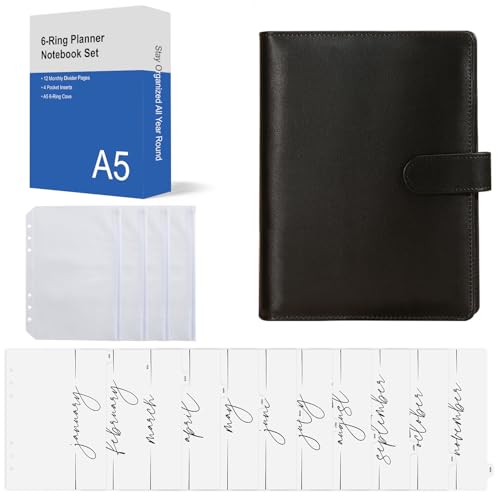
Physical tools:
- Financial Peace Planner—step-by-step budget worksheets
- Debt Payoff Planner—visual tracker for paying down debt
- Savings Challenge Book—fun way to gamify saving money
Books for continued learning:
- “I Will Teach You to Be Rich” by Ramit Sethi—practical, no-BS money advice for regular people
- “The Simple Path to Wealth” by JL Collins—straightforward approach to building wealth without complexity
Note: Prices and availability may vary. Always check current pricing and read recent reviews before purchasing.
Related Article
To understand how financial independence fits into your overall well-being, explore The Triangle of Well-being, which shows how physical wellness, mental resilience, and financial stability work together.

Your 30-Day Action Plan Summary
Week 1: Awareness
- Calculate your monthly income
- List all fixed expenses and debts
- Track every purchase for 3 days
- Calculate your cash flow
Week 2: Planning
- Create your first zero-based budget
- Identify spending cuts (subscriptions, convenience spending)
- Set up budget categories
- Plan which bills come from which paycheck
Week 3: Protection
- Open a separate savings account
- Set up automatic transfer to emergency fund
- Save your first $10-50
- Identify “found money” opportunities
Week 4: Habits
- Start daily 5-minute money check-ins
- Implement weekly budget review
- Use 24-hour rule for non-essential purchases
- Celebrate small wins
What Happens After Day 30?
This is just the beginning. After your first 30 days, you’ll have:
- Clear visibility into your finances
- A working budget you can adjust
- The start of an emergency fund
- Daily habits that build financial stability
- Reduced financial stress and anxiety
From here, you can:
- Continue building your emergency fund to $1,000, then 3-6 months of expenses
- Start aggressively paying down debt using the debt snowball or avalanche method
- Increase your income through side hustles or career advancement
- Begin investing for retirement
- Build wealth intentionally instead of just surviving
The paycheck to paycheck budget you create this month becomes your foundation for everything else. Master this, and you’re no longer at the mercy of your next paycheck.
Final Thoughts: You’re Not Starting from Zero

If you’re in your 40s or 50s and feeling like you’re behind, I want you to hear this: you’re not starting from zero. You have experience, resilience, and the wisdom that comes from living through financial challenges. Those are assets.
Breaking the paycheck-to-paycheck cycle isn’t about perfection. It’s about progress. It’s about making better decisions today than you did yesterday. It’s about giving yourself permission to start over, right now, regardless of what happened before.
“Do not save what is left after spending, but spend what is left after saving
– Warren Buffett
Every successful person you admire has had money struggles. The difference is they decided to change their trajectory—and that decision starts with a single step.
Your first 30 days won’t make you rich. But they will give you something more valuable: control. Control over your money, your stress, and your future.
So start today. Not Monday. Not next month. Not after you get that raise or pay off that one bill. Today.
You’ve got this.
Disclosure
This article contains affiliate links. If you choose to make a purchase through these links, we may earn a commission at no additional cost to you.
Important Note: The information provided in this article is for educational purposes only and should not be considered financial advice. Always consult with a qualified financial advisor before making significant financial decisions. Your situation is unique, and these general guidelines may need to be adjusted to your specific circumstances.