Creating Your Personal Success Ecosystem: The Complete Guide for Men Over 40
At 45, Mike realized his biggest enemy wasn’t his competition—it was his own environment. Every morning, he’d wake up with good intentions, but by noon, he was scrolling social media, surrounded by clutter, and feeling overwhelmed. Sound familiar?
If you’re a man over 40 feeling stuck despite your best efforts, the problem isn’t your willpower—it’s your personal success ecosystem. Just like a garden needs the right soil, water, and sunlight to flourish, your success needs the right environment, people, and tools to grow automatically.
“The key to success is to focus our conscious mind on things we desire not things we fear.”
– Brian Tracy
Creating a personal success ecosystem after 40 isn’t about working harder; it’s about working smarter by designing systems that make success inevitable. Think of it as building a machine that runs on autopilot, supporting your goals even when motivation runs low.
In this guide, we’ll explore the four essential pillars of your success ecosystem: designing your environment for automatic success systems, building a strategic support network, optimizing your tools and resources, and eliminating the hidden saboteurs that derail your progress. By the end, you’ll have a clear blueprint to transform your life from the inside out.
Disclosure
This article contains affiliate links. If you choose to make a purchase through these links, we may earn a commission at no additional cost to you.

Environment Design for Automatic Success
Your environment is like a silent coach—it’s either pushing you toward success or pulling you toward mediocrity every single day. Strategic environment design means creating spaces that make good choices easier and bad choices harder.

The Psychology of Environmental Influence
Here’s something most people don’t realize: your brain makes about 35,000 decisions daily, and 95% of them happen automatically. Your environment triggers these automatic decisions. When you walk into a cluttered room, your stress hormones spike. When you see your running shoes by the door, you’re more likely to exercise.
This is called environmental psychology—the science of how your surroundings shape your behavior. The good news? Once you understand this, you can design what experts call “habit architecture“—environments that make success feel effortless.
Take the 3-second rule: if something takes more than three seconds to access, you’re 70% less likely to do it. That’s why keeping healthy snacks at eye level in your fridge works better than hiding them in the crisper drawer.
Designing Your Physical Success Environment
Your home and workspace should function like a productivity space designed specifically for your goals. Start with your home office or wherever you do your most important work.
The Success Setup Checklist:
- Clear desk with only essential items visible
- Inspiring quotes or images within your line of sight
- Comfortable lighting that energizes rather than strains
- A dedicated “no phone” zone for deep work
- Visual reminders of your goals (photos, vision board, progress charts)
Remember, home environment design extends beyond your office. Create “success zones” throughout your house. Place books you want to read on your coffee table instead of the remote control. Keep a water bottle on your nightstand to start hydrating immediately upon waking.
For workspace optimization, consider investing in quality tools that support your daily habits. The Rocketbook Smart Reusable Notebook lets you take handwritten notes and digitize them instantly—perfect for capturing ideas without digital distractions. Pair it with the Pomodoro Timer Cube to maintain focus during work sessions.


Digital Environment Optimization
Your digital environment might be even more important than your physical one. The average person checks their phone 96 times daily—that’s once every 10 minutes during waking hours. Each notification is a potential derailment from your priorities.
Digital minimalism doesn’t mean going off-grid; it means being intentional about your technology optimization.
Start with these steps:
Phone Configuration for Success:
- Turn off all non-essential notifications
- Use “Do Not Disturb” mode during focused work
- Place productivity apps on your home screen, social media apps in folders
- Set specific times for checking email and social media
Email and Notification Management:
- Unsubscribe from newsletters that don’t add value
- Use filters to automatically sort important emails
- Check email at designated times only (not first thing in the morning)
Social Media Environment Curation:
- Unfollow accounts that make you feel inadequate or distracted
- Follow accounts that inspire and educate
- Use apps like Freedom to block distracting websites during work hours


Building Your Support Network Strategically

Success after 40 isn’t a solo journey—it’s a team sport. But here’s what most men get wrong: they think networking means collecting business cards at events. Real strategic support network building is about cultivating relationships that genuinely support your growth and goals.
The Five Types of Success Partners
Think of your support network like a basketball team. You need different players for different positions.
Here are the five essential types of accountability partners every successful man over 40 needs:
- Mentors and Advisors: People who’ve achieved what you want to achieve. They provide wisdom and perspective from experience.
- Accountability Partners: Peers who check in on your progress and hold you to your commitments. This could be a workout buddy, business partner, or mastermind group member.
- Peer Collaborators: People at your level working toward similar goals. You support each other through challenges and celebrate wins together.
- Industry Connections: Professional contacts who can open doors, share opportunities, or provide expertise in your field.
- Personal Cheerleaders: Family and friends who believe in you unconditionally and provide emotional support during tough times.
Network Audit and Optimization
Before building new relationships, evaluate your current ones. This relationship assessment might feel uncomfortable, but it’s essential for your growth.
Create three lists:
- Energy Givers: People who leave you feeling motivated and positive
- Energy Neutral: People who neither drain nor energize you
- Energy Drains: People who consistently leave you feeling tired, negative, or stressed
The goal isn’t to cut people out of your life completely, but to be strategic about how much time and energy you invest in each relationship. Toxic relationship elimination sometimes means setting boundaries rather than ending relationships entirely.
For example, if your brother always complains about his job but never takes action, you might limit those conversations to 10 minutes and then redirect to more positive topics.
Maintaining and Nurturing Your Network
Relationship maintenance requires systems, just like any other important area of your life. Successful men over 40 don’t leave networking to chance—they have networking strategies that work automatically.
The Monthly Network Check-in System:
- First week: Reach out to mentors and advisors
- Second week: Connect with accountability partners
- Third week: Touch base with peer collaborators
- Fourth week: Nurture industry connections
The key is value-first networking—always think about how you can help others before asking for help yourself. Share relevant articles, make introductions, or simply check in during challenging times.
Use a simple system like the Moleskine Weekly Planner to track these connections, or go digital with apps like Notion or Airtable.
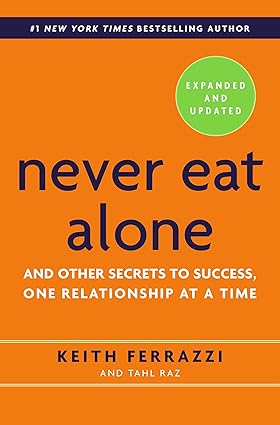
For deeper insights into building meaningful professional relationships, we recommend “Never Eat Alone” by Keith Ferrazzi. It’s a masterclass in authentic relationship building that goes far beyond traditional networking tactics.


Tool and Resource Optimization

Here’s a truth that might surprise you: having too many tools can hurt your productivity more than having too few. Resource optimization techniques are about finding the sweet spot—enough tools to be effective, but not so many that you spend more time managing tools than achieving goals.
The Minimalist Tool Philosophy
The most successful men over 40 follow what we call the “minimalist tool philosophy.” Instead of collecting every productivity app and gadget, they focus on productivity tools that serve multiple purposes and integrate well together.
Think of it like a professional chef’s kitchen. A master chef doesn’t need 50 different knives—they need a few high-quality ones they know inside and out. The same principle applies to your tool optimization strategy.
The 80/20 Rule for Tools:
- 80% of your results come from 20% of your tools
- Focus on mastering a few essential tools rather than dabbling with many
- Regularly audit your tools and eliminate redundancies
Essential Questions for Tool Selection:
- Does this tool solve a specific problem I have?
- Will I use this tool at least weekly?
- Does it integrate with my existing systems?
- Is the learning curve worth the potential benefit?
Essential Success Tools by Category
Let’s break down the essential tracking systems and tools every man over 40 should consider, organized by life area:
Planning and Organization:
- Calendar: Google Calendar or Apple Calendar for scheduling
- Task Manager: Todoist or Things 3 for project management
- Note-taking: Notion or Obsidian for knowledge management

Learning and Development:
- Books: Kindle Unlimited for unlimited reading
- Audiobooks: Audible for learning during commutes
- Courses: MasterClass or Coursera for skill development
- Podcasts: Spotify or Apple Podcasts for ongoing education
Health and Wellness:
- Fitness Tracking: Apple Watch or Fitbit for activity monitoring
- Meditation: Headspace or Calm for mental wellness
- Nutrition: MyFitnessPal for food tracking
- Sleep: Sleep Cycle for sleep optimization
Financial Management:
- Budgeting: YNAB (You Need A Budget) or Mint
- Investing: Vanguard or Fidelity for long-term wealth building
- Expense Tracking: Expensify for business expenses
YNAB (You Need A Budget) Software or similar budgeting apps can ensuring you maintain visibility over your cash flow.

Creating Your Personal Resource Library
Knowledge management becomes increasingly important as you accumulate experience and wisdom. Your resource curation system should make it easy to capture, organize, and retrieve valuable information.
Building Your Success Resource Database:
- Create folders for different life areas (health, wealth, relationships, career)
- Save articles, videos, and podcasts that provide actionable insights
- Use tags or labels to make content searchable
- Review and update your library quarterly
Regular Resource Review Process:
- Monthly: Add new resources you’ve discovered
- Quarterly: Remove outdated or irrelevant content
- Annually: Reorganize categories based on current priorities

Eliminating Success Saboteurs from Your Life

Even with the perfect environment, support network, and tools, success can still feel elusive if you haven’t addressed the hidden saboteurs working against you. Eliminating success saboteurs is like removing weeds from a garden—it’s not glamorous work, but it’s essential for growth.
Identifying Your Personal Saboteurs
Self-sabotage patterns often develop over decades and can be so ingrained that we don’t even recognize them.
For men over 40, the most common success blockers include:
The Perfectionism Trap: Waiting for the “perfect” time, plan, or conditions before taking action. This often stems from fear of failure or judgment.
The Comparison Game: Constantly measuring your progress against others, especially younger colleagues or more successful peers.
The Comfort Zone Addiction: Staying in familiar but unfulfilling situations because change feels risky or overwhelming.
The Time Scarcity Mindset: Believing you’re “too old” to start something new or that you’ve missed your window of opportunity.
Self-Assessment Questions:
- What goals have I been “planning” to pursue for more than six months?
- When do I find myself making excuses instead of taking action?
- What stories do I tell myself about why I can’t achieve certain things?
- Which activities do I avoid because they feel uncomfortable or challenging?
Environmental Saboteur Elimination
Your environment can sabotage your success in subtle ways. Distraction elimination means identifying and removing environmental triggers that derail your focus and energy.
Physical Space Saboteurs:
- Clutter that creates mental overwhelm
- Uncomfortable furniture that causes physical discomfort
- Poor lighting that strains your eyes and drains energy
- Noise distractions that break concentration
Digital Distractions and Time Wasters:
- Social media apps that trigger mindless scrolling
- News websites that create anxiety and negativity
- Email notifications that interrupt deep work
- Streaming services that encourage binge-watching
Social and Relationship Saboteurs:
- People who consistently discourage your goals
- Friends who pressure you to maintain old, unhealthy habits
- Family members who resist your positive changes
- Colleagues who create drama or negativity
The Noise-Cancelling Headphones by Sony can be a game-changer for eliminating audio distractions, while the Blue Light Blocking Glasses help reduce digital eye strain during long work sessions.


Internal Saboteur Management
Mindset work is perhaps the most challenging aspect of eliminating success saboteurs because it requires honest self-examination. The internal saboteurs that plague men over 40 often include:
Fear-Based Thinking Patterns:
- “What if I fail and look foolish?”
- “I’m too old to learn new skills”
- “I don’t have enough time/money/experience”
Perfectionism and Procrastination:
- Waiting for the “perfect” moment to start
- Spending excessive time planning instead of doing
- Abandoning projects when they don’t meet unrealistic standards
Imposter Syndrome After 40:
- Feeling like you don’t deserve success
- Believing others are more qualified or capable
- Downplaying your achievements and experience
Cognitive Restructuring Techniques:
- Challenge Negative Thoughts: When you catch yourself thinking “I can’t do this,” ask “What evidence do I have that this is true?”
- Reframe Failures as Learning: Instead of “I failed,” try “I learned what doesn’t work.”
- Focus on Progress, Not Perfection: Celebrate small wins and incremental improvements.
- Use Positive Self-Talk: Replace “I have to” with “I get to” and “I should” with “I choose to.”

Creating Saboteur-Proof Systems
Prevention strategies are more effective than trying to overcome saboteurs after they’ve already derailed your progress. Think of this as building immunity rather than treating illness.
Early Warning Systems:
- Track your energy levels and mood daily
- Notice patterns in when you feel most/least motivated
- Identify triggers that lead to self-sabotaging behaviors
- Create accountability check-ins with trusted friends or mentors
Recovery Protocols:
- Have a plan for getting back on track after setbacks
- Practice self-compassion instead of self-criticism
- Focus on the next right action rather than dwelling on mistakes
- Use the “two-day rule”—never allow yourself to skip a habit for more than two consecutive days
Long-term Maintenance Strategies:
- Regular self-reflection and journaling
- Ongoing education about personal development
- Professional coaching or therapy when needed
- Continuous refinement of your systems and processes
The Five Minute Journal is an excellent tool for daily self-reflection and maintaining positive momentum, while “Atomic Habits” by James Clear provides the scientific foundation for building saboteur-proof systems.


Atomic Habits by James Clear breaks down how tiny mindset changes compound into major transformations. It's written in plain English—no psychology degree needed.
Your 30-Day Implementation Blueprint
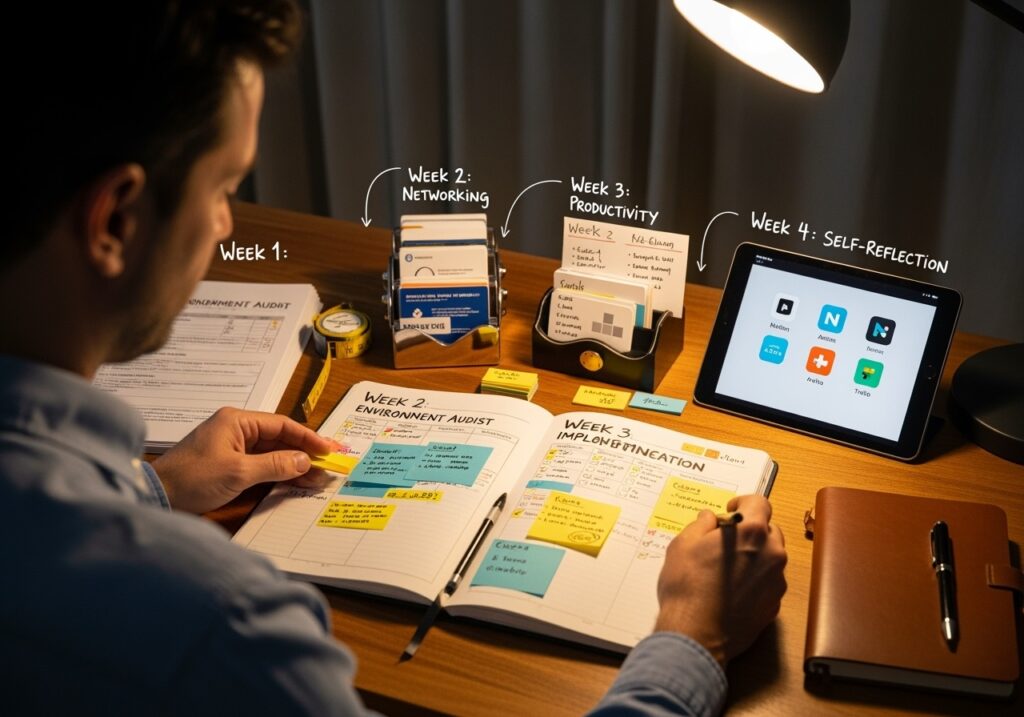
Now that you understand the four pillars of a personal success ecosystem, let’s create a practical implementation strategy that won’t overwhelm you. This step-by-step guide breaks down the process into manageable weekly chunks.
Week 1: Environment Audit and Design
Days 1-2: Physical Environment Assessment
- Walk through your home and workspace with fresh eyes
- Take photos of each area to see them objectively
- List three things in each space that support your goals
- List three things that distract or drain your energy
Days 3-4: Digital Environment Cleanup
- Audit your phone apps and delete unused ones
- Turn off non-essential notifications
- Unsubscribe from email lists that don’t add value
- Organize your computer files and desktop
Days 5-7: Environment Redesign
- Reorganize your workspace for maximum productivity
- Create designated spaces for important activities
- Remove or relocate items that trigger bad habits
- Add visual cues that remind you of your goals
Week 2: Network Assessment and Optimization
Days 8-9: Relationship Inventory
- List the 20 people you interact with most frequently
- Categorize them as energy givers, neutral, or drains
- Identify gaps in your support network (missing mentors, accountability partners, etc.)
Days 10-11: Network Optimization
- Schedule time with your energy-giving relationships
- Set boundaries with energy-draining relationships
- Research potential mentors or accountability partners in your field
Days 12-14: Strategic Outreach
- Reach out to one potential mentor or advisor
- Connect with one peer who shares similar goals
- Schedule regular check-ins with existing accountability partners
Week 3: Tool Selection and Setup
Days 15-16: Tool Audit
- List all productivity tools, apps, and systems you currently use
- Rate each tool’s effectiveness on a scale of 1-10
- Identify redundancies and gaps in your toolkit
Days 17-18: Tool Optimization
- Delete or stop using tools rated below 7
- Research replacements for essential functions you’re missing
- Choose one new tool to test (start with the highest-impact area)
Days 19-21: System Integration
- Set up your chosen tools and customize them for your needs
- Create workflows that connect your tools seamlessly
- Practice using your optimized system for three days
Week 4: Saboteur Identification and Elimination
Days 22-23: Saboteur Detection
- Journal about times when you’ve self-sabotaged in the past
- Identify your top three internal saboteurs (perfectionism, comparison, etc.)
- Notice environmental triggers that lead to unproductive behaviors
Days 24-25: Saboteur Elimination Strategy
- Create specific action plans for each identified saboteur
- Remove or modify environmental triggers
- Establish early warning systems for when saboteurs appear
Days 26-28: System Testing and Refinement
- Test your anti-saboteur strategies in real situations
- Adjust your environment, network, and tools based on what you’ve learned
- Document what’s working and what needs improvement
Maintenance and Evolution
Monthly Ecosystem Reviews: Set aside 2 hours each month to evaluate your success ecosystem implementation:
- What’s working well in each pillar?
- Where are you seeing the biggest improvements?
- What adjustments need to be made?
- Are there new saboteurs emerging?
Quarterly Optimization Sessions: Every three months, conduct a deeper review:
- Reassess your goals and priorities
- Evaluate whether your environment still supports your current objectives
- Review your network and consider new relationships to cultivate
- Upgrade or replace tools that are no longer serving you
Annual Ecosystem Overhauls: Once a year, do a complete ecosystem redesign:
- Conduct a thorough audit of all four pillars
- Set new goals and adjust your ecosystem accordingly
- Invest in major upgrades to your environment or tools
- Celebrate your growth and plan for the year ahead
Four Common Challenges and Solutions
Even with the best-laid plans, you’ll face obstacles while building your personal success ecosystem.
Here are the four most common challenges men over 40 encounter, along with practical solutions:
Challenge 1
“I Don’t Have Time to Set All This Up”
The Reality: You’re already spending time on unproductive activities—you’re just not aware of it. The average person spends 2.5 hours daily on social media and 4 hours watching TV.
The Solution: Start with just 15 minutes daily for one week. Use a time-tracking app like RescueTime to see where your time actually goes. You’ll be surprised how much “dead time” you can reclaim. Begin with the highest-impact changes first—usually digital environment cleanup gives the biggest immediate return.
Quick Win: Delete three apps from your phone that you use mindlessly. Replace that time with ecosystem-building activities.
Challenge 2
“My Family Doesn’t Support These Changes”
The Reality: Change can feel threatening to people close to you, especially if they’re comfortable with the status quo. Your growth might highlight areas where they feel stuck.
The Solution: Lead by example rather than trying to convince others. Focus on your own transformation and let the results speak for themselves. Include family members when possible—invite your spouse to help redesign your shared spaces or ask your kids for input on your goals.
Communication Strategy: Explain that these changes will make you a better husband, father, and provider. Frame it as investing in your family’s future, not just personal ambition.
Challenge 3
“I’ve Tried Systems Before and They Never Stick”
The Reality: Most people try to change everything at once, which leads to overwhelm and abandonment. They also don’t account for the adjustment period required to form new habits.
The Solution: Focus on one pillar at a time and expect a 30-60 day adjustment period. Use the “minimum viable habit” approach—start so small that it feels almost silly not to do it. For example, instead of “exercise for an hour daily,” start with “put on workout clothes.”
Accountability Hack: Share your progress with someone weekly. The Stickk app lets you put money on the line for your commitments, which significantly increases follow-through rates.
Challenge 4
“I Can’t Afford All These Tools and Resources”
The Reality: Building a personal success ecosystem doesn’t require expensive tools. Many of the most effective strategies cost nothing but time and intentionality.
The Solution: Start with free alternatives and upgrade gradually. Use your phone’s built-in apps for tracking, free versions of productivity tools, and library books instead of purchasing everything immediately. Focus on optimizing what you already have before buying new tools.
The most important tool in your success ecosystem is your mindset, and that’s completely free.

Measuring Your Ecosystem’s Effectiveness

Your personal success ecosystem should produce measurable results within 30-90 days.
Here are key indicators that your system is working:
- You feel more energized throughout the day
- You can focus for longer periods without distraction
- You complete important tasks more consistently
- You feel less overwhelmed by daily responsibilities
Energy and Focus Metrics:
- You feel more energized throughout the day
- You can focus for longer periods without distraction
- You complete important tasks more consistently
- You feel less overwhelmed by daily responsibilities
Progress Indicators:
- You’re making consistent progress toward your goals
- You recover more quickly from setbacks
- You feel more confident in your abilities
- You’re learning and growing regularly
Relationship Quality:
- Your relationships feel more supportive and energizing
- You’re having more meaningful conversations
- You feel less isolated and more connected
- You’re contributing value to others’ lives
System Efficiency:
- You spend less time on unproductive activities
- Your tools and processes feel streamlined
- You make decisions more quickly and confidently
- You have more time for activities you enjoy
If you’re not seeing improvements in these areas after 60 days, revisit each pillar and identify what needs adjustment. Remember, building a personal success ecosystem is an iterative process—expect to refine and improve your system continuously.


Final Thoughts

Your Next Steps
Creating your personal success ecosystem isn’t a destination—it’s a journey of continuous improvement and growth. The framework you’ve learned today will serve you not just for the next few months, but for the rest of your life.
Start with the 30-day implementation blueprint, but remember that small, consistent actions compound over time. The man who optimizes his environment by 1% each day will see dramatic improvements within a year.
“Success is not just about what you accomplish in your life, it’s about what you inspire others to do.”
– Unknown
Your ecosystem will evolve as you do. The tools that serve you today might not be the ones you need in five years. The relationships that support your current goals might change as your priorities shift. That’s not just okay—it’s expected and healthy.
The key is to remain intentional about your choices. Every environment you enter, every person you spend time with, every tool you use should either support your growth or be consciously chosen for other important reasons (like family obligations or necessary work tasks).
Most importantly, be patient with yourself. You’re not just changing habits—you’re rewiring decades of patterns and creating new neural pathways. This takes time, and there will be setbacks. The difference between men who succeed and those who don’t isn’t the absence of obstacles—it’s the presence of systems that help them navigate those obstacles effectively.
Your personal success ecosystem is your competitive advantage in a world full of distractions and competing priorities. While others are fighting against their environment, you’ll be supported by yours. While others struggle with motivation, your systems will carry you forward automatically.
The best time to plant a tree was 20 years ago. The second best time is now. Your future self is counting on the decisions you make today.
Remember, you’re not just building a system—you’re designing a life that works for you, not against you. That’s the true power of a personal success ecosystem.
Ready to build your personal success ecosystem? Start with one small change today. Your future self will thank you for taking that first step.
Disclosure
This article contains affiliate links. If you choose to make a purchase through these links, we may earn a commission at no additional cost to you.
Important Note: The information in this post is meant to educate and inform, not to replace professional mental health care or psychological advice. While we’ve spent years studying mental resilience and personal development, we’re not licensed mental health professionals or therapists. Everyone’s life circumstances and mental health journey are unique, so what works for one person might not work for another. If you’re experiencing serious mental health challenges, please reach out to a qualified mental health professional. Some of the strategies discussed may not be suitable for everyone, and it’s important to assess your own situation carefully. By reading and using this information, you’re taking responsibility for your own decisions. Remember, seeking help is a sign of strength, not weakness. Stay resilient!