

Home Workouts for Men Over 40: The Joint-Friendly 3-Day Strength Plan
Strength that doesn’t punish your joints
If you’re searching for a home workout plan for men over 40, you’re probably not looking for “extreme.” You want something you can stick with—without your knees, shoulders, or lower back paying for it the next day.
You do not rise to the level of your goals. You fall to the level of your systems.
– James Clear
This plan is built for real life: busy schedules, mixed fitness levels, and budgets that range from “bands only” to a small home setup.
Think of this as your system: three strength-focused days per week, designed to be joint-friendly and repeatable.
Start here (foundation): Fitness for Men Over 40: The Body Reset Guide
Support reads: Joint Health 101 and Flexibility and Mobility
Disclosure
This article contains affiliate links. If you choose to make a purchase through these links, we may earn a commission at no additional cost to you.
Who this plan is for
- Men 40+ restarting (or getting consistent again)
- Busy professionals, dads, shift workers, and anyone short on time
- Guys who want strength without wrecking their joints
Micro-action (2 minutes): Write your “why” in one sentence (example: “I want to feel strong again.”). Keep it visible.
What “joint-friendly” means (plain English)
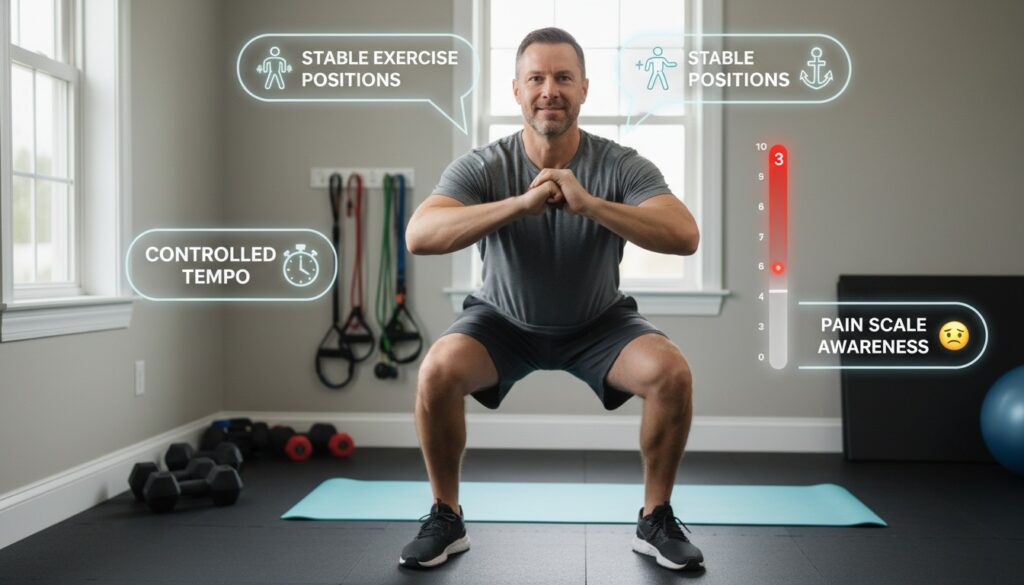
Just Remember
- Muscle burn is okay. Example: legs feel tired during squats.
- Sharp joint pain is not okay. Example: stabbing knee pain during lunges.
- Control beats ego. We use stable positions and clean reps so joints don’t take the beating.
A simple pain rule
- 0–2: okay
- 3: reduce range, slow down, or lighten the load
- 4+ or sharp pain: stop and swap the exercise
What you’ll need (budget-friendly options)
You can do this with minimal gear. If you want a simple, budget-friendly nutrition companion, use: Creating a Simple Meal Plan (Beginner + Budget-Friendly).
Option A: Ultra-budget
Option B: Best bang for your buck
- Adjustable dumbbells (or one solid pair)
- Doorframe pull-up bar (optional)
Option C: Nice-to-have upgrades
- Adjustable bench
- Suspension trainer (TRX-style)
- Kettlebell
Micro-action (5 minutes): Pick A, B, or C. Don’t overthink it.
Shop Aquasana's fast-flowing Clean Water Machine that removes 78 contaminants including 99% of lead & cysts, 15x more than the leading pitcher filter.
The weekly schedule (simple and repeatable)
- Day 1: Push + Legs
- Day 2: Pull + Core
- Day 3: Full Body + Carries
Best rhythm: Mon/Wed/Fri or Tue/Thu/Sat. If life gets messy, follow one rule: never miss twice.
Warm-up: 6 minutes that saves your joints
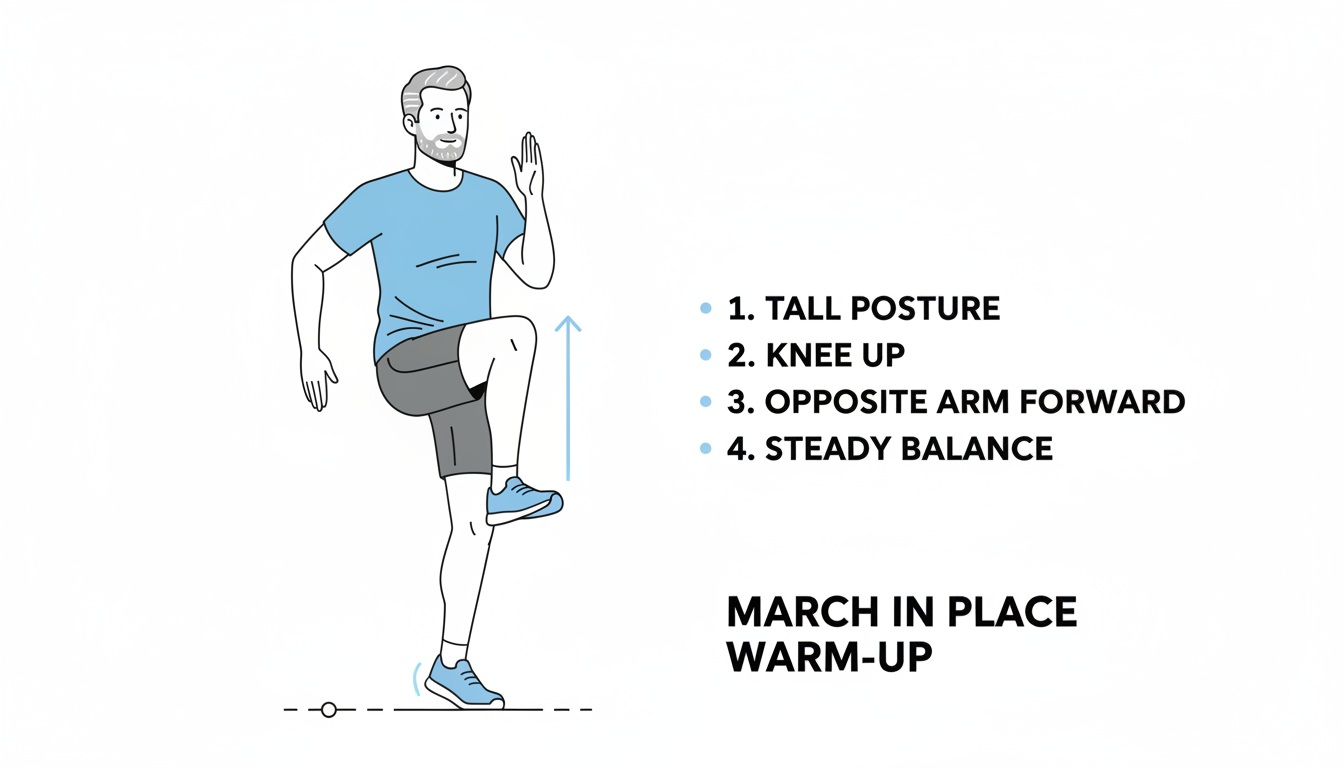
1. March in place (or brisk walk) — 60 seconds
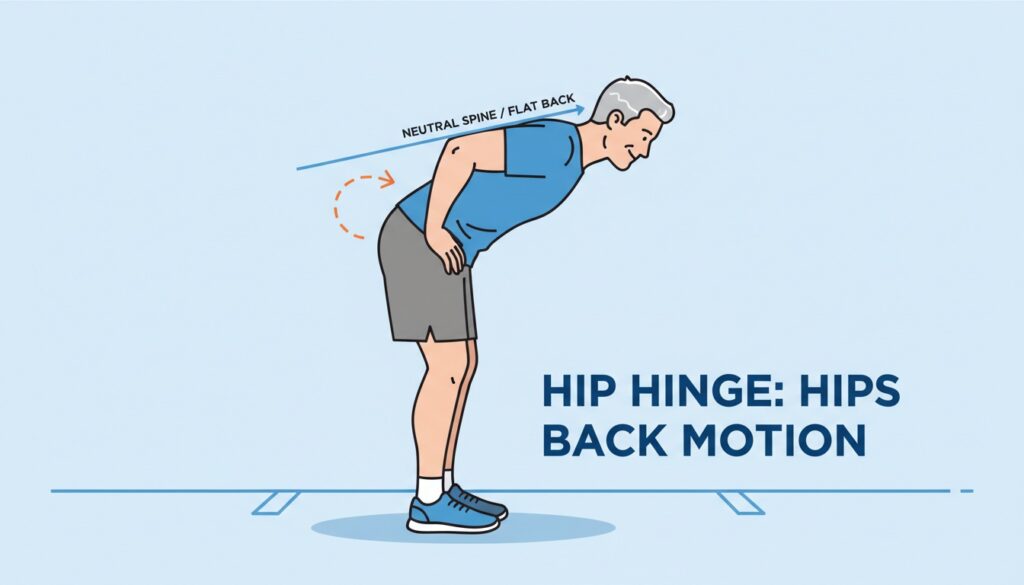
2. Hip hinge practice — 8 reps
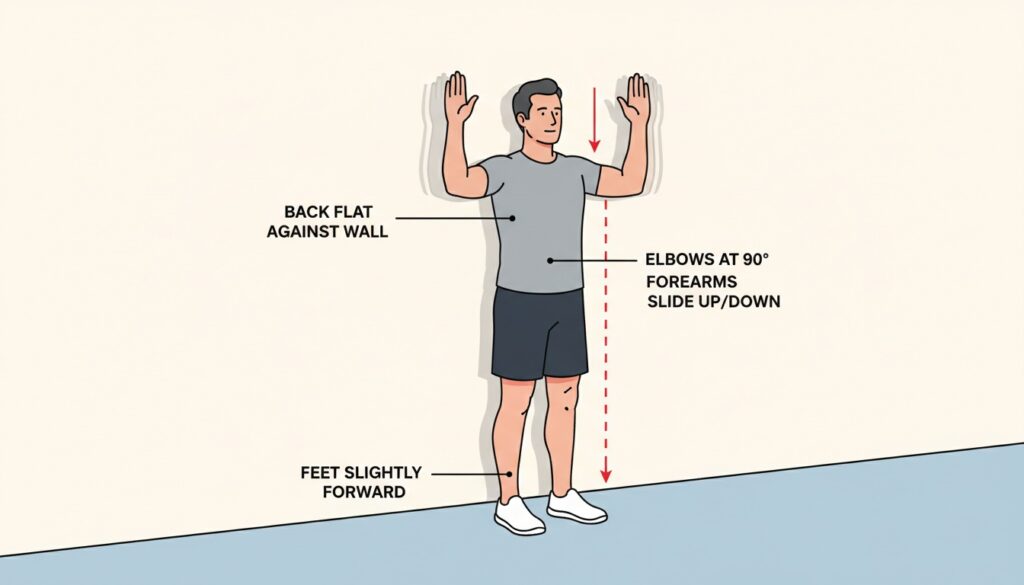
3. Wall slides — 8 reps
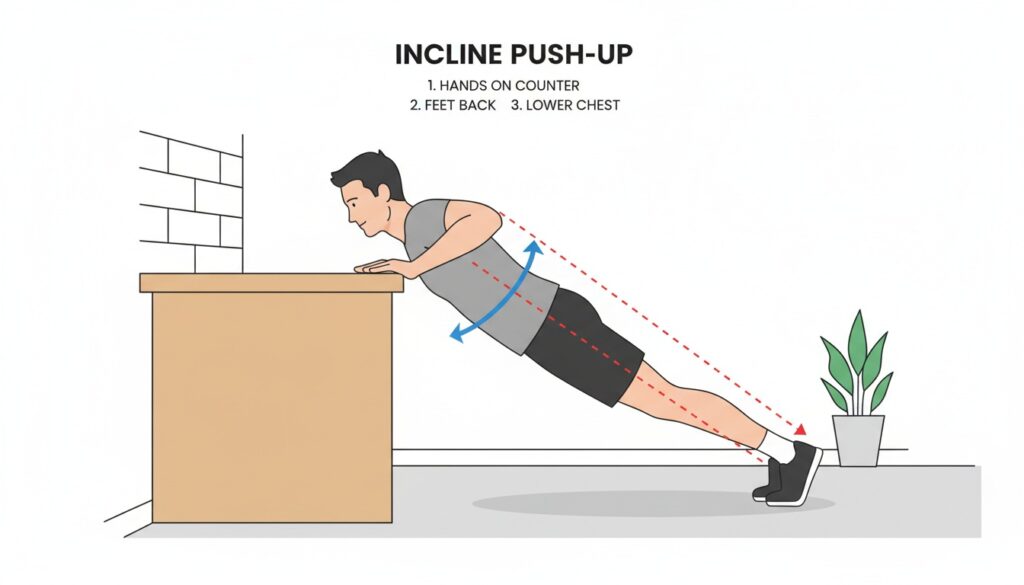
4. Incline push-up (hands on counter) — 6–10 reps
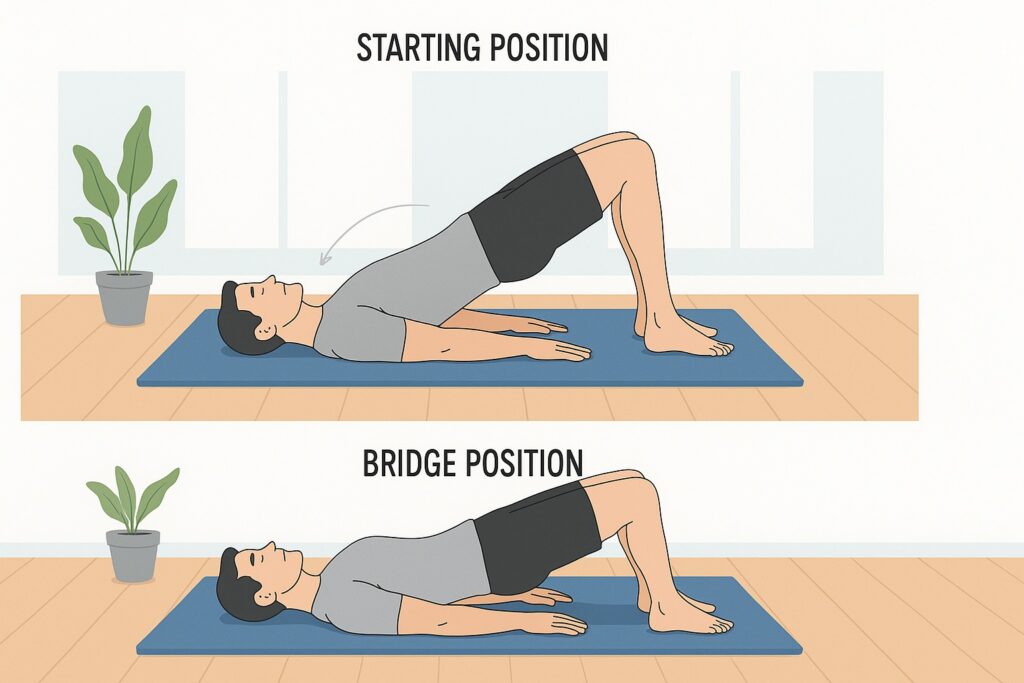
5. Glute bridge — 10 reps
Micro-action (today): Do the warm-up only. That still counts.
How to choose the right weight (no jargon)
- Aim for 8–12 reps with good form
- Last 2 reps feel challenging
- You could still do 1–2 more reps if you had to
What “progressive overload” means
Progressive overload = tiny upgrades over time. Examples: add 1 rep, add a little weight, or lower slower.
The plan overview
- 1 main lower-body move
- 1 main upper-body move
- 1–2 support moves (posture + core)
- Optional short finisher
Related Articles
Most workouts take 35–50 minutes, or 20 minutes on busy days. If recovery has been a struggle, start here:

And if you’re filtering nutrition noise, this helps:

Day 1: Push + Legs (joint-friendly strength)
Day 1 builds the kind of strength you actually use—standing up, carrying things, feeling solid in your shoulders— without turning the workout into a joint-pain contest. Keep reps controlled and finish most sets feeling like you could do 1–2 more reps.
If joints are your main concern, bookmark this: Joint Health 101: Protecting Your Body as You Build Strength.
Day 1 workout (30–40 minutes)
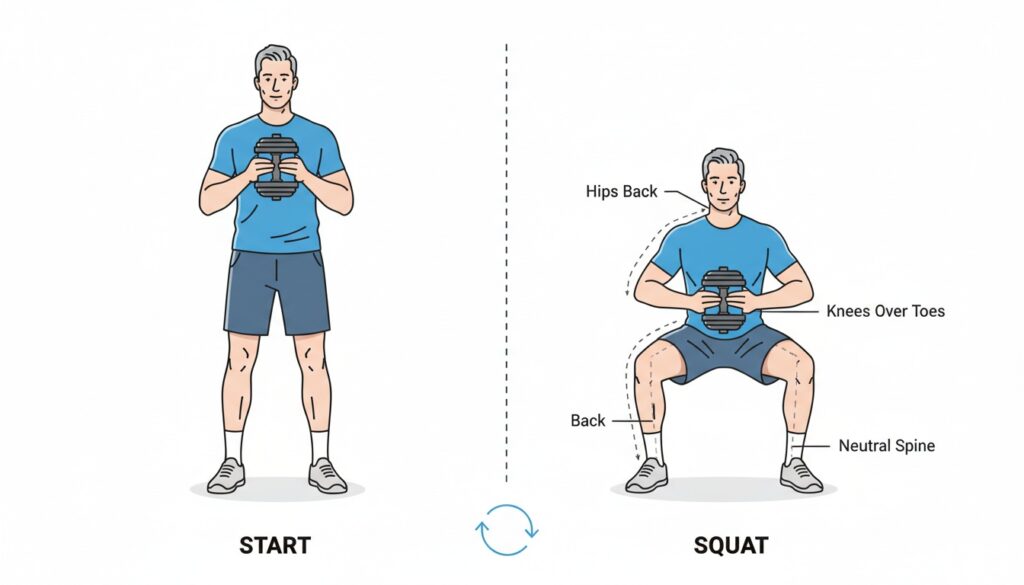
1) Goblet Squat (or Box Squat)
- 3 sets of 8–12 reps (rest 60–90 sec)
- Knee-friendly option: squat to a chair/bench (“box squat”) and stand back up
- Form cue: lower slowly (2–3 seconds), stand up smooth
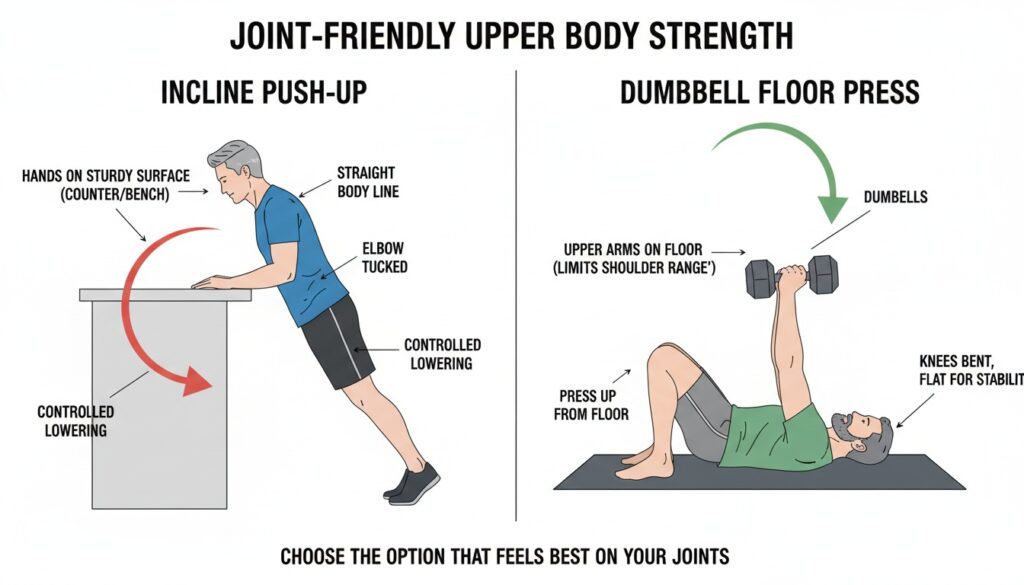
2) Incline Push-Up (or Dumbbell Floor Press)
- 3 sets of 8–15 reps (rest 60–90 sec)
- Shoulder-friendly option: dumbbell floor press (the floor limits depth)
- Form cue: stop the rep if you feel a sharp pinch in the front of the shoulder
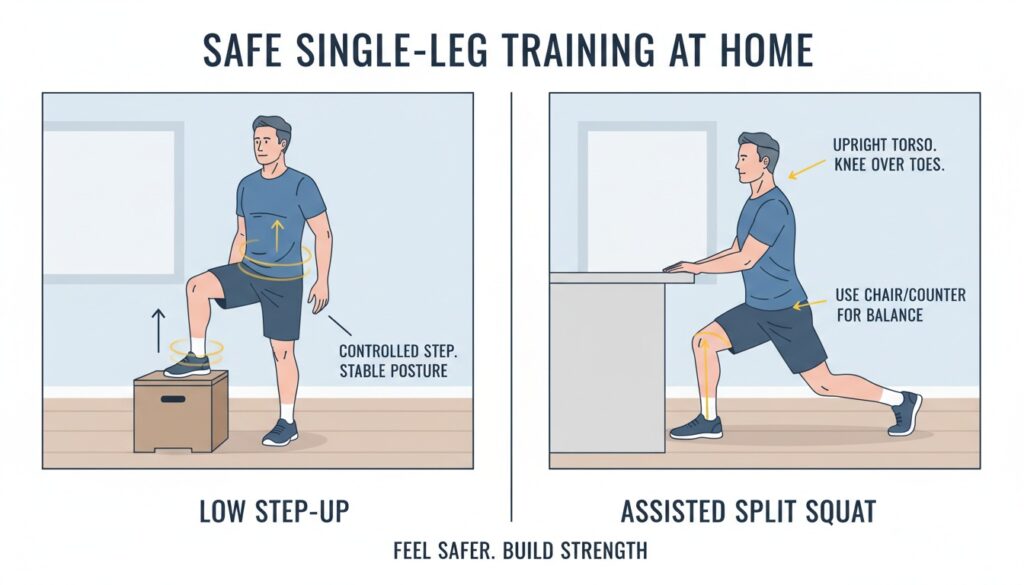
3) Step-Up (low height) or Assisted Split Squat
- 2 sets of 8–10 reps per side (rest 45–75 sec)
- Joint-friendly tip: hold a wall/chair for balance and keep the step height modest
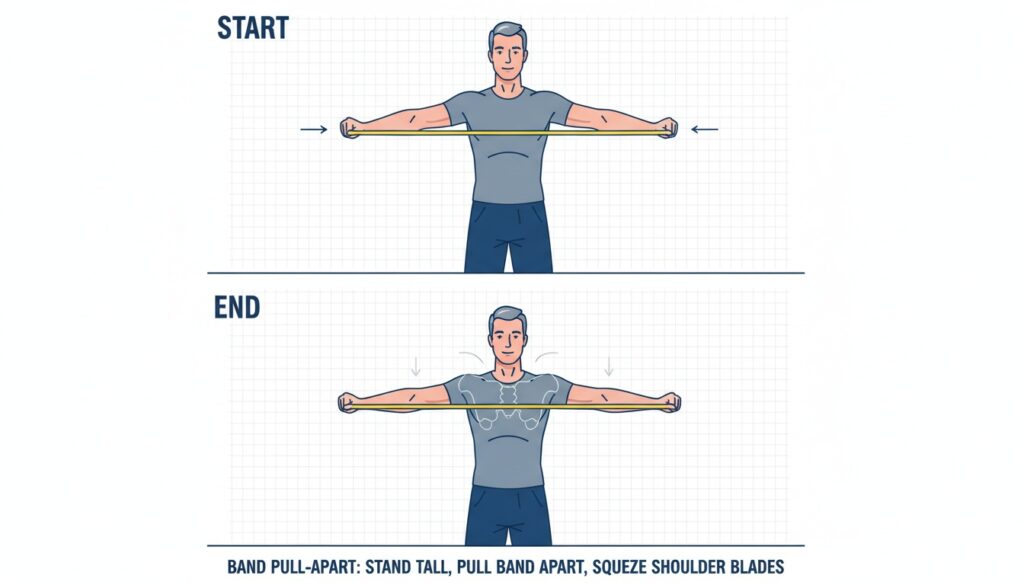
4) Band Pull-Apart (posture)
- 2 sets of 12–20 reps (rest 30–60 sec)
- Form cue: pull the band apart, pause, return slowly
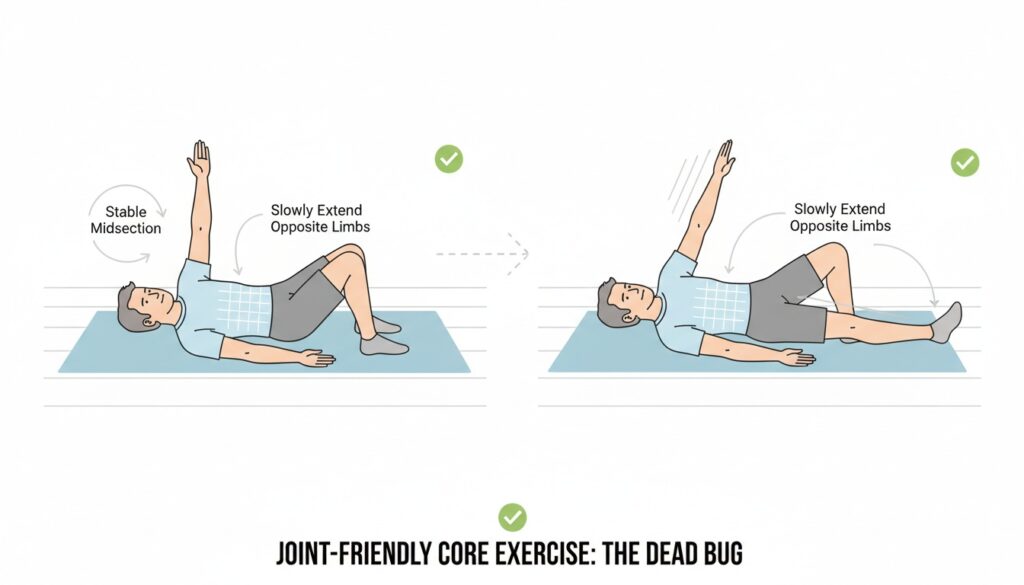
5) Dead Bug (core stability)
- 2 sets of 6–10 reps per side (rest 30–60 sec)
- Form cue: move slow; if your lower back arches, shorten the range
Busy-day version (20 minutes)
- Warm-up (6 minutes)
- Goblet/box squat: 2 sets of 8–12
- Incline push-up/floor press: 2 sets of 8–15
- Band pull-apart: 1–2 sets of 15–20
Micro-action: Do Day 1 once this week. Next week, aim for two total workouts. Momentum first.
Recommended Equipment for Day 1


Perfect for beginners, portable, and joint-friendly.
Related Articles
Two things that make this home workout plan for men over 40 work long-term: sleep and simple food. If either one is messy right now, start here:


Day 2: Pull + Core (back, posture, and a stronger midsection)
Day 2 is the “feel-better” day for a lot of men over 40. It strengthens your upper back (posture), trains your core to protect your lower back, and balances out all the pushing we do in daily life (driving, desk work, carrying, etc.).
If you feel stiff more than you feel “weak,” this is worth pairing with today’s workout: Flexibility and Mobility: The Missing Link in Your Fitness.
Day 2 workout (30–40 minutes)
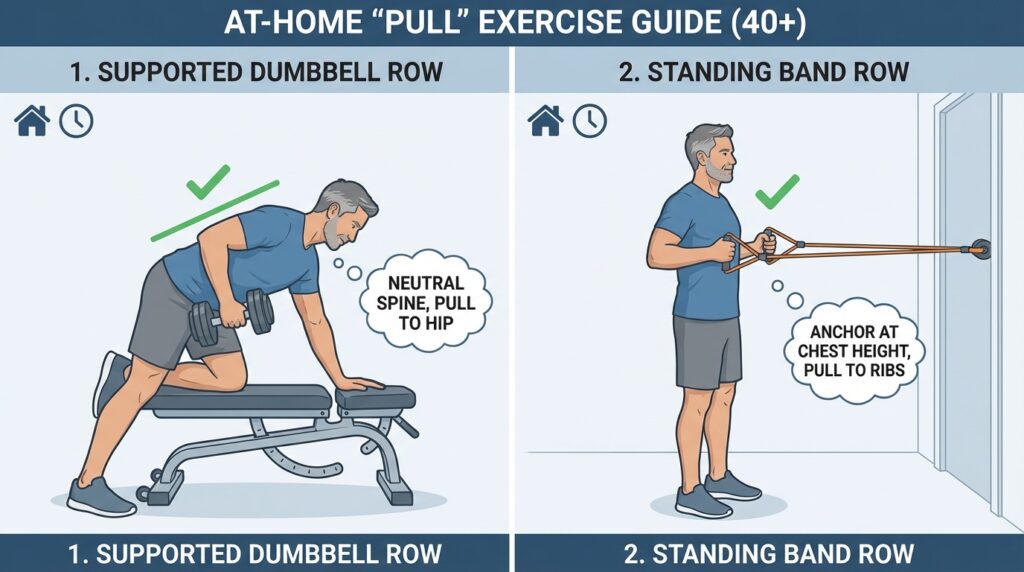
1) Main pull move: One-Arm Dumbbell Row (or Band Row)
Why it’s here: Rows build the upper back muscles that help your shoulders sit in a stronger, less cranky position—especially if you sit a lot.
- Sets/Reps: 3 sets of 8–12 reps per side
- Rest: 60–90 seconds
- Simple cue: pull your elbow toward your back pocket, then lower slowly
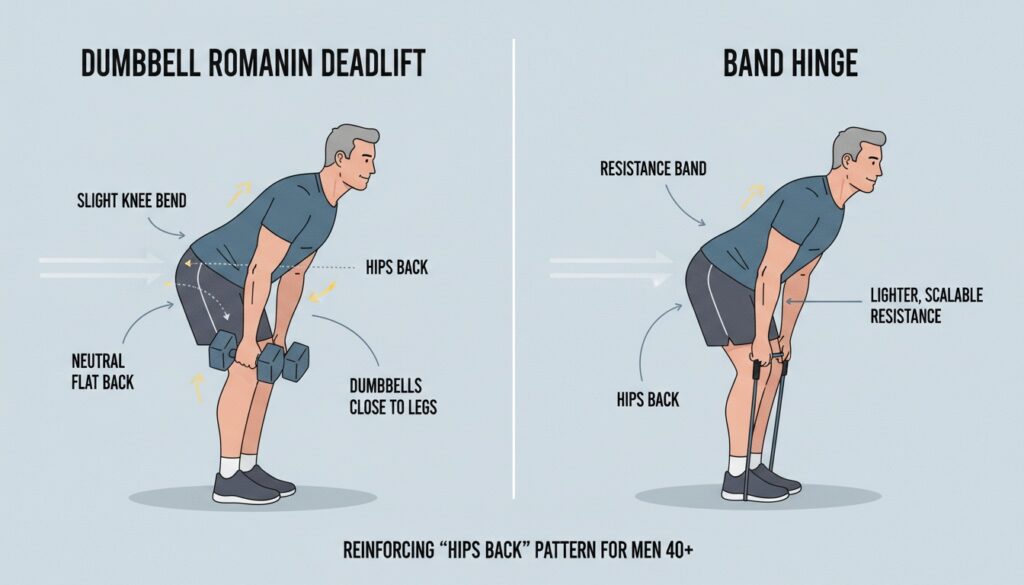
2) Hinge move: Romanian Deadlift (dumbbells) or Band Hinge
Why it’s here: This trains your hips and hamstrings (the “back side” of your body), which helps protect your knees and lower back when you bend, lift, and move in real life.
- Sets/Reps: 3 sets of 8–12 reps
- Rest: 60–90 seconds
- Simple cue: soft knees, push hips back, keep the weight close to your legs
If you’re unsure what “hinge” means: it’s the motion of pushing your hips back like you’re closing a car door with your butt—without rounding your back.
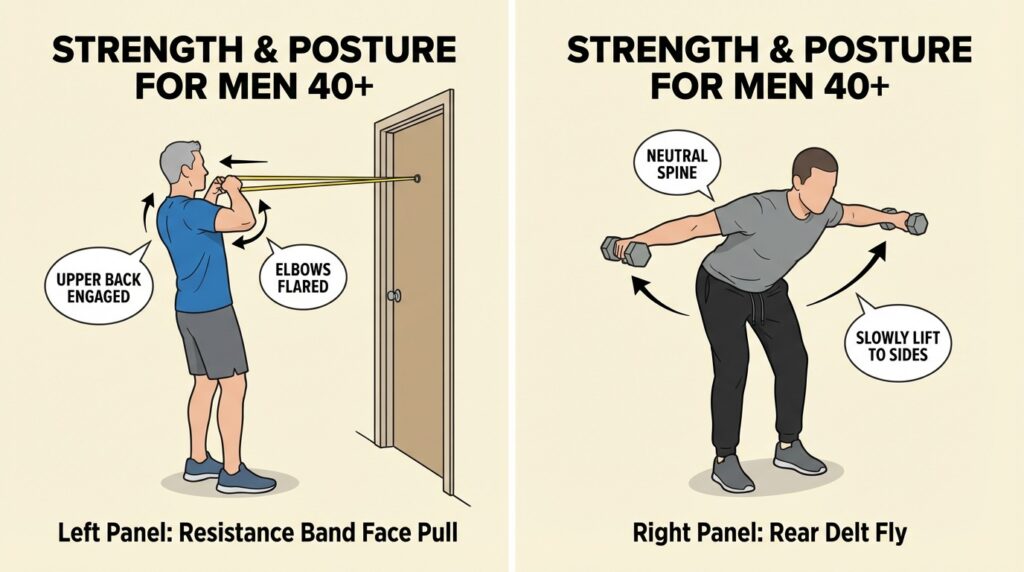
3) Posture + shoulder health: Face Pull (band) or Rear Delt Fly
- Sets/Reps: 2 sets of 12–20 reps
- Rest: 30–60 seconds
- Simple cue: pull toward your face, elbows high, squeeze your upper back
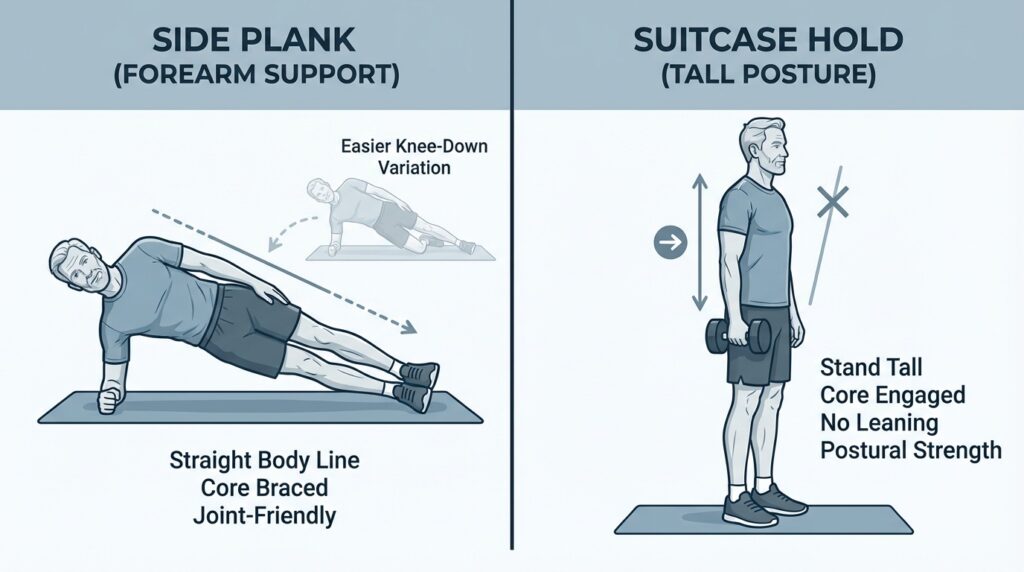
4) Core stability: Side Plank (or Suitcase Hold)
Why it’s here: This trains your core to resist bending and twisting—one of the most joint-friendly ways to build a stronger midsection and protect your back.
- Sets/Time: 2 rounds of 20–40 seconds per side
- Rest: 30–60 seconds
- Easy option: side plank from knees
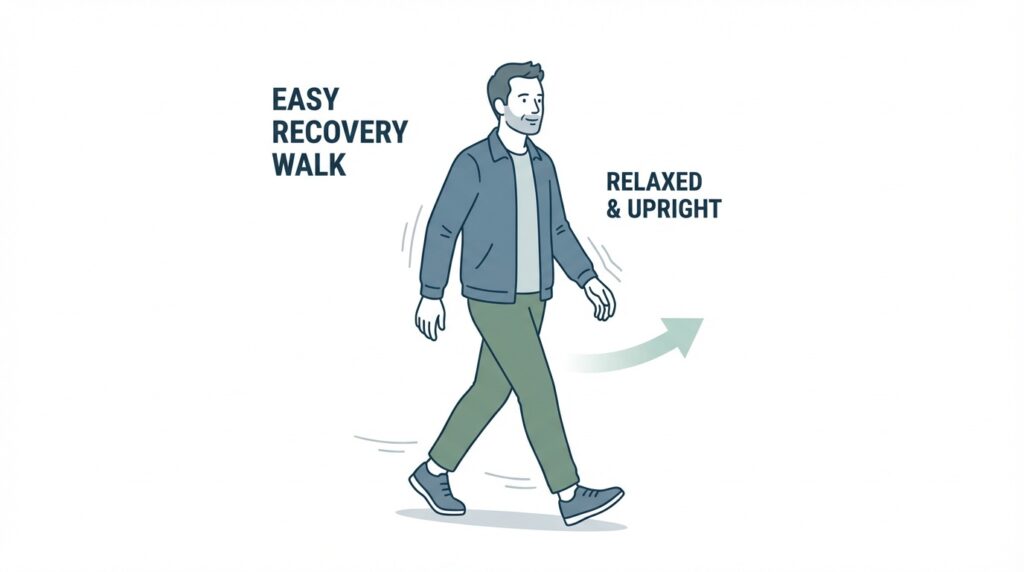
5) Optional “feel good” finisher: 5-minute easy walk
Keep it simple: walk around the block, up and down the hallway, or on a treadmill. This helps recovery and keeps your joints moving.
Busy-day version (20 minutes)
- Warm-up (6 minutes)
- Row (dumbbell or band): 2 sets of 8–12 per side
- Romanian deadlift (or band hinge): 2 sets of 8–12
- Side plank: 1–2 rounds of 20–30 seconds per side
Micro-action: If you only do one thing today, do the rows. Better posture and stronger shoulders pay off fast.
Recommended Equipment for Day 2


For rows + RDLs (Romanian Deadlift)
Related Article
If you notice your workouts feel harder than they should, don’t assume you’re “broken.” Check sleep first:

Day 3: Full Body + Carries (real-world strength)
Day 3 ties everything together. You’ll train a full-body pattern, add a little “work capacity” (without high-impact jumping), and finish with carries—one of the simplest ways to build practical strength at home.
Day 3 workout (30–40 minutes)
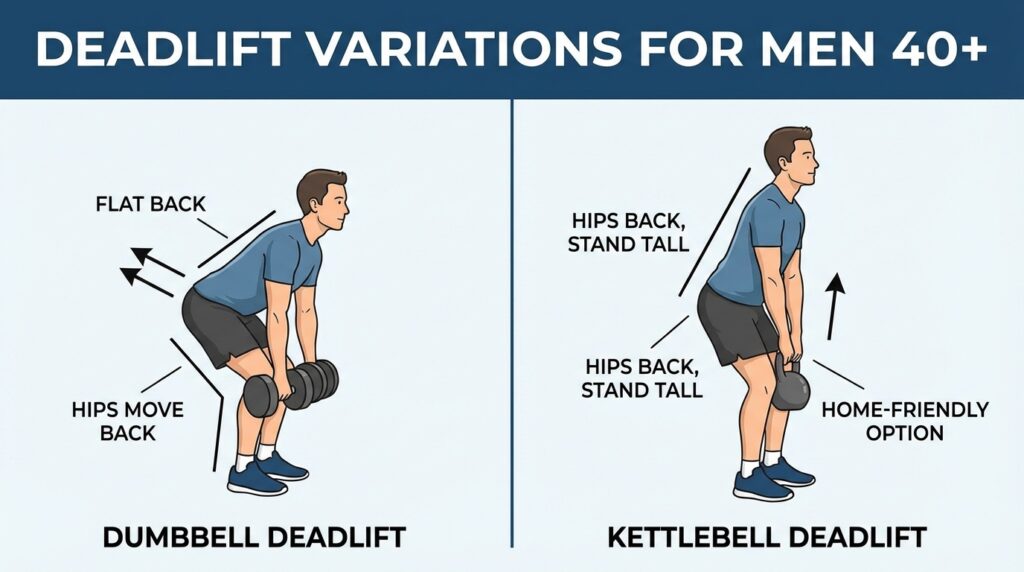
1) Main full-body move: Dumbbell Deadlift (or Kettlebell Deadlift)
Why it’s here: This is one of the most joint-friendly ways to train your whole body—legs, hips, back, and grip—while keeping things controlled.
- Sets/Reps: 3 sets of 6–10 reps
- Rest: 60–90 seconds
- Simple cue: keep the weight close, push hips back, stand tall at the top
If your lower back feels it more than your legs/hips, reduce the weight and slow down. This is a “clean reps” exercise, not a max-out lift.
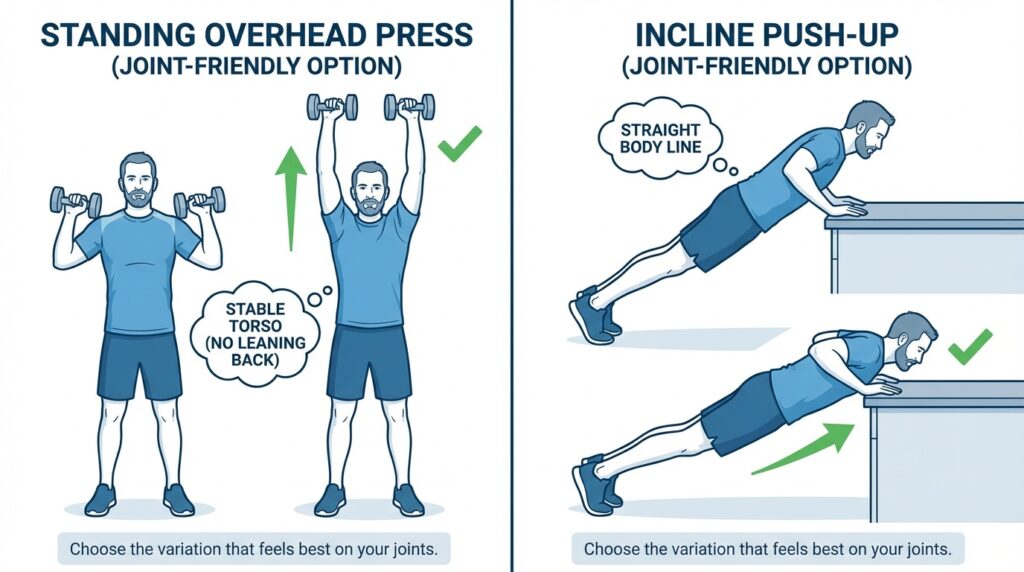
2) Upper-body combo: Overhead Press (light) or Incline Push-Up
Why it’s here: We keep pressing in the plan, but Day 3 is where you choose the version that feels best on your shoulders.
- Sets/Reps: 2–3 sets of 8–12 reps
- Rest: 60–90 seconds
- Shoulder-friendly option: incline push-up (use a counter/bench)
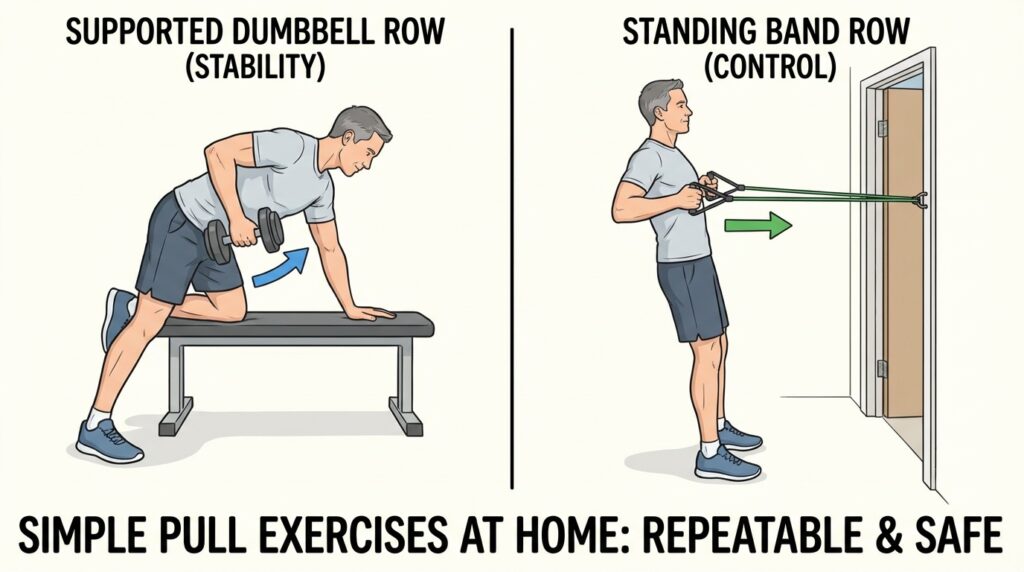
3) Back + posture: Supported Dumbbell Row (or Band Row)
- Sets/Reps: 2 sets of 10–12 reps per side
- Rest: 45–75 seconds
- Simple cue: pull, pause for 1 second, lower slowly
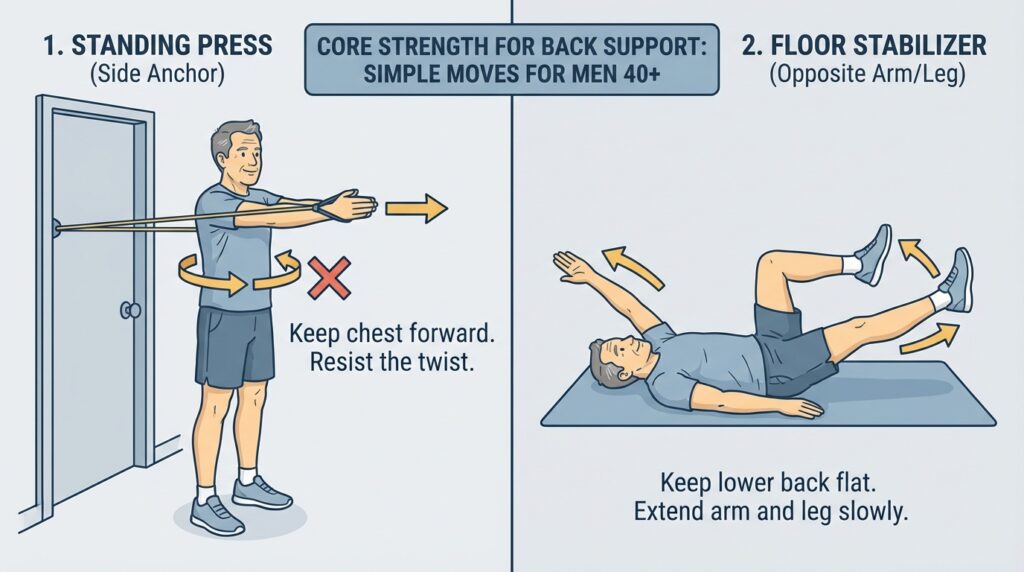
4) Core finisher: Pallof Press (band) or Dead Bug
Why it’s here: This trains your core to resist twisting—great for protecting your back and keeping your movement solid.
- Sets/Reps: 2 sets of 8–12 reps per side
- Rest: 30–60 seconds
- Simple cue: press out slowly, don’t let your body rotate
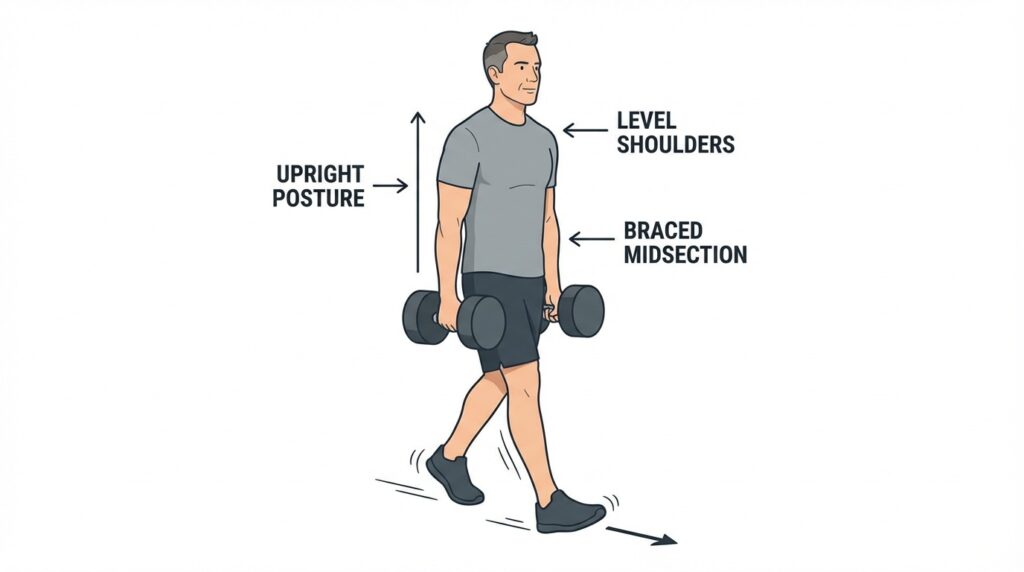
5) Carries (the “real-life strength” builder)
Carries are exactly what they sound like: pick up weight and walk. They train posture, grip, and core without a lot of joint pounding.
- Farmer carry: 3 rounds of 30–60 seconds
- Rest: 30–60 seconds between rounds
- Simple cue: stand tall, ribs down, walk slow and steady
Busy-day version (20 minutes)
- Warm-up (6 minutes)
- Dumbbell deadlift: 2 sets of 6–10
- Incline push-up (or light press): 2 sets of 8–12
- Farmer carry: 2 rounds of 30–45 seconds
Micro-action: Do the carries even if you skip everything else. Two rounds is enough to build the habit.
Recommended Equipment for Day 3


Versatile for deadlifts and carries.
Related Articles
If you’re feeling stiff or “rusty,” don’t add intensity—add mobility. This is a great companion:

One reminder: recovery drives results. If sleep is inconsistent, your joints and workouts will feel worse than they need to. Keep it simple here:
How to make this plan work (progression, recovery, and common mistakes)
The fastest way to fail a home workout plan for men over 40 is trying to “make up for lost time.” The fastest way to win is boring (in a good way): repeat the plan, make small upgrades, and recover well enough to show up again.
A simple 4-week progression (no complicated math)
- Week 1: Learn the moves. Use lighter weights. Stop with 2 reps left in the tank.
- Week 2: Add 1–2 reps per set (or a small amount of weight) on 1–2 exercises.
- Week 3: Keep the same weight and make reps cleaner/slower (especially the lowering part).
- Week 4: “Deload” week: do the same workouts but cut 1 set from each exercise.
After Week 4, restart the cycle slightly stronger than last time. That’s how you build strength without constantly irritating joints.
What “deload” means (plain English)
A deload is a planned easier week. It’s not quitting. It’s how you keep making progress without your body feeling beat up. Think of it like backing off the gas so the engine lasts longer.
Recovery basics (the stuff that actually matters)
- Sleep: if sleep is short or broken, everything feels harder—joints included. Use: Sleep Optimization for Men Over 40.
- Food: you don’t need a perfect diet. You need repeatable meals that fit your budget and schedule. Start here: The 7-Day Meal Prep System for Busy Men Over 40
- Mobility: 5–10 minutes after workouts keeps you moving better and helps you stay consistent. Reference: Flexibility and Mobility.

Flip 7 Chocolate Courage - Feel better, fast with one shake a day. FLIP 7 is an unmatched, all-in-one meal replacement SUPER FOOD powder with the most nutrient rich balance of health extending blends formulated to support whole body and mind wellness.


Common mistakes (and the calm fix)
Mistake 1
Going too heavy too soon.
Fix: Use a weight you can control for 8–12 reps and leave 1–2 reps in the tank.
Mistake 2
Skipping warm-ups.
Fix: Do the 6-minute warm-up every time. It’s “joint insurance.”
Mistake 3
Training through sharp pain.
Fix: Use the 0–10 pain rule. Swap the move, shorten the range, or lighten the load. If pain persists, consider getting checked by a qualified professional.
Mistake 4
Trying to overhaul everything at once (workouts, diet, sleep).
Fix: Pick one “non-negotiable” this week: 2 workouts, or a simple bedtime, or a basic meal plan.
Recommended for recovery Support


Targets tight spots.

Optional, well-known basic supplement for strength.

Flip 8 Performance Stack – FLIP 8 is a stimulant-free muscle growth, performance, and recovery formula designed to enhance strength, endurance, cellular energy, hydration, and recovery without caffeine or jitters.
Related Article
If you’re overwhelmed by nutrition trends, keep it simple and ignore the noise:
Micro-action: Choose one progression for next week: +1 rep on squats, +1 rep on rows, or one extra carry round.
FAQ: Home workouts for men over 40 (simple answers)

The Aquasana Claryum® 3-Stage Max Flow is a top-tier water filtration option that removes up to 99% of 78 different contaminants.
Final thoughts: keep it simple, keep it moving
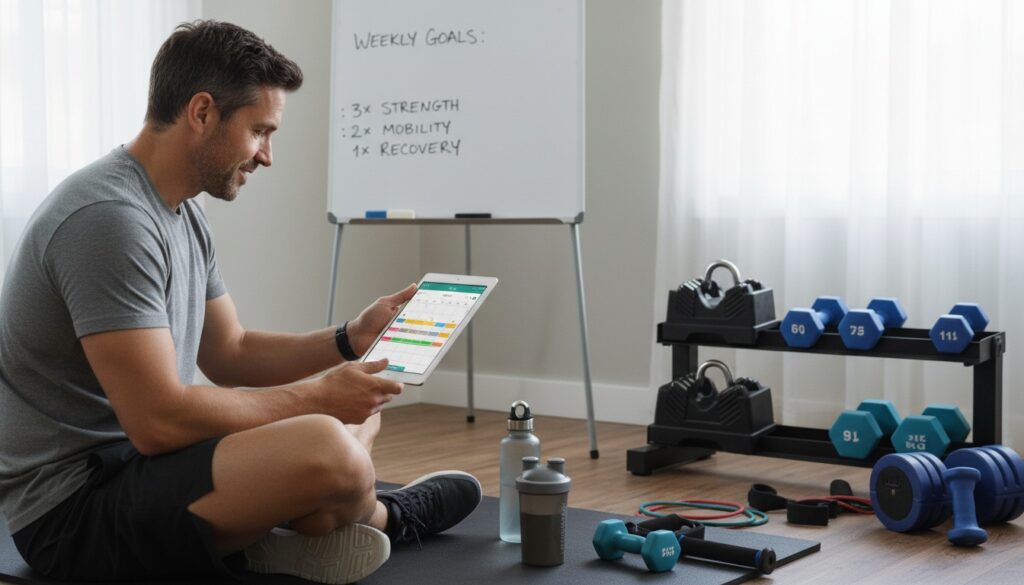
You don’t need a perfect week to make progress. You need a repeatable plan you can return to—especially when life gets busy. That’s why this home workout plan for men over 40 is built around three days, joint-friendly choices, and small upgrades over time.
Impatience with actions, patience with results.
– Naval Ravikant
Show up, do the warm-up, hit the basics, and let the results stack.
If you want the bigger framework behind this plan, revisit: Fitness for Men Over 40: The Body Reset Guide. And if you’re trying to protect your joints long-term, keep this in your back pocket: Joint Health 101.
Micro-action (right now): Put your first workout on the calendar. Day 1. One hour. That’s it.
If you want a simple “support stack” without overspending, start with the basics: bands, a mat, and dumbbells when you’re ready. Consistency first. Gear second.
Disclosure
This article contains affiliate links. If you choose to make a purchase through these links, we may earn a commission at no additional cost to you.
Important Note: The information in this post is meant to educate and inform, not to replace professional medical advice. While we’ve spent years studying health and wellness, we’re not licensed healthcare providers. Everyone’s body and circumstances are different, so what works for one person might not work for another. Always check with your doctor before starting any new exercise program or making significant lifestyle changes, especially if you have pre-existing conditions. By reading and using this information, you’re taking responsibility for your own health decisions.