5-Minute Meditation for Men Who Think They Can’t Meditate
If you’re a man who thinks you can’t meditate, you’re not alone. Maybe you’ve tried sitting cross-legged, closing your eyes, and “clearing your mind” only to find yourself thinking about work deadlines, that weird noise your car is making, or what you’re having for dinner. Your mind races. You feel restless. After two minutes, you’re done.
“You should sit in meditation for twenty minutes every day—unless you’re too busy. Then you should sit for an hour.”
— Zen proverb
Here’s the truth: meditation for men who can’t meditate isn’t about emptying your brain or achieving some zen-master state. It’s about learning simple techniques that reduce stress, improve focus, and give you back control when life feels overwhelming.
Disclosure
This article contains affiliate links. If you choose to make a purchase through these links, we may earn a commission at no additional cost to you.
Why Most Men Think They Can’t Meditate (And Why They’re Wrong)

This 5-minute meditation for beginners is designed specifically for busy men over 40 who’ve tried meditation before and thought, “This isn’t for me.” No chanting. No incense. No sitting in uncomfortable positions. Just practical stress relief that actually works.
Let’s get real about why beginner meditation for men feels impossible:
- “My mind won’t stop racing.” That’s actually normal. Meditation isn’t about stopping thoughts—it’s about noticing them without getting pulled into the drama. Think of it like watching cars drive by instead of chasing every single one.
- “I don’t have time.” You have five minutes. That’s less time than scrolling through social media or waiting for your coffee to brew. This meditation for busy men fits into the gaps you already have.
- “I can’t sit still.” Good news—you don’t have to. This technique works whether you’re sitting in your car, at your desk, or even standing in your kitchen.
- “It feels weird or too ‘spiritual.'” Strip away the mysticism and meditation is just a mental exercise—like doing push-ups for your brain. It’s about mental clarity and stress management, not religion or philosophy.
The biggest misconception? That you need to “clear your mind” completely. That’s like telling someone to stop thinking about a pink elephant—it’s impossible. Instead, meditation for men who hate meditation is about changing your relationship with your thoughts, not eliminating them.
Related Article
For more on breaking through mental blocks that keep you stuck, check out:

The Science Behind Why This Works (In Plain English)
Before we dive into the technique, here’s why simple meditation techniques actually reduce stress:
When you’re stressed, your body goes into fight-or-flight mode. Your heart races, your muscles tense, and your brain floods with cortisol (the stress hormone). Over time, this wears you down—affecting your sleep, your mood, your health, and your relationships.
Meditation for stress and anxiety activates your parasympathetic nervous system—think of it as your body’s “calm down” button. Just five minutes of focused breathing tells your brain, “We’re safe. We can relax.” Your heart rate slows. Your blood pressure drops. Your mind clears.
Studies show that even short breathing exercises can lower cortisol levels, improve focus, and boost your mood. You don’t need hours of practice to see results. You just need consistency and the right technique.
The 5-Minute Meditation Technique for Busy Minds
This is the easiest way to start meditating for beginners. No apps required (though I’ll recommend some helpful ones below). No special equipment. Just you and five minutes.
Step 1: Find Your Space (30 Seconds)
You don’t need a quiet room or a meditation cushion. You just need a place where you won’t be interrupted for five minutes. This could be:
- Your car before you walk into work
- Your office with the door closed
- Your bedroom before everyone else wakes up
- Even the bathroom if that’s your only private space
Sit comfortably. You can sit in a chair with your feet flat on the floor, lean back in your car seat, or even stand if sitting isn’t comfortable. The goal is to be relaxed but alert—not so comfortable you’ll fall asleep.
Step 2: Set Your Timer (10 Seconds)
Pull out your phone and set a timer for five minutes. Use a gentle alarm sound—nothing jarring. This removes the temptation to check the clock every thirty seconds.
If you prefer guided meditation, apps like Headspace or Calm offer excellent beginner sessions. They talk you through the process, which helps if your mind tends to wander.
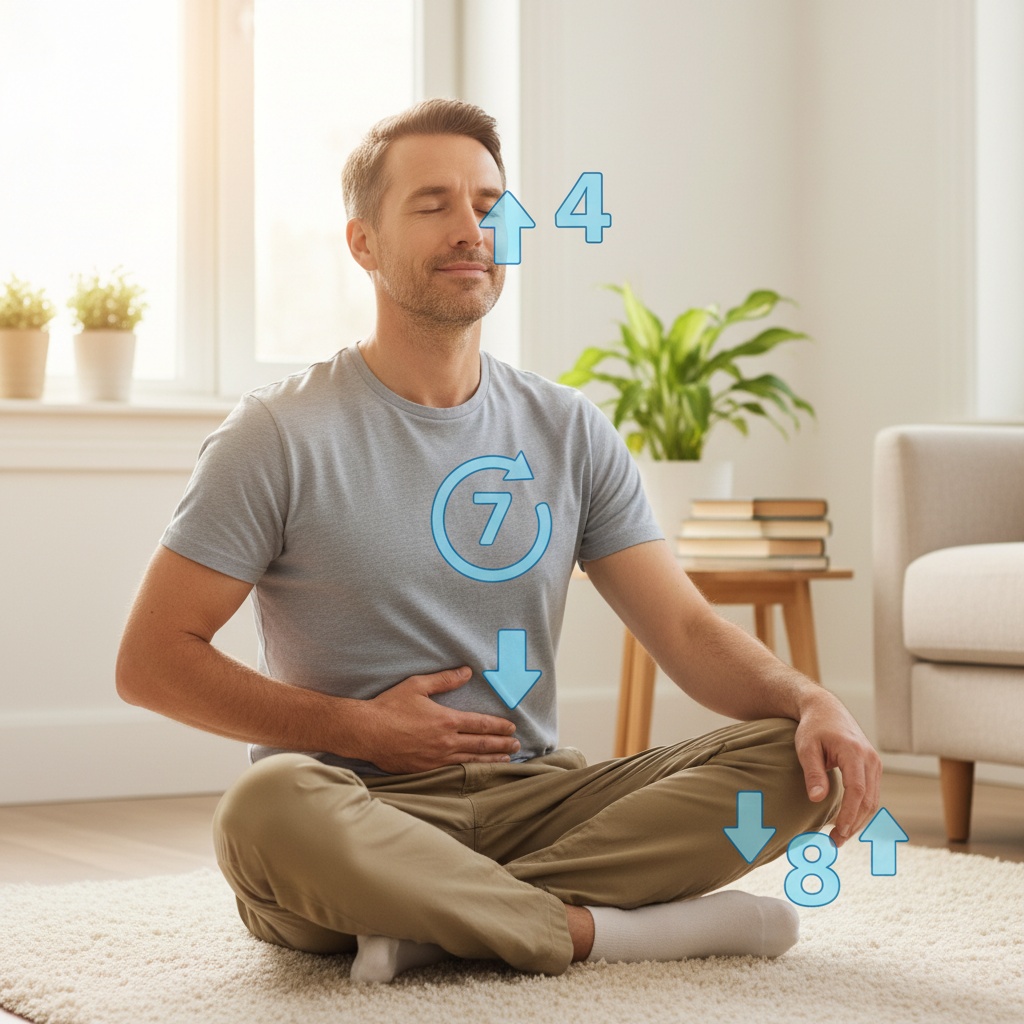
Step 3: The 4-7-8 Breathing Technique (4 Minutes)
This is the core of your 5-minute morning meditation for men. It’s called the 4-7-8 technique, and it’s one of the most effective relaxation techniques for reducing stress fast.
Here’s how it works:
- Breathe in through your nose for 4 counts. Feel your belly expand (not just your chest). Imagine you’re filling up a balloon in your stomach.
- Hold your breath for 7 counts. Don’t strain—just pause comfortably.
- Exhale slowly through your mouth for 8 counts. Make a soft “whoosh” sound if it helps. Feel the tension leaving your body.
- Repeat. That’s one cycle. Do this for the full five minutes (about 8-10 cycles).
What to do when your mind wanders: It will. That’s guaranteed. When you notice you’re thinking about work, bills, or that argument from last week, don’t judge yourself. Just notice the thought—”Oh, I’m thinking about work”—and gently bring your attention back to your breath. Count the inhales if it helps you focus.
This is mindfulness practice in action: noticing when your mind drifts and bringing it back without beating yourself up. Every time you do this, you’re building mental muscle.
Step 4: Ease Back In (30 Seconds)
When your timer goes off, don’t jump straight back into your day. Take a moment to notice how you feel. Is your breathing slower? Do your shoulders feel less tense? Are you calmer than you were five minutes ago?
Open your eyes slowly. Stretch if you need to. Then carry that sense of calm your mind into whatever comes next.
Making It Stick: How to Build Your Meditation Practice
The difference between meditation for men with no experience and men who actually benefit from it? Consistency. Here’s how to make this a habit:

Start Small and Stack It
Five minutes is manageable. Don’t try to do twenty minutes right away—you’ll burn out. Instead, attach your meditation to something you already do every day. This is called “habit stacking.”
Examples:
- After your morning coffee: Brew your coffee, sit down, meditate for five minutes, then start your day.
- Before lunch: Close your office door, meditate, then eat.
- In your car before work: Park, meditate, then walk inside.
Related Article
For more on building sustainable routines, read The Over-40 Body Reset, which covers how small daily habits create massive long-term change.

Track Your Progress
Use a simple habit tracker to mark off each day you meditate. You can use a notebook, your phone’s calendar, or grab a dedicated habit tracker journal from Amazon. Seeing a streak of completed days is surprisingly motivating.
Notice the Benefits
Pay attention to how you feel on days you meditate versus days you skip. Do you handle stress better? Sleep more soundly? Feel more focused? These small wins reinforce the habit.
Tools and Resources to Support Your Practice
Headspace: Great for beginners. Offers guided sessions specifically for stress, sleep, and focus. The founder, Andy Puddicombe, has a no-nonsense style that appeals to skeptical men.
Mindful Mantra: Your personalised meditation experience. Perfect for seeking relaxation, healing, and self-growth.
Insight Timer (Free): Thousands of free guided meditations. You can filter by length, so finding a five-minute session is easy.

10% Happier by Dan Harris: Written by a news anchor who had a panic attack on live TV, this book breaks down meditation in a practical, relatable way. No woo-woo language—just real talk about how meditation changed his life.

The Miracle of Mindfulness by Thich Nhat Hanh: A classic introduction to mindfulness. Short, simple, and packed with practical exercises you can do anywhere.

Meditations by Marcus Aurelius: Not a how-to book, but the personal journal of a Roman emperor who practiced Stoic philosophy. It's a reminder that even the most powerful men in history used meditation-like practices to stay grounded.

Noise-canceling headphones: If you live in a noisy environment, these can help you focus. Even budget-friendly options work well.

Meditation cushion or chair: Not necessary, but if sitting on a regular chair feels uncomfortable, a cushion designed for meditation can help. Look for one with good back support.

Essential oil diffuser: Some men find that calming scents like lavender or eucalyptus help them relax. Totally optional, but worth trying if you're into it.
Troubleshooting Common Problems
Even with the best practical meditation exercises, you’ll hit roadblocks. Here’s how to handle them:
“My Mind Won’t Stop Racing”
That’s normal, especially when you’re dealing with stress and anxiety. Remember: the goal isn’t to stop thinking. It’s to notice when you’re thinking and bring your focus back to your breath. Every time you do this, you’re succeeding—even if it feels frustrating.
If racing thoughts are overwhelming, try counting your breaths. Inhale (one), exhale (two), inhale (three), and so on up to ten. Then start over. This gives your mind something to do.
“I Don’t Feel Any Different”
Benefits aren’t always immediate. Some men notice a difference after one session. Others need a week or two of consistent practice. Stick with it. The changes are often subtle at first—better sleep, less irritability, improved focus and concentration.
If you’re still not feeling it after two weeks, experiment with different techniques. Try a guided meditation app, a longer session (10 minutes), or meditating at a different time of day.
“I Fall Asleep Every Time”
This usually means you’re either exhausted or too comfortable. Try meditating earlier in the day, sitting upright instead of reclining, or doing it standing up. If you’re consistently falling asleep, your body might be telling you that you need more rest—listen to it.
“I Miss Days and Feel Guilty”
Life happens. You’ll miss days. Don’t let guilt derail your progress. Just start again the next day. One missed session doesn’t erase the benefits you’ve already built.
Related Article
For strategies on staying consistent even when life gets chaotic, check out:

Beyond the Basics: What Comes Next

Once you’ve mastered this 5-minute meditation for beginners, you can expand your practice:
- Increase the time: Move from five minutes to ten, then fifteen. The longer you practice, the deeper the benefits.
- Try different techniques: Body scan meditation, visualization, walking meditation. There are dozens of styles—find what resonates with you.
- Join a group: Many communities offer free or low-cost meditation groups. Practicing with others can deepen your commitment and provide accountability.
- Explore mindfulness in daily life: Meditation isn’t just sitting quietly. It’s bringing that same focused awareness to everyday activities—eating, walking, even washing dishes. This is where mindfulness for beginners men becomes a lifestyle, not just a practice.
Related Article
For a holistic approach to mental wellness, read The Triangle of Well-being, which shows how physical health, mental resilience, and financial stability all support each other.

Real Talk: Why This Matters for Men Over 40
Let’s be honest—life after 40 comes with unique stressors. Career pressure. Financial responsibilities. Health concerns. Relationships that require more effort. Maybe you’re dealing with aging parents, teenagers, or both. Maybe you’re questioning whether you’re on the right path.
Meditation for men over 40 isn’t about escaping these challenges. It’s about building the mental resilience to face them without burning out. It’s about creating a few minutes of quiet time in a noisy world so you can think clearly, make better decisions, and show up as the man you want to be.
This isn’t self-indulgence. It’s self-care for men—and it’s essential. You can’t pour from an empty cup. Taking five minutes to reset your nervous system isn’t weakness. It’s smart strategy.
Related Article
For more on building unshakeable confidence and mental strength, read:

Your 5-Minute Challenge
Here’s your challenge: commit to this meditation for men who can’t meditate technique for seven days. Just five minutes a day. That’s it.
Don’t worry about doing it perfectly. Don’t stress about whether you’re “good at it.” Just show up, breathe, and notice what happens.
After seven days, check in with yourself:
- Are you sleeping better?
- Do you feel less reactive to stress?
- Is your mind clearer?
- Are you more present with the people you care about?
If the answer to any of these is yes, you’ve found something worth keeping.
Final Thoughts

You don’t have to be a zen master to benefit from meditation. You don’t need to sit cross-legged on a mountaintop or chant mantras. You just need five minutes, a willingness to try, and the understanding that meditation for men who think too much is about progress, not perfection.
“The mind is everything. What you think, you become.”
— Buddha
This quick meditation for stress relief works because it’s simple, practical, and designed for real life. It fits into your schedule. It doesn’t require special equipment or training. And it meets you where you are—skeptical, busy, and looking for something that actually works.
Start tomorrow morning. Set your timer. Breathe. And give yourself permission to be five minutes calmer, five minutes clearer, and five minutes more in control.
You’ve got this. 💪
Disclosure
This article contains affiliate links. If you choose to make a purchase through these links, we may earn a commission at no additional cost to you.
Important Note: The information in this post is meant to educate and inform, not to replace professional mental health care or psychological advice. While we’ve spent years studying mental resilience and personal development, we’re not licensed mental health professionals or therapists. Everyone’s life circumstances and mental health journey are unique, so what works for one person might not work for another. If you’re experiencing serious mental health challenges, please reach out to a qualified mental health professional. Some of the strategies discussed may not be suitable for everyone, and it’s important to assess your own situation carefully. By reading and using this information, you’re taking responsibility for your own decisions. Remember, seeking help is a sign of strength, not weakness. Stay resilient!