Building Confidence After 40: Practical Steps & Real-Life Wins
The Mirror Moment
Ever looked in the mirror and wondered, “Am I still enough?” Maybe it’s after a tough workday, or during a quiet moment when everyone else is asleep. If you’re a man over 40, you’re not alone. Confidence after 40 can feel like a moving target—one day you’re on top of the world, the next, self-doubt sneaks in and makes you question your worth.
“Progress, not perfection, is how real confidence is built—one small win at a time.”
Here’s the thing: real confidence isn’t about pretending to have it all together. It’s about making small, consistent choices that build self-esteem for men—no matter where you’re starting from. In this post, we’ll walk through practical steps, real-life examples, and simple tools to help you start overcoming self-doubt and rediscover your best self.
Disclosure
This article contains affiliate links. If you choose to make a purchase through these links, we may earn a commission at no additional cost to you.
Why Confidence After 40 Matters

Turning 40 (or 50) is a milestone. For many men, it’s a time of reflection—on careers, relationships, health, and the legacy you want to leave. But it’s also a season when self-doubt can creep in, especially if you’re facing changes like career shifts, health challenges, or feeling stuck in a rut.
Why does confidence matter now more than ever?
- Better Relationships: When you believe in yourself, you show up more authentically for your partner, kids, and friends.
- Work & Finances: Confidence after 40 helps you speak up for that raise, try a new side hustle, or finally start that business idea.
- Health & Wellness: A confident mindset makes it easier to stick to healthy habits—even when motivation dips.
Quick tip: Confidence isn’t about being loud or outgoing. It’s about trusting yourself to handle whatever life throws your way.
Related Reading
Practical health tips that boost self-esteem from the inside out:
Common Confidence Killers (and How to Spot Them)
If you’ve ever caught yourself thinking, “I’m too old to change,” or “I’ve already missed my chance,” you’re not alone. These thoughts are some of the most common confidence killers for men after 40. Recognizing them is the first step to overcoming self-doubt.
Negative Self-Talk
That inner critic telling you you’re not good enough? It’s lying. Try catching those thoughts and challenging them with facts—like remembering a time you handled a tough situation well.
Comparing Yourself to Others
Social media makes it easy to feel “behind.” Remember, everyone’s journey is different—focus on your own progress, not someone else’s highlight reel.
Fear of Failure
Worrying about making mistakes can keep you stuck. But every successful person has failed—and learned from it. Think of failure as feedback, not a final verdict.
Physical Burnout
Feeling tired or run-down? Sometimes low energy is mistaken for low confidence. Taking care of your body (even small steps) can make a big difference.
Example: Mike, a 48-year-old shift worker, used to compare himself to younger colleagues. Once he started focusing on his own small wins—like learning a new skill at work—his self-esteem improved, and so did his confidence.
Practical Steps to Build Confidence After 40
Building confidence isn’t about overhauling your life overnight. It’s about stacking up small, practical wins—day after day.
Here are some simple, proven steps you can start using right now:
Start a “Wins” Journal: Each evening, jot down one thing you did well that day. It could be as simple as helping a friend or finishing a project at work. Over time, these notes remind you of your progress and help build self-esteem for men.
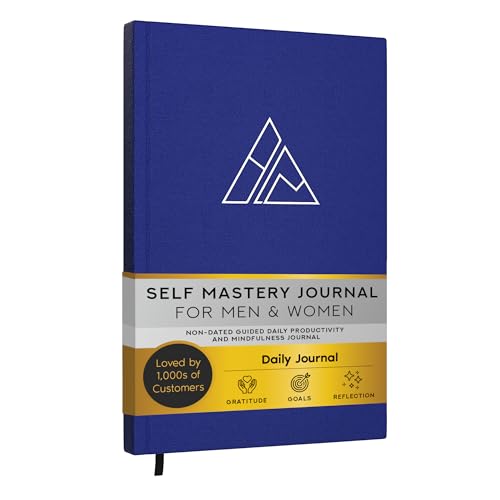
Recommended tool: Self Mastery Journal – A classic, affordable journal to keep your wins in one place.
Practice Positive Self-Talk: When you catch yourself thinking, “I can’t,” swap it for, “I’m learning.” This simple shift, known as a mindset hack, can help you start overcoming self-doubt one thought at a time.
Example: Instead of “I’m not good with money,” try, “I’m learning one new thing about finances each week.”
Move Your Body: Physical activity isn’t just for fitness—it boosts your mood and confidence. You don’t need a gym membership; a daily walk or quick home workout works wonders. Check out our Beginner Strength Training Guide.
Set Micro-Goals: Break big goals into tiny steps. Want to eat healthier? Start by adding one serving of veggies to your lunch. Small goals are easier to stick with—and every win builds momentum.
Connect with Others: Share your journey with a friend, partner, or online group. Community support makes every step easier—and you might inspire someone else along the way.
Remember: Confidence after 40 is built through daily actions, not overnight transformations. Celebrate every small win—you’re making progress, even if it doesn’t feel huge yet.

Real-Life Stories: Small Wins That Built Big Confidence
Sometimes, the best way to learn is through someone else’s story. Here are a few examples of men over 40 who found practical ways to boost their confidence after 40—one micro-action at a time:
Mike, 48 – The Shift Worker: Mike always felt overlooked at work. Instead of trying to change everything at once, he started volunteering for small tasks in his team meetings. Each time he spoke up, his self-esteem grew. After a few months, he was offered a lead role on a new project.
Read: The Power of Small Wins: Building Unstoppable Momentum
James, 52 – The Busy Dad: James struggled with self-doubt after a career change. He set a micro-goal to walk 10 minutes every morning before his kids woke up. That small commitment helped him feel more in control—and soon, his energy and outlook improved.
Check out: Daily Wellness Habits for Busy Professionals
David, 45 – The Aspiring Writer: David wanted to share his story but doubted anyone would care. He started journaling his thoughts each night, using a simple leather journal (see on Amazon). Over time, he gained the confidence to submit an article to a local magazine—and it was published!
Explore: The Power of Progressive Mindset
Takeaway: Every journey is unique, but the path to confidence after 40 is built on small, repeated actions. Whether it’s speaking up at work, caring for your body, or simply writing down your thoughts—these steps all add up.

Tools & Products to Support Your Confidence Journey
Sometimes, having the right tools can make all the difference. Here are a few practical, affordable products that can help you build confidence after 40—no matter your starting point or budget:

Writing down your daily wins or thoughts helps track progress and boost self-esteem for men.
Small-space, beginner-friendly strength training at home. Building physical strength often translates to more confidence in all areas.

Track your steps, sleep, and activity. Seeing your progress in real time is a great motivator for sticking with healthy habits.

A down-to-earth guide to building better habits, one small step at a time.
Tip: You don’t need to buy everything at once. Start with one tool that fits your needs and budget. Even small investments in yourself can lead to big results.


Celebrating Progress & Next Steps
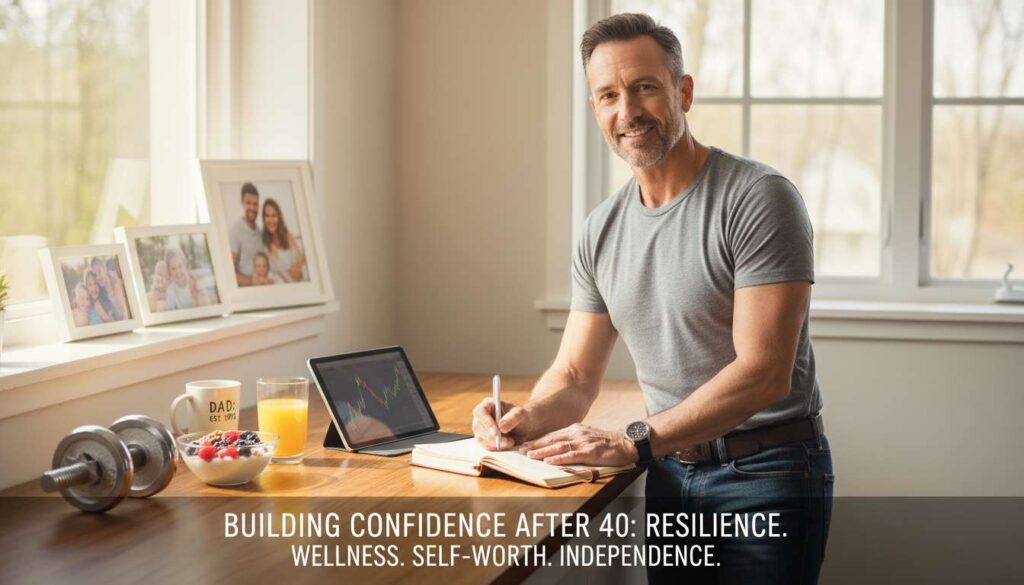
If you’ve made it this far, you’re already taking steps to build confidence after 40. Remember, it’s not about huge leaps—it’s about steady, sustainable progress. Every time you challenge a negative thought, try a new habit, or write down a win, you’re moving forward.
“Confidence isn’t about being perfect. It’s about showing up, trying, and celebrating every small win along the way.”
What’s your next step? Maybe it’s picking up a journal, trying a short home workout, or sharing your story with someone you trust. Whatever you choose, know that you’re not alone—and that every action counts.
Disclosure
This article contains affiliate links. If you choose to make a purchase through these links, we may earn a commission at no additional cost to you.
Important Note: The information in this post is meant to educate and inform, not to replace professional mental health care or psychological advice. While we’ve spent years studying mental resilience and personal development, we’re not licensed mental health professionals or therapists. Everyone’s life circumstances and mental health journey are unique, so what works for one person might not work for another. If you’re experiencing serious mental health challenges, please reach out to a qualified mental health professional. Some of the strategies discussed may not be suitable for everyone, and it’s important to assess your own situation carefully. By reading and using this information, you’re taking responsibility for your own decisions. Remember, seeking help is a sign of strength, not weakness. Stay resilient!