Workplace Wellness: Burnout & Balance (For Men Who Are Tired of “Pushing Through”)
You ever notice how burnout doesn’t usually show up like a dramatic crash?
Most of the time it shows up like a quiet, slow leak.
You’re still going to work. Still paying bills. Still showing up for your people. Still “handling it.”
But you’re doing it with less patience. Less energy. Less sleep. Less joy.
And the scary part? You start calling that normal.
That’s why this post is about workplace wellness in the real world—not the corporate poster version. Not the “take a bubble bath” version. The version that matters for men who are carrying a lot: work pressure, family pressure, money pressure, and the pressure to not look like you’re struggling.
If you’ve been running on fumes, feeling drained after work every day, or snapping at people you actually care about… you’re not weak. You’re not broken.
You might just be dealing with burnout.
Disclosure
This article contains affiliate links. If you choose to make a purchase through these links, we may earn a commission at no additional cost to you.
What we’re covering (simple + practical)
- Signs of burnout (what it looks like in real life, not jargon)
- Burnout vs. stress (quick difference with examples)
- A simple way to rebuild work-life balance for men without quitting your job or “changing your whole life”
- A 10-minute reset you can start today
- Micro-actions you can use this week to feel more like yourself again
- Amazon affiliate recommendations that support recovery (sleep, stress, mobility, focus)
The “Push Through” Trap: How Burnout Sneaks Up on Good Men
A lot of men don’t wake up and say, “I think I’m experiencing burnout.”
They wake up and say things like:
- “I’m just tired.”
- “It’s been a busy month.”
- “Once this project is done, I’ll breathe.”
- “I’ll get back to the gym when life calms down.”
- “I’m fine. I just need to push through.”
That last one is the trap.
Because “push through” works… for a while.
But eventually, your body and brain start collecting receipts.
And burnout is what happens when the receipts come due.
Quick definition (no corporate speak)
Burnout is more than being stressed.
Stress is usually: too much pressure right now.
Burnout is: too much pressure for too long, with not enough recovery.
Think of it like this:
- Stress is sprinting harder than usual.
- Burnout is sprinting so long you forget what walking feels like.
And if you’re a man over 40, burnout can hit even harder because recovery isn’t as automatic as it used to be. Sleep debt stacks. Joint pain nags. Motivation gets harder to “force.” And the mental load (kids, aging parents, finances, career pressure) doesn’t politely wait its turn.
Related Article
If this is hitting home, you’ll like this related read on building toughness without breaking yourself:

A quick “reality check” (micro-action)
Before we go further, here’s a 30-second check-in. No journaling required.
Answer this honestly:
- Do you feel tired even after sleep?
- Do you feel more irritated than you used to?
- Do you feel like you’re just “getting through” the day?
- Do you struggle to relax even when you have time?
- Do you feel less motivated by things that used to matter?
If you said “yes” to 2 or more, don’t panic. Just take it seriously.
Because workplace wellness isn’t about perfection—it’s about catching the problem early, while you still have options.
Signs of Burnout (What It Looks Like in Real Life)
Burnout doesn’t always look like collapsing on the couch and not moving for three days.
A lot of the time, it looks like you still “function”… but everything feels heavier than it should.
So let’s make this simple. Here are common signs of burnout—explained in plain language—with real-life examples.
1) Physical signs (your body waving the red flag)
- You’re tired even after sleep (or you wake up already drained).
- Your sleep is lighter—you fall asleep but wake up at 2–4am thinking about work.
- More aches and tightness (neck, shoulders, low back, hips) even if you didn’t do anything “hard.”
- Headaches or a tight jaw from clenching.
- More cravings for sugar, energy drinks, fast food—because your body is hunting for quick fuel.
Real-life example: You used to bounce back after a rough week. Now it takes you all weekend just to feel “okay” again… and Monday hits like a truck.
Micro-action (2 minutes): “Body scan reset”
- Drop your shoulders away from your ears.
- Unclench your jaw (tongue relaxed, teeth not touching).
- Take 3 slow breaths: in through the nose for 4 seconds, out for 6 seconds.
Related Article
If sleep is the weak link, start here:


2) Mental signs (brain fog, forgetfulness, decision fatigue)
Burnout can make a capable man feel like he’s losing his edge.
- Brain fog (you read the same email twice and it still doesn’t land).
- Forgetfulness (keys, appointments, what you walked into the room for).
- Decision fatigue (even simple choices feel annoying).
- Overthinking (you replay conversations and can’t shut it off).
Real-life example: You sit down to do one task and suddenly you’re scrolling, snacking, or reorganizing your desk—anything except the thing you need to do.
If this is you, you’re not lazy. Your brain is overloaded.
3) Emotional signs (irritability, numbness, “short fuse” mode)
- Irritability (small things feel personal).
- Numbness (not sad, not happy… just flat).
- Less patience with your kids, partner, coworkers, or customers.
- Less enjoyment in hobbies you used to like.
Real-life example: You sit down to do one task and suddenly you’re scrolling, snacking, or reorganizing your desk—anything except the thing you need to do.
This is a big reason work-life balance for men matters. Not because it’s trendy—because the people you love shouldn’t only get the leftovers of you.
Related Article
If burnout has been messing with your confidence:

4) Work signs (procrastination, mistakes, “Sunday night anxiety”)
- Procrastination (you avoid tasks you used to handle easily).
- More mistakes (because your attention is chopped up).
- Lower tolerance for people and problems.
- Sunday night anxiety (that heavy feeling before the week starts).
- You’re always “on”—even off the clock, your mind is still at work.
Micro-action (5 minutes): “End-of-day shutdown”
- Write down the top 3 tasks for tomorrow (not 12).
- Write down one worry that’s looping in your head.
- Next to it, write the next action (even if it’s small).
Related Article

Burnout vs. Stress (Simple Difference + Examples)
Stress is usually: too much pressure right now.
Burnout is: too much pressure for too long, with not enough recovery.
The simplest way to tell (a quick “finish line” test)
- Stress: “Once this is over, I’ll feel better.”
- Burnout: “Even when it’s over, I don’t feel better.”
If you’re in the second one, you don’t need more motivation. You need more recovery—and a better system for work-life balance for men that fits real life.
Why this matters for workplace wellness
Workplace wellness isn’t just about perks. It’s about whether your daily work setup (schedule, boundaries, workload, expectations) allows you to stay healthy over time.
Because if your job requires you to run at 90% every day, eventually your body will force you to stop—through illness, injury, anxiety, depression, or a total crash.
And here’s the part nobody likes to say out loud: burnout is expensive. It costs energy, sleep, performance, and relationships.
Related Article
If money pressure is part of what’s keeping you stuck:


Work-Life Balance for Men: The 10-Minute Reset
Real balance is simple:
Balance is when work stops stealing recovery.
This is a 10-minute routine you can do most days to support workplace wellness and start pulling yourself out of burnout.
Minute 1–2: Downshift breathing
- In through your nose for 4 seconds
- Out for 6 seconds
Minute 3–6: Tension release (pick 2 moves)
- Neck/upper trap stretch (30 seconds each side)
- Hip flexor stretch (30 seconds each side)
- Child’s pose (60 seconds)
- Thoracic rotation (10 slow reps each side)
Minute 7–9: Micro-movement (choose one)
- Low energy: 10 bodyweight squats + 10 wall push-ups
- Medium energy: 2 rounds of 10 squats + 10 push-ups + 20-second plank
- High energy: a brisk 5-minute walk outside
Minute 10: Tomorrow anchor (stop the mental carryover)
- One thing I’m doing tomorrow that makes my life easier is: ______
- One boundary I’m holding tomorrow is: ______
Examples:
- “I’m packing lunch so I don’t live on gas station food.”
- “No work email after 7pm.”
- “I’m not saying yes to extra tasks until I check my schedule.”
This is how you build work-life balance for men—one small boundary at a time.


Micro-Actions You Can Start This Week (No Big Life Overhaul)
When you’re burned out, big plans feel heavy. Heavy plans don’t get done.
So here’s the move: pick one micro-action from each category below and run it for 7 days.
1) Boundaries
- 10-minute home buffer: when you get home, don’t open email/messages for 10 minutes.
- Pause before yes: “Let me check my schedule and I’ll get back to you.”
- One hard stop per week: pick one day you stop work at a set time.
2) Energy
- Hydration anchor: drink water before caffeine.
- Protein first: aim for 20–30g protein in your first meal.
- 2-minute sunlight: step outside for 2 minutes in the morning or midday.
3) Movement
- 5-minute walk after work (no headphones).
- 10 push-ups twice a day (or wall push-ups).
- Mobility snack: hip flexor stretch + child’s pose.
4) Mental off-switch
- 2-minute brain dump: write everything down, circle the one thing you can act on tomorrow.
- One worry, one next step: write the worry and the next smallest action.
- 5-page rule: read 5 pages instead of scrolling.

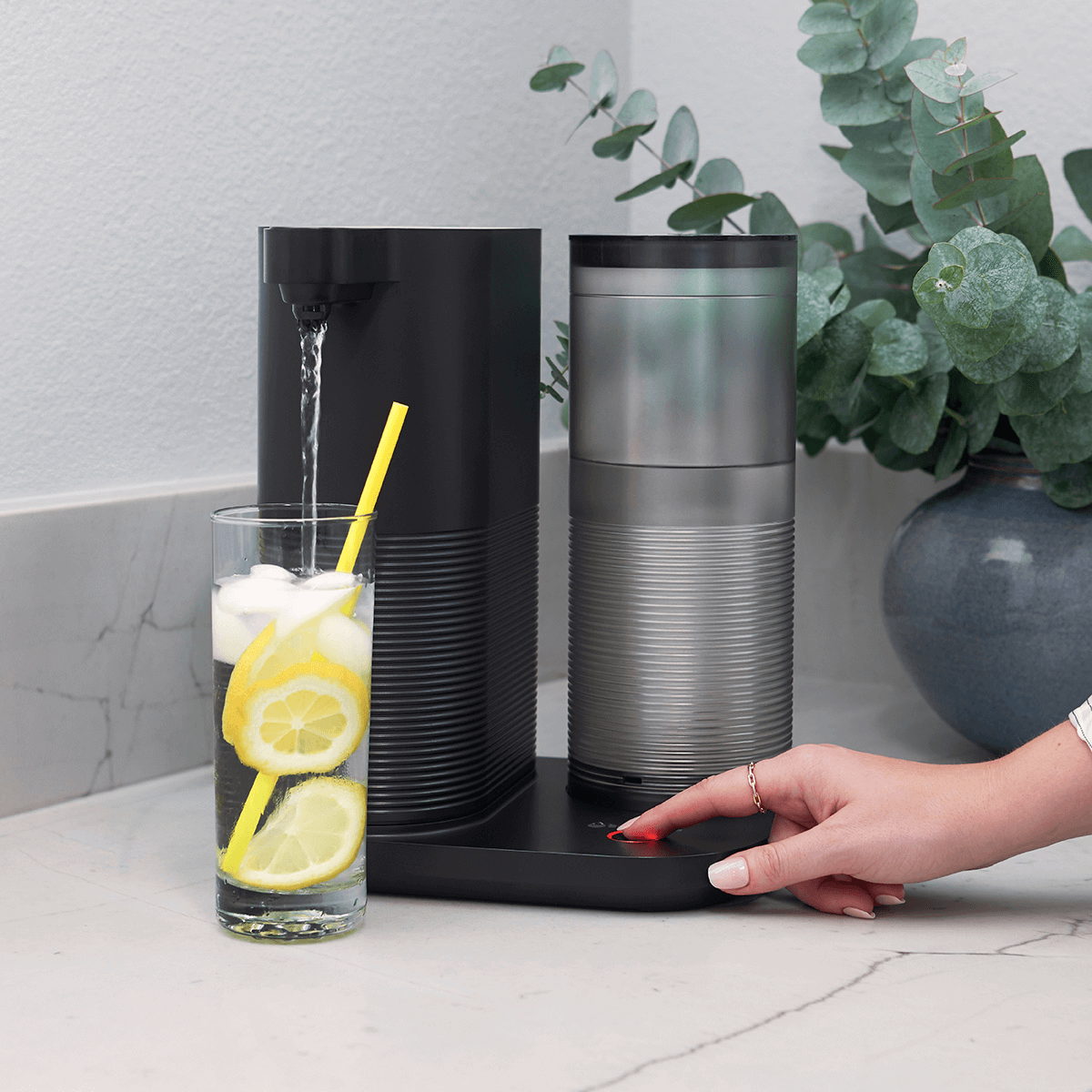
Aquasana’s fast-flowing Clean Water Machine removes 78 contaminants including 99% of lead & cysts, 15x more than the leading pitcher filter.
When to Get Extra Support (If You’re Running on Empty)
Micro-actions change lives. But sometimes burnout is past the “just tweak your routine” stage.
Getting extra support isn’t weakness—it’s strategy.
If you’re having panic attacks, severe depression, thoughts of self-harm, or you feel unsafe, please reach out for immediate help right now. You matter more than your job. You matter more than your productivity.
Signs you shouldn’t try to handle this alone
If any of these are true, it’s a strong sign to get support from a qualified professional (doctor, therapist, counselor, or other licensed provider):
- You’re having panic attacks, frequent chest tightness, or you feel like you can’t breathe normally.
- You’re not sleeping for days at a time (or sleep is consistently terrible).
- You’re using alcohol, food, or other habits to numb out most nights.
- You feel hopeless, deeply depressed, or like you don’t care if you wake up.
- You’re having thoughts of self-harm.
If you’re “not there,” but you’re not okay either
A lot of men live in this middle zone:
- You’re functioning… but barely.
- You’re showing up… but you’re not present.
- You’re getting things done… but it costs you everything.
This is where work-life balance for men becomes a decision, not a wish.
And it usually starts with one honest conversation.
Micro-action (today): tell one person you trust the truth in one sentence:
- “I’ve been running on empty and I need to make some changes.”
- “I’m not okay lately. I’m overloaded.”
- “I need help getting my head and energy back.”
Workplace wellness move: what to do at work (without oversharing)
You don’t have to tell your boss your whole life story.
But you can advocate for yourself in a way that protects your health and your income.
Pick one:
- Clarify priorities: “I can take on X and Y this week. Which one is the top priority?”
- Ask for a timeline reset: “Given the current workload, what deadline is flexible?”
- Set a communication boundary: “I’ll respond to messages during work hours unless it’s urgent.”
This is not being difficult. This is being sustainable.

Closing: Burnout Isn’t a Character Flaw—It’s a Signal
If you take one thing from this post, let it be this:
Burnout isn’t proof you’re weak. It’s proof you’ve been strong for too long without enough recovery.
And the way back isn’t some massive life overhaul.
It’s a series of small decisions that rebuild your capacity:
- A boundary that protects your evenings.
- A 10-minute reset that tells your body it can exhale.
- A simple plan for tomorrow so your brain can stop spinning.
- One conversation that gets you support instead of isolation.
This is workplace wellness in real life. This is how you rebuild work-life balance for men. And this is how you climb out of burnout—one micro-action at a time.
Your next step (pick one)
- Pick one sign from the burnout list that hit you hardest and write it down.
- Pick one micro-action from the 10-minute reset and do it today.
- Pick one boundary you’ll hold this week (even if it’s small).
Question for you: Which one hits you hardest right now—exhaustion, irritability, or brain fog?
Disclosure
This article contains affiliate links. If you choose to make a purchase through these links, we may earn a commission at no additional cost to you.
Important Note: The information in this post is meant to educate and inform, not to replace professional mental health care or psychological advice. While we’ve spent years studying mental resilience and personal development, we’re not licensed mental health professionals or therapists. Everyone’s life circumstances and mental health journey are unique, so what works for one person might not work for another. If you’re experiencing serious mental health challenges, please reach out to a qualified mental health professional. Some of the strategies discussed may not be suitable for everyone, and it’s important to assess your own situation carefully. By reading and using this information, you’re taking responsibility for your own decisions. Remember, seeking help is a sign of strength, not weakness. Stay resilient!