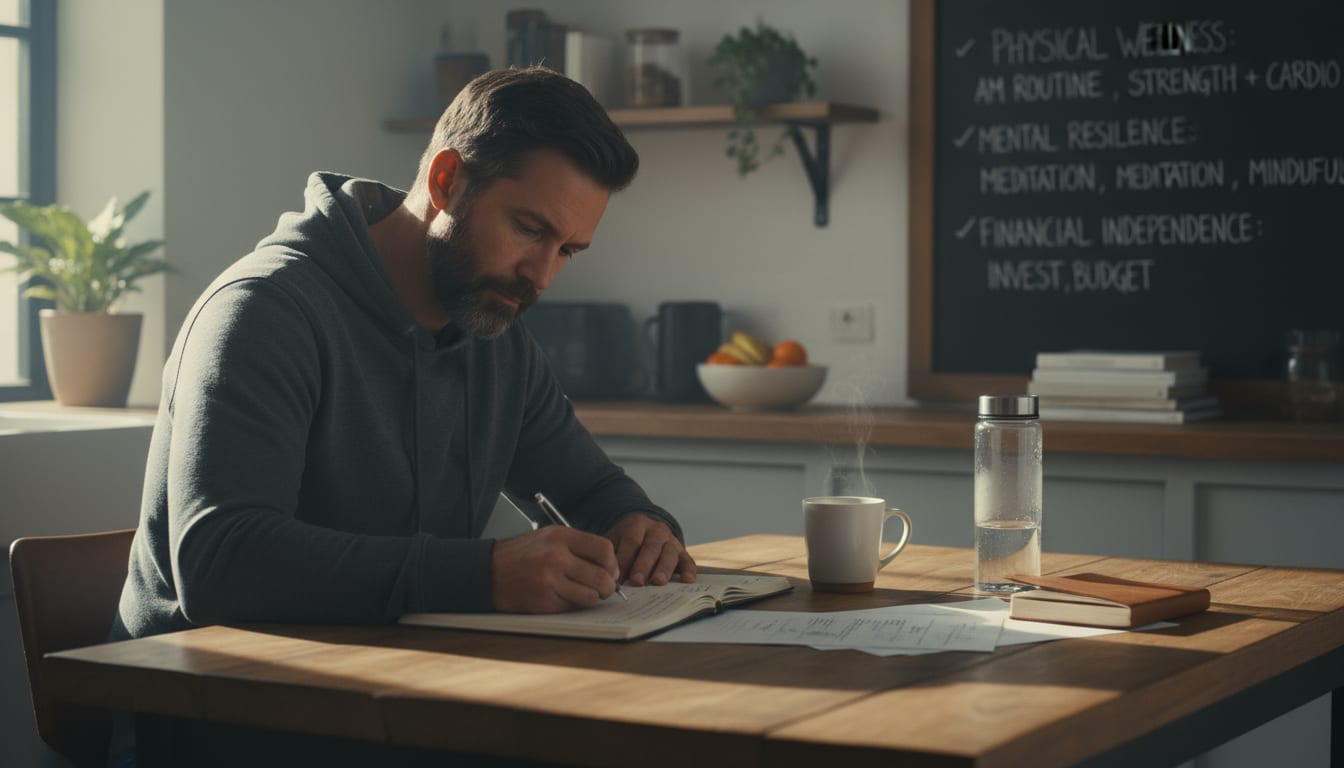
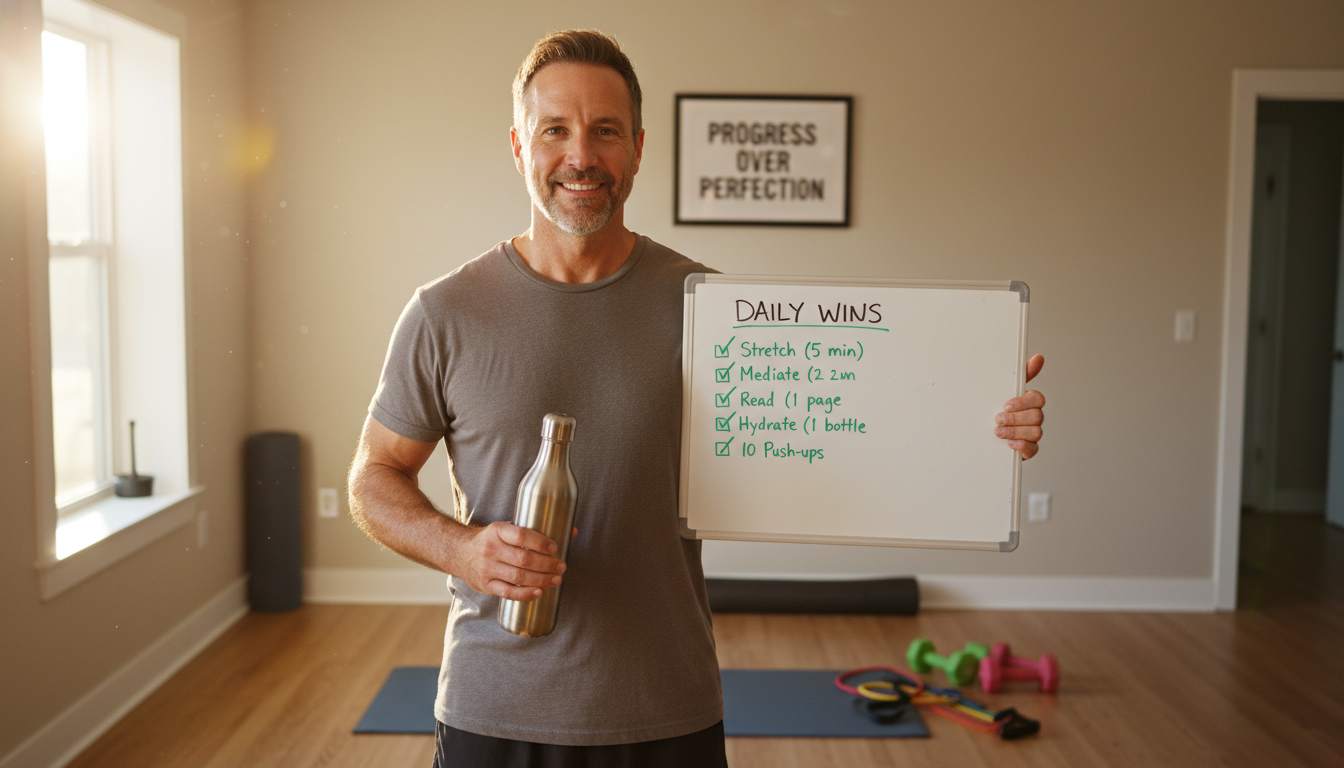
Meditation for Skeptics: A Practical Approach
Think meditation is just for yoga instructors, spiritual gurus, and people who burn incense all day? Think again. If you’re a guy in your 40s or 50s who’s skeptical about meditation but curious about reducing stress and gaining mental clarity, this guide is for you. No chanting, no mysticism—just practical meditation techniques that actually work.
“The thing about meditation is: You become more and more you.”
— David Lynch
Let’s cut through the noise and get to what meditation really is: a simple practice of focusing your mind to reduce stress and gain clarity. Think of it as a mental reset button you can press anytime, anywhere. And the best part? You don’t need special equipment, a quiet mountaintop, or even much time to get started.
Disclosure
This article contains affiliate links. If you choose to make a purchase through these links, we may earn a commission at no additional cost to you.
What Is Meditation in Simple Terms?

Meditation is simply the practice of training your mind to focus and redirect your thoughts. That’s it. No religion required, no special beliefs needed. It’s like going to the gym for your brain—you’re building mental strength, focus, and resilience through regular practice.
Here’s what meditation is NOT:
- It’s not about emptying your mind completely (that’s nearly impossible)
- It’s not religious or spiritual unless you want it to be
- It’s not about sitting in uncomfortable positions for hours
- It’s not only for “calm” people who never get stressed
Meditation for beginners over 40 is about finding practical ways to manage stress, improve focus, and build the mental resilience you need to tackle life’s challenges. Whether you’re dealing with work pressure, financial stress, or just the general chaos of modern life, meditation offers real, science-backed benefits.
Why Should Skeptics Care About Meditation?
If you’re skeptical, you’re probably asking: “Does meditation really work, or is it just another wellness trend?” Fair question.
Let’s look at what meditation actually does, backed by research:
Stress Relief: Meditation activates your body’s relaxation response, lowering cortisol (your stress hormone) and helping you feel calmer. It’s like having a natural stress reliever you carry everywhere.
Better Focus: Regular meditation improves your ability to concentrate and stay on task. In a world full of distractions, that’s a superpower worth developing.
Improved Sleep: Meditation helps quiet the racing thoughts that keep you awake at night. Many men over 40 struggle with sleep—meditation can be a game-changer.
Mental Clarity: By training your mind to focus, you make better decisions and think more clearly under pressure. This ties directly into building unshakeable confidence in your 40s and beyond.
Physical Health Benefits: Lower blood pressure, reduced inflammation, and better immune function are all linked to regular meditation practice.
The science is clear: meditation isn’t woo-woo nonsense. It’s a practical tool for managing stress and improving your mental health—two things every man over 40 needs in his toolkit.
How to Start Meditation: Simple Techniques That Work
Ready to try meditation for beginners? Here are three practical techniques you can start today. No experience needed, no special equipment required.
1. The 5-Minute Breathing Exercise
This is the easiest meditation technique and perfect for skeptics. Breathing exercises are controlled breathing patterns that calm your nervous system naturally.
How to do it:
- Sit comfortably in a chair or on your couch—no need for a special meditation cushion (though if you want one, the The Hugger Mugger Zabuton Meditation Cushion is affordable and comfortable)
- Close your eyes or keep them slightly open, looking down
- Breathe in slowly through your nose for a count of 4
- Hold your breath for a count of 4
- Exhale slowly through your mouth for a count of 6
- Repeat for 5 minutes
That’s it. Your mind will wander—that’s completely normal. When it does, just notice it and bring your attention back to your breathing. Think of your breath as an anchor keeping you grounded in the present moment.
This simple practice is one of the most effective stress management techniques you can learn. Do it first thing in the morning, during your lunch break, or before bed.
2. Body Scan Meditation for Tension Relief
A body scan is like doing an inventory of where you’re holding stress in your body. It’s perfect for guys who carry tension in their shoulders, neck, or back.
How to do it:
- Lie down or sit in a comfortable position
- Close your eyes and take three deep breaths
- Starting at your toes, mentally check in with each part of your body
- Notice any tension without trying to fix it—just observe
- Slowly move up through your feet, legs, hips, stomach, chest, arms, shoulders, neck, and head
- Spend about 30 seconds on each body part
- When you notice tension, breathe into that area and imagine it releasing
This technique takes about 10-15 minutes and is incredibly effective for relaxation. It’s also a great way to improve your mind-body connection and understand how stress affects you physically.
If you prefer guided meditation (following along with audio instructions), the Calm app or Headspace both offer excellent body scan meditations. For a budget-friendly option, YouTube has thousands of free guided meditations.
Try Ennora’s binaural beats meditation. It’s a scientifically-backed audio technology that helps your brain achieve specific states like deep relaxation or enhanced focus.

Remember, these are optional. You can start meditation at home with absolutely nothing but yourself and 5 minutes. Don’t let lack of equipment become an excuse not to start.
3. Walking Meditation (For Guys Who Can’t Sit Still)
If sitting still feels impossible, walking meditation is your answer. This is mindfulness in motion—perfect for active guys who think meditation isn’t for them.
How to do it:
- Find a quiet place to walk—your backyard, a park, or even a hallway
- Walk at a natural, comfortable pace
- Focus on the physical sensations: your feet touching the ground, your arms swinging, the air on your skin
- When your mind wanders to your to-do list or worries, gently bring attention back to the act of walking
- Continue for 10-20 minutes
Walking meditation combines the mental benefits of meditation with light physical activity. It’s a practical meditation exercise that fits naturally into your day—do it during your lunch break or after dinner.
For outdoor walks, a good pair of comfortable walking shoes makes a difference. The New Balance 990v5 offers excellent support for men over 40.
Common Objections to Meditation (And How to Overcome Them)

“I Don’t Have Time to Meditate”
This is the number one excuse, and it’s understandable—you’re busy. But here’s the truth: meditation for busy people doesn’t require hours. Five minutes is enough to see benefits. You spend more time scrolling social media or watching TV commercials.
Start with just 5 minutes a day. Set a timer on your phone. That’s less time than it takes to make coffee. As you build the habit, you can gradually increase to 10 or 15 minutes if you want—but you don’t have to.
The key is consistency, not duration. Five minutes daily beats an hour once a week. This principle applies to all aspects of developing a progressive mindset—small, consistent actions create lasting change.
“My Mind Won’t Stop Racing”
Good news: that’s completely normal. The goal of meditation isn’t to stop your thoughts—it’s to change your relationship with them. Your mind is designed to think; trying to force it to be blank is like trying to stop your heart from beating.
Instead, think of meditation as noticing when your mind wanders and gently bringing it back to your focus point (your breath, your body, your steps). Every time you notice your mind has wandered and bring it back, you’re actually succeeding at meditation. That’s the practice.
It’s like training a puppy—you don’t get angry when it wanders off; you just gently guide it back. Be patient with yourself. This gets easier with practice.
“Meditation Feels Weird or Uncomfortable”
Anything new feels weird at first. The first time you lifted weights, drove a car, or gave a presentation probably felt awkward too. That discomfort is just unfamiliarity, not a sign that meditation isn’t for you.
Start small and build gradually. Don’t force yourself into uncomfortable positions or try advanced techniques right away. Use the simple breathing exercise for a week before moving to anything else. Give yourself permission to be a beginner.
If physical discomfort is the issue—back pain, stiff knees, etc.—you don’t have to sit cross-legged on the floor. Sit in a comfortable chair with back support. The Florensi Meditation Cushion can also help if you prefer floor sitting but need extra support.
“I’m Too Stressed to Meditate”
This is like saying you’re too dirty to take a shower. Stress is exactly why you should meditate. Meditation is one of the most effective stress relief techniques available, and it’s free.
If you’re feeling overwhelmed, start with just 2-3 minutes of breathing exercises. That’s all. You can handle 2 minutes, no matter how stressed you are. Those few minutes of focused breathing will actually help you think more clearly and handle your stress better.
For comprehensive strategies on managing stress, check out our guide on stress-proofing your life with advanced mental strategies.
Recommended for Comfort


Remember, these are optional. You can start meditation at home with absolutely nothing but yourself and 5 minutes. Don’t let lack of equipment become an excuse not to start.
Building Your Meditation Practice: A 30-Day Starter Plan
Here’s a practical, no-nonsense plan to build a meditation habit over the next month:
Week 1: Foundation (Days 1-7)
- Practice the 5-minute breathing exercise once daily
- Pick the same time each day (morning works best for most people)
- Don’t judge yourself—just show up
Week 2: Consistency (Days 8-14)
- Continue the 5-minute breathing exercise
- Add a second 5-minute session if you want (optional)
- Notice any changes in your stress levels or sleep quality
Week 3: Expansion (Days 15-21)
- Try the body scan meditation 2-3 times this week
- Continue daily breathing exercises on other days
- Experiment with different times of day to find what works best
Week 4: Integration (Days 22-30)
- Mix all three techniques throughout the week
- Increase session length to 10 minutes if it feels right
- Reflect on what’s working and what isn’t
This gradual approach prevents burnout and builds sustainable habits. Remember, meditation is a practice, not a performance. There’s no “perfect” meditation—there’s only showing up consistently.
Frequently Asked Questions About Meditation for Skeptics
Recommended for Focus


Great noise cancellation at a fraction of the price.

Creates a consistent sound environment.
Remember, these are optional. You can start meditation at home with absolutely nothing but yourself and 5 minutes. Don’t let lack of equipment become an excuse not to start.
Integrating Meditation Into Your Wellness Routine
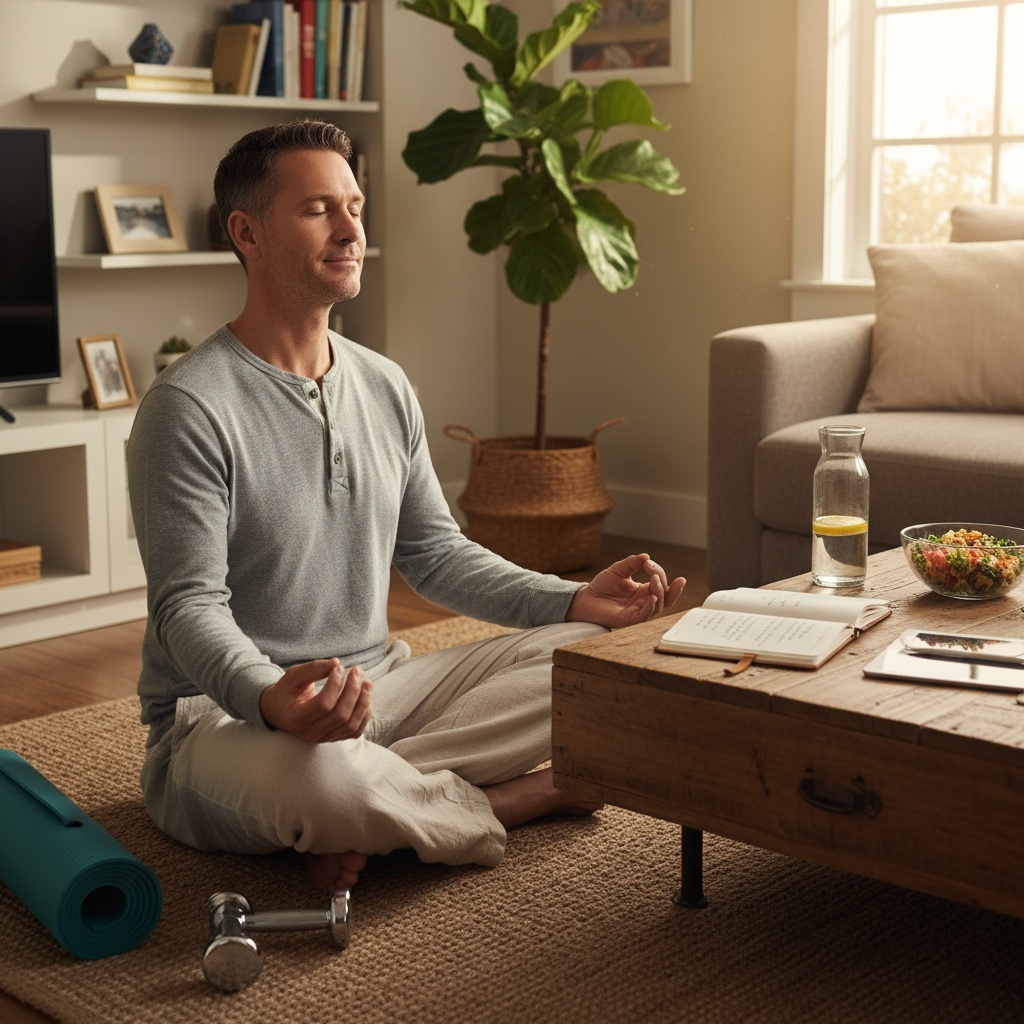
Meditation isn’t a standalone practice—it’s one piece of your overall wellness strategy. For maximum impact, combine meditation with other healthy habits:
Physical Wellness: Meditation complements your fitness routine by improving focus and reducing exercise-related stress. Check out our guide on the over-40 body reset for a comprehensive approach to physical health.
Mental Resilience: Meditation is a cornerstone of mental strength. Pair it with other mindset practices from our mindset mastery guide to build unshakeable mental resilience.
Financial Independence: A calm, focused mind makes better financial decisions. Meditation can help you avoid impulsive spending and think more clearly about building wealth after 40.
This is what we call the triangle of well-being—physical wellness, mental resilience, and financial independence all working together. Meditation strengthens all three sides of that triangle.
Your Action Plan: What to Do Today
Stop overthinking and start doing. Here’s your simple 3-step action plan:
Step 1: Right now, set a timer for 5 minutes. Sit comfortably, close your eyes, and practice the breathing exercise: in for 4, hold for 4, out for 6. That’s it. You just meditated.
Step 2: Pick a consistent time tomorrow to do it again. First thing in the morning works best for most people—before the day’s chaos begins.
Step 3: Commit to 7 days. Just one week. Track it in your phone or a simple notebook. After 7 days, evaluate how you feel and decide if you want to continue.
That’s all you need to do. No complicated plans, no expensive equipment, no dramatic life changes. Just 5 minutes a day for one week.
Recommended for Learning


Practical mindfulness guide without the fluff.

Perfect book for skeptics; written by a news anchor who thought meditation was nonsense.
Final Thoughts: Give Skepticism a Break
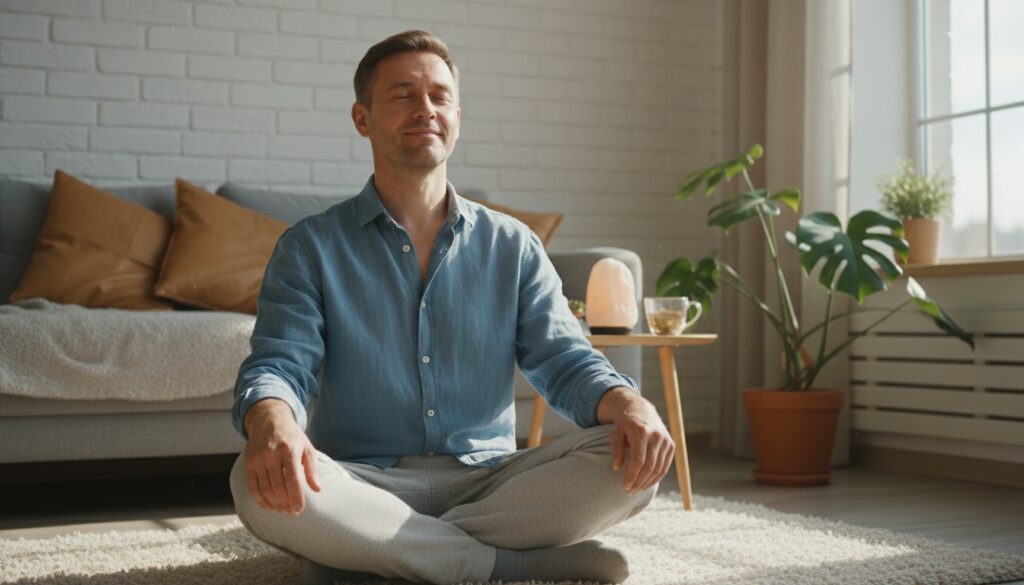
Look, skepticism is healthy. You shouldn’t believe everything you hear about wellness trends. But meditation isn’t a trend—it’s a practice that’s been around for thousands of years and is now backed by modern science.
You don’t have to become a meditation guru or sit in lotus position for hours. You just need to be willing to try something new for 5 minutes a day. That’s it. Five minutes to potentially reduce your stress, improve your focus, and build mental resilience.
The worst that happens? You spend 5 minutes breathing deeply. The best that happens? You discover a powerful tool for managing stress and improving your mental health that you can use for the rest of your life.
“You should sit in meditation for 20 minutes every day—unless you’re too busy. Then you should sit for an hour.”
— Zen proverb
Meditation for beginners over 40 isn’t about perfection—it’s about progress. It’s about showing up consistently, even when it feels awkward or your mind won’t stop racing. It’s about giving yourself the mental space to breathe, think clearly, and handle whatever life throws at you.
You’ve spent decades taking care of everyone else—your family, your career, your responsibilities. It’s time to spend 5 minutes a day taking care of your mind. You’ve got nothing to lose and everything to gain.
Start today. Your future self will thank you.
Ready to build a complete wellness strategy? Check out our 90-day transformation challenge that integrates meditation, fitness, and financial planning into one comprehensive plan. It’s never too late to make a change.
Disclosure
This article contains affiliate links. If you choose to make a purchase through these links, we may earn a commission at no additional cost to you.
Important Note: The information in this post is meant to educate and inform, not to replace professional mental health care or psychological advice. While we’ve spent years studying mental resilience and personal development, we’re not licensed mental health professionals or therapists. Everyone’s life circumstances and mental health journey are unique, so what works for one person might not work for another. If you’re experiencing serious mental health challenges, please reach out to a qualified mental health professional. Some of the strategies discussed may not be suitable for everyone, and it’s important to assess your own situation carefully. By reading and using this information, you’re taking responsibility for your own decisions. Remember, seeking help is a sign of strength, not weakness. Stay resilient!