The 30-Day Challenge: Transform One Habit
Feeling stuck? Like you’ve been running in place for years while life passes by? You’re not alone. Most men in their 40s and 50s hit a point where they know something needs to change, but the thought of overhauling their entire life feels overwhelming.
Here’s the truth: You don’t need a complete transformation. You need one habit.
“We are what we repeatedly do. Excellence, then, is not an act, but a habit.”
– Aristotle
You Don’t Need to Change Everything—Just One Thing
This 30 day habit challenge isn’t about perfection or becoming someone you’re not. It’s about proving to yourself that change is possible—one small, sustainable step at a time. Whether you’re looking to improve your health, sharpen your mind, or get your finances in order, this challenge works for anyone, regardless of your income level or where you’re starting from.
Ready to transform your life one habit at a time? Let’s get started.
Disclosure
This article contains affiliate links. If you choose to make a purchase through these links, we may earn a commission at no additional cost to you.
Why Focus on Just One Habit?

You’ve probably tried changing everything at once before. New diet, gym membership, meditation app, budgeting spreadsheet—all starting Monday. By Wednesday, you’re exhausted and back to old patterns.
The problem isn’t you. It’s the approach.
When you try to change multiple habits simultaneously, your brain gets overwhelmed. You’re fighting too many battles at once, and willpower (your mental energy to resist temptation or push through discomfort) runs out fast.
But when you focus on ONE habit for 30 days:
- Your brain can actually form new patterns through repetition
- You build confidence with small wins
- You prove to yourself that lasting change is possible
- You create momentum that naturally spills into other areas
Think of it like learning to drive. You didn’t master steering, braking, signaling, and parking all at once. You focused on one skill at a time until it became automatic. That’s exactly how habit transformation for men over 40 works.
Related Article
This connects directly to what we call The Triangle of Well-being—the idea that physical wellness, mental resilience, and financial independence all support each other. Change one corner of the triangle, and the others naturally improve.

How to Change a Habit in 30 Days: The Science Made Simple
You’ve probably heard it takes 21 days to form a habit. That’s partially true, but here’s the real story:
Research shows it takes anywhere from 18 to 254 days for a new behavior to become automatic—with the average being around 66 days.
But here’s the key: The first 30 days are the most critical.
During this 30 day personal challenge, three things happen:
Days 1-10: Building Awareness
You’re learning the new behavior and becoming aware of your old patterns. This phase feels awkward and requires conscious effort. Example: If you’re trying to drink more water, you’ll keep forgetting your water bottle or realizing at 3 PM you’ve only had one glass.
Days 11-20: Fighting Resistance
This is where most people quit. The novelty wears off, life gets busy, and your brain wants to return to comfortable old habits. This is normal—it’s called “behavior change resistance,” which just means your brain prefers familiar patterns because they require less energy.
Days 21-30: Cementing the Habit
If you push through the resistance phase, something shifts. The new behavior starts feeling more natural. You begin doing it without thinking as hard about it. You’re building what’s called “habit automaticity”—basically, your brain is creating a shortcut so the behavior becomes easier.
The bottom line: 30 days won’t make your habit completely automatic, but it WILL get you past the hardest part and set you up for long-term success.
Choosing Your One Habit: Start Here
The key to this simple habit change challenge is picking something that’s:
- Specific (not vague like “be healthier”)
- Measurable (you can track whether you did it)
- Realistic (you can actually do it daily)
- Meaningful (it matters to YOU, not what you think you “should” do)
Here are proven habit change tips for busy men across all three pillars of well-being, with options for every budget:
Physical Wellness Habits
Free/Low-Cost Options:
- Walk 15-20 minutes after dinner every night
- Do 10 pushups every morning before your shower
- Drink 8 glasses of water daily (track with a simple tally on your phone)
- Stretch for 10 minutes before bed
Investment Options ($):
- Use a resistance band set from Amazon for 15-minute strength training (around $15-25)
- Track your steps with a basic fitness tracker to hit 7,500 steps daily (budget options start at $40-50)
- Follow a structured program with a foam roller for mobility work (around $15-30)

Related Article
If you’re starting from scratch with fitness, check out The Over-40 Body Reset for a complete framework on rebuilding your physical foundation.

Mental Resilience Habits
Free/Low-Cost Options:
- Write down 3 things you’re grateful for every morning
- Meditate for 5 minutes using a free app like Insight Timer
- Read 10 pages of a personal development book before bed
- Practice 5 deep breaths when you feel stressed (called “box breathing”: breathe in for 4 counts, hold for 4, breathe out for 4, hold for 4)
Investment Options ($):
- Start a daily journal with a structured habit journal from Amazon (around $12-25)
- Read Atomic Habits by James Clear to understand the science of small habit changes (around $15-18)
- Use a meditation cushion for more comfortable daily practice (around $25-40)

Atomic Habits by James Clear breaks down how tiny mindset changes compound into major transformations. It's written in plain English—no psychology degree needed.
Related Article
Struggling with negative self-talk or feeling stuck mentally? This article breaks down exactly how to shift your thinking patterns:

Financial Independence Habits
Free/Low-Cost Options:
- Track every purchase for 30 days (use your phone’s notes app or a simple notebook)
- Pack your lunch 4 days per week instead of eating out
- Review your subscriptions and cancel one you don’t use
- Save $5 every day in a separate account (that’s $150 in 30 days)
Investment Options ($):
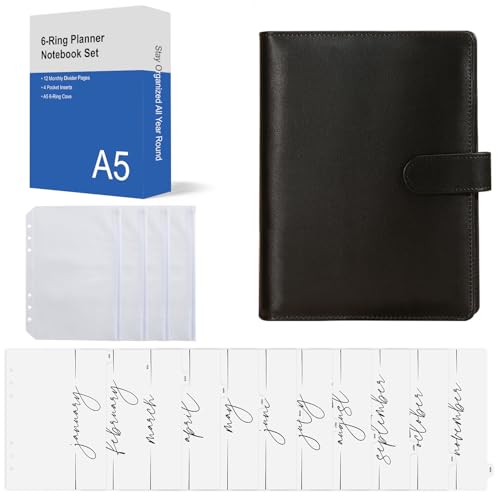
- Use a budgeting planner from Amazon to organize your finances (around $10-20)
- Read The Simple Path to Wealth by JL Collins to understand basic investing (around $15-18)
- Start tracking with a cash envelope system if you prefer physical money management (wallet sets around $12-20)
Related Articles
For a deeper dive into building wealth after 40, read:


Your 30-Day Challenge Framework
Now that you’ve chosen your one habit, here’s your simple, proven system to make it stick:
Week 1: Make It Stupid Simple
Goal: Just show up. Don’t worry about perfection.
If your habit is “exercise for 30 minutes,” start with 10 minutes. If it’s “read for 30 minutes,” start with 5 pages. The goal this week is consistency over intensity.
Habit trigger strategy: Attach your new habit to something you already do daily. This is called “habit stacking”—basically, you’re piggybacking your new habit onto an existing routine.
Examples:
- “After I pour my morning coffee, I’ll do 10 pushups”
- “After I brush my teeth at night, I’ll write 3 gratitudes”
- “After I park my car at work, I’ll review yesterday’s spending”
Tracking: Get a simple wall calendar or use your phone. Mark an X for every day you complete your habit. Seeing that chain of X’s builds momentum—you won’t want to break it.
A simple habit tracker from Amazon (around $8-15) can make this visual and satisfying, or just use a free printable.
Week 2: Expect the Dip
Goal: Push through when motivation fades.
This is where the 30 day challenge for men over 40 gets real. The excitement wears off. You’ll have a bad day. You’ll want to skip.
This is normal. This is not failure.
Strategies for fighting resistance:
- Pre-commit: Tell someone about your challenge. Accountability (having someone check on your progress) makes you 65% more likely to succeed
- Prepare for obstacles: If your habit is morning walks but it might rain, have a backup (walk in place indoors for 15 minutes)
- Use the 2-minute rule: If you don’t feel like doing your habit, commit to just 2 minutes. Usually, starting is the hardest part
Remember: You don’t need to feel motivated to take action. Action creates motivation, not the other way around.
Week 3: Level Up Slightly
Goal: Add small progressive changes.
If you started with 10 pushups, try 12. If you walked 15 minutes, try 20. If you saved $5 daily, try $7.
Progressive change just means gradually doing a bit more as your habit becomes easier. Think of it like adding weight at the gym—you don’t start with the heaviest weight; you build up slowly.
But here’s the key: Only increase if it feels sustainable. If you’re struggling to maintain your current level, stay there. There’s zero shame in that. Consistency beats intensity every single time.
Week 4: Cement and Plan Ahead
Goal: Make this habit permanent and decide what’s next.
By now, your habit should feel more natural. You’re not fighting yourself as hard. You might even feel weird if you skip a day.
Reflection questions:
- What made this easier? (Time of day? Specific trigger? Accountability?)
- What made it harder? (Lack of preparation? Certain situations?)
- How do you feel different than 30 days ago?
- What’s ONE more small habit you could add next month?
Celebrate your win. Seriously. You just proved to yourself that you can change. That’s massive.
Consider rewarding yourself with something meaningful—maybe a new book, quality workout gear, or a nice journal to continue your momentum.

Real Examples: Small Habit Changes, Big Results
Let’s look at how simple 30 day challenges for beginners create compound effects:
Mike, 47, Warehouse Manager:
- Habit: Walk 20 minutes during lunch break
- Result after 30 days: Lost 6 pounds, sleeping better, more energy at work
- Cost: $0 (just used existing shoes)
- Spillover effect: Started packing healthier lunches naturally because he didn’t want to “waste” his walking effort
David, 52, Accountant:
- Habit: Journal 3 gratitudes every morning
- Result after 30 days: Less irritable, better relationship with wife, more optimistic outlook
- Cost: $12 for a basic journal
- Spillover effect: Started noticing more positive things throughout the day, which reduced stress
Carlos, 44, Truck Driver:
- Habit: Track every purchase for 30 days
- Result after 30 days: Discovered $200/month in “invisible” spending (gas station snacks, impulse buys)
- Cost: $0 (used phone notes app)
- Spillover effect: Naturally started asking “do I really need this?” before buying anything
The pattern? One small, sustainable habit creates awareness, builds confidence, and naturally improves other areas. That’s the power of building better habits after 40—you’re not just changing a behavior; you’re changing your identity.
Common Obstacles (And How to Beat Them)
Obstacle 1
“I keep forgetting to do my habit”
Solution: Use habit triggers and visual reminders.
- Put your water bottle on your pillow so you see it before bed
- Set a phone alarm for your habit time
- Leave your resistance bands in the middle of your bathroom floor
- Put a sticky note on your steering wheel
Obstacle 2
“I missed a day and feel like I failed”
Solution: One missed day is not failure—it’s data.
The 2-day rule: Never miss twice in a row. Missing once is life. Missing twice is the start of a new (bad) habit.
If you miss a day, don’t spiral into “I’m terrible at this” thinking. Just do it the next day. Progress isn’t perfection.
Obstacle 3
“I don’t have time”
Solution: You have time—you’re just not prioritizing it yet (and that’s okay, we’ll fix it).
Most of these habits take 5-20 minutes. You’re not too busy for 10 minutes. You might be:
- Spending that time scrolling social media
- Watching TV
- Hitting snooze
Try this: Track your time for 2 days. Write down what you do every hour. You’ll find the time—it’s there.
Obstacle 4
“I’m not seeing results fast enough”
Solution: Redefine what “results” mean.
The result isn’t just weight loss or money saved. The result is:
- Proving you can commit to something
- Building self-trust
- Creating a foundation for bigger changes
Sustainable habit formation isn’t about dramatic transformations in 30 days. It’s about becoming the type of person who keeps promises to themselves.
Related Article
If you’re struggling with the mental side of change, Mindset Mastery: Why Most Men Stay Stuck addresses exactly why we resist change and how to overcome it.


Flip 7 Classic Combo – Feel better, fast with one shake a day. FLIP 7 is an unmatched, all-in-one meal replacement SUPER FOOD powder with the most nutrient rich balance of health extending blends formulated to support whole body and mind wellness.
Tools to Make This Easier (For Every Budget)
Free Resources:
- Habit tracking apps: HabitBull, Streaks, Habitica (gamifies habit building)
- Accountability: Text a friend daily with your progress
- Printable trackers: Search “free 30-day habit tracker printable”
Budget-Friendly Investments ($10-30):
- Simple habit tracker journal – visual, satisfying, no tech needed
- Basic resistance bands set – versatile for dozens of exercises
- Motivational books like Atomic Habits or The Power of Habit
- Reusable water bottle with time markers – makes hydration tracking automatic
- Budget meal prep containers – supports healthy eating habits
Worth the Investment ($30-100):
- Quality fitness tracker – automates tracking, provides data and motivation
- Foam roller and stretching tools – supports physical recovery and mobility
- Noise-canceling headphones – creates space for meditation or focused time
- Financial planning workbook – structured approach to money habits
Remember: The tool doesn’t create the habit—YOU do. Start with free options, and only invest in tools once you’ve proven to yourself you’ll use them.

Aquasana’s fast-flowing Clean Water Machine removes 78 contaminants including 99% of lead & cysts, 15x more than the leading pitcher filter.
After 30 Days: What’s Next?

Congratulations—you made it through your 30 day habit challenge! Now what?
Option 1: Keep Going
Continue your habit for another 30-60 days until it’s truly automatic. Remember, the average is 66 days for full habit formation.
Option 2: Add a Second Habit
Now that you’ve proven you can change, add ONE more habit. Use the same framework. Maybe you:
- Started with physical (daily walks) → Add mental (5-minute meditation)
- Started with financial (expense tracking) → Add physical (meal prep Sundays)
- Started with mental (gratitude journal) → Add financial (save $10 daily)
Option 3: Level Up Your Current Habit
Take your existing habit to the next level:
- 15-minute walks → 30-minute walks or light jogging
- 3 gratitudes → Full journal entry with reflections
- Tracking expenses → Creating and following a budget
The key: Don’t rush. Realistic 30 day habit goals beat ambitious failures every time.
“Success is the sum of small efforts repeated day in and day out.”
– Robert Collier
Your Challenge Starts Now
Here’s what I want you to do today—not tomorrow, not Monday, TODAY:
- Choose ONE habit from the lists above (or create your own)
- Write it down specifically: “I will [HABIT] at [TIME] after [EXISTING HABIT]”
- Tell someone about your challenge (comment below, text a friend, post on social media)
- Set up your tracking system (calendar, app, journal—whatever works for you)
- Do it once right now to start your momentum
That’s it. You don’t need to plan the perfect 30 days. You don’t need the ideal circumstances. You just need to start.
This is how to transform your life one habit at a time. Not with massive overhauls or unrealistic goals, but with one small, sustainable change that proves you’re capable of more than you think.
30 days from now, you’ll either have a new habit and renewed confidence, or you’ll be in the exact same place wishing you’d started today.
Which version of yourself do you want to meet in 30 days?
Ready for more transformation strategies? Check out these related articles:
- The Triangle of Well-being – How physical, mental, and financial health connect
- The Over-40 Body Reset – Complete guide to rebuilding your physical foundation
- The Power of Progressive Mindset – Shift your thinking to unlock change
- Creating Multiple Income Streams After 40 – Financial habits that build wealth
What habit are you committing to for the next 30 days? Drop a comment below and let’s build accountability together!
Disclosure
This article contains affiliate links. If you choose to make a purchase through these links, we may earn a commission at no additional cost to you.
Important note: The information provided in this post is for educational and informational purposes only. While we’ve spent over a decade studying health, wellness, and financial strategies, we are not a licensed healthcare provider, mental health professional, or financial advisor. Everyone’s situation is unique, so what works for one person might not work for another. For physical health matters, always consult your doctor before starting any new fitness program. For mental health concerns, please seek qualified mental health professionals. For financial decisions, consult with certified financial advisors who can assess your specific situation. The content here reflects personal research and experience but shouldn’t replace professional advice in any of these areas. By reading and using this information, you’re taking responsibility for your own decisions. Your health, mind, and money deserve professional guidance when needed. Stay awesome!