Balance Fitness, Mindset & Money at 40: Your Simple Guide
Want to finally feel like you’ve got your life together—health, mind, and money? You’re not alone. Most men over 40 feel pulled in a dozen directions, trying to juggle fitness goals, mental clarity, and financial security without a clear plan.
“Life is 10% what happens to you and 90% how you react to it.”
– Charles R. Swindoll
Here’s the thing: learning how to balance fitness, mindset, and money at 40 isn’t about doing more—it’s about understanding how these three areas actually help each other. When you improve one, the others get easier. That’s the connected system we’re building today.
Let’s break down the simple strategies that work for men from all backgrounds and income levels.
Disclosure
This article contains affiliate links. If you choose to make a purchase through these links, we may earn a commission at no additional cost to you.
Why These Three Areas Actually Connect
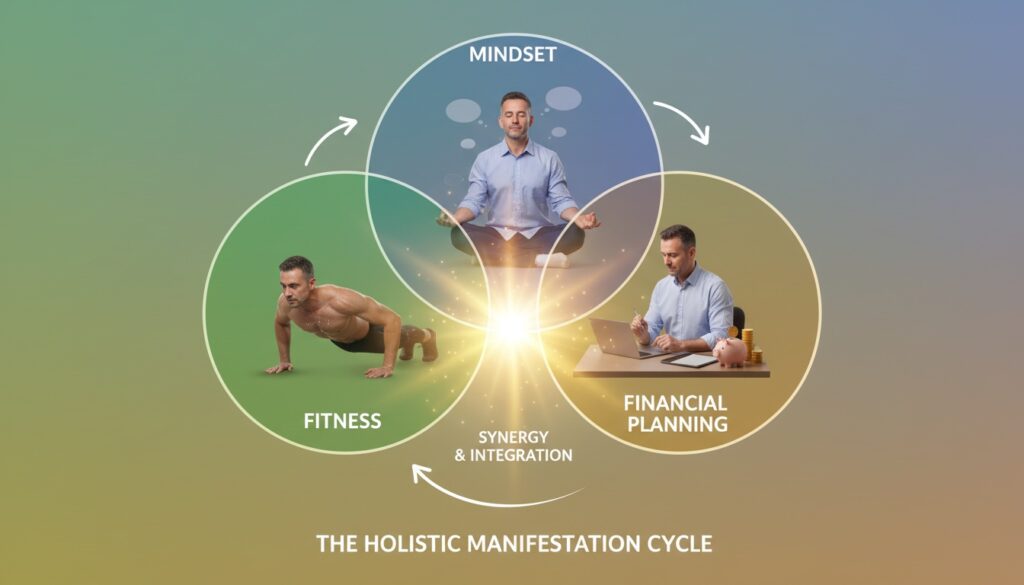
Before we dive into each pillar, you need to understand why this integrated approach works better than tackling each area separately.
Think of it like this: when you start moving your body regularly, you sleep better and have more energy. That energy helps you think clearer and make better decisions. Those better decisions help you manage money smarter. And when your finances feel more stable, your stress drops—making it easier to stay consistent with fitness.
It’s a cycle that either lifts you up or drags you down. We’re choosing the lift.
Discover the science behind this connection in our Triangle of Well-being guide—it breaks down exactly how physical wellness impacts your financial future and mental resilience.
Start Moving: Simple Fitness for Men Over 40
Your physical energy is the foundation of everything else. Without it, managing stress and building wealth becomes exponentially harder. But here’s the good news: you don’t need a gym membership or fancy equipment to start.
What Actually Works
Build a sustainable fitness routine that fits your real life:
- Start small, stay consistent: 15-20 minutes daily beats sporadic 2-hour gym sessions every time. Whether you’re a desk worker or on your feet all day, movement is movement.
- Focus on functional strength: Exercises that help you in real life—lifting groceries, playing with kids, moving furniture. Think squats, push-ups, and walking.
- Prioritize recovery: Sleep 7-8 hours. Your body repairs itself during rest, not during the workout.
- Fuel smart, not perfect: Whole foods most of the time. You don’t need a complicated meal plan—just more vegetables, lean protein, and water.
Real-World Example
Mike, a 45-year-old accountant, started with 10-minute morning walks. No gym. No equipment. Just walking. After two weeks, he had more energy at work. After a month, he added bodyweight exercises. Six months later, he’d lost 20 pounds and his doctor reduced his blood pressure medication.
Learn how to start working out when you’re over 40 with our complete beginner-friendly guide that includes workout plans you can do at home.
Essential Tools That Actually Help
You don’t need much, but these make a difference:

Perfect for home workouts, travel-friendly, and work every muscle group. Great whether you're just starting or already active.

Helps with recovery and reduces soreness. Use it while watching TV.

Sounds simple, but staying hydrated changes everything. Aim for half your body weight in ounces daily.
The bottom line: Connect health and wealth by viewing fitness as an investment, not an expense. Better health means fewer medical bills, more productive work years, and the energy to actually enjoy your money.
Clear Your Mind: Build Confidence in Your 40s
Your mindset determines how effectively you can execute any plan. That voice in your head telling you “it’s too late” or “I’m not good enough”? That’s what we’re addressing here.
Mental Resilience Basics
Stress management techniques that work for real life:
- 5-minute morning clarity routine: Before checking your phone, sit quietly and ask yourself: “What’s one thing I can control today?” That’s it. No meditation app required.
- Reframe negative self-talk: When you think “I’m too old to start,” add “…but I have more experience and wisdom than I did at 25.” Context changes everything.
- Track small wins: Keep a simple note on your phone. Every small victory counts—walked today, saved $20, said no to something draining.
- Energy management over time management: You can’t create more hours, but you can protect your energy. Learn how to manage your energy to do more with strategies that actually fit busy schedules.
Why Consistency Beats Intensity
Here’s what most guys get wrong: they go all-in for two weeks, burn out, then quit. The secret? Small daily actions beat big gestures every single time.
See why consistency matters more than intensity—this post breaks down the psychology of lasting change and why your 40s are actually the perfect time to build new habits.
Tools for Mental Clarity

The best book on building sustainable habits. Explains why small changes compound into major results.

Raw, honest, and motivating. Shows what's possible when you push past mental barriers.

Not for essays. Just bullet points. What worked today? What didn't? What's tomorrow's focus?
Real talk: Building confidence in your 40s isn’t about fake affirmations. It’s about proving to yourself—through small, consistent actions—that you can follow through. That proof becomes unshakeable confidence.
Money Made Simple: Financial Planning That Works
With physical energy and mental clarity in place, you’re perfectly positioned to build lasting wealth. But financial planning for middle age doesn’t have to be complicated.
Simple Money Management for Beginners
Whether you’re making $40k or $400k, these principles work:
- Know your numbers: Track income and expenses for one month. Just awareness changes behavior. Use a simple spreadsheet or app—nothing fancy needed.
- Pay yourself first: Save 10-20% before spending on anything else. Start with 5% if that’s all you can swing. Automate it so you don’t think about it.
- Build multiple income streams: Your job is one stream. Add one more—side hustle, investments, rental income. Learn how to build extra income without leaving your job with practical ideas for every skill level.
- Eliminate high-interest debt first: Credit cards at 20% interest are killing your wealth-building potential. Attack those before investing.
- Invest for the long game: Index funds, retirement accounts, real estate if it makes sense. Time in the market beats timing the market.
For Every Income Level
If you’re making $30-50k: Focus on eliminating debt and building a $1,000 emergency fund first. Then work toward 3-6 months of expenses saved.
If you’re making $50-100k: Maximize employer 401k match (free money), then attack debt, then build toward 6 months emergency fund.
If you’re making $100k+: You should be investing 20%+ and exploring tax-advantaged strategies. If you’re not, you’re leaving money on the table.
Get your complete financial roadmap with our Mid-Life Wealth Building Blueprint—it includes specific action steps for every income bracket.
Financial Tools Worth Having

Best straightforward investing book. No jargon, just what works.

Physical tracking works better than apps for many people. See your progress on paper.

Changes how you think about money and assets. Essential reading for building wealth.
Connect All Three: How Your Health Helps Your Wealth
Here’s where men over 40 life improvement really happens—when you stop treating these as separate goals and start seeing the connections.
The Integration Process
Week 1-2: Physical Foundation
- Pick one movement habit: morning walk, lunchtime stretches, evening bodyweight routine
- Track it daily (even just a checkmark on your phone)
- Notice how your energy changes
Week 3-4: Add Mental Practice
- Keep the movement habit going
- Add 5-minute morning clarity routine
- Start tracking one small win per day
Week 5-6: Layer in Financial Awareness
- Maintain movement and mental practices
- Track expenses for one week
- Identify one area to cut or one way to earn extra
Week 7-8: Full Integration
- All three habits running simultaneously
- Notice how physical energy helps mental clarity
- Notice how mental clarity helps financial decisions
- Notice how financial progress reduces stress and supports fitness consistency
Measuring What Matters
Forget complicated tracking systems. Here’s what to watch:
Physical Progress:
- Energy level (1-10 scale, check weekly)
- How clothes fit (better than scale)
- Workout consistency (days per week)
Mental Progress:
- Stress response (do small things bother you less?)
- Decision clarity (are you more decisive?)
- Morning mood (do you wake up with purpose?)
Financial Progress:
- Savings rate (percentage of income saved)
- Debt reduction (actual dollars paid down)
- Side income growth (even $100/month counts)


Common Mistakes to Avoid
Mistake 1
Trying to fix everything at once
Pick one pillar to start. Usually fitness, because physical energy fuels everything else.
Mistake 2
Comparing your Chapter 1 to someone else’s Chapter 20
The guy who’s been lifting for 5 years started somewhere too. Focus on your own progress.
Mistake 3
Waiting for perfect conditions
There’s never a perfect time. Start messy, adjust as you go.
Mistake 4
Ignoring the connections
When you skip workouts, notice how your mental clarity and financial decisions suffer. The connection is real.
Your 60-Day Challenge
Ready to actually do this? Here’s your simple challenge:
Days 1-20: Physical focus
- Move 15-20 minutes daily
- Drink half your body weight in ounces of water
- Sleep 7+ hours
Days 21-40: Add mental practice
- Keep physical habits
- 5-minute morning clarity routine
- Track one daily win
Days 41-60: Add financial awareness
- Maintain physical and mental habits
- Track all expenses for 2 weeks
- Identify one income-boosting opportunity or one expense to cut
After 60 days: Assess which pillar needs more attention and adjust. This isn’t a finish line—it’s a sustainable system.
Final Thoughts

Learning how to balance fitness, mindset, and money at 40 isn’t about perfection. It’s about building a connected system where each area supports the others.
Start with one pillar this week. Just one. Most guys find that physical movement creates the momentum for everything else, but you know yourself best.
“The journey of a thousand miles begins with a single step—and sometimes that step costs less than you think.”
– Lao Tzu (adapted)
The men who succeed aren’t the ones with perfect plans—they’re the ones who start messy and adjust as they go. Your 40s aren’t about catching up. They’re about building the foundation for your best decades ahead.
Which pillar needs your attention most right now? Pick one, start today, and watch how it ripples into the other areas of your life.
Disclosure
This article contains affiliate links. If you choose to make a purchase through these links, we may earn a commission at no additional cost to you.
Important note: The information provided in this post is for educational and informational purposes only. While we’ve spent over a decade studying health, wellness, and financial strategies, we are not a licensed healthcare provider, mental health professional, or financial advisor. Everyone’s situation is unique, so what works for one person might not work for another. For physical health matters, always consult your doctor before starting any new fitness program. For mental health concerns, please seek qualified mental health professionals. For financial decisions, consult with certified financial advisors who can assess your specific situation. The content here reflects personal research and experience but shouldn’t replace professional advice in any of these areas. By reading and using this information, you’re taking responsibility for your own decisions. Your health, mind, and money deserve professional guidance when needed. Stay awesome!