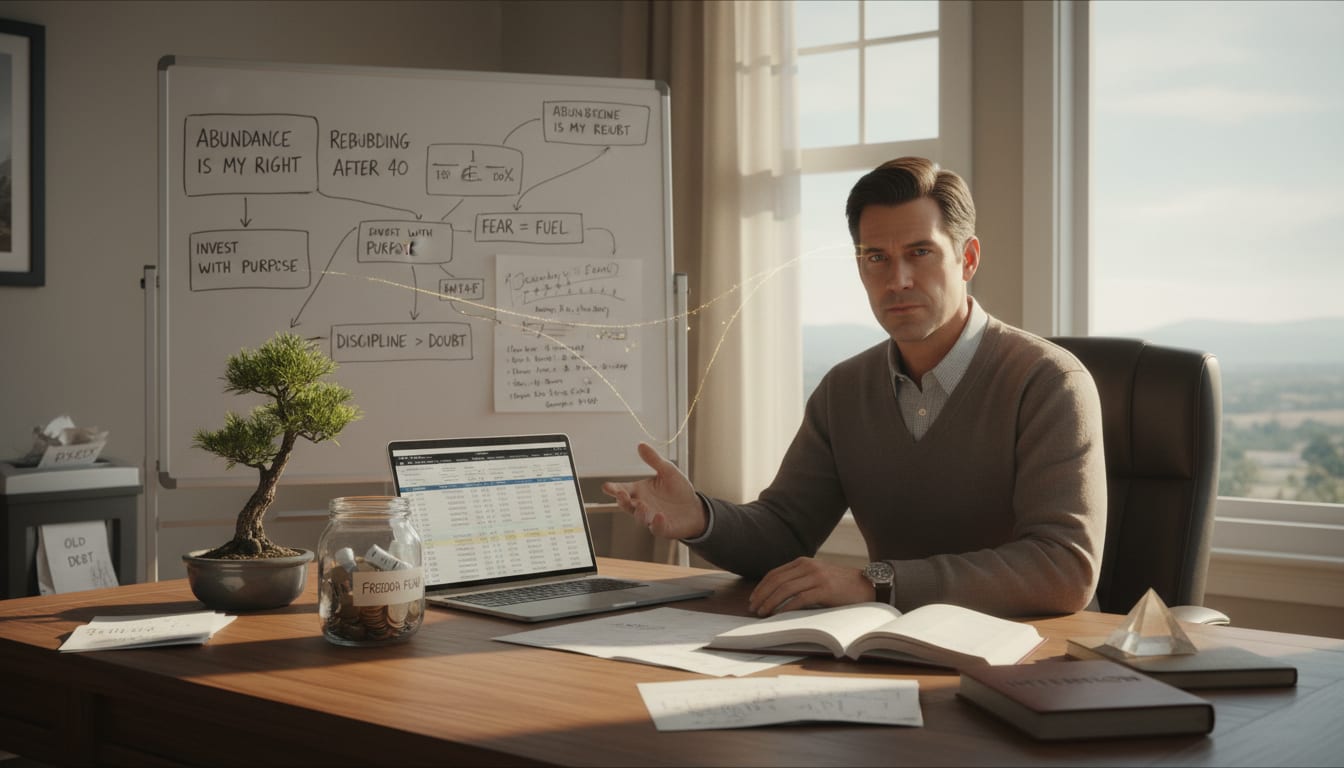
The Mental Game of Change: Building Resilience in Your Prime Years
If you’re in your 40s or 50s and feeling like change is harder than it used to be, you’re not imagining things. But here’s the good news: building resilience after 40 isn’t just possible—it’s one of the most powerful skills you can develop during this stage of life. Whether you’re facing a career shift, health challenges, relationship changes, or just feeling stuck in old patterns, mental resilience is what separates men who thrive from those who stay trapped in frustration.
“The greatest glory in living lies not in never falling, but in rising every time we fall.”
– Nelson Mandela
This isn’t about positive thinking or pretending everything’s fine. It’s about developing real, practical mental strength that helps you adapt, recover, and keep moving forward when life throws curveballs. And the best part? You don’t need expensive therapy or a complete life overhaul to start building it today.
Disclosure
This article contains affiliate links. If you choose to make a purchase through these links, we may earn a commission at no additional cost to you.
Why Building Resilience After 40 Feels Different

Let’s be honest—handling change in your 40s hits differently than it did in your 20s. Back then, you probably bounced back from setbacks faster. You had fewer responsibilities, less to lose, and maybe a bit more blind optimism.
Now? You’ve got a mortgage, kids who depend on you, aging parents, career pressures, and decades of experiences that have taught you exactly how badly things can go wrong. That’s not pessimism—that’s reality. And it makes overcoming fear of change at 40 feel like climbing a mountain with a weighted backpack.
But here’s what most guys don’t realize: your brain at 40+ has advantages your younger self never had.
You’ve got:
- Pattern recognition – You can spot problems before they spiral
- Emotional intelligence – You understand yourself better than ever
- Life experience – You’ve survived 100% of your worst days so far
- Perspective – You know what actually matters and what’s just noise
The challenge isn’t that you can’t change. It’s that you’ve built comfortable routines, even if those routines aren’t serving you anymore. Developing resilience in midlife means learning to leverage your strengths while breaking free from patterns that keep you stuck.
The Real Obstacles Men Face
When I talk to guys in their 40s and 50s, the same themes come up:
“I’m too old to start over.” (You’re not—your brain can learn new patterns at any age)
“I’ve tried to change before and failed.” (Past failures are data, not destiny)
“I don’t have the energy I used to.” (Resilience isn’t about energy—it’s about strategy)
“What if I make things worse?” (Staying stuck guarantees nothing gets better)
Sound familiar? These aren’t character flaws. They’re normal responses to decades of conditioning. The good news is that mental resilience for men over 40 can be built systematically, just like physical strength. You just need the right approach.
The Science of Mental Resilience (Explained Simply)
Let’s talk about what resilience actually means without the psychology jargon.
Resilience is your ability to bounce back from setbacks. Think of it like a rubber band—it stretches when pulled but returns to its original shape. When you lose a job, face a health scare, or go through a divorce, resilience is what helps you recover and move forward instead of staying stuck.
Here’s the science part made simple: Your brain has something called neuroplasticity—which is just a fancy way of saying your brain can learn new patterns at any age. Every time you practice a new thought pattern or behavior, you’re literally rewiring your brain. It’s like creating a new path through a forest. The first time is hard, but the more you walk that path, the clearer it becomes.
This is why building mental strength after 40 is totally possible, even if you’ve been stuck in the same patterns for decades. Your brain isn’t hardwired—it’s constantly adapting based on what you practice.
The Three Core Components of Resilience
- Emotional Strength – Managing your emotions instead of letting them control you
- Mental Flexibility – The ability to adapt when life throws curveballs
- Recovery Skills – Bouncing back faster after setbacks
The best part? All three can be developed through simple daily practices. You don’t need a psychology degree or expensive coaching. You just need consistency and the right strategies.
For a deeper dive into how your mindset shapes everything, check out The Power of Progressive Mindset, which breaks down the mental frameworks that separate stuck guys from those who keep growing.
Related Articles:
Overcoming the Fear of Change: Why Staying Stuck Hurts More
You know that feeling, right? That nagging voice telling you something needs to change—your health, your mindset, your finances—but every time you think about taking action, fear creeps in and…The $100 Budget That Can Change Your Life
What if we told you that $100 budget to change your life isn’t just a catchy headline—it’s a proven strategy that thousands of men over 40 have used to transform…


5 Practical Strategies for Developing Resilience in Midlife
Let’s get into the actionable stuff. These aren’t theory—they’re proven strategies that work for real guys dealing with real challenges.
Strategy #1: Build Your Mental Fitness Foundation
Just like you can’t run a marathon without training, you can’t handle major life changes without building baseline mental fitness first.
Start with these daily habits:
- 10-minute morning routine – Before checking your phone, spend 10 minutes on something that centers you (meditation, journaling, stretching, or just sitting with coffee in silence)
- Gratitude practice – Write down three things you’re grateful for each day (sounds cheesy, but it rewires your brain to notice positives)
- Physical movement – Even a 15-minute walk reduces stress hormones and improves mental clarity
Budget-Friendly Tools:
- Free: YouTube has thousands of guided meditations (search “10-minute meditation for beginners”)
- Low Budget ($5-15): Grab a simple journal like the Leuchtturm1917 Medium Notebook for daily reflection
- Mid Budget ($10-30/month): Try apps like Headspace or Calm for structured meditation programs
- Higher Budget ($100-200/month): Consider working with a therapist who specializes in men’s mental health
The key is consistency over intensity. Doing 10 minutes daily beats doing an hour once a week. For more on building sustainable routines, check out Creating Your Personal Success Ecosystem, which shows you how to design habits that actually stick.

Strategy #2: Reframe Your Self-Talk
Here’s a hard truth: overcoming negative self-talk in your 40s is one of the biggest game-changers for building resilience.
Most guys have an internal voice that sounds like a harsh coach: “You’re too old.” “You always mess this up.” “Who are you kidding?” That voice isn’t protecting you—it’s keeping you stuck.
Cognitive reframing (changing how you think about a situation) is the antidote. Here’s how it works:
Old thought: “I’m too old to start a side business.”
Reframed thought: “I have 20+ years of experience that gives me advantages younger guys don’t have.”
Old thought: “I failed at losing weight before, so I’ll fail again.”
Reframed thought: “Past attempts taught me what doesn’t work. Now I can try smarter approaches.”
Old thought: “I’m stuck in this career forever.”
Reframed thought: “I have transferable skills and can explore options without quitting tomorrow.”
Action Step: For the next week, catch yourself when negative thoughts pop up. Write them down, then write a reframed version. This simple practice literally changes your brain’s default patterns over time.
Recommended Reading:
- Budget Option ($10-20): Atomic Habits by James Clear – Shows how tiny mindset shifts create massive changes
- Mid-Range ($15-25): Can’t Hurt Me by David Goggins – Raw, no-BS approach to mental toughness
- Premium ($20-30): The Obstacle Is the Way by Ryan Holiday – Ancient wisdom applied to modern challenges
For more on breaking free from limiting beliefs, read Mindset Mastery: Why Most Men Stay Stuck, which dives deep into the mental blocks that keep guys trapped.

Atomic Habits by James Clear breaks down how tiny mindset changes compound into major transformations. It's written in plain English—no psychology degree needed.
Strategy #3: Build Your Stress Tolerance Gradually
Think of mental toughness for men 40+ like building muscle. You don’t start by benching 300 pounds. You start light and progressively add weight.
The same applies to handling stress and change. If you avoid all discomfort, you never build resilience. But if you take on too much at once, you burn out.
The Progressive Stress Approach:
Week 1-2: Take one small uncomfortable action daily (cold shower, speaking up in a meeting, trying a new workout)
Week 3-4: Add a slightly bigger challenge (have a difficult conversation, tackle a project you’ve been avoiding)
Week 5-6: Combine multiple small stressors (busy workday + evening workout + social commitment)
This gradual exposure teaches your nervous system that you can handle discomfort without falling apart. Over time, things that used to feel overwhelming become manageable.
Physical Tools That Support Mental Resilience:
- Budget ($20-40): Resistance Bands Set – Home workouts reduce stress and build confidence
- Mid-Range ($40-80): Adjustable Dumbbells – Strength training is proven to improve mental health
- Premium ($100-200): Weighted Vest – Adds challenge to walks and bodyweight exercises
Physical and mental resilience are deeply connected. Check out The Over-40 Body Reset for a complete guide to building physical strength that supports mental toughness.

Strategy #4: Create Your Support System
Here’s something most guys struggle with: asking for help. We’re conditioned to tough it out alone, but isolation is the enemy of resilience.
You don’t need a huge network. You need 2-3 people you can be real with when things get hard. This could be:
- A close friend who’s also working on self-improvement
- A men’s group (online or in-person)
- A mentor who’s been through similar challenges
- A therapist or coach (not a sign of weakness—it’s strategic)
How to Build Your Circle:
- Identify one person in your life who “gets it” and schedule regular check-ins (weekly coffee, monthly dinner, daily text thread)
- Join an online community focused on men’s growth (Reddit’s r/DecidingToBeBetter, Facebook groups, or men’s forums)
- Consider professional support if you’re dealing with major transitions (career change, divorce, health crisis)
Budget-Friendly Options:
- Free: Online communities and accountability partners
- Low Budget ($10-30/month): Group coaching programs or online men’s groups
- Mid Budget ($50-100/month): Monthly men’s meetups or workshops
- Higher Budget ($100-300/month): One-on-one coaching or therapy
The goal isn’t to become dependent on others. It’s to have people who can offer perspective when you’re too close to a problem to see clearly. For more on building the right environment for growth, read Creating Your Personal Success Ecosystem.
Strategy #5: Practice Micro-Recoveries Throughout Your Day
Building resilience when you feel stuck isn’t about powering through 24/7. It’s about knowing how to recover quickly so stress doesn’t accumulate.
Most guys go full throttle until they crash. Then they need days or weeks to recover. That’s not resilience—that’s burnout with breaks.
Micro-recoveries are 2-10 minute practices that reset your nervous system throughout the day:
- Box breathing (4 seconds in, 4 hold, 4 out, 4 hold – repeat 5 times)
- 5-minute walk outside (nature exposure reduces cortisol)
- Power nap (10-20 minutes max – any longer and you’ll feel groggy)
- Stretching routine (releases physical tension that creates mental stress)
- Mindful coffee break (actually taste your coffee instead of scrolling your phone)
Tools to Support Recovery:
- Free: YouTube breathing exercises and stretching routines
- Budget ($15-30): Foam Roller – Releases muscle tension and promotes recovery
- Mid-Range ($30-60): Acupressure Mat – 10 minutes daily reduces stress significantly
- Premium ($100-200): Massage Gun – Professional-grade recovery at home
The guys who thrive in their 40s and 50s aren’t the ones who never feel stress. They’re the ones who recover faster. For more stress management strategies, check out Stress-Proofing Your Summer: Advanced Mental Strategies.

How to Handle Change in Your 40s: Real-World Examples
Let’s look at how these strategies play out in real situations guys face:
Example 1: Career Transition
Situation: Mike, 47, got laid off after 15 years with the same company. He’s terrified of starting over.
Resilience in Action:
- Reframed the situation: “This is a forced opportunity to find something better” instead of “My career is over”
- Built stress tolerance: Started with small networking conversations before tackling job interviews
- Created support: Joined a career transition group and hired a resume coach
- Practiced recovery: Used morning walks to process emotions instead of spiraling into anxiety
Result: Within 4 months, Mike landed a role with better pay and work-life balance. The resilience skills he built now serve him in every area of life.
Example 2: Health Scare
Situation: James, 52, had a minor heart incident that scared him straight. He’d been ignoring his health for years.
Resilience in Action:
- Started small: 10-minute daily walks instead of trying to become a gym rat overnight
- Managed self-talk: Replaced “I’m falling apart” with “My body is giving me feedback I can act on”
- Built gradually: Added one healthy habit per week (more water, better sleep, strength training)
- Got support: Worked with a trainer who understood midlife challenges
Result: Lost 30 pounds in 6 months, but more importantly, built confidence that he can handle challenges instead of avoiding them. Read more about sustainable fitness in The Over-40 Body Reset.
Example 3: Relationship Struggles
Situation: David, 49, realized his marriage was in trouble after years of just going through the motions.
Resilience in Action:
- Faced discomfort: Had the hard conversation with his wife instead of avoiding it
- Sought help: Started couples therapy (which he’d resisted for years)
- Practiced daily: Used journaling to process emotions and identify patterns
- Built recovery skills: Took walks after difficult conversations to reset
Result: The marriage didn’t survive, but David’s resilience skills helped him navigate the divorce without falling apart. He’s now building a life he’s actually excited about.
Building Mental Strength on Any Budget
One of the biggest myths about mental resilience for men over 40 is that it requires expensive programs or retreats. That’s BS. Here’s how to build resilience at every budget level:
Free Resources
- YouTube: Thousands of guided meditations, breathing exercises, and motivational content
- Podcasts: The Tim Ferriss Show, The Art of Manliness, Jocko Podcast
- Library: Free access to books on mindset, resilience, and personal development
- Nature: Walking, hiking, and outdoor time (proven to reduce stress)
- Journaling: A $2 notebook and 10 minutes daily
Budget-Friendly ($10-50/month)
- Books: One quality book per month (Atomic Habits, Can’t Hurt Me, The Obstacle Is the Way)
- Apps: Meditation apps like Headspace or Insight Timer
- Basic equipment: Resistance bands, foam roller, journal
- Online communities: Men’s groups and accountability partners
Mid-Range Investment ($50-200/month)
- Gym membership: Strength training improves mental health
- Therapy: Monthly sessions with a licensed therapist
- Courses: Online programs focused on mindset and resilience
- Quality supplements: Support physical health that enables mental strength
Premium Options ($200+/month)
- Personal trainer: Especially one who understands midlife challenges
- Life coach: Focused on men’s transitions and growth
- Retreats: Weekend or week-long immersive experiences
- Comprehensive programs: Combining fitness, nutrition, and mindset coaching
The investment level matters less than the consistency. A $10 book you actually read and apply beats a $5,000 program you never finish.
For more on building sustainable habits regardless of budget, read The Triangle of Well-being, which shows how physical, mental, and financial health work together.

Building mental toughness and resilience through controlled adversity.
FAQ: Building Resilience After 40
Your 30-Day Resilience Building Plan
Ready to start building resilience after 40? Here’s your practical action plan:
Week 1: Foundation
- Daily: 10-minute morning routine (meditation, journaling, or quiet coffee)
- 3x this week: 15-minute walk outside
- Once: Identify one negative thought pattern and write a reframed version
- Action: Order or download one book on mindset (Atomic Habits is a great start)
Week 2: Building Momentum
- Daily: Continue morning routine + add evening gratitude (3 things)
- 4x this week: Increase walks to 20 minutes
- Twice: Practice box breathing for 5 minutes when stressed
- Action: Reach out to one person who could be part of your support system
Week 3: Adding Challenge
- Daily: Morning routine + gratitude + one uncomfortable action
- 5x this week: 25-minute walks or light exercise
- Daily: Catch and reframe negative self-talk
- Action: Join one online community or men’s group
Week 4: Integration
- Daily: Full routine (morning practice, movement, reframing, gratitude)
- 3x this week: Practice micro-recoveries during stressful moments
- Once: Review your progress and adjust what’s working/not working
- Action: Schedule your next 30 days with progressive challenges
Track Your Progress:
Get a simple journal (Leuchtturm1917 or any notebook) and rate yourself daily on a 1-10 scale:
- How resilient did I feel today?
- How well did I handle stress?
- What’s one thing I did well?
- What’s one thing I’ll improve tomorrow?
The Bottom Line: It’s Not Too Late

If you’re in your 40s or 50s feeling like you’ve missed your window for change, I want you to hear this: You haven’t.
Building resilience after 40 isn’t about becoming a different person. It’s about developing the mental tools to handle whatever life throws at you. It’s about bouncing back faster, adapting smarter, and refusing to let setbacks define your future.
“Resilience is not what happens to you. It’s how you react to, respond to, and recover from what happens to you.”
– Jeffrey Gitomer
You’ve already survived 100% of your worst days. You’ve got decades of experience, pattern recognition, and hard-won wisdom. Now it’s time to add one more tool to your arsenal: the ability to bend without breaking.
Start small. Pick one strategy from this article and practice it for 30 days. Then add another. In six months, you’ll look back and barely recognize the guy who felt stuck.
The mental game of change isn’t about never falling. It’s about getting back up faster every time. And that’s a skill you can build starting today.
Ready to take the next step? Check out these related articles:
- Building Unshakeable Confidence in Your 40s and Beyond
- The Power of Progressive Mindset
- Creating Your Personal Success Ecosystem
- The 90-Day Summer Challenge: Transform Your Life by October
Want more practical strategies for thriving in your prime years? Explore The Triangle of Well-being to see how physical health, mental resilience, and financial independence work together to create lasting change.
Disclosure
This article contains affiliate links. If you choose to make a purchase through these links, we may earn a commission at no additional cost to you.
Important Note: The information in this post is meant to educate and inform, not to replace professional mental health care or psychological advice. While we’ve spent years studying mental resilience and personal development, we’re not licensed mental health professionals or therapists. Everyone’s life circumstances and mental health journey are unique, so what works for one person might not work for another. If you’re experiencing serious mental health challenges, please reach out to a qualified mental health professional. Some of the strategies discussed may not be suitable for everyone, and it’s important to assess your own situation carefully. By reading and using this information, you’re taking responsibility for your own decisions. Remember, seeking help is a sign of strength, not weakness. Stay resilient!