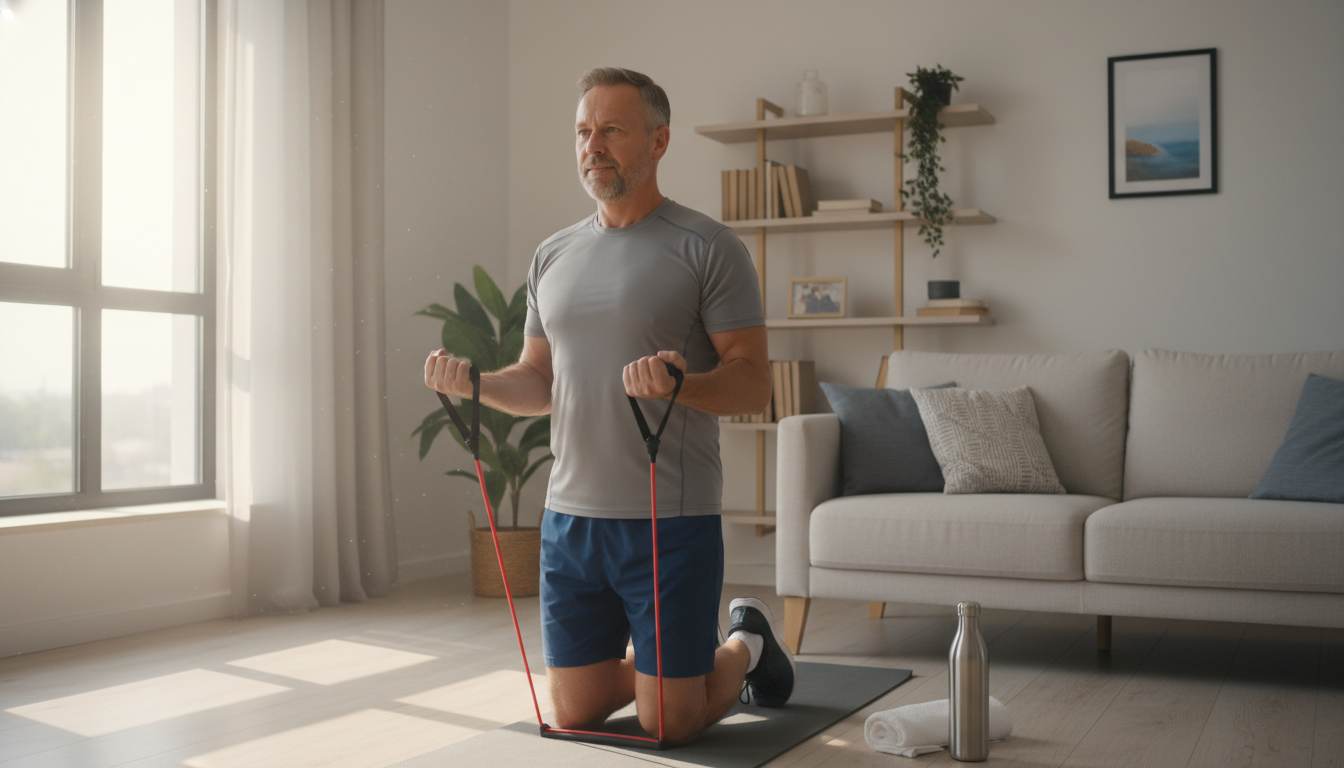
The Power Hour: Combining Physical, Mental, and Financial Growth in 60 Minutes
Are you tired of feeling like there’s never enough time to focus on your personal growth? You’re not alone. As men over 40, we often juggle multiple responsibilities, making it challenging to balance our physical health, mental wellbeing, and financial goals. But what if you could transform your life by maximizing just one hour of your day?
“The way you start your day determines how well you live your day. Master your morning, master your life.”
— Robin Sharma
This holistic morning routine isn’t just another productivity hack—it’s an integrated wellness approach that recognizes true success after 40 requires balance across physical health, mental clarity, AND financial security. Unlike generic morning routine advice that focuses on just one area, this comprehensive morning framework addresses all three pillars of well-being in a realistic, sustainable way.
Whether you’re operating heavy machinery, managing spreadsheets, or running your own business, this 60-minute routine works for every income level and profession. Let’s dive into how you can create your own total life transformation morning, starting tomorrow.
Disclosure
This article contains affiliate links. If you choose to make a purchase through these links, we may earn a commission at no additional cost to you.
Why the Holistic Approach Works
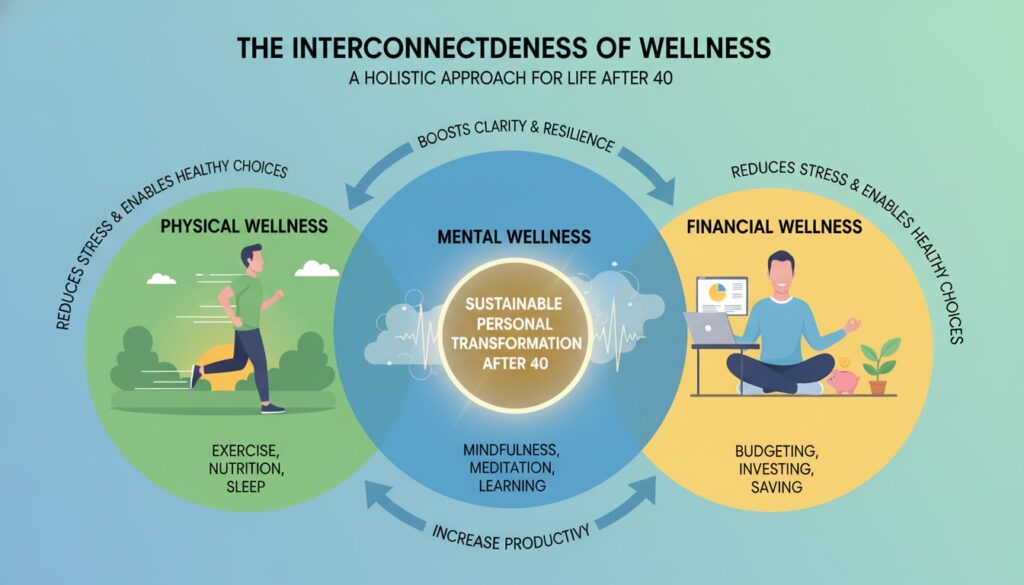
Before we break down the routine, let’s talk about why combining all three pillars is more effective than focusing on just one area. Think of it like a three-legged stool—if one leg is weak, the whole thing becomes unstable.
Here’s how each pillar reinforces the others:
- Physical wellness gives you energy for mental work — When your body feels good, your brain works better. That morning workout isn’t just about muscles; it’s about creating the physical foundation for clear thinking.
- Mental clarity helps you make better financial decisions — A stressed, cluttered mind leads to impulse purchases and poor money choices. When you start your day with mental peace, you approach finances from a place of calm strategy rather than anxiety.
- Financial security reduces stress that impacts physical health — Money worries keep you up at night, spike your cortisol (your body’s stress hormone), and can lead to stress-eating or skipping workouts. Building financial confidence creates space for better health habits.
- Each pillar reinforces the others — This isn’t three separate routines crammed together; it’s a balanced wellness practice where progress in one area naturally supports the others.
This is what makes the Power Hour different from other morning routines. You’re not just getting fit, or just meditating, or just checking your bank account. You’re building an integrated wellness routine that creates momentum across your entire life. Learn more about how these three areas connect in The Triangle of Well-being: How Health, Mind, and Money Connect.
The Power Hour Framework: Your 60-Minute Success Blueprint
Let’s break down this powerful holistic morning routine into simple, actionable steps that work whether you’re operating heavy machinery or managing spreadsheets. This complete morning transformation routine is designed specifically for men over 40 who want real results without complicated systems or expensive equipment.
The Physical Foundation: Your Day’s Launchpad (20 Minutes to Transform Your Body)

Think of your body like a car that’s been sitting in the garage overnight. You wouldn’t immediately floor the accelerator, right? Those first 20 minutes of physical movement aren’t just about exercise—they’re about waking up your body’s engine the right way.
For us guys over 40, this isn’t about crushing intense workouts or trying to relive our twenties. It’s about smart, sustainable movement that sets us up for success. This morning fitness routine over 40 focuses on what actually works for our bodies at this stage of life.
When you start your day with simple mobility work (gentle movements that help your joints move freely and reduce stiffness—think arm circles, leg swings, and hip rotations) and light exercise, you’re not just burning calories. You’re:
- Increasing blood flow to your brain — More oxygen means sharper thinking for those morning decisions
- Releasing endorphins — Your body’s natural “feel-good” chemicals that improve mood
- Reducing joint stiffness — Especially important after 40 when we wake up a bit creakier
- Boosting metabolism — Getting your calorie-burning engine started early
- Building consistency — The habit that compounds into real transformation
The best part? You don’t need fancy gym equipment or complicated routines. Whether you’re a construction worker or a CEO, these movements are designed to work for every body type and fitness level. Remember, we’re not training for the Olympics—we’re training for a better life after 40.
5 Minutes: Simple Mobility Work
Start with gentle movements that wake up your joints:
- Arm circles (10 forward, 10 backward)
- Leg swings (10 each leg, front to back)
- Hip rotations (10 circles each direction)
- Neck rolls (5 slow circles each way)
- Ankle circles (10 each ankle)
Budget-Friendly Option: No equipment needed—just your body and a little floor space.
Mid-Range Investment: A basic exercise mat ($20-30) provides cushioning for floor work and makes mobility exercises more comfortable, especially for your knees and back.
Enhanced Option: Add a foam roller ($15-35) to release muscle tension and improve flexibility. It’s like giving yourself a deep tissue massage before you start your day.
15 Minutes (Choose One Based on Your Fitness Level):
Option 1: Brisk Walking
Perfect if you’re just starting out or prefer low-impact movement. Walk around your neighborhood, on a treadmill, or even in place while watching the morning news. The goal is to get your heart rate up and your blood flowing.
Option 2: Bodyweight Circuit
For those ready for more intensity, try this simple circuit (repeat 2-3 times):
- 10 squats (builds leg strength for daily activities)
- 10 push-ups (or wall push-ups if regular ones are too challenging)
- 10 lunges (5 each leg—great for balance)
- 30-second plank (strengthens your core to protect your back)
Option 3: Resistance Band Routine
Resistance bands ($10-25) are incredibly versatile and joint-friendly. They provide enough resistance to build strength without the joint stress of heavy weights—perfect for men over 40.
Try this quick routine:
- Band rows (15 reps—strengthens your back)
- Band chest press (15 reps—works your chest and arms)
- Band squats (15 reps—adds resistance to leg work)
- Band shoulder press (12 reps—builds shoulder strength)
Income-Level Considerations:
- Budget-Friendly: Use bodyweight exercises at home, walk around your neighborhood, or invest in a basic resistance band set for under $15. These simple tools provide everything you need for an effective workout.
- Mid-Range: A basic gym membership ($30-50/month) gives you access to equipment, climate control, and sometimes group classes that add variety to your routine.
- Higher Budget: Personal training sessions ($50-100/hour) or boutique fitness classes can provide customized guidance and accountability, especially helpful when you’re starting out or want to level up your routine.
For more detailed guidance on these movements, check out The Foundation Five: Essential Movements for Men Over 40 or explore simple home workout routines that require zero equipment.

Mental Clarity: Your Daily Command Center (20 Minutes to Sharpen Your Mind)

In today’s world of constant notifications and endless to-do lists, those 20 minutes of mental clarity aren’t just a luxury—they’re your secret weapon. Think of your mind like a computer that’s been running too many programs; sometimes, you need to close the tabs and reboot.
For us guys over 40, this isn’t about becoming meditation masters or achieving perfect zen—it’s about creating a practical mental foundation that serves us throughout the day. This mental clarity routine (a simple practice that clears your mind like defragging a computer—removing mental clutter so you can think clearly) is designed to reduce stress and improve focus.
This Mental Clarity Routine, Your Personal “Desk-Based Zen Moment”:
5 Minutes: Breathing & Meditation
Don’t let the word “meditation” intimidate you. This is simply sitting quietly and focusing on your breath. Here’s how:
- Sit comfortably (couch, chair, floor—doesn’t matter)
- Close your eyes or soften your gaze
- Breathe in slowly through your nose for 4 counts
- Hold for 4 counts
- Breathe out through your mouth for 6 counts
- Repeat
When your mind wanders (and it will—that’s normal), gently bring your attention back to your breathing. You’re not trying to stop thoughts; you’re just practicing not getting caught up in them.
Budget-Friendly Options:
- Free: Simply sit quietly with a timer on your phone. No apps, no subscriptions—just you and your breath.
- Free Apps: Insight Timer offers thousands of free guided meditations specifically designed for beginners and busy professionals.
Mid-Range Investment:
- Premium meditation apps like Headspace ($70/year) or Calm ($70/year) offer structured programs that guide you through building a meditation practice step-by-step.
10 Minutes: Journaling & Planning
Grab a notebook and spend 10 minutes getting your thoughts on paper. This isn’t about writing perfectly—it’s about clearing mental clutter and setting intentions.
Write about:
- Three things you’re grateful for (shifts your mindset to positive)
- Your top 3 priorities for today (creates focus)
- One thing that’s bothering you (gets worries out of your head)
- One small win from yesterday (builds momentum)
Journal Options for Every Budget:
- Budget-Conscious: A simple $5 notebook from the dollar store works just as well as expensive designer journals. What matters is that you use it consistently, not what it looks like.
- Mid-Range: A guided journal for men ($15-25) provides prompts and structure, which is helpful if you’re not sure what to write about.
- Premium Option: The Vibe Journal ($30) or similar guided mindfulness journals offer 13-week programs with dynamic daily prompts specifically designed for men, including practical exercises and habit-building tools.
5 Minutes: Visualization & Affirmations
Close your eyes and spend 5 minutes visualizing your day going well. Picture yourself:
- Handling challenges calmly
- Making good decisions
- Feeling energized and focused
- Achieving your top priorities
Then say a few affirmations out loud (yes, it might feel weird at first, but it works):
- “I make decisions from a place of calm confidence”
- “I have the energy and focus to handle today’s challenges”
- “I’m building a better life, one day at a time”
The beauty of this approach? It works whether you’re managing a construction site or preparing for board meetings. No fancy apps or complicated techniques required—just simple, proven methods that fit into your real life. Remember, we’re not aiming for perfect meditation; we’re building a stress-proof framework for your best day.
Want to dive deeper into building mental strength? Check out Mindset Mastery: Building Mental Toughness in Your Prime Years and learn how to optimize your mental performance throughout the day. If you’re ready to push past your comfort zone, explore strategies for building mental resilience that create lasting change.

The Vibe Journal |13-Week Guided Mindfulness Journal for Men
Financial Growth: Your 20-Minute Money Check-In (Your Daily Financial Foundation)

Just like your morning coffee kickstarts your day, these 20 minutes of financial focus jumpstart your path to financial independence. Think of it as your personal CFO meeting—except you’re both the boss and the advisor.
For us men over 40, this isn’t about getting rich quick or making risky moves; it’s about building sustainable wealth through consistent, informed decisions. This morning wealth building routine is designed to create financial clarity and confidence, regardless of where you’re starting from.
This Financial Power Block:
Reduces money anxiety — When you know exactly where you stand financially, the unknown fear disappears
Catches problems early — Spotting a suspicious charge today is easier than dealing with fraud next month
Builds wealth awareness — You can’t improve what you don’t measure
Creates intentional spending — Reviewing yesterday’s purchases makes you more mindful of today’s choices
Compounds over time — Small daily financial decisions add up to major wealth building
Your 20-Minute Money Check-In:
7 Minutes: Review Yesterday’s Spending
Open your banking app or check your accounts and review:
- What did you spend money on yesterday?
- Were those purchases aligned with your goals?
- Any unexpected charges or subscriptions you forgot about?
- Can you spot any patterns in your spending?
This isn’t about judgment—it’s about awareness. Even if you spent more than planned, simply noticing the pattern helps you make better choices today.
8 Minutes: Check Financial Goals & Progress
Review your financial priorities:
- Emergency fund progress — How close are you to your goal? Even $50 saved is progress worth celebrating.
- Debt paydown — If you’re paying off debt, check your balance. Seeing it decrease, even slightly, builds motivation.
- Investment accounts — Quick glance at retirement accounts or investments (don’t obsess over daily fluctuations)
- Upcoming bills — What’s due this week? Any payments you need to schedule?
5 Minutes: One Small Financial Action
Choose ONE small action to move your finances forward:
- Transfer $10 to savings (even small amounts build the habit)
- Schedule a bill payment
- Research one financial question you’ve been avoiding
- Update your budget based on yesterday’s spending
- Read one article about a financial topic you want to understand better
- Compare prices on a recurring expense (insurance, phone plan, subscriptions)
Financial Tools for Every Budget:
Starting Out (Free-$10):
If you’re living paycheck to paycheck, even tracking \$5 daily spending builds awareness. Use:
- Free banking apps that come with your account
- A simple notebook to track spending ($1-5)
- Free budgeting apps like Mint or your bank’s built-in tools
- A basic budget planner ($8-15) helps you see where every dollar goes
Building Wealth ($15-30):
Once you have emergency savings and want to level up your financial tracking:
- Monthly Budget Planner Book ($15-25) with expense trackers, debt tracking, and savings goal sheets
- Financial journal ($15-20) that includes monthly budgets and guided finance advice
- Premium budgeting apps with investment tracking (\$10-15/month)
Established ($30+):
For those ready to diversify and optimize:
- Premium financial planner ($25-40) with comprehensive yearly goal setting, monthly budget tracking, and investment planning sections
- Financial advisor consultations (often free initial consultations, then $100-300/hour)
- Investment tracking software with tax optimization features
The real power? This routine works whether you’re managing a household budget or running a business. No fancy financial degree required—just practical tools and strategies that make sense for real people. Remember, we’re not aiming to become Wall Street traders; we’re building a foundation for financial independence that grows stronger every day.

Clever Fox Budget Planner - Expense Tracker Notebook
Consider using budgeting tools like the Clever Fox Budget Planner to track your expenses more effectively. A physical planner can help you stay more engaged with your finances than digital apps alone.
Want to go deeper? Learn about building your financial foundation even on a tight budget, discover strategies for creating multiple income streams, or set up a weekly financial check-in system that takes your money management to the next level.
For more comprehensive guidance on building all three pillars together, explore Foundation Habits: The 5 Non-Negotiables for Success After 40.
Adapting Your Power Hour by Season
Your holistic morning routine doesn’t have to look the same year-round. Here’s how to adjust your Power Hour to match the seasons and maintain consistency:
Winter (December-February):
- Physical: Indoor exercises, resistance band work, or mall walking when it’s too cold outside
- Mental: Extra focus on gratitude journaling during darker months
- Financial: Year-end review, tax preparation, annual goal setting
Spring (March-May):
- Physical: Outdoor walks to enjoy the weather, gardening as movement
- Mental: Goal-setting emphasis, fresh start mindset
- Financial: Review first quarter progress, adjust budget for summer expenses
Summer (June-August):
- Physical: Early morning routine to beat the heat, swimming or water activities
- Mental: Vacation planning, stress management during busy season
- Financial: Investment review, planning for back-to-school or holiday expenses
Fall (September-November):
- Physical: Habit reinforcement as routines return, preparing for indoor season
- Mental: Reflection on year’s progress, gratitude practices
- Financial: Year-end financial prep, holiday budget planning, retirement contribution review
Progress Tracking Made Simple
To make your Power Hour stick, you need a simple way to track your consistency. Here’s what works:
The Weekly Scorecard:
At the end of each week, give yourself a score out of 21 (7 days × 3 pillars):
- Did you complete the physical portion? (1 point per day)
- Did you complete the mental portion? (1 point per day)
- Did you complete the financial portion? (1 point per day)
Aim for 15+ points per week (that’s about 70% consistency). Remember, we’re building sustainable habits, not pursuing perfection.
Track Your Progress:
- Budget-Friendly: Use a simple notebook or free habit-tracking apps
- Mid-Range: A fitness and wellness journal ($15-25) that includes sections for physical, mental, and goal tracking
- Comprehensive: A morning routine journal ($20-30) with guided prompts for all three areas of your Power Hour

Clever Fox Wellness Planner
Getting Started: Your First Week Action Plan
Ready to transform your mornings? Start small. Choose just ONE element from each section and commit to it for one week.
Here’s your starter routine:
Week 1 Minimum Viable Power Hour (30 minutes):
- Physical: 10-minute walk (that’s it—just walk)
- Mental: 5 minutes of breathing + write down 3 priorities
- Financial: 5-minute spending review + one small action
Week 2: Add Time
- Physical: 15 minutes
- Mental: 10 minutes
- Financial: 10 minutes
Week 3: Full Power Hour
- Physical: 20 minutes
- Mental: 20 minutes
- Financial: 20 minutes
Tips for Success:
- Prepare the night before — Lay out workout clothes, set up your journal, have your phone charged
- Start with what excites you most — If you love the physical part, do that first to build momentum
- Use habit stacking (linking new habits to existing ones—like doing your Power Hour right after your morning coffee)
- Track your consistency, not perfection — Missing one day doesn’t erase your progress
- Adjust as needed — This is YOUR routine; customize it to fit your life
If you’re feeling overwhelmed about starting your transformation journey, remember: it’s never too late to begin. Learn practical strategies for managing your daily energy so you can sustain this routine long-term, and discover how to achieve balancing all three pillars of wellness without burning out.
Frequently Asked Questions About the Power Hour Routine
Related Articles:


5 Common Mistakes to Avoid
Mistake 1
Trying to be perfect from day one
Start with one element from each pillar and build from there. Attempting the full 60-minute routine when you currently do zero morning routine is a recipe for burnout. Give yourself permission to start small.
Mistake 2
Skipping the mental clarity portion
This is the glue that holds everything together. Many guys want to jump straight to the physical workout or financial planning, but the mental clarity practice is what helps you stay consistent with the other two. It’s the foundation of your integrated wellness approach.
Mistake 3
Not tracking progress
What gets measured gets improved. You don’t need fancy apps or complicated systems, but you do need some way to track whether you’re doing your Power Hour. A simple checkmark on a calendar works.
Mistake 4
Giving up after missing a day (or three)
One missed day doesn’t erase your progress. Neither does a missed week. Life happens. The difference between people who transform their lives and those who don’t isn’t perfection—it’s the ability to restart after setbacks.
Mistake 5
Comparing your routine to others
Your coworker might do a 90-minute routine, or your buddy might only need 30 minutes. This isn’t a competition. Customize this complete morning transformation routine to fit YOUR life, YOUR goals, and YOUR current fitness level. The best routine is the one you’ll actually do consistently.

Whether you’re aiming to optimize your morning routine, enhance your fitness journey, or build sustainable wealth habits, this book reveals why previous attempts at change may have failed (hint: it’s not your fault) and provides a concrete framework for success.
Through Clear’s proven strategies, you’ll learn how small, consistent actions—like your daily Power Hour—can compound into remarkable results. This is perfect for busy professionals seeking real, lasting transformation. Thousands of men in their prime years are using these methods to revolutionize their daily routines and build the integrated wellness approach that creates lasting change.
Final Thoughts

The Power Hour isn’t just another morning routine—it’s a comprehensive life transformation system that recognizes what most “productivity gurus” miss: true success after 40 requires balance. You can’t build wealth if you’re too exhausted to think clearly. You can’t maintain mental clarity if financial stress keeps you up at night. And you can’t sustain physical wellness if you don’t have the mental resilience to stay consistent.
“Success is the sum of small efforts repeated day in and day out.”
— Robert Collier
Remember: This isn’t about perfection; it’s about progress. Every minute invested in your holistic morning routine is a deposit in your future success across all three pillars of well-being.
This integrated wellness routine works because it addresses all three areas simultaneously, creating a positive feedback loop where progress in one area fuels progress in the others. Start tomorrow. Start small. But start
Your best years aren’t behind you—they’re ahead of you, beginning with how you spend the first hour of each day.
Disclosure
This article contains affiliate links. If you choose to make a purchase through these links, we may earn a commission at no additional cost to you.
Important note: The information provided in this post is for educational and informational purposes only. While we’ve spent over a decade studying health, wellness, and financial strategies, we are not a licensed healthcare provider, mental health professional, or financial advisor. Everyone’s situation is unique, so what works for one person might not work for another. For physical health matters, always consult your doctor before starting any new fitness program. For mental health concerns, please seek qualified mental health professionals. For financial decisions, consult with certified financial advisors who can assess your specific situation. The content here reflects personal research and experience but shouldn’t replace professional advice in any of these areas. By reading and using this information, you’re taking responsibility for your own decisions. Your health, mind, and money deserve professional guidance when needed. Stay awesome!