The Psychology of Consistency: Why Small Daily Actions Beat Big Gestures
If you’re a man over 40 who’s tried the “go big or go home” approach to change and found yourself back at square one, you’re not alone. The psychology of consistency reveals a powerful truth: small daily actions create lasting transformation while dramatic gestures often lead to burnout and disappointment.
“We are what we repeatedly do. Excellence, then, is not an act, but a habit.”
– Aristotle
Today, we’re diving deep into why daily habits for men over 40 work better than sporadic bursts of motivation, and how you can harness this knowledge to build the life you want—one small step at a time.
Disclosure
This article contains affiliate links. If you choose to make a purchase through these links, we may earn a commission at no additional cost to you.
The Science Behind Why Small Actions Win
Understanding Your Brain’s Preference for Consistency
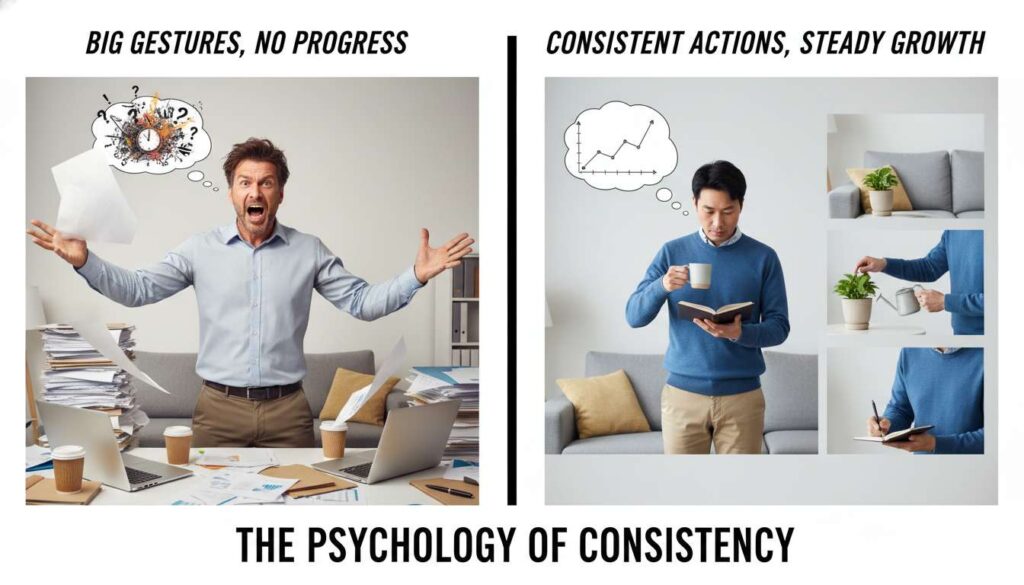
Your brain is wired for efficiency, not dramatic change. When you attempt massive lifestyle overhauls, your mind perceives this as a threat to your survival and activates what psychologists call “resistance.” Think of it like your brain’s security system—it’s designed to keep you safe by maintaining the status quo.
Small daily actions, on the other hand, fly under this mental radar. When you commit to just 10 push-ups instead of a 2-hour gym session, or read one page instead of an entire book, your brain doesn’t sound the alarm bells. This is the foundation of habit formation psychology—working with your mind’s natural tendencies rather than against them.
The Compound Effect: How 1% Improvements Transform Lives
Here’s where the magic happens. Imagine you improve just 1% each day for a year. That tiny improvement compounds to make you 37 times better by year’s end. Conversely, if you get 1% worse each day, you’ll decline to nearly zero.
This isn’t just mathematical theory—it’s the psychology behind why small actions work better than dramatic gestures. Your daily choices are like votes for the type of person you want to become. Each small action reinforces your new identity, while big gestures often feel disconnected from who you are day-to-day.
Real-world example: Instead of trying to transform your finances overnight, commit to tracking your expenses for 5 minutes daily. This simple habit builds awareness, creates momentum, and naturally leads to better financial decisions—a key component of The Triangle of Well-being: How Health, Mind, and Money Connect.

Why Big Gestures Fail: The Psychology of Unsustainable Motivation
The Motivation Trap
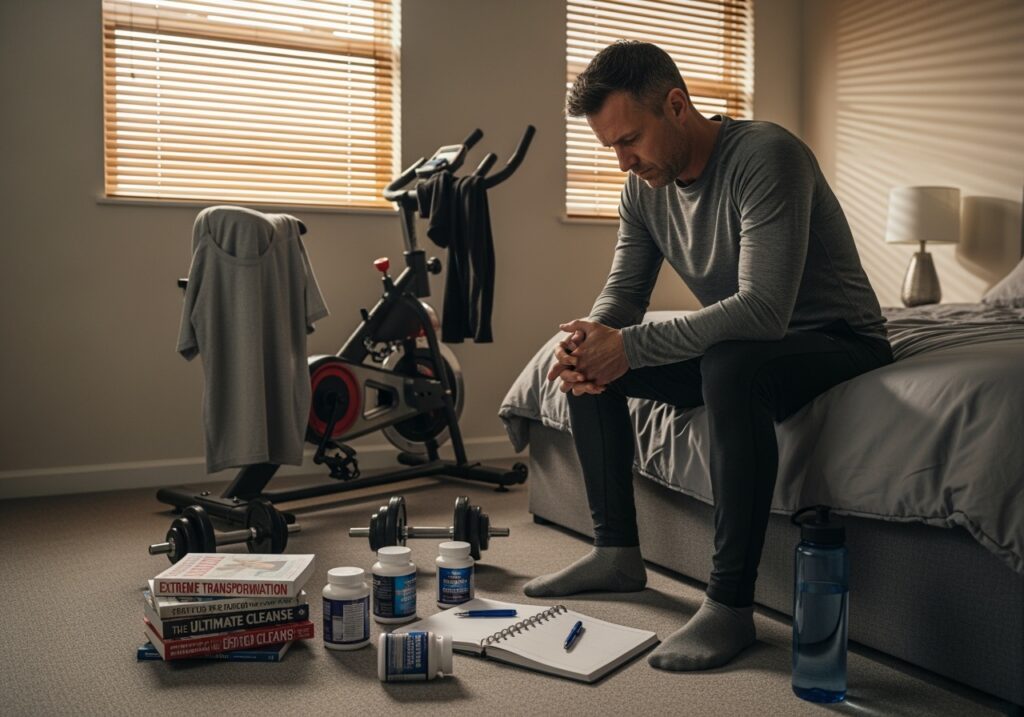
We’ve all been there—January 1st rolls around, and suddenly we’re going to exercise for 2 hours daily, eat perfectly, and completely overhaul our lives. By February, we’re back to old patterns, feeling defeated.
This happens because big gestures rely on motivation, which is essentially an emotion. And emotions, by nature, are temporary. Consistency over intensity wins because it builds systems that work regardless of how you feel on any given day.
The All-or-Nothing Mindset
Many men over 40 fall into the trap of thinking change has to be dramatic to be meaningful. This all-or-nothing mindset often stems from societal pressure to “man up” and make sweeping changes. But research in behavioral psychology shows that sustainable change happens through small, repeated actions that gradually reshape your neural pathways.
When you miss a day of your extreme routine, it’s easy to think, “I’ve blown it,” and abandon the effort entirely. With small daily habits, missing one day is just that—one day. You can easily get back on track tomorrow.
The 4 Pillars of Building Consistent Daily Habits
Pillar 1: Start Ridiculously Small
The key to building consistent habits after 40 is to make them so small that they feel almost silly not to do. Want to start exercising? Begin with one push-up. Want to read more? Start with one page. Want to meditate? Try one minute.
This approach works because it removes the friction that typically prevents us from starting. Once you’re in motion, you’ll often do more than the minimum, but the small commitment ensures you never skip a day.
Pillar 2: Stack Your Habits
Habit stacking is a powerful technique where you attach a new habit to an existing one. Your current habits are already strong neural pathways in your brain—by connecting new behaviors to them, you make adoption much easier.
Formula: After I [existing habit], I will [new habit].
Examples for men over 40:
- After I pour my morning coffee, I will write down three things I’m grateful for
- After I sit down at my desk, I will review my daily priorities
- After I brush my teeth at night, I will lay out my workout clothes for tomorrow
Pillar 3: Track Your Progress
What gets measured gets managed. Habit tracking provides visual proof of your consistency and helps maintain momentum during challenging times. You don’t need fancy apps—a simple calendar with X’s marking completed days works perfectly.
Budget-friendly option: Habit Tracker Wall Calendar and colored markers (under $15 total)
Mid-range option: Habitica app – gamifies your habits ($5/month)
Premium option: The Full Focus Planner – comprehensive planning system ($39)
Pillar 4: Focus on Identity, Not Outcomes
Instead of saying “I want to lose 20 pounds,” say “I’m becoming someone who takes care of his body.” This shift from outcome-based to identity-based habits is crucial for long-term success.
Every small action becomes evidence of your new identity. When you do 10 push-ups, you’re not just exercising—you’re proving to yourself that you’re the type of person who prioritizes fitness. This psychological shift makes consistency much easier to maintain.
Recommended Reading


Building Your Personal Consistency System

Step 1: Choose Your Keystone Habit
A keystone habit is one behavior that naturally triggers other positive behaviors.
For men over 40, common keystone habits include:
- Morning routine: 15 minutes of planning your day
- Evening reflection: 5 minutes reviewing what went well
- Physical movement: 10 minutes of walking after lunch
- Learning: Reading 5 pages of a personal development book
Choose one that aligns with your biggest priority right now. If you’re struggling with Breaking Through Mental Blocks, start with a morning planning routine. If physical health is your focus, begin with daily movement.
Step 2: Design Your Environment
Your environment shapes your behavior more than willpower ever will.
Make good choices easier and bad choices harder:
- For exercise: Lay out workout clothes the night before
- For reading: Keep a book on your nightstand, not your phone
- For healthy eating: Prep nutritious snacks and make them visible
- For productivity: Create a dedicated workspace, even if it’s just a corner of a room
Step 3: Plan for Obstacles
Mental resilience through consistency means preparing for the inevitable challenges.
What will you do when:
- You’re traveling for work?
- You’re feeling sick?
- Family emergencies arise?
- You simply don’t feel motivated?
Having a plan for these scenarios prevents temporary setbacks from becoming permanent failures. Create “minimum viable” versions of your habits for tough days—maybe it’s just 2 push-ups instead of 10, or one paragraph instead of one page.
Step 4: Celebrate Small Wins
Your brain releases dopamine (the “feel-good” chemical) when you complete tasks and receive recognition. Don’t wait for big milestones to celebrate—acknowledge every small victory.
This could be as simple as:
- Checking off completed habits on your tracker
- Sharing your progress with a supportive friend
- Treating yourself to something small (but not counterproductive to your goals)
- Taking a moment to feel proud of your consistency
Overcoming Common Consistency Challenges for Men Over 40
Challenge #1
“I Don’t Have Time”
Reality check: You have the same 24 hours as everyone else. The issue isn’t time—it’s priorities and efficiency.
Solution: Start with habits that take 2 minutes or less. Everyone has 2 minutes. As these become automatic, you can gradually expand them. Also, consider habit stacking with activities you already do (like listening to educational podcasts during your commute).
Challenge #2
“I Keep Forgetting”
Solution: Use environmental cues and reminders. Set phone alarms, leave visual reminders, or use the habit stacking technique mentioned earlier. The goal is to make your new habit impossible to ignore.
Budget-friendly tracker: Simple habit tracking journal ($12-15)
Challenge #3
“I’m Not Seeing Results Fast Enough”
Mindset shift: Focus on the process, not the outcome. Every day you maintain your habit, you’re building mental strength through routine. Results will come, but they often happen gradually and then suddenly.
Strategy: Take progress photos, measurements, or keep a journal documenting how you feel. Sometimes the changes are happening internally before they become visible externally.
Challenge #4
“I’m Too Old to Change”
Truth bomb: Your brain maintains neuroplasticity (the ability to form new neural connections) throughout your entire life. Age might slow down the process slightly, but it doesn’t stop it.
Encouragement: Many men over 40 find they’re actually better at building habits than they were in their twenties because they have more self-awareness and life experience to draw from.

The Ripple Effect: How Small Daily Actions Transform Everything

Physical Wellness
When you commit to small, consistent physical actions, your body responds positively.
A daily 10-minute walk might seem insignificant, but it:
- Improves cardiovascular health
- Boosts mood through endorphin release
- Increases energy levels
- Often leads to additional healthy choices throughout the day

Flip 7 Classic Combo – Feel better, fast with one shake a day. FLIP 7 is an unmatched, all-in-one meal replacement SUPER FOOD powder with the most nutrient rich balance of health extending blends formulated to support whole body and mind wellness.
Mental Resilience
Daily discipline vs sporadic effort builds mental muscle. Each time you follow through on a small commitment to yourself, you strengthen your self-trust and confidence. This mental resilience then applies to all areas of your life—work challenges, relationship difficulties, and financial decisions.
Financial Independence
Small, consistent financial habits compound dramatically over time. Saving $5 daily might not seem like much, but it’s $1,825 per year. Invested wisely, this grows significantly over decades. More importantly, the habit of conscious spending decisions impacts every financial choice you make.
Your 30-Day Consistency Challenge
Ready to put this into practice? Here’s a simple 30-day challenge designed specifically for habit formation for men over 40:
Week 1: Foundation Building
- Choose ONE keystone habit (2 minutes or less)
- Set up your tracking system
- Focus only on showing up daily—don’t worry about perfection
Week 2: Momentum Building
- Continue your keystone habit
- Add environmental cues to support your habit
- Celebrate each day you complete your habit
Week 3: Obstacle Navigation
- Maintain your habit even when life gets complicated
- Create “minimum viable” versions for tough days
- Practice self-compassion when you miss a day
Week 4: Identity Integration
- Reflect on how this habit is changing your self-perception
- Consider what additional habits would support your new identity
- Plan for month two and beyond
The Long-Term Vision: Building a Life of Sustainable Success

The psychology of consistency and daily habits for men over 40 isn’t just about individual behaviors—it’s about creating a life where positive choices become automatic. When you master the art of small, daily actions, you develop:
- Unshakeable confidence in your ability to follow through
- Mental resilience that helps you navigate life’s challenges
- Physical vitality that supports all your other goals
- Financial stability built through consistent, smart choices
This holistic approach aligns perfectly with The Triangle of Well-being, where health, mind, and money work together to create lasting success.
Looking Beyond the First 30 Days
Once you’ve established your first consistent habit, you can gradually add others. The key is patience and progression. Most men over 40 can successfully maintain 3-5 daily habits without feeling overwhelmed.
Consider building habits in each area of the triangle:
- Physical: Daily movement, hydration tracking, sleep consistency
- Mental: Morning planning, evening reflection, learning time
- Financial: Expense tracking, savings automation, investment education

Aquasana’s fast-flowing Clean Water Machine removes 78 contaminants including 99% of lead & cysts, 15x more than the leading pitcher filter.
Taking Action: Your Next Steps

The psychology behind why small actions work better is clear, but knowledge without action is just entertainment.
Here’s how to start today:
- Choose your first habit (2 minutes or less)
- Set up your tracking system (calendar, app, or journal)
- Identify your trigger (what existing habit will you stack this onto?)
- Plan for obstacles (what’s your minimum viable version?)
- Commit to 30 days (give the process time to work)
“Success is the sum of small efforts repeated day in and day out.”
– Robert Collier
Remember, you’re not just building a habit—you’re proving to yourself that you’re the type of person who follows through on commitments. This identity shift is the foundation of all lasting change.
The path to transformation isn’t found in dramatic gestures or overnight changes. It’s built through the consistency mindset for men who understand that small daily actions, repeated over time, create extraordinary results.
Your future self is counting on the choices you make today. Start small, stay consistent, and trust the process. The compound effect of your daily habits will surprise you with their power to transform not just your behaviors, but your entire life.
What small daily action will you commit to starting today? Share your commitment in the comments below—accountability is one of the most powerful tools for maintaining consistency.
Disclosure
This article contains affiliate links. If you choose to make a purchase through these links, we may earn a commission at no additional cost to you.
Important Note: The information in this post is meant to educate and inform, not to replace professional mental health care or psychological advice. While we’ve spent years studying mental resilience and personal development, we’re not licensed mental health professionals or therapists. Everyone’s life circumstances and mental health journey are unique, so what works for one person might not work for another. If you’re experiencing serious mental health challenges, please reach out to a qualified mental health professional. Some of the strategies discussed may not be suitable for everyone, and it’s important to assess your own situation carefully. By reading and using this information, you’re taking responsibility for your own decisions. Remember, seeking help is a sign of strength, not weakness. Stay resilient!