Weathering the Change: Mental Strategies for Seasonal Transitions
As the leaves begin their colorful transformation and daylight hours start shrinking, many men over 40 find themselves facing an unexpected challenge: seasonal mental health changes. If you’ve noticed your mood shifting with the weather, feeling less motivated as summer fades, or experiencing what people call the “winter blues,” you’re not alone—and more importantly, you’re not stuck.
“The only way to make sense out of change is to plunge into it, move with it, and join the dance.”
– Alan Watts
Mental strategies for seasonal transitions after 40 aren’t just about surviving the darker months; they’re about thriving through every season of the year. Whether you’re a construction worker who dreads shorter daylight hours, an office manager feeling the Sunday scaries intensify, or a small business owner worried about seasonal revenue dips, this guide will give you practical tools to maintain your mental resilience no matter what Mother Nature throws your way.
Disclosure
This article contains affiliate links. If you choose to make a purchase through these links, we may earn a commission at no additional cost to you.
Understanding Your Seasonal Mental Shifts
Before we dive into solutions, let’s talk about what’s actually happening in your brain during seasonal transitions. Think of your mind like a car engine—it runs differently in summer heat versus winter cold, and it needs different maintenance strategies for peak performance.
Seasonal Affective Disorder (SAD) sounds scary, but it’s really just a fancy term for when your mood consistently drops during certain seasons. For most guys, this happens during fall and winter when we get less sunlight. Your brain produces less serotonin (the “feel-good” chemical) and more melatonin (the “sleepy” hormone), which is like having your internal thermostat stuck on “low energy mode.”
But here’s the thing—you don’t need a medical diagnosis to benefit from seasonal mental health strategies. Even mild mood changes deserve attention and action.

The Three Pillars of Seasonal Mental Resilience
Just like The Triangle of Well-being connects your physical health, mental state, and financial stability, seasonal mental resilience relies on three core strategies:
- Light and Environment Management
- Routine and Structure Adaptation
- Social Connection and Support Systems
Let’s break down each pillar with practical, budget-friendly approaches that work whether you’re making $35K or $150K a year.
Pillar 1
Light and Environment Management
The Science Made Simple
Your brain has an internal clock called your circadian rhythm—think of it as your body’s natural alarm system. When daylight decreases, this clock gets confused, leading to mood changes, sleep problems, and energy crashes. The solution? We need to hack this system with strategic light exposure.
Light Therapy: Your Seasonal Game-Changer
Light therapy for seasonal depression isn’t just for people with severe SAD. It’s like giving your brain a daily dose of artificial sunshine, and the results can be remarkable.

Budget-Friendly Option ($25-50): The Verilux HappyLight VT22
Compact Personal, Portable Light Therapy Energy Lamp is perfect for guys just starting out. It’s small enough for your desk at work and bright enough to make a difference. Use it for 20-30 minutes while drinking your morning coffee or checking emails.
Note: Prices and availability may vary. Always check current Amazon pricing and read recent reviews before purchasing.

Mid-Range Investment ($75-150): For more serious seasonal mood management, consider the Philips SmartSleep Wake-up Light Therapy Alarm Clock. This gradually increases light to wake you naturally and can be used throughout the day. It’s like having a personal sunrise every morning, even when it’s still dark outside.
Note: Prices and availability may vary. Always check current Amazon pricing and read recent reviews before purchasing.

Premium Solution ($200+): The Northern Light Technology Boxelite-OS Light Therapy Box is the gold standard. If you’re experiencing significant seasonal mood changes, this investment pays for itself in improved productivity and well-being.
Note: Prices and availability may vary. Always check current Amazon pricing and read recent reviews before purchasing.
DIY Environment Optimization
You don’t need expensive equipment to start coping with seasonal changes:
- Maximize natural light: Open all blinds and curtains during daylight hours
- Strategic mirror placement: Position mirrors to reflect light around your living spaces
- Light-colored walls and decor: Lighter colors reflect more light and create a brighter atmosphere
- Outdoor time: Even 15 minutes outside during lunch can boost your mood significantly
Pillar 2
Routine and Structure Adaptation
Why Routines Matter More in Fall and Winter
During seasonal transitions, your brain craves predictability. Think of routines as mental anchors—they keep you steady when everything else feels uncertain. This connects directly to the principles we discussed in Building Unshakeable Confidence in Your 40s and Beyond, where consistent daily practices build long-term resilience.
The 5-Minute Morning Mental Reset
Start each day with this simple mental resilience seasonal transitions routine:
- Light exposure (natural or artificial) – 5 minutes
- Gratitude practice – Write down 3 things you’re grateful for
- Intention setting – Choose one priority for the day
- Body check-in – Notice how you’re feeling physically and mentally
This isn’t about perfection; it’s about consistency. Missing a day doesn’t matter—getting back to it tomorrow does.
Exercise: Your Natural Antidepressant
Exercise seasonal depression relief doesn’t require a gym membership or expensive equipment. Your body produces natural mood-boosting chemicals (endorphins) when you move, making it one of the most effective winter blues men over 40 strategies.
No-Cost Options:
- Walking meetings instead of sitting in conference rooms
- Taking stairs instead of elevators
- Parking farther away from store entrances
- Dancing to music while doing household chores

Resistance Bands Set with Door Anchor ($15-25) for full-body workouts at home
Note: Prices and availability may vary. Always check current Amazon pricing and read recent reviews before purchasing.

Yoga Mat ($20-30) for stretching and bodyweight exercises
Note: Prices and availability may vary. Always check current Amazon pricing and read recent reviews before purchasing.
Sleep Optimization During Seasonal Changes
Sleep patterns seasonal changes can throw off your entire mental game.
Here’s how to maintain quality rest:
- Consistent bedtime: Go to bed at the same time, even on weekends
- Morning light exposure: Get bright light within 30 minutes of waking
- Evening wind-down: Dim lights 2 hours before bed
- Cool, dark bedroom: Your brain sleeps better in cooler temperatures (65-68°F)
Pillar 3:
Social Connection and Support Systems
The Hidden Challenge of Seasonal Isolation
As days get shorter and weather gets colder, it’s natural to want to hibernate. But social connections winter months are crucial for mental health. Isolation feeds depression, while connection builds resilience.
Building Your Support Network
For the Budget-Conscious:
- Community groups: Libraries, community centers, and religious organizations often have free activities
- Walking groups: Many neighborhoods have informal walking clubs
- Volunteer opportunities: Helping others boosts your mood while building connections
- Online communities: Join forums or social media groups focused on your interests
For Those With More Resources:
- Hobby classes: Photography, woodworking, or cooking classes at community colleges
- Fitness memberships: Group fitness classes provide both exercise and social interaction
- Professional networking events: Combine career development with social connection
The Power of Professional Support
Sometimes seasonal depression coping strategies require professional help, and that’s completely normal. Think of therapy like going to a mechanic when your car makes strange noises—it’s preventive maintenance, not a sign of failure.

For Understanding Seasonal Changes: Winter Blues: Everything You Need to Know to Beat Seasonal Affective Disorder by Norman E. Rosenthal
This is the definitive guide written by the doctor who first identified SAD. It’s written in plain English and includes practical strategies anyone can implement.
Note: Prices and availability may vary. Always check current Amazon pricing and read recent reviews before purchasing.

For Building Mental Resilience: The Resilience Factor: 7 Keys to Finding Your Inner Strength and Overcoming Life’s Hurdles by Karen Reivich
Perfect for guys who want practical tools without psychological jargon.
Note: Prices and availability may vary. Always check current Amazon pricing and read recent reviews before purchasing.

For Mindfulness and Stress Management: Wherever You Go, There You Are: Mindfulness Meditation in Everyday Life by Jon Kabat-Zinn
This book makes meditation accessible for skeptical, practical-minded men.
Note: Prices and availability may vary. Always check current Amazon pricing and read recent reviews before purchasing.
Advanced Strategies: Mindfulness Seasonal Changes
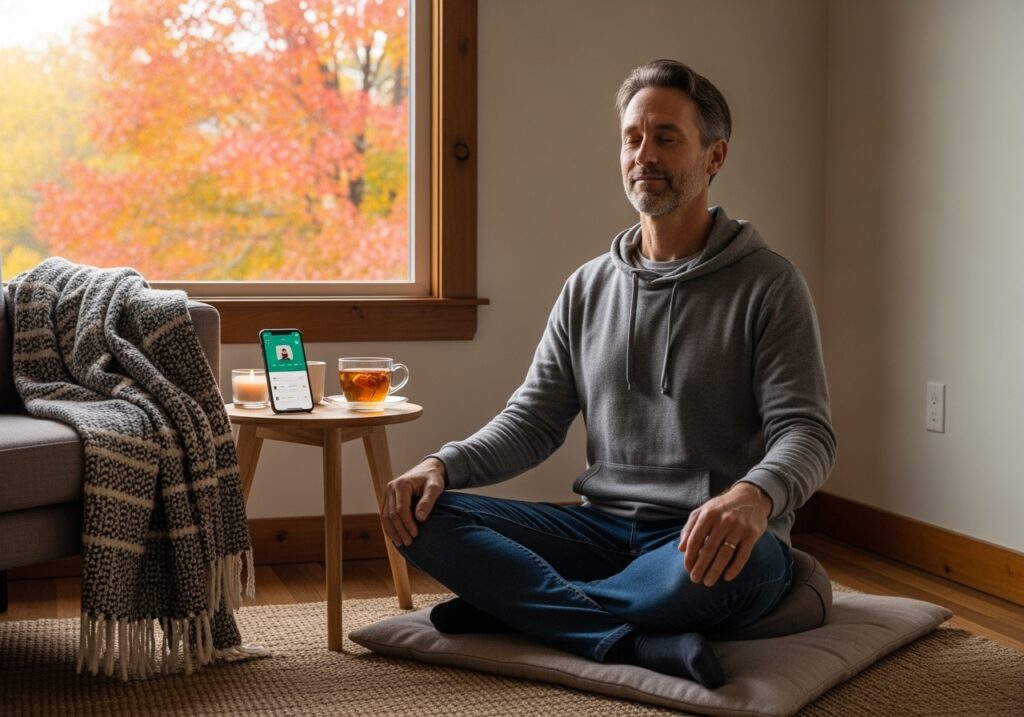
Meditation Apps That Actually Work for Guys
Many men think meditation is too “woo-woo,” but it’s really just mental training—like going to the gym for your brain. Mindfulness seasonal changes practices help you observe your thoughts without getting trapped by them.
Free Options:
- Insight Timer: Thousands of free guided meditations, including specific ones for seasonal depression
- YouTube: Search “meditation for men” or “mindfulness for beginners”
Paid Options Worth the Investment:
- Headspace: Specifically designed programs for sleep, stress, and seasonal mood changes ($5-13/month)
- Calm: Great for bedtime stories and sleep sounds that help with seasonal sleep disruption ($70/year)
- Mindful Mantra: Personalize your meditation journey ($4.99/month)
The 3-Minute Breathing Reset
When seasonal stress hits, use this quick technique (based on principles from Stress-Proofing Your Life: A Mid-Life Man’s Guide):
- Inhale for 4 counts through your nose
- Hold for 4 counts
- Exhale for 6 counts through your mouth
- Repeat 5 times
This activates your parasympathetic nervous system (your body’s “calm down” response) and can be done anywhere—in your car, at your desk, or before a difficult conversation.
Nutrition and Supplements: Fueling Your Seasonal Mental Health

The Vitamin D Connection
Vitamin D deficiency winter is incredibly common, especially for men over 40. Think of vitamin D as fuel for your brain’s happiness engine. When you don’t get enough sunlight, your body can’t produce adequate amounts.
Supplement Recommendations:
- Nature Made Vitamin D3 2000 IU – Affordable, third-party tested, and the right dosage for most men
- Nordic Naturals Vitamin D3 5000 IU – Higher potency for those with significant deficiency
Food Sources (Budget-Friendly):
- Canned salmon or sardines
- Egg yolks
- Fortified milk or cereals
- Mushrooms (especially UV-treated varieties)
Omega-3 Fatty Acids: Brain Food
These healthy fats support brain function and mood regulation.
If fresh fish is expensive, canned options work just as well:
- Budget option: Canned sardines or mackerel ($1-2 per can)
- Supplement option: Nordic Naturals Ultimate Omega if you can’t stand fish

Flip 7 Classic Combo – Feel better, fast with one shake a day. FLIP 7 is an unmatched, all-in-one meal replacement SUPER FOOD powder with the most nutrient rich balance of health extending blends formulated to support whole body and mind wellness.
Creating Your Personal Seasonal Action Plan
The 30-Day Seasonal Mental Health Challenge
Instead of trying to change everything at once, pick one strategy from each pillar and commit for 30 days:
Week 1-2: Foundation Building
- Choose your light therapy approach
- Establish morning routine
- Identify one social activity
Week 3-4: Expansion
- Add exercise component
- Try meditation app
- Consider vitamin D supplementation
Week 4+: Optimization
- Adjust strategies based on what’s working
- Add additional elements gradually
- Plan for next seasonal transition
Tracking Your Progress
You don’t need fancy apps or complicated systems. A simple notebook or phone notes app works perfectly.
Track:
- Energy levels (1-10 scale)
- Mood (1-10 scale)
- Sleep quality (1-10 scale)
- Activities completed (checkmarks)
When to Seek Additional Help
If you’re implementing these mental strategies for seasonal transitions after 40 consistently for 4-6 weeks and still experiencing:
Please reach out to a mental health professional. This isn’t weakness—it’s smart maintenance, just like seeing a doctor for chest pain or a mechanic for car trouble.
Seasonal Transition Timeline: What to Expect

Early Fall (September-October)
- Begin light therapy routine
- Adjust exercise schedule for shorter days
- Start vitamin D supplementation
- Plan social activities for winter months
Deep Winter (November-February)
- Maintain consistent routines
- Increase social connections
- Monitor mood and energy levels
- Adjust strategies as needed
Spring Transition (March-May)
- Gradually reduce artificial light therapy
- Increase outdoor activities
- Maintain healthy habits developed
- Prepare for next seasonal cycle
Your Seasonal Success Toolkit
By now, you have a comprehensive understanding of seasonal mental health strategies that work for real men with real budgets and real lives. The key isn’t perfection—it’s consistency and adaptation.
Remember the core principles:
- Light management keeps your internal clock synchronized
- Routine adaptation provides stability during change
- Social connection prevents isolation and builds resilience
These strategies connect directly with everything we’ve discussed about The Power of Progressive Mindset and building lasting change in your 40s and beyond.
Taking Action Today

Don’t wait for the “perfect” moment or until you feel worse. Seasonal depression coping strategies work best as prevention, not just treatment.
Pick one thing from this guide and start today:
- Order a basic light therapy lamp
- Download a meditation app
- Schedule a 15-minute morning walk
- Text a friend you haven’t talked to in a while
- Buy vitamin D supplements on your next grocery run
“You are never too old to set another goal or to dream a new dream.”
– C.S. Lewis
Your future self—the one who feels energized and resilient through every season—will thank you for starting now.
Ready to build unshakeable mental resilience? Start with one strategy today, and remember: every small step forward is progress worth celebrating. Your mental health isn’t a luxury—it’s the foundation everything else in your life is built upon.
Disclosure
This article contains affiliate links. If you choose to make a purchase through these links, we may earn a commission at no additional cost to you.
Important Note: The information in this post is meant to educate and inform, not to replace professional mental health care or psychological advice. While we’ve spent years studying mental resilience and personal development, we’re not licensed mental health professionals or therapists. Everyone’s life circumstances and mental health journey are unique, so what works for one person might not work for another. If you’re experiencing serious mental health challenges, please reach out to a qualified mental health professional. Some of the strategies discussed may not be suitable for everyone, and it’s important to assess your own situation carefully. By reading and using this information, you’re taking responsibility for your own decisions. Remember, seeking help is a sign of strength, not weakness. Stay resilient!