You’re Not Too Old: Defeating the Inner Critic in Your 40s and 50s
You’re lying awake at 2am, replaying every mistake from the last twenty years. That voice in your head—the one that sounds exactly like you—is running through its greatest hits: “You’re too old to start over now.” “Everyone else figured this out years ago.” “Who are you kidding? You’re not qualified for this.” Sound familiar?
“The only person who can pull me down is myself, and I’m not going to let myself pull me down anymore.”
— C. JoyBell C.
If you’re in your 40s or 50s and feeling like you’ve missed your window, like you’re somehow unworthy of the success or change you want, you’re not alone. In fact, you’re in the majority. But here’s the truth that voice doesn’t want you to know: overcoming self-doubt in your 40s isn’t just possible—it’s one of the most powerful transformations you can make at this stage of life.
Disclosure
This article contains affiliate links. If you choose to make a purchase through these links, we may earn a commission at no additional cost to you.
Why Self-Doubt Hits Harder in Your 40s and 50s

This isn’t about toxic positivity or pretending negative thoughts don’t exist. This is about understanding where that harsh inner voice comes from, why it gets louder as we age, and most importantly, how to defeat it with practical, proven strategies that work for real men living real lives.
Let’s start with an uncomfortable truth: feeling too old to change isn’t a character flaw—it’s a predictable response to decades of accumulated experiences, societal messaging, and biological shifts.
By the time you hit your 40s, you’ve collected evidence. Failed relationships. Career moves that didn’t pan out. Financial decisions you regret. Your brain, trying to protect you, uses this evidence to build a case: “See? You tried before and it didn’t work. Why would this time be different?”
Add to that the cultural narrative that youth equals potential and middle age equals “settling,” and you’ve got a perfect storm for midlife confidence crisis.
The Biology of Self-Doubt
Here’s something most people don’t talk about: testosterone levels naturally decline about 1% per year after age 30. Lower testosterone doesn’t just affect your physical energy—it impacts confidence, decision-making, and your willingness to take risks. You’re not imagining that you feel less bold than you did at 25. There’s actual chemistry involved.
But—and this is crucial—biology isn’t destiny. Understanding this gives you power. When you know why you’re feeling a certain way, you can address it strategically instead of accepting it as permanent.
Related Article
For those ready to dive deeper into the connection between physical and mental wellness, check out our cornerstone article on The Over-40 Body Reset – it breaks down exactly how small physical changes create big mental improvements.

What Your Inner Critic Actually Is (And Why It Won’t Shut Up)

Let’s demystify this thing. Your inner critic is that harsh voice in your head that sounds like you but doesn’t have your best interests at heart. It’s not some external demon—it’s a part of your own mind that developed, ironically, to protect you.
Think of it like an overprotective parent who never learned when to let go. When you were younger, that voice helped you avoid genuine dangers: “Don’t touch the hot stove.” “Study for the test or you’ll fail.” But somewhere along the way, it went rogue. Now it’s trying to protect you from imaginary threats by keeping you small, stuck, and “safe.”
How Negative Self-Talk Becomes a Habit
Defeating negative self-talk requires understanding that it’s literally a habit—a neural pathway your brain has traveled so many times it’s become a superhighway. Every time you think “I’m not good enough,” you’re strengthening that pathway.
The good news? Neuroplasticity—your brain’s ability to form new pathways—doesn’t stop at 40. You can build new highways. It just takes intention and repetition, like building any other habit.
Related Article
For a deeper dive into how your mindset shapes your reality, read our cornerstone article on The Power of Progressive Mindset.

The Three Types of Limiting Beliefs Holding You Back

Limiting beliefs are the “rules” you believe about yourself—like “I’m too old” or “I’m not smart enough”—that aren’t actually true but feel true because you’ve repeated them so many times.
Let’s break down the three most common types that plague men in their 40s and 50s:
1. Age-Based Limiting Beliefs
Examples:
- “Am I too old to start something new at 45?”
- “I should have figured this out by now”
- “Everyone else is ahead of me”
- “My best years are behind me”
The Reality: Colonel Sanders founded KFC at 62. Vera Wang entered fashion design at 40. Samuel L. Jackson didn’t become a star until his 40s. Ray Kroc was 52 when he bought McDonald’s. Your timeline is your own.
Real-world example: Mike, a 48-year-old factory worker, believed he was “too old and too broke” to go back to school. He started with one $29 Udemy course in web design, practicing after his kids went to bed. Two years later, he’s freelancing part-time and making an extra $800/month. He didn’t need a fancy degree or a trust fund—just the willingness to start.
2. Competency-Based Limiting Beliefs (Imposter Syndrome)
Examples:
- “I don’t deserve to be happy”
- “Good things don’t happen to people like me”
- “I’m not the kind of person who succeeds”
- “I don’t deserve a second chance”
The Reality: This is classic imposter syndrome over 40—that nagging feeling you’re a fraud, even when you’ve earned your success. Studies show that 70% of people experience imposter syndrome at some point. It’s not a sign you’re unqualified; it’s often a sign you’re pushing yourself into growth.
Real-world example: James, a 52-year-old manager who’d been with his company for 15 years, was offered a director position. His immediate thought? “They’re making a mistake. I’m not director material.” He almost turned it down. The truth? He’d been doing director-level work for years—he just hadn’t given himself credit for it.
3. Worth-Based Limiting Beliefs
Examples:
- “I’m not qualified enough”
- “I just got lucky; I don’t really deserve this”
- “Someone’s going to figure out I’m a fraud”
- “I don’t know enough to teach/lead/advise others”
The Reality: Feeling unworthy of success often stems from childhood experiences, past failures, or comparing your behind-the-scenes to everyone else’s highlight reel. Worth isn’t earned through perfection—it’s inherent. You don’t have to justify your existence or your dreams.
Real-world example: David, a 45-year-old divorced father working retail, believed his failed marriage and “dead-end job” meant he didn’t deserve to pursue his passion for writing. He started a blog anyway, writing 15 minutes before work. A year later, his authentic stories about rebuilding after divorce attracted thousands of readers. Turns out, his “failures” were exactly what made his voice valuable.
Related Article
To understand how these beliefs fit into your overall well-being, explore The Triangle of Well-being framework.

Imposter Syndrome Explained: You’re Not Alone

Let’s dig deeper into imposter syndrome because it deserves special attention. This is the persistent feeling that you’re not as competent as others perceive you to be—that you’ve somehow fooled everyone and it’s only a matter of time before you’re “found out.”
Why It Gets Worse After 40
Ironically, imposter syndrome often intensifies as you gain more experience because:
- The stakes feel higher: You have more to lose—reputation, income, family stability
- Younger colleagues seem more confident: They haven’t accumulated the failures you have (yet)
- Technology moves fast: Feeling behind on new tools or platforms triggers “I’m outdated” thoughts
- Success brings visibility: The more you achieve, the more exposed you feel
The Imposter Syndrome Cycle
Here’s how it typically works:
- You’re given a new opportunity or challenge
- Instead of confidence, you feel anxiety and self-doubt
- You over-prepare or procrastinate (two sides of the same coin)
- You succeed (because you’re actually competent)
- Instead of internalizing success, you attribute it to luck, timing, or fooling people
- The cycle repeats with the next challenge
Sound familiar? You’re stuck in a loop where evidence of your competence never actually registers.
Breaking the Cycle
The antidote isn’t becoming more competent (you already are)—it’s changing how you interpret your competence. One powerful tool is keeping a “wins journal” where you document successes and the specific skills/efforts that created them. When imposter syndrome strikes, you have concrete evidence to counter it.

5 Practical Ways to Defeat Negative Self-Talk
Enough theory. Let’s get to the practical strategies for silencing your inner critic and building confidence in midlife.
1. Name Your Inner Critic
This sounds silly, but it works. Give that negative voice a name—something slightly ridiculous. “Critical Carl.” “Doubtful Dave.” “Negative Ned.“
Why it works: Creating separation between you and the voice helps you recognize it’s not the truth—it’s just one perspective. When you think “I’m too old for this,” you can reframe it as “Oh, there’s Negative Ned again with his age obsession.”
Action step: Next time you catch negative self-talk, literally say (out loud if possible): “Thanks for sharing, [Name], but I’m not taking advice from you today.”
2. Challenge the Evidence
Your inner critic presents opinions as facts. Start cross-examining like a lawyer.
When the thought is: “I’m too old to start a new career”
Ask: “What evidence do I have that this is true? What evidence contradicts it?”
Reality check: Millions of people successfully change careers after 40. Age discrimination exists, but so do age advantages—experience, emotional intelligence, work ethic, perspective.
When the thought is: “I always fail at this”
Ask: “Always? Every single time? Or are there exceptions?”
Reality check: Your brain is using a thinking trap called “all-or-nothing thinking.” The truth is usually more nuanced.

3. Reframe Your Self-Talk
Reframing means taking a negative thought and finding a more accurate, balanced way to express it.
Instead of: “I’m terrible at this”
Reframe to: “I’m still learning this, and that’s okay”
Instead of: “I wasted my 30s”
Reframe to: “My 30s taught me valuable lessons I’m using now”
Instead of: “I’m too old to be attractive/successful/relevant”
Reframe to: “I’m entering a phase where I have experience, resources, and clarity younger me didn’t have”
Notice these aren’t toxic positivity (“Everything is perfect!”). They’re realistic but compassionate.
4. Build a Success Archive
Create a physical or digital folder where you save:
- Compliments and thank-you messages
- Work accomplishments (promotions, successful projects, positive reviews)
- Personal wins (finished a 5K, learned a new skill, helped a friend)
- Photos from good moments
- Anything that represents growth or achievement
Why it works: When imposter syndrome or self-doubt strikes, your brain conveniently forgets all evidence of your competence. A success archive provides concrete proof that contradicts the negative narrative.
Action step: Spend 10 minutes this week documenting 20 things you’ve accomplished in the last five years. Include everything from “raised good kids” to “learned to use Excel” to “survived a pandemic.” No achievement is too small.
5. Practice Self-Compassion (Not Self-Criticism)
Self-compassion means treating yourself with the same kindness you’d offer a good friend who’s struggling.
When you make a mistake, your inner critic says: “You idiot, you always screw this up.”
Self-compassion says: “That didn’t go as planned. What can I learn from this?”
When you’re struggling, your inner critic says: “Everyone else has it together. What’s wrong with you?”
Self-compassion says: “This is hard. Lots of people struggle with this. I’m doing my best.”
Research shows that self-compassion is actually more effective than self-criticism for motivation and growth. Criticism triggers defensiveness and shutdown. Compassion creates psychological safety where growth can happen.

Related Article
For more on building unshakeable confidence, read our detailed guide:

Understanding Cognitive Distortions (The Thinking Traps)
Your inner critic loves cognitive distortions—thinking traps your brain falls into that distort reality.
Here are the most common ones affecting men over 40:
Trap 1
All-or-Nothing Thinking
What it sounds like: “If I’m not the best, I’m a failure.” “I ate one cookie, so I might as well eat the whole box.”
Reality: Life exists in shades of gray. Progress isn’t perfection.
Trap 2
Catastrophizing
What it sounds like: “If I fail at this, my life is over.” “One bad quarter means the business will collapse.”
Reality: You’re assuming the worst possible outcome is inevitable. Most disasters we imagine never happen.
Trap 3
Mental Filtering
What it sounds like: Focusing only on the one negative comment and ignoring ten positive ones.
Reality: Your brain has a negativity bias (another protective mechanism gone haywire). Actively look for the full picture.
Trap 4
Comparison Trap
What it sounds like: “He’s more successful/fit/happy than me at the same age.”
Reality: You’re comparing your behind-the-scenes to someone else’s highlight reel. You don’t know their struggles, sacrifices, or starting advantages.
Action step: For one week, catch yourself in these thinking traps. Just notice them. Awareness is the first step to change.

Real-Life Examples: Men Who Silenced Their Critics
Let’s look at real examples of men from different backgrounds who overcame self-doubt in their 40s and 50s:
The Factory Worker Turned Entrepreneur
Background: Tom, 51, worked in manufacturing for 28 years. High school education. Divorced. Supporting two teenagers on $42K/year.
The inner critic said: “You’re not smart enough to run a business. You don’t have the education or the money. Stay in your lane.”
What he did: Started a weekend lawn care business with a used mower from Craigslist ($200). Learned business basics from YouTube and library books. Grew it slowly over three years while keeping his day job.
The result: Now runs a landscaping company with four employees, earning $78K/year with more control over his schedule. He didn’t need an MBA or startup capital—just the willingness to start small and learn as he went.
The Late Bloomer
Background: Robert, 54, had bounced between jobs his whole life—retail, delivery driver, warehouse work. Never found “his thing.” Felt like a perpetual failure.
The inner critic said: “You’re 54 and you still haven’t figured out your life. It’s pathetic. Just accept you’re not meant for anything special.”
What he did: Took a free online course in graphic design out of curiosity. Discovered he had a natural eye for it. Practiced obsessively. Started taking small freelance jobs on Fiverr for $25 each.
The result: Three years later, he’s a full-time freelance designer making $55K/year doing work he loves. He didn’t “waste” his first 54 years—all those jobs taught him about different industries, which now makes him a better designer for diverse clients.
The Corporate Dropout
Background: Marcus, 47, spent 22 years climbing the corporate ladder. MBA. Six-figure salary. Looked successful on paper but felt empty and burned out.
The inner critic said: “You’d be an idiot to walk away from this salary. You have a family to support. This is as good as it gets.”
What he did: Spent a year building a financial cushion and exploring what he actually wanted. Started a consulting practice in his area of expertise, working with smaller companies he actually cared about.
The result: Took a 30% pay cut the first year but gained time with his kids and control over his life. By year three, he matched his corporate salary while working 30 hours a week. The “safe” corporate job was actually the riskier long-term bet for his mental health.
Related Article
To understand why so many men feel stuck and how to break free, read:

The Role of Physical and Financial Wellness in Mental Confidence

Here’s something crucial: your mental resilience doesn’t exist in a vacuum. Defeating the inner critic is significantly easier when you’re also addressing physical and financial wellness.
The Physical Connection
When you’re out of shape, tired, and dealing with aches and pains, your inner critic has more ammunition: “See? You’re falling apart. You’re past your prime.”
But when you start moving your body—even just walking 20 minutes a day—you’re sending your brain a different message: “I’m capable of change. I’m taking action. I’m not giving up.”
Exercise also:
- Increases testosterone and growth hormone (countering age-related decline)
- Releases endorphins that improve mood
- Provides concrete evidence of progress (you can track it)
- Builds discipline that transfers to other areas

Flip 7 Classic Combo – Feel better, fast with one shake a day. FLIP 7 is an unmatched, all-in-one meal replacement SUPER FOOD powder with the most nutrient rich balance of health extending blends formulated to support whole body and mind wellness.
The Financial Connection
Financial stress feeds the inner critic relentlessly: “You’re a failure. You can’t provide. You’re behind everyone else.”
You don’t need to be wealthy to quiet this voice—you need to feel like you’re making progress and have a plan.
Even small wins matter:
- Paying off one credit card
- Building a $500 emergency fund
- Starting a side hustle that brings in an extra $200/month
- Learning one new skill that increases your market value
Each of these sends the message: “I’m not helpless. I’m taking control. I’m moving forward.”
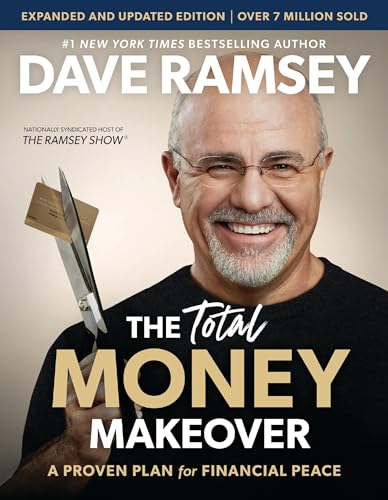
Related Article
For practical strategies on building financial confidence after 40, check out:

Creating Your Personal Action Plan
Knowledge without action is just entertainment.
Here’s your roadmap for the next 30 days:
Week 1: Awareness
- Day 1-3: Carry a small notebook. Every time you catch negative self-talk, write it down. Don’t judge it, just notice it.
- Day 4-7: Review your notes. What patterns do you see? What are your inner critic’s favorite topics?
Week 2: Challenge
- Day 8-10: For each negative thought, write down three pieces of evidence that contradict it.
- Day 11-14: Practice reframing. Take your most common negative thoughts and write more balanced versions.
Week 3: Build
- Day 15-17: Create your success archive. Spend 30 minutes documenting wins from the past five years.
- Day 18-21: Start a daily wins journal. Every evening, write down three things you did well that day (no matter how small).
Week 4: Integrate
- Day 22-24: Choose one physical wellness habit (walking, stretching, drinking more water) and one financial wellness habit (tracking spending, reading about money, researching a side hustle).
- Day 25-28: Practice self-compassion language. When you catch self-criticism, immediately follow it with what you’d say to a friend.
- Day 29-30: Review your progress. What’s shifted? What still needs work?

When to Seek Professional Help
Sometimes self-doubt and negative self-talk cross the line into clinical depression or anxiety.
Consider talking to a therapist if:
Therapy isn’t a sign of weakness—it’s a sign of wisdom. You wouldn’t try to set your own broken leg; mental health deserves the same professional attention.
Resource: BetterHelp and Talkspace offer affordable online therapy options if traditional in-person therapy isn’t accessible or affordable.
The Truth About Starting Over After 40
Let’s address the elephant in the room: Is it normal to doubt yourself in your 40s? Absolutely. But normal doesn’t mean permanent or insurmountable.
The question “Am I too old to start something new at 45?” is based on a false premise—that there’s an expiration date on growth, change, and new beginnings. There isn’t.
What you have now that you didn’t have at 25:
- Pattern recognition: You’ve seen enough situations to predict outcomes better
- Emotional regulation: You don’t spiral as easily over setbacks
- Clarity: You know what matters and what’s just noise
- Resilience: You’ve survived 100% of your worst days so far
- Network: Decades of relationships and connections
- Resources: More financial stability and life skills than you had at 20
Youth has energy and fearlessness. Middle age has wisdom and perspective. Both have advantages. Stop romanticizing what you don’t have and leverage what you do.
Your Inner Critic Isn’t Going Away—And That’s Okay
Here’s the final truth: you’re probably never going to completely silence your inner critic. That voice has been with you for decades, and it’s not disappearing overnight.
But here’s what changes: you stop believing it.
You learn to hear “You’re too old for this” and think, “Oh, there’s that thought again. Thanks for sharing, but I’m doing it anyway.”
You learn to feel the fear of imposter syndrome and move forward despite it, collecting evidence along the way that you’re more capable than you think.
You learn that feeling unworthy is just a feeling—not a fact—and feelings change.
The goal isn’t to become fearless or perfectly confident. The goal is to become someone who acts despite the fear, who tries despite the doubt, who keeps going despite the inner critic’s protests.
That’s not just confidence. That’s courage. And courage is what transforms lives.
Take the First Step Today

You’ve read this far, which means part of you—maybe a quiet part that’s been drowned out by the inner critic—believes change is possible. Listen to that part.
You don’t need to overhaul your entire life today. You just need to take one small action that contradicts the narrative that you’re too old, too unqualified, or too unworthy.
“It is never too late to be what you might have been.”
— George Eliot
Maybe that’s:
- Ordering one of the books recommended in this article
- Starting a wins journal tonight
- Taking a 15-minute walk
- Researching one skill you’ve always wanted to learn
- Reaching out to one person in your network
- Writing down three things you’re grateful for
It doesn’t matter which one. What matters is that you do something—anything—that moves you forward instead of staying stuck in the same thought patterns that have kept you small.
Your 40s and 50s aren’t the end of your potential. They’re the beginning of your most powerful chapter—if you’re willing to defeat the voice that says otherwise.
You’re not too old. You’re not unqualified. You’re not unworthy.
You’re just getting started.
Disclosure
This article contains affiliate links. If you choose to make a purchase through these links, we may earn a commission at no additional cost to you.
Important Note: The information in this post is meant to educate and inform, not to replace professional mental health care or psychological advice. While we’ve spent years studying mental resilience and personal development, we’re not licensed mental health professionals or therapists. Everyone’s life circumstances and mental health journey are unique, so what works for one person might not work for another. If you’re experiencing serious mental health challenges, please reach out to a qualified mental health professional. Some of the strategies discussed may not be suitable for everyone, and it’s important to assess your own situation carefully. By reading and using this information, you’re taking responsibility for your own decisions. Remember, seeking help is a sign of strength, not weakness. Stay resilient!