Flexibility and Mobility: The Missing Link in Your Fitness
If you’re a man over 40, you’ve probably noticed something: getting out of bed takes a little longer, bending down to tie your shoes feels harder, and that stiffness in your back just won’t quit. You might be hitting the gym regularly, eating better, and trying to stay active—but something still feels off. Here’s the truth most fitness plans won’t tell you: flexibility and mobility for men over 40 aren’t just nice-to-haves—they’re essential.
“The greatest wealth is health.”
– Virgil
Most guys focus on building muscle or losing weight, but they completely ignore flexibility and mobility exercises. Then one day, they reach for something on a high shelf and—pop—something pulls. Or they try playing basketball with their kids and end up hobbling around for a week. Sound familiar?
The good news? It’s not too late. Whether you’re just starting your fitness journey or you’ve been working out for years, improving flexibility after 40 can transform how you move, feel, and live. Let’s dive into why this matters and what you can do about it today.
Disclosure
This article contains affiliate links. If you choose to make a purchase through these links, we may earn a commission at no additional cost to you.
What’s the Difference? Flexibility vs. Mobility Explained
Before we go further, let’s clear up some confusion. People use “flexibility” and “mobility” interchangeably, but they’re actually different—and you need both.
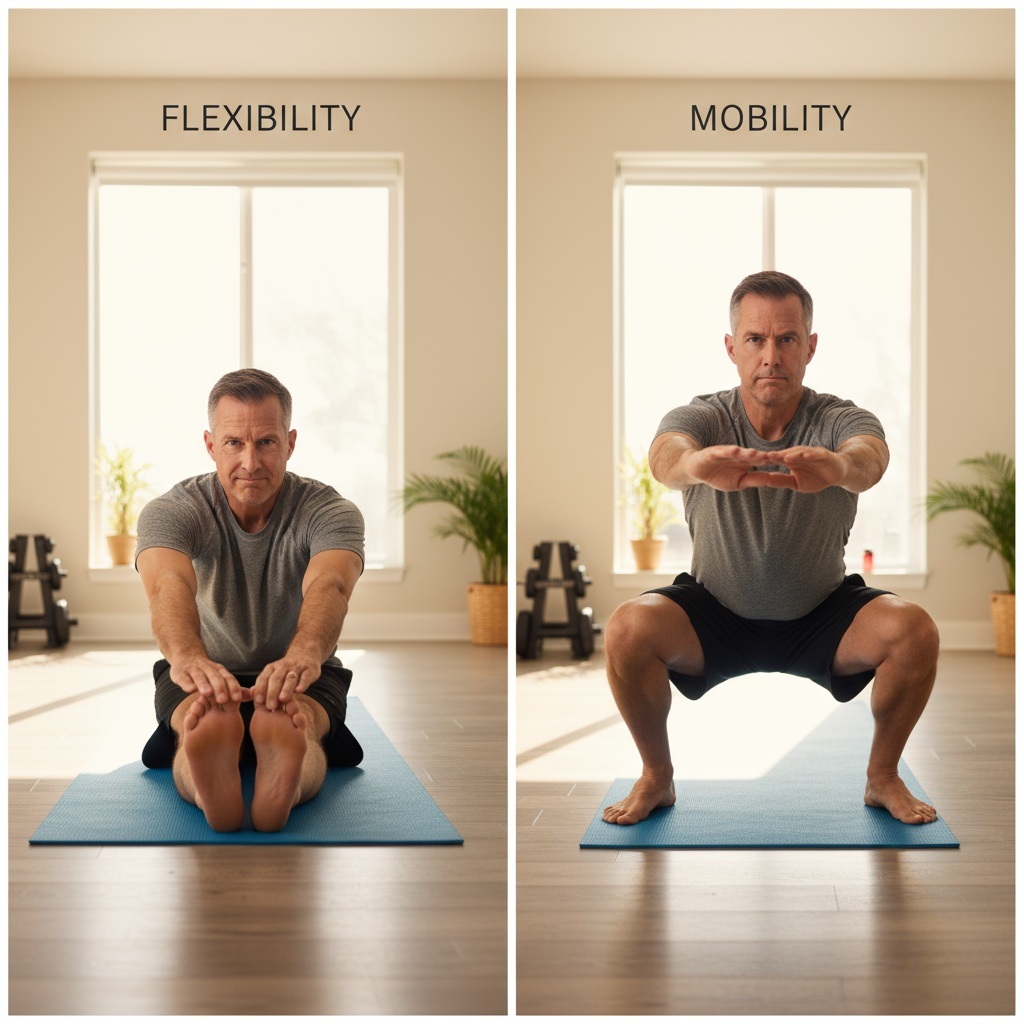
Flexibility
Flexibility is how far your muscles can stretch. Think of it like a rubber band—how much can it extend? A real-life example: Can you reach down and touch your toes? That’s flexibility. It’s about your muscle length and how much they can elongate without injury.
Mobility
Mobility is how well your joints move through their full range of motion. It’s not just about stretching muscles—it’s about how smoothly and freely your joints can move. Example: Can you squat all the way down comfortably? Can you reach your arm behind your back? That’s mobility. It involves your joints, muscles, and even your nervous system working together.
Why Both Matter
You can have flexible muscles but poor mobility (your muscles stretch, but your joints are stiff). Or you can have good mobility but tight muscles. For optimal movement and injury prevention, you need both working together. This is the foundation of functional movement—the ability to move well in everyday life.
Why Flexibility and Mobility Matter More After 40
Here’s what nobody tells you about aging: starting around 40, your body naturally loses flexibility and mobility. Your muscles get tighter, your joints get stiffer, and your range of motion decreases. It’s not your fault—it’s biology. But here’s the kicker: it’s also preventable and reversible.
Real-Life Impact
Poor flexibility and mobility don’t just affect your workouts—they affect everything:
- Daily activities: Bending down to pick up groceries, reaching for items on shelves, getting in and out of your car
- Playing with kids or grandkids: Chasing them around, getting down on the floor to play, throwing a ball
- Yard work and home projects: Mowing the lawn, painting, fixing things around the house
- Sports and recreation: Golf, tennis, hiking, biking—all require good mobility
- Injury prevention: Tight muscles and stiff joints are injury magnets
The Injury Connection
Here’s a sobering fact: most injuries in men over 40 aren’t from doing something extreme—they’re from doing something ordinary with a body that’s too tight and stiff to handle it. You bend down to lift a box, your hamstrings are tight, your lower back compensates, and boom—you’re out for two weeks.
Mobility training for men over 40 is one of the most effective ways to prevent these common injuries. When your body can move the way it’s designed to, you’re far less likely to get hurt.
The Missing Link: Why Most Fitness Plans Ignore This
Walk into any gym and what do you see? Guys lifting weights, running on treadmills, doing endless crunches. What you don’t see? Anyone working on their flexibility or mobility. Why?
Common Misconceptions
- “Stretching is for yoga people, not real workouts” – Wrong. Elite athletes in every sport prioritize mobility work.
- “I don’t have time for stretching” – You don’t have time NOT to. Ten minutes of stretching can save you weeks of injury recovery.
- “I’m too stiff to stretch” – That’s exactly WHY you need to stretch. You don’t need to be flexible to start—you start to become flexible.
- “It’s boring” – So is being in pain and unable to move properly.
The truth is, flexibility and mobility work doesn’t feel as “productive” as lifting weights or burning calories. You can’t see it in the mirror immediately. But over time, it’s what keeps you moving, active, and pain-free well into your 60s, 70s, and beyond. This is a core component of The Over-40 Body Reset—building a sustainable foundation for long-term physical wellness.
Related Articles:
Joint Health 101: Protecting Your Body as You Build Strength
If you’re a man over 40 thinking about starting a fitness routine, you’ve probably had this thought: “What if I hurt myself?” It’s a legitimate concern. Your joints aren’t what…Joint Health for Men Over 40: Prevention, Exercises & Natural Supplements
The Reality Check: You’re sitting at your desk, and suddenly your knee reminds you it’s there. You stand up from the couch, and your hips protest. Maybe you threw your…


Simple Exercises You Can Start Today
Ready to improve flexibility in your 40s? Here are beginner-friendly exercises that require little to no equipment. These are perfect mobility exercises at home that anyone can do, regardless of fitness level or budget.
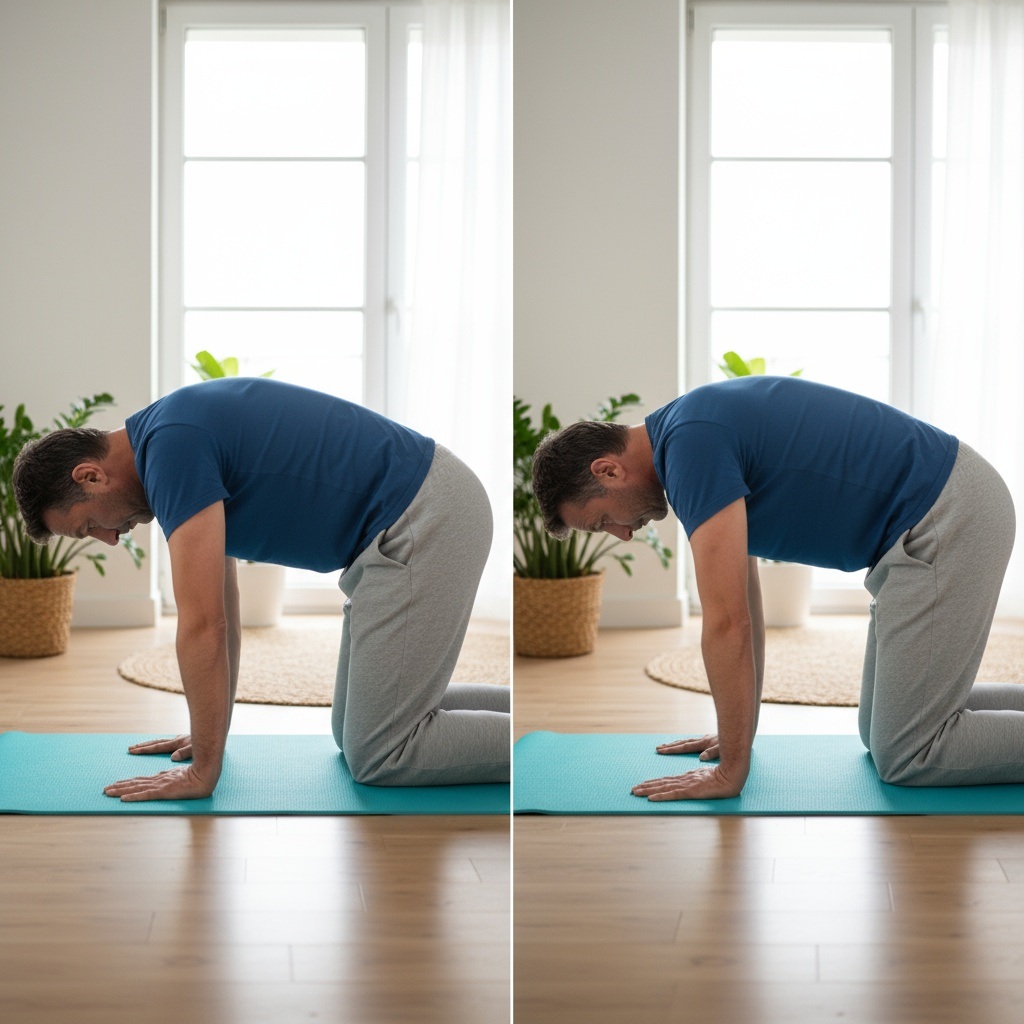
1. Cat-Cow Stretch (Spine Mobility)
What it does: Improves spine flexibility and reduces back stiffness
How to do it: Get on your hands and knees. Arch your back like a cat (round it up), then dip it down like a cow (belly toward the floor). Move slowly and breathe. Do 10-15 repetitions.
Why it matters: Most back pain comes from a stiff, immobile spine. This simple movement keeps your back healthy.
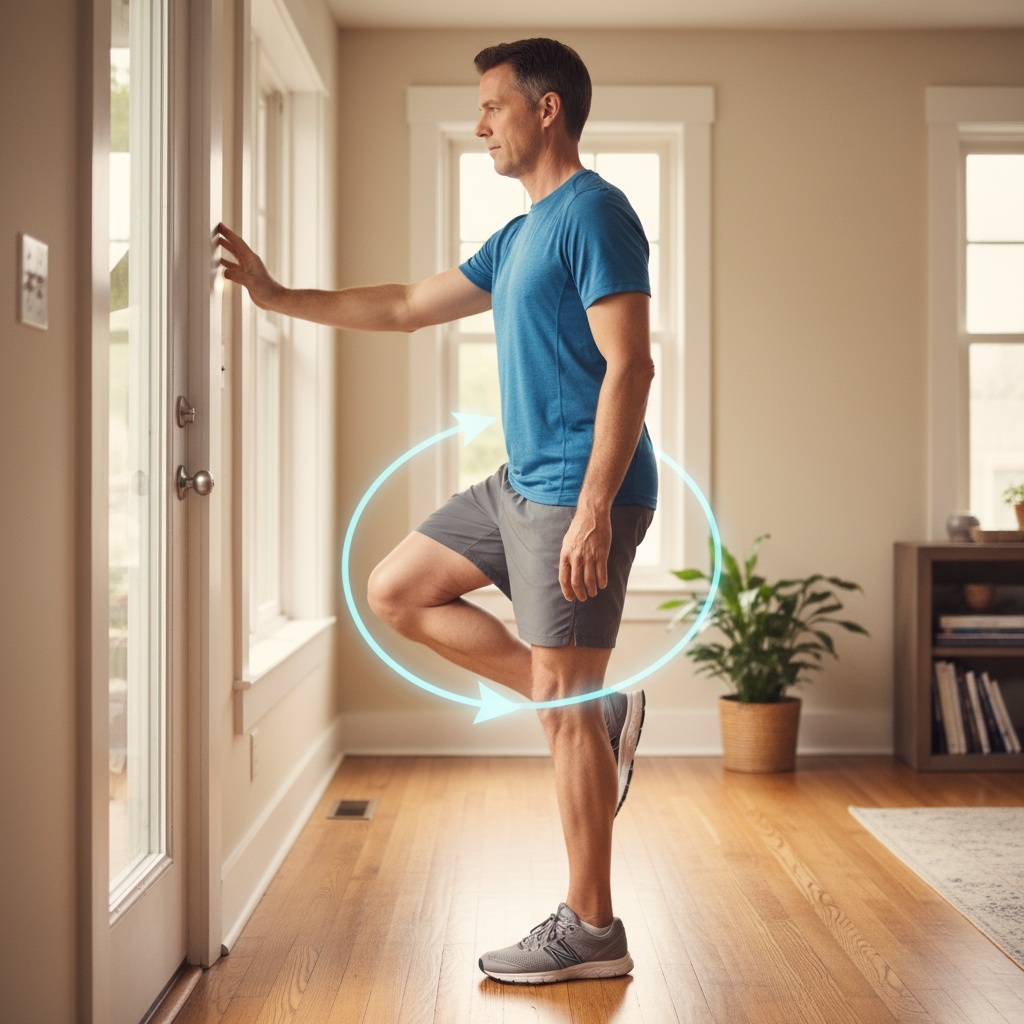
2. Hip Circles (Hip Mobility)
What it does: Opens up tight hips and improves lower body mobility
How to do it: Stand on one leg (hold a wall for balance). Lift your other knee and make big circles with it—10 circles forward, 10 circles backward. Switch legs.
Why it matters: Tight hips are epidemic in men over 40, especially if you sit at a desk all day. Mobile hips prevent knee and back problems.
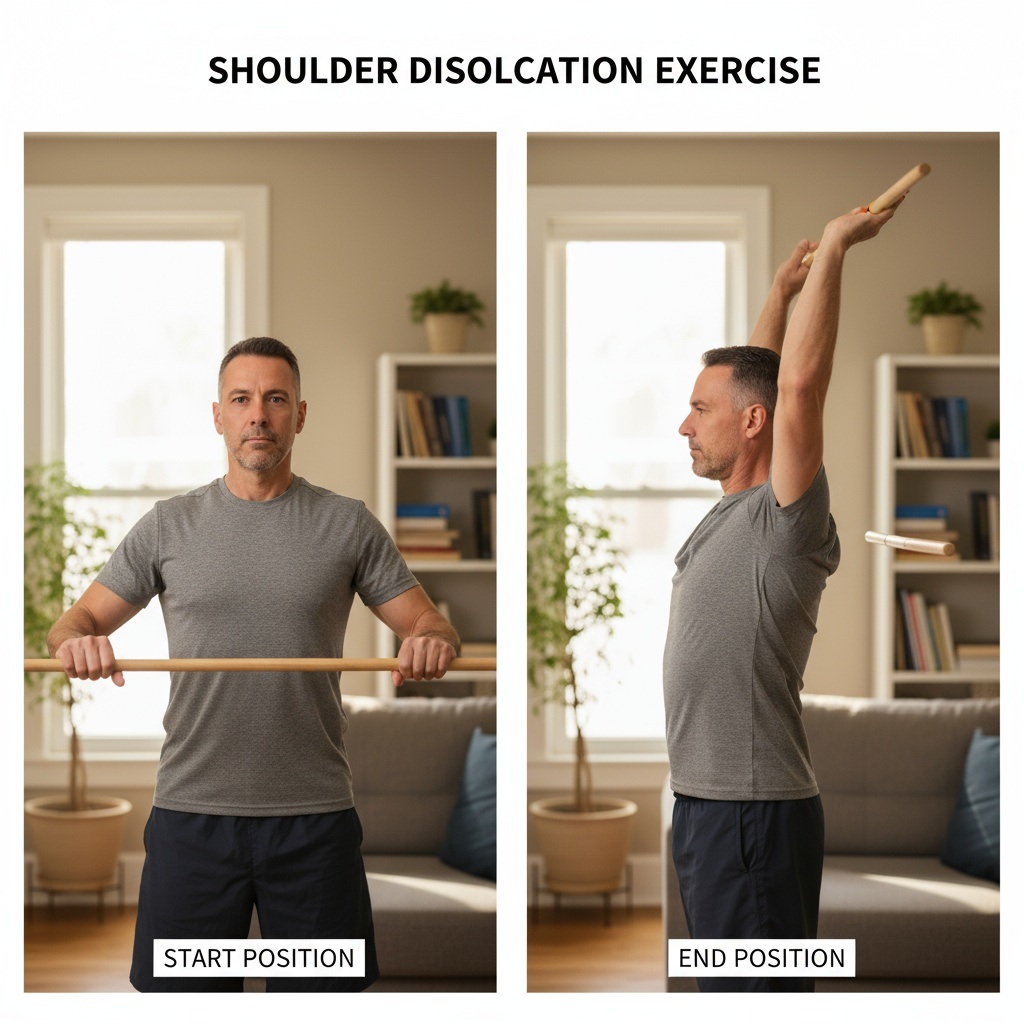
3. Shoulder Dislocations (Shoulder Mobility)
What it does: Improves shoulder range of motion and posture
How to do it: Hold a broomstick, resistance band, or towel with both hands wide apart. Keeping your arms straight, slowly raise it over your head and behind your back. Return to the front. Do 10 repetitions.
Why it matters: Shoulder mobility affects everything from lifting to reaching to throwing.
Affordable tool: A simple resistance band set from Amazon (usually $10-20) works perfectly for this and dozens of other exercises. Look for bands with different resistance levels so you can progress over time.
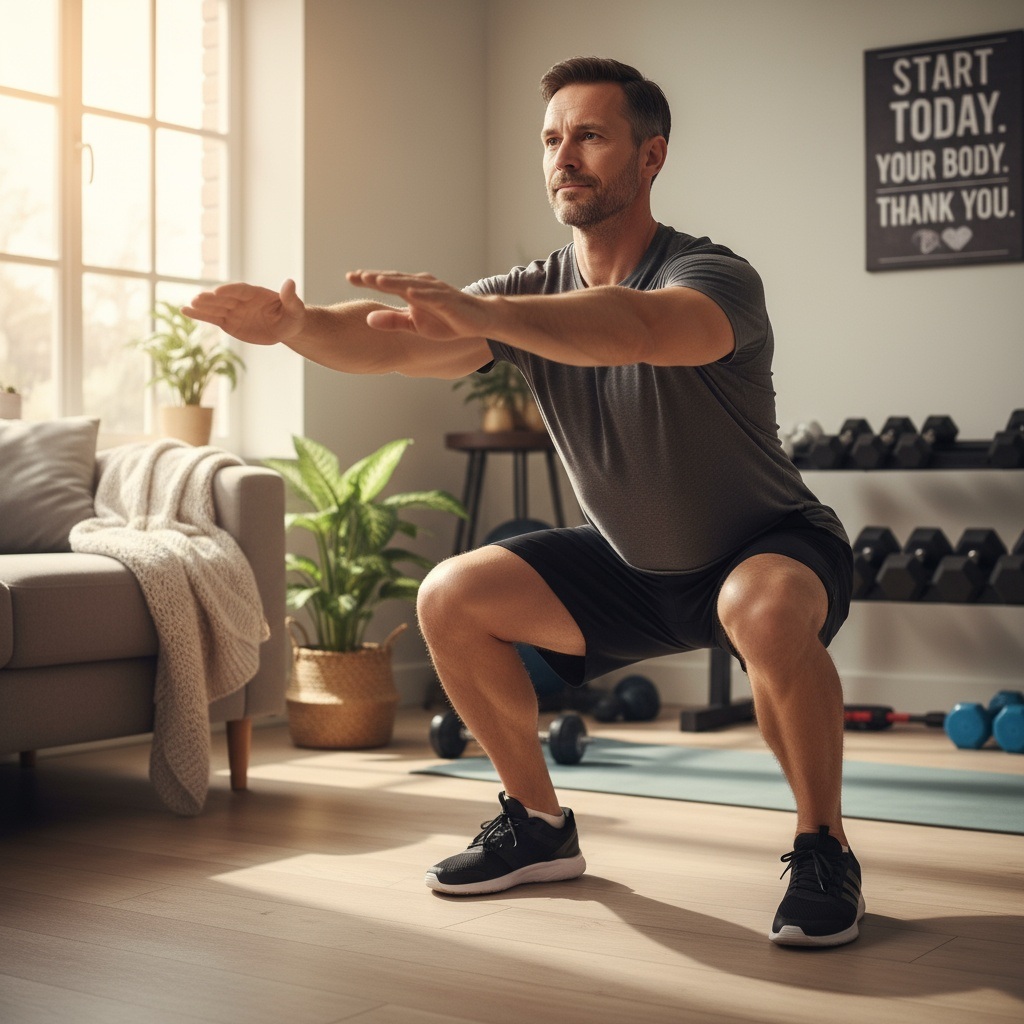
4. Deep Squat Hold (Full-Body Mobility)
What it does: Works on ankle, knee, hip, and spine mobility all at once
How to do it: Stand with feet shoulder-width apart. Squat down as low as you comfortably can, keeping your heels on the ground. Hold for 30 seconds to 2 minutes. Use a doorframe or pole for balance if needed.
Why it matters: This is one of the most functional movements for daily life—getting up from the floor, picking things up, sitting down.
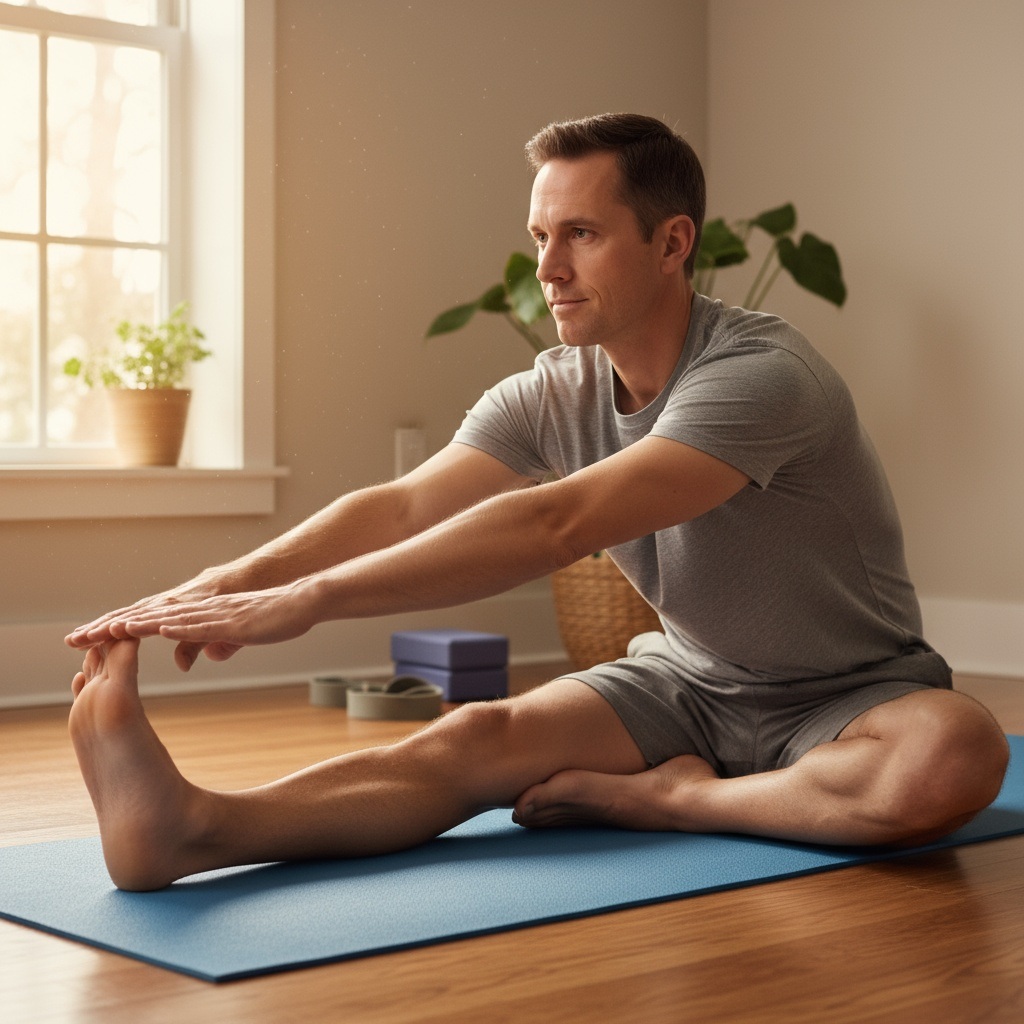
5. Hamstring Stretch (Flexibility)
What it does: Lengthens tight hamstrings and reduces lower back stress
How to do it: Sit on the floor with one leg extended, the other bent. Reach toward your extended foot, keeping your back straight. Hold for 30 seconds. Switch legs.
Why it matters: Tight hamstrings are a leading cause of lower back pain in men over 40.
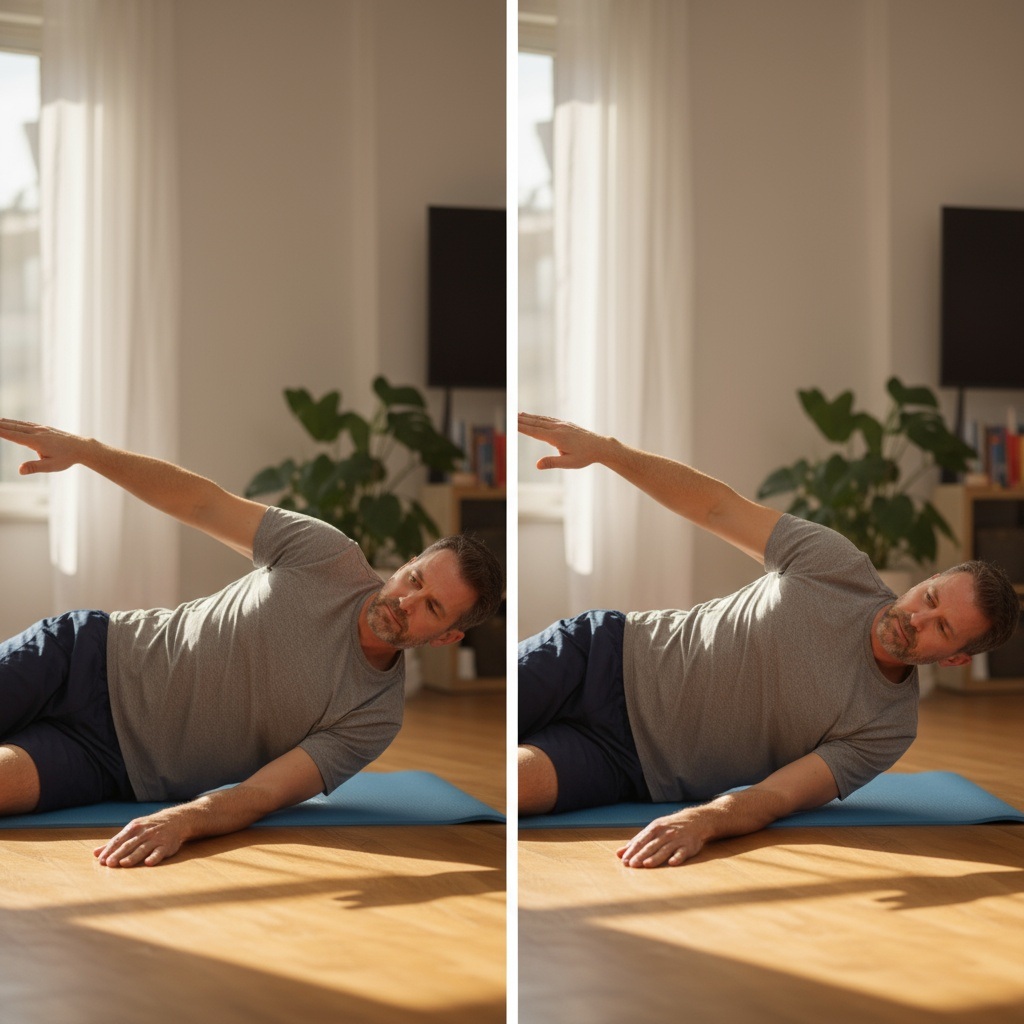
6. Thoracic Spine Rotation (Upper Back Mobility)
What it does: Improves rotation and reduces upper back stiffness
How to do it: Lie on your side with knees bent. Extend your arms in front of you. Slowly open your top arm, rotating your upper body and following your hand with your eyes. Return and repeat 10 times per side.
Why it matters: A stiff upper back affects your neck, shoulders, and breathing.
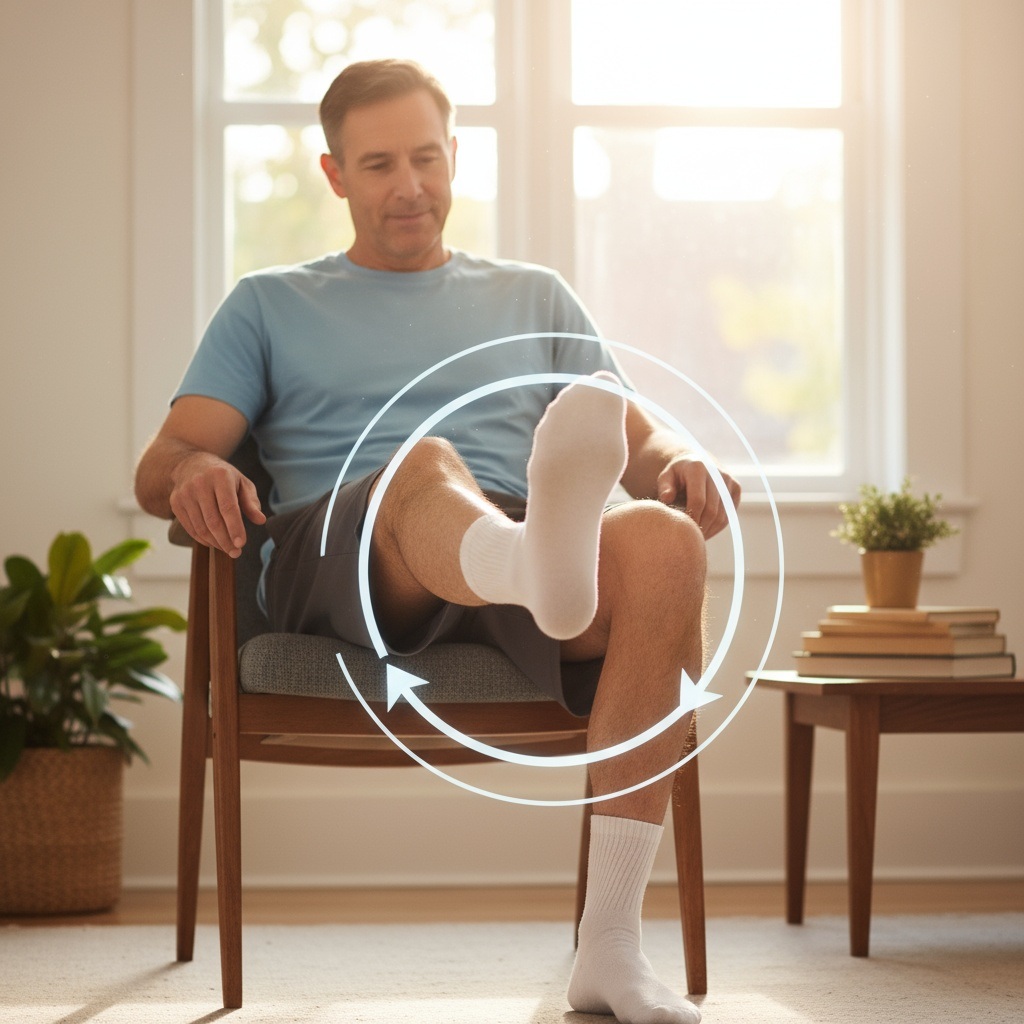
7. Ankle Circles (Ankle Mobility)
What it does: Improves ankle flexibility and balance
How to do it: Sit or stand. Lift one foot and make circles with your ankle—10 clockwise, 10 counterclockwise. Switch feet.
Why it matters: Ankle mobility is crucial for walking, running, and preventing falls.
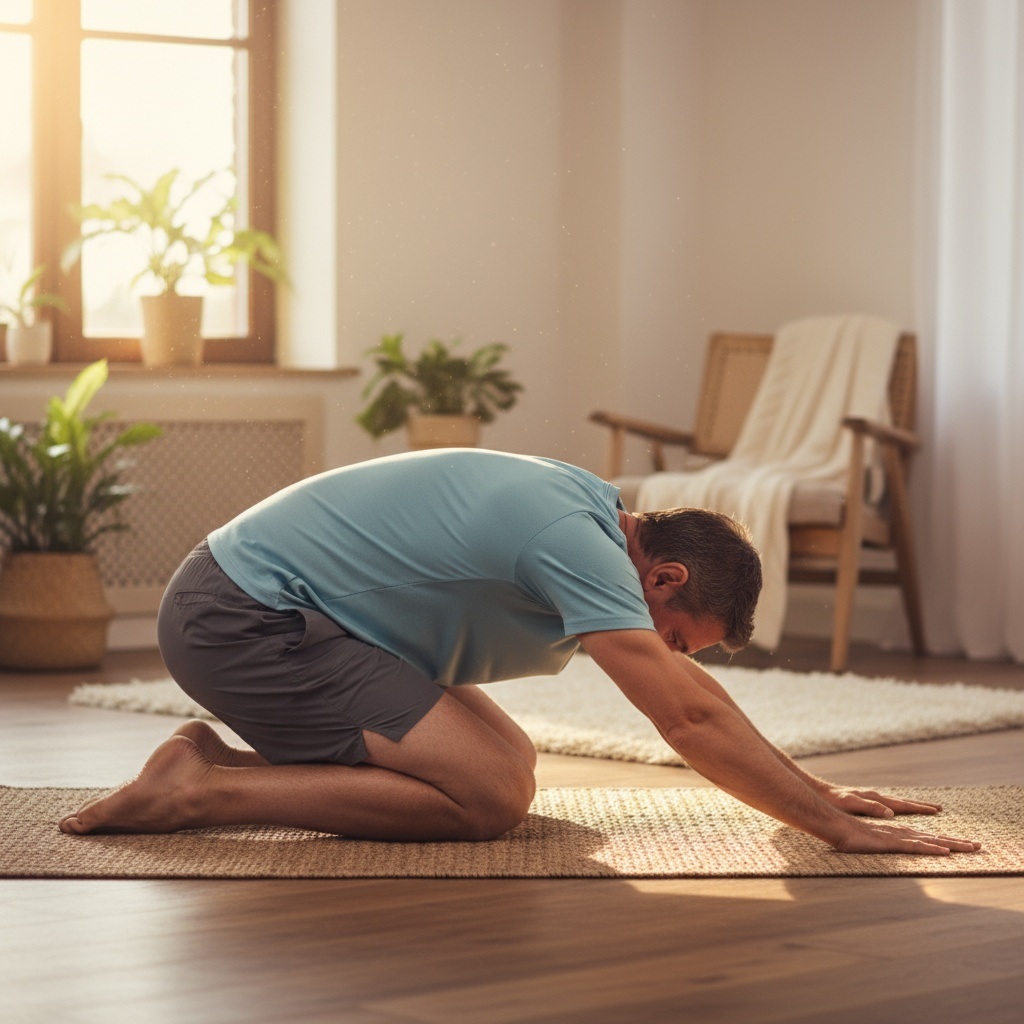
8. Child’s Pose (Full-Body Stretch)
What it does: Stretches your back, hips, and shoulders while promoting relaxation
How to do it: Kneel on the floor, sit back on your heels, and reach your arms forward on the ground. Hold for 1-2 minutes, breathing deeply.
Why it matters: This is a recovery position that helps release tension throughout your entire body.

Flip 7 Chocolate Courage Feel better, fast with one shake a day. FLIP 7 is an unmatched, all-in-one meal replacement SUPER FOOD powder with the most nutrient rich balance of health extending blends formulated to support whole body and mind wellness.
Tools That Help (For Every Budget)
You don’t need expensive equipment to improve flexibility and mobility, but a few simple tools can make a big difference. Here are options for every income level:
Free Options
- YouTube videos for guided stretching routines
- Use a towel or belt for assisted stretches
- Use a wall or doorframe for balance and support
- Bodyweight exercises require zero equipment
Low-Cost Options ($10-$30)
- Resistance bands: Versatile for stretching and strengthening (Amazon has quality sets for $15-20)
- Foam roller: Great for releasing muscle tension and improving mobility ($15-25 on Amazon)
- Yoga mat: Provides cushioning for floor exercises ($15-30)
Mid-Range Options ($30-$100)
- Massage ball set: Target specific tight spots ($20-40)
- Stretching strap with loops: Helps you stretch further safely ($15-25)
- Online mobility programs or apps: Guided routines with progression ($10-30/month)
Investment Options ($100+)
- Personal training sessions focused on mobility
- Physical therapy assessment
- Quality massage gun for deep tissue work ($100-300 on Amazon)
Our recommendation for beginners: Start with a basic resistance band set and foam roller from Amazon (total investment: $30-40). These two tools will cover 90% of your flexibility and mobility needs.


Creating Your Flexibility and Mobility Routine
Now that you know the exercises, let’s talk about how to build a sustainable stretching routine for older men that actually fits into your life.
How Often Should You Stretch?
- Minimum: 10 minutes, 3 times per week
- Ideal: 10-15 minutes daily
- Optimal: 20-30 minutes daily, plus mobility work before workouts
Remember: consistency beats intensity. Ten minutes every day is far better than an hour once a week.
Best Times to Work on Flexibility and Mobility
Morning (5-10 minutes)
A morning stretching routine for men helps wake up your body and reduces stiffness. Focus on gentle, dynamic movements like cat-cow stretches, hip circles, and arm circles. This sets you up for better movement all day.
Before Workouts (5-10 minutes)
Use dynamic stretching—movement-based stretches that warm up your muscles and joints. Think leg swings, arm circles, and bodyweight squats. This is injury prevention in action.
After Workouts (10-15 minutes)
This is the best time for static stretching—holding stretches for 30-60 seconds. Your muscles are warm and more receptive to lengthening. Focus on the muscles you just worked.
Evening (10-15 minutes)
Evening stretching helps release the day’s tension and improves sleep quality. Focus on relaxing stretches like child’s pose, hamstring stretches, and gentle spinal twists.
Sample Weekly Routine for Beginners
Monday, Wednesday, Friday:
- Morning: 5-minute dynamic warm-up (hip circles, arm circles, cat-cow)
- Evening: 15-minute full-body stretch routine (all 8 exercises listed above)
Tuesday, Thursday:
- Morning: 10-minute mobility flow (focus on problem areas—hips, shoulders, back)
Saturday:
- 20-30 minute comprehensive session (all exercises, hold stretches longer)
Sunday:
- Active recovery: gentle yoga or walking with mobility breaks
This routine fits perfectly into The Triangle of Well-being approach—balancing physical wellness with mental resilience and sustainable habits.

Shop Aquasana’s fast-flowing Clean Water Machine that removes 78 contaminants including 99% of lead & cysts, 15x more than the leading pitcher filter.
Common Questions About Flexibility and Mobility
The Connection to Your Overall Wellness
Flexibility and mobility training isn’t just about touching your toes or doing the splits. It’s about maintaining your independence, staying active, and living without pain. It’s about being able to play with your kids or grandkids without worrying about throwing your back out. It’s about hiking, golfing, or doing whatever you love without limitations.
This is a fundamental part of physical wellness—one of the three pillars that support a fulfilling life after 40. When you move better, you feel better. When you feel better, you’re more motivated to take care of your mental resilience and work toward financial independence.
It all connects. Your body is the vehicle that carries you through life. Flexibility and mobility are the maintenance that keeps that vehicle running smoothly for decades to come.
Your Action Plan: Start Today
Here’s what to do right now:
- Assess your current mobility: Try each of the 8 exercises above. Notice where you’re tight or restricted. Don’t judge—just observe.
- Pick 3-5 exercises that target your problem areas: Tight hips? Focus on hip circles and deep squats. Stiff back? Cat-cow and thoracic rotations are your friends.
- Set a daily reminder: 10 minutes. Same time every day. Morning or evening—whatever works for you.
- Track your progress: Take a video or photo of yourself doing a stretch today. Check again in 4 weeks. You’ll be amazed at the difference.
- Consider investing in basic tools: A resistance band set and foam roller from Amazon (under $40 total) will expand your options significantly.
Remember: you don’t need to be flexible to start. You start to become flexible. The best time to begin was 10 years ago. The second-best time is today.
Final Thoughts
Flexibility and mobility for men over 40 isn’t optional—it’s essential. It’s the difference between aging gracefully and aging painfully. It’s the difference between staying active and sitting on the sidelines. It’s the missing link that makes everything else in your fitness routine work better.
Take care of your body. It’s the only place you have to live.”
– Jim Rohn
You’ve spent decades building your career, your family, your life. Now it’s time to invest in the body that’s carried you through it all. Ten minutes a day. That’s all it takes. No gym required. No expensive equipment. Just you, some floor space, and a commitment to moving better.
Your future self—the one who’s still hiking, playing, and living fully at 60, 70, and beyond—will thank you.
Ready to transform how you move? Start with just one exercise today. Pick the one that addresses your biggest problem area. Do it for 2 minutes. Tomorrow, do it again. Build the habit, and the results will follow.
For more strategies on building a sustainable fitness routine after 40, check out The Over-40 Body Reset and learn how flexibility and mobility fit into your complete wellness transformation.
What’s your biggest mobility challenge? Drop a comment below and let’s talk about it. Remember—it’s never too late to start moving better.
Disclosure
This article contains affiliate links. If you choose to make a purchase through these links, we may earn a commission at no additional cost to you.
Important Note: The information in this post is meant to educate and inform, not to replace professional medical advice. While we’ve spent years studying health and wellness, we’re not licensed healthcare providers. Everyone’s body and circumstances are different, so what works for one person might not work for another. Always check with your doctor before starting any new exercise program or making significant lifestyle changes, especially if you have pre-existing conditions. By reading and using this information, you’re taking responsibility for your own health decisions.