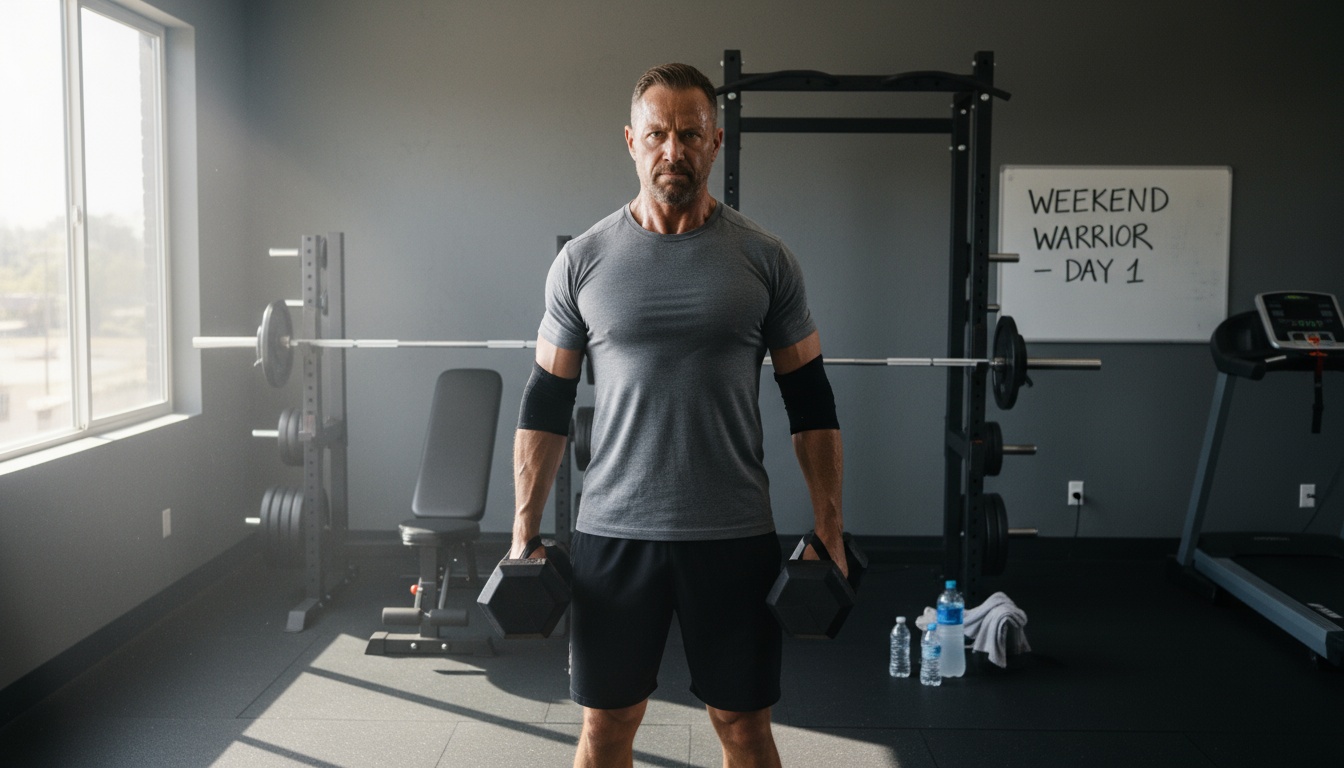
Plateau After 40: 5 Reasons Progress Stalls & the Fix
You’ve been showing up. You’ve been putting in the work — maybe hitting the gym a few times a week, cutting back on junk food, drinking more water. And for a while, it was working. The scale moved. You felt stronger. Your clothes started fitting differently.
Then it stopped.
Now you’re doing the same things — sometimes even more — and getting absolutely nothing back. No changes on the scale. No new strength. Nothing. And that quiet voice in the back of your head starts whispering: “Maybe this is just what getting older looks like.”
“It’s not about being the best. It’s about being better than you were yesterday.”
— Unknown
Here’s what I want you to know before we go any further: that voice is wrong.
What you’re experiencing has a name — a fitness plateau — and it happens to almost every man over 40 who is doing the right things. It’s not a sign of failure. It’s actually a sign that your body is working exactly as it should. The problem isn’t you. The problem is that nobody told you why it happens or what to do about it.
That’s what this post is for.
By the time you finish reading, you’ll know exactly why your progress stalled, and you’ll have at least one simple, zero-cost action you can take today — no gym membership required, no expensive supplements, no massive lifestyle overhaul.
Let’s get into it.
Disclosure
This article contains affiliate links. If you choose to make a purchase through these links, we may earn a commission at no additional cost to you.
First, What Exactly Is a Fitness Plateau?
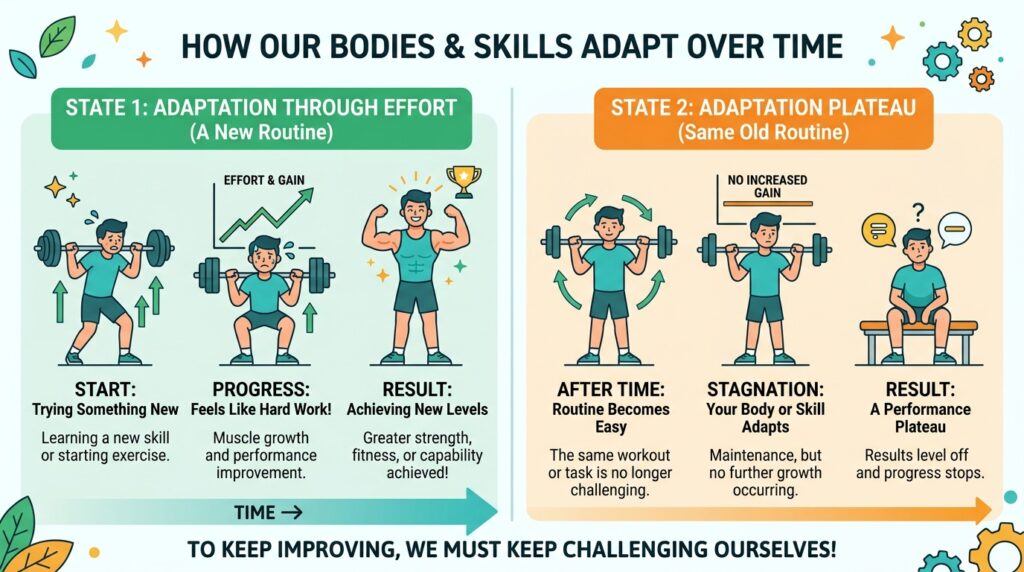
A plateau is what happens when your body stops responding to what you’re doing — even though you keep doing it.
Here’s a simple way to think about it: imagine rearranging your living room furniture. The first few days, it feels completely different — fresh, new, exciting. But after a couple of weeks, it just feels normal. Your brain stops noticing it.
Your body works the same way. When you start a new workout or change the way you eat, your body has to work hard to adapt. That hard work is what creates results — fat loss, muscle growth, more energy. But once your body has fully adapted, it stops working as hard. It found the path of least resistance. And that’s when progress stalls.
This happens to everyone. But after 40, it happens faster — and for a few specific reasons that most fitness advice completely ignores.
Why Does Fitness Progress Stall After 40? Here Are the 5 Real Reasons
Reason #1: Your Body Has Adapted to Your Routine — and Got Really Efficient at It
This is the most common reason men over 40 hit a weight loss plateau — and it’s actually good news wrapped in frustrating packaging.
When you first started your workout or diet, your body was in unfamiliar territory. Unfamiliar = hard work. Hard work = results. But over time, your body figured out exactly how to handle what you’re throwing at it. It became efficient. And efficiency, when it comes to fitness, means your body is burning fewer calories to do the same job.
Think of it like driving the same route to work every day. The first time, you’re focused — checking every turn, watching every sign. A year later, you practically drive it on autopilot. Your brain barely registers the effort. Your muscles do the same thing with exercise.
The simple fix: Change something. It doesn’t have to be dramatic. Add one extra set to your workout. Walk a slightly longer route. Try a different exercise for the same muscle group. Even a small change is enough to snap your body out of autopilot.
The goal is to keep your body guessing — a concept called progressive overload (which just means gradually giving your body a little more to deal with over time, even if it’s just one extra rep or five more pounds). You don’t need a fancy program. You just need to stop doing the exact same thing every single time.
Related Article
For more on leveraging your experience and wisdom in fitness, check out our comprehensive guide on proven reset strategies that work specifically for men in their 40s and beyond.
Reason #2: Your Metabolism Has Shifted — But It Hasn’t Given Up on You
If you’re over 40 and wondering, “Why am I not losing weight even though I’m eating less?” — your metabolism deserves a closer look.
Here’s the truth: metabolism does slow down after 40. But not in the dramatic, catastrophic way most people imagine. It’s more of a gradual shift — and it’s largely tied to one thing: muscle.
Your body naturally loses muscle as you age (a process called sarcopenia — which just means age-related muscle loss). Muscle is expensive for your body to maintain — it burns calories even when you’re sitting still. So as you lose muscle, your body needs fewer calories to function. And if you’re eating the same amount you always have, that creates a gap that gets stored as fat.
This doesn’t mean you’re broken. It means your body’s fuel needs have changed — and your approach might need to catch up.
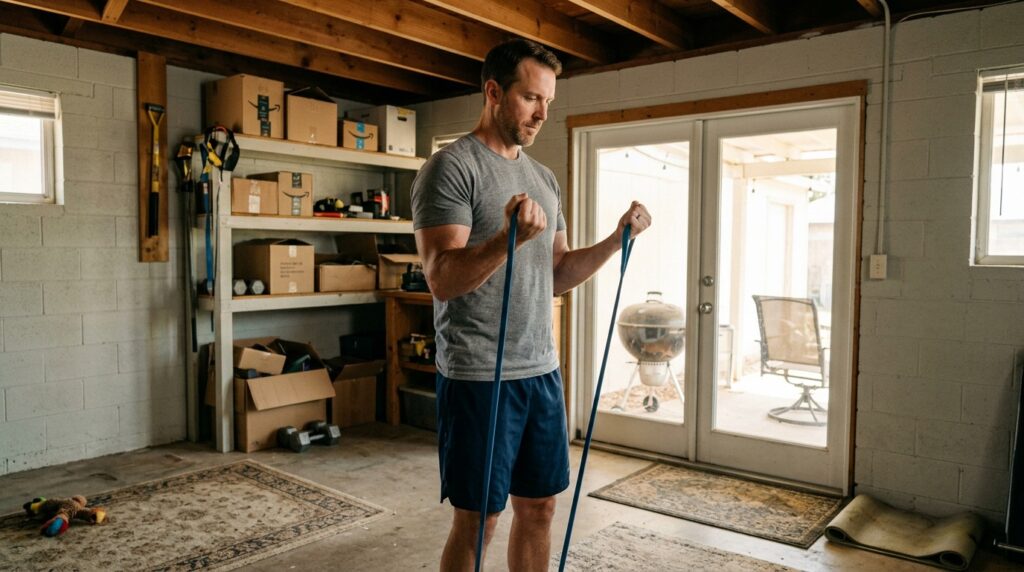
The simple fix: Focus on building and keeping muscle. You don’t need to become a bodybuilder. Even 2–3 sessions a week of basic resistance training — like bodyweight squats, push-ups, or lifting light weights — can meaningfully slow muscle loss and keep your metabolism working for you. Resistance training just means exercises where your muscles work against some kind of resistance, like your own body weight, dumbbells, or resistance bands (which cost about $10–$15 and you can use anywhere).
Here’s something most workout advice gets completely backwards: you don’t get stronger during your workout. You get stronger during recovery.
When you exercise, you’re actually creating tiny micro-tears in your muscle fibers. That sounds scary, but it’s completely normal and necessary — it’s how muscles grow. Your body repairs those tears while you rest, and it rebuilds them slightly stronger than before.
But that repair process requires time. And after 40, it requires more time than it used to.
In your 20s, you could train hard five days in a row and bounce back by the weekend. In your 40s, that same approach often means you’re training on top of unrepaired damage — which leads to fatigue, stalled progress, and a higher risk of getting hurt.
Recovery isn’t just about rest days, either. Sleep is where a huge portion of the real repair happens. If you’re getting less than 7 hours most nights — which a lot of busy men in their 40s are — your body is running on a repair deficit.
The simple fix: Take recovery as seriously as you take training. That means:
- At least 1–2 rest days per week (rest doesn’t mean inactive — a walk counts)
- Aiming for 7–8 hours of sleep when possible
- Not training the same muscle group two days in a row
None of this costs money. It just requires treating recovery like part of the plan — because it is.

Related Article
Reason #4: Stress Is Quietly Sabotaging Your Progress
This one surprises a lot of guys.
When you’re under stress — whether it’s work pressure, money worries, family stuff, or just the relentless pace of everyday life — your body releases a hormone called cortisol. Cortisol is your body’s stress-response chemical. In short bursts, it’s useful. Over long periods, it becomes a problem.
High cortisol tells your body to hold onto fat, especially around the belly. It also interferes with muscle recovery and can mess with your sleep, which then makes everything else worse. It’s a cycle that’s hard to see when you’re in the middle of it.
And here’s what nobody talks about: intense exercise is also a form of stress on your body. That means if you’re already stressed from life and you’re pushing yourself hard at the gym on top of it, you might actually be making the plateau worse — not better.
The simple fix: This isn’t about eliminating stress (easier said than done). It’s about giving your body a break from intensity when life is already loud. On high-stress days or weeks, swap a hard workout for a 20-minute walk, a short stretching session, or even just some deep breathing before bed. These aren’t “giving up” — they’re strategic. You’re managing your body’s total stress load so it can actually recover and make progress.
Related Article
Reason #5: Your Nutrition Strategy Hasn’t Kept Pace With Your Body’s Changing Needs

You might be eating “healthy” — and genuinely doing a great job by most standards — but still not eating in a way that supports the results you want at this stage of life.
After 40, a few things shift:
- Protein becomes more important. Your body becomes less efficient at using protein to build and maintain muscle. That means you need more of it than you might have in your 20s or 30s.
- Calorie needs drop slightly. Because of the muscle shift and metabolic changes, you may not need as many calories as you used to. This doesn’t mean starve yourself — it means being a bit more intentional about what you’re eating.
- Eating patterns matter more. Skipping meals or eating most of your calories late at night can work against fat loss and muscle maintenance after 40.
None of this requires counting every calorie or following a strict meal plan. Nutrition doesn’t have to be complicated or expensive.
The simple fix: Start by adding more protein to what you’re already eating. A couple of eggs with breakfast, some chicken or beans with lunch, Greek yogurt as a snack — small additions that most budgets can handle. If you’re eating mostly processed food (chips, fast food, packaged snacks), gradually swapping one meal a day for something whole — eggs, rice, canned tuna, frozen vegetables — is enough to start shifting the needle.
Progress, not perfection.

Flip 7 Chocolate Courage - Feel better, fast with one shake a day. FLIP 7 is an unmatched, all-in-one meal replacement SUPER FOOD powder with the most nutrient rich balance of health extending blends formulated to support whole body and mind wellness.
The Simple Fix That Ties It All Together
Here’s the thing about all five of these reasons: none of them require a gym membership. None of them require expensive supplements. None of them require you to flip your entire life upside down.
They all come back to one idea: your body needs variety, recovery, and consistency — not perfection.
If you’re in the middle of a plateau right now, here’s a simple starting point:
- Change one thing about your workout this week. Add a rep, try a new exercise, or go slightly longer on your walk. One thing. That’s it.
- Add one protein-rich food to your day. Eggs, canned tuna, chicken, Greek yogurt, beans, cottage cheese — whatever fits your budget and tastes.
- Protect one hour of sleep. Go to bed 30–60 minutes earlier for the next week and notice how you feel.
- Add one low-stress movement day. Instead of a hard session, take a 20-minute walk. It still counts. It’s still forward motion.
That’s four small actions. You don’t have to do all four today. Pick one. Do it. Then come back for the next one.
Small, consistent changes beat massive overhauls every single time — especially after 40, when sustainability matters more than intensity.
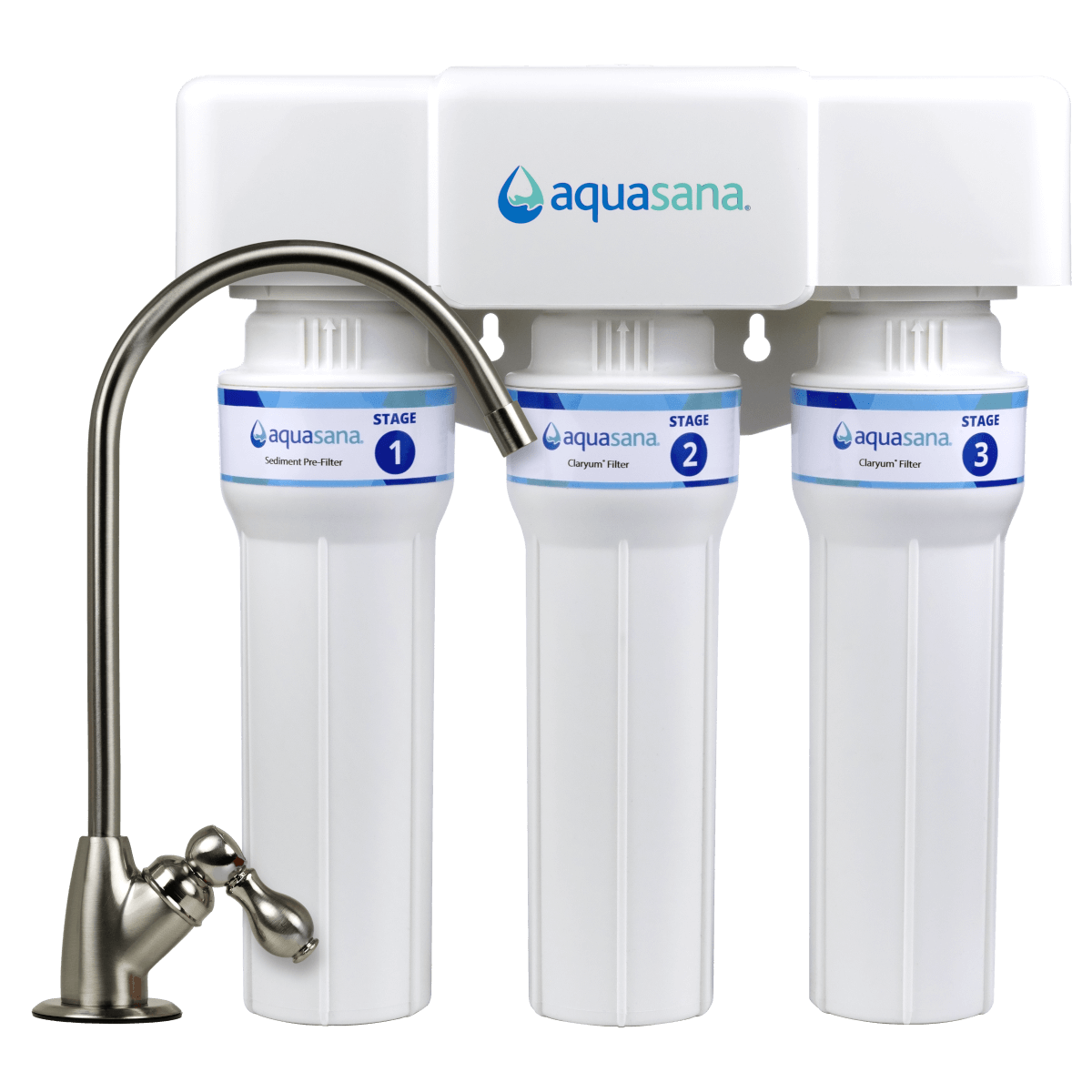
The Aquasana Claryum® 3-Stage Max Flow is a top-tier water filtration option that removes up to 99% of 78 different contaminants.
Keep Building From Here
Breaking through a plateau is one piece of the puzzle. Here are a few other posts that connect to what we covered today:
- Strength Training for Men Over 40: How to Start (or Restart) Without Getting Hurt
- Nutrition After 40: Eating for Energy and Recovery
- Functional Strength Training for Longevity: A Guide for Men Over 40
- Workout Habit Stacking: Building Unstoppable Fitness Routines
You Haven’t Stalled — You’ve Just Adapted

A plateau isn’t a dead end. It’s a signal. It means your body is smart, your baseline has improved, and you’re ready for the next level — whatever that looks like for your life, your schedule, and your goals.
You don’t need to do more. You need to do different.
And different doesn’t have to be hard. It doesn’t have to be expensive. It just has to be something — one small shift that wakes your body back up and reminds it there’s still work to do.
You’ve already proven you can do the hard part. You showed up. You stayed consistent. That’s more than most people ever do.
Now it’s just time to give your body a new challenge. And you’ve got everything you need to do exactly that.
Disclosure
This article contains affiliate links. If you choose to make a purchase through these links, we may earn a commission at no additional cost to you.
Important Note: The information in this post is meant to educate and inform, not to replace professional medical advice. While we’ve spent years studying health and wellness, we’re not licensed healthcare providers. Everyone’s body and circumstances are different, so what works for one person might not work for another. Always check with your doctor before starting any new exercise program or making significant lifestyle changes, especially if you have pre-existing conditions. By reading and using this information, you’re taking responsibility for your own health decisions.