Joint Health 101: Protecting Your Body as You Build Strength
If you’re a man over 40 thinking about starting a fitness routine, you’ve probably had this thought: “What if I hurt myself?” It’s a legitimate concern. Your joints aren’t what they were at 25, and the last thing you want is to injure yourself trying to get healthier. The good news? With the right approach to joint health for men over 40, you can build strength safely and sustainably—no matter your current fitness level or budget.
“The greatest wealth is health.”
– Virgil
This guide will walk you through everything you need to know about protecting joints while exercising, from simple mobility exercises for older men to stretching basics that prevent injury. Let’s get started.
Disclosure
This article contains affiliate links. If you choose to make a purchase through these links, we may earn a commission at no additional cost to you.
Why Joint Health Matters More After 40

Here’s the reality: as we age, our bodies change. The cartilage—that cushioning between your bones that acts like shock absorbers in a car—starts to thin out. Your joints produce less synovial fluid (the natural lubricant that keeps everything moving smoothly). And if you’ve been inactive for years, your range of motion (how far a joint can comfortably move in different directions) has likely decreased.
But here’s what most guys don’t realize: starting to exercise actually helps your joints. Movement increases blood flow, strengthens the muscles that support your joints, and keeps that cartilage healthy. The key is doing it right.
Think of it this way: if you haven’t driven your car in five years, you wouldn’t immediately take it on a cross-country road trip. You’d start it up, let it warm up, check the fluids, and take it around the block first. Your body works the same way. This is where joint health for beginners becomes crucial—it’s about building a foundation that lasts.
Related Article
For a comprehensive approach to restarting your fitness journey safely, check out this article, which covers the complete strategy for transforming your physical wellness.

Understanding Your Joints: A Simple Explanation
Before we dive into how to protect your joints when starting to exercise, let’s quickly cover what we’re actually protecting. No medical degree required—just practical knowledge.
Your joints are where two bones meet. They’re held together by ligaments (tough bands of tissue) and moved by muscles and tendons. Between the bones is that cartilage we mentioned—it prevents bone-on-bone grinding and absorbs impact.
The most important joints for fitness are:
- Knees: Take the most impact during walking, running, and squatting
- Hips: Control your lower body movement and stability
- Shoulders: The most mobile joints, but also the most vulnerable to injury
- Ankles: Your foundation for balance and movement
- Elbows and Wrists: Critical for upper body exercises
When these joints are healthy, they move smoothly and painlessly. And when they’re not, you feel stiffness, pain, or that grinding sensation. The goal of safe strength training over 40 is to keep them in the “healthy” category while you build muscle and lose fat.
What Is Mobility Work and Why You Need It
You’ve probably heard the term “mobility work” thrown around, but what does it actually mean? Simple: mobility work is exercises that help your joints move smoothly through their full range of motion—think of it as oiling the hinges on a door.
This is different from just stretching. Stretching lengthens muscles. Mobility work improves how well your joints actually move. Both are important for joint pain prevention, but mobility work is what most guys over 40 are missing.
Why Mobility Work Matters
If your hip can’t move through its full range of motion, your body compensates. Maybe your lower back takes over, or your knee twists awkwardly. Over time, these compensations lead to injury. Mobility work fixes this before it becomes a problem.
Think of mobility as the foundation of everything else you’ll do. You can’t build a strong house on a weak foundation, and you can’t build a strong body on stiff, immobile joints.
Simple Mobility Exercises for Beginners
Here are five mobility exercises you can do at home with zero equipment. Do these before any workout, or even just in the morning to start your day right:
1. Arm Circles (Shoulder Mobility)
Stand with feet shoulder-width apart. Extend your arms out to the sides and make small circles, gradually increasing the size. Do 10 circles forward, then 10 backward. This warms up your shoulder joints and improves range of motion.
2. Hip Circles (Hip Mobility)
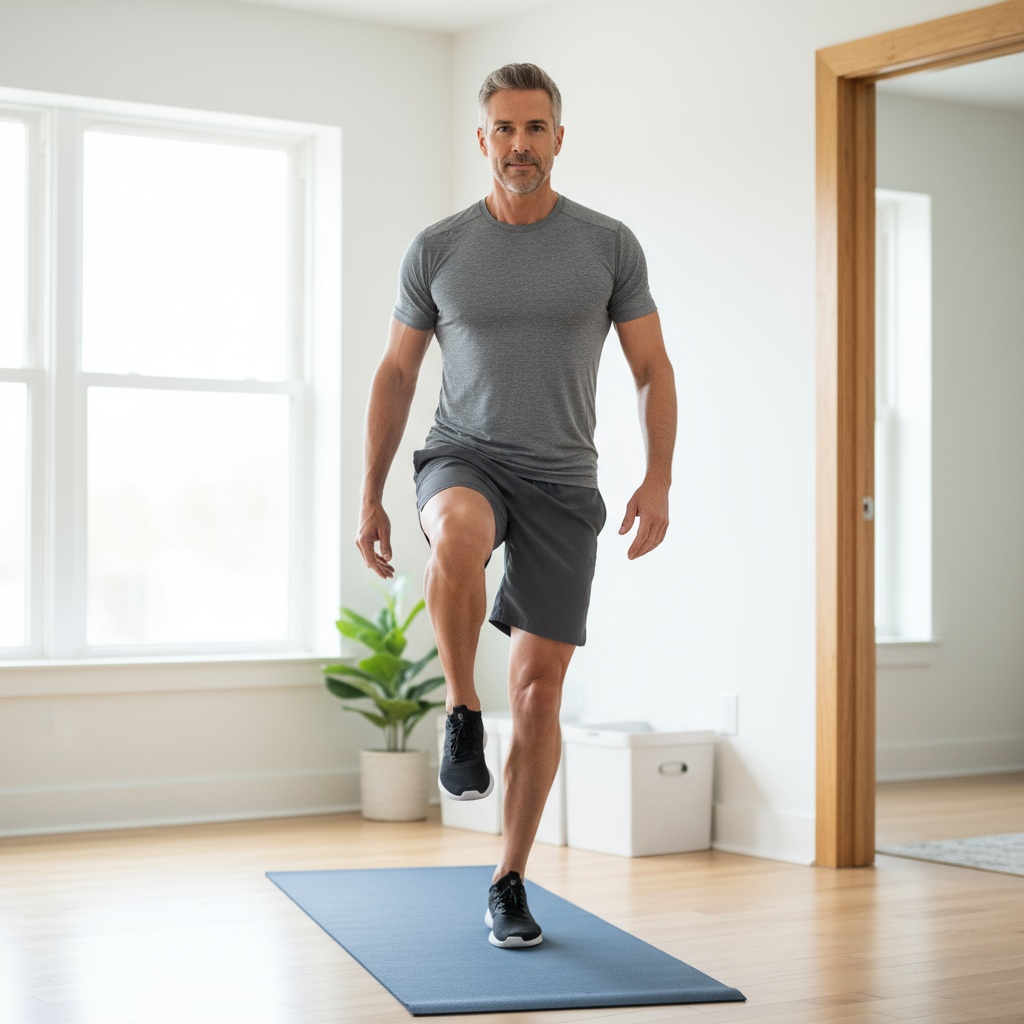
Stand on one leg (hold a wall for balance if needed). Lift your other knee and make circles with it—imagine drawing a circle in the air with your knee. Do 10 circles each direction, then switch legs. This is crucial for preventing knee and lower back issues.
3. Ankle Rolls (Ankle Mobility)
Sit or stand and lift one foot off the ground. Rotate your ankle in circles—10 one way, 10 the other. Your ankles are your foundation; if they’re stiff, everything above them suffers.
4. Cat-Cow Stretch (Spine Mobility)
Get on your hands and knees. Arch your back like a cat, then dip it down like a cow. Move slowly and smoothly for 10 repetitions. This mobilizes your entire spine and is perfect for guys who sit at a desk all day.
5. Leg Swings (Hip and Leg Mobility)
Hold onto a wall or sturdy surface. Swing one leg forward and back like a pendulum, keeping it straight. Do 10 swings, then switch to side-to-side swings. Switch legs and repeat. This is one of the best mobility exercises for older men because it prepares your hips for any lower body work.

Stretching Basics: What You Need to Know

Now let’s talk about stretching for joint health. There are two main types you need to understand:
Dynamic Stretching: Moving stretches you do before exercise, like arm circles or leg swings—they warm up your body while you move. These are what you do BEFORE your workout.
Static Stretching: Holding a stretch in one position, like touching your toes and holding it for 30 seconds—best done AFTER your workout when your muscles are warm.
Here’s the mistake most beginners make: they do static stretching before exercise, which can actually decrease performance and increase injury risk. Save those for after your workout.
Best Stretches for Joint Health Over 40
Pre-Workout Dynamic Stretches:
- Walking Lunges: Step forward into a lunge, then bring your back leg forward into the next lunge. Do 10 per leg. This warms up hips, knees, and ankles.
- Arm Swings: Swing both arms across your body, then open them wide. Do 15-20 reps. Perfect for shoulder mobility.
- High Knees: March in place, bringing your knees up high. Do 20 total (10 per leg). Gets your heart rate up and warms up your hips.
Post-Workout Static Stretches:
- Hamstring Stretch: Sit on the floor with one leg extended, the other bent. Reach toward your extended foot and hold for 30 seconds. Switch legs. This prevents knee and lower back pain.
- Quad Stretch: Stand on one leg, pull your other foot toward your butt. Hold for 30 seconds, then switch. Crucial for knee health.
- Shoulder Stretch: Pull one arm across your body, hold it with your other arm. Now hold 30 seconds, switch arms. Prevents shoulder injuries.
- Hip Flexor Stretch: Kneel on one knee, other foot flat on the floor in front. Push your hips forward gently. Hold 30 seconds, switch sides. Essential if you sit all day.

Injury Prevention Strategies for Beginners
Knowing how to prevent joint injuries is just as important as the exercises themselves. Here are the non-negotiable rules for building strength without hurting joints:
1. Start Ridiculously Light
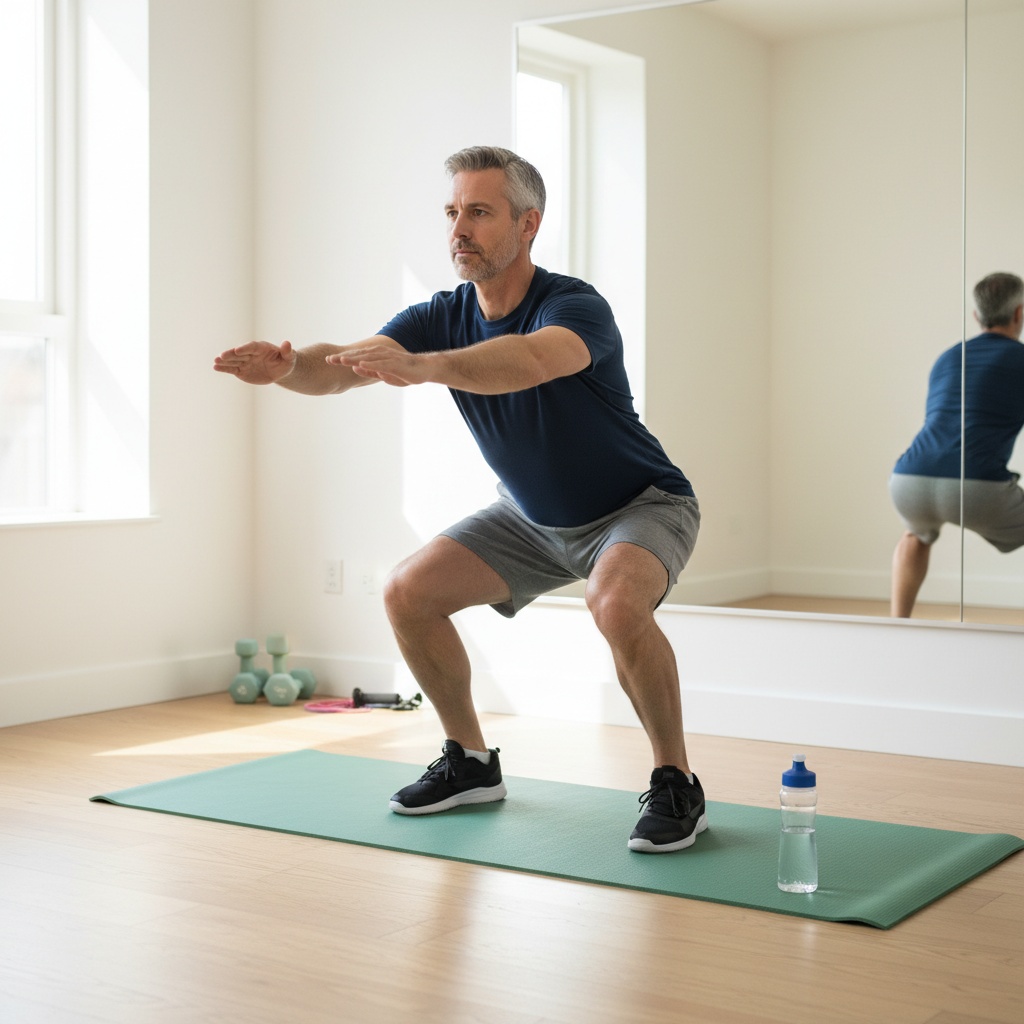
Your ego will want you to lift heavier. Ignore it. Start with bodyweight exercises or very light weights. If you can do 15-20 reps easily, that’s your starting point. You’re building the foundation—strength comes later.
2. Master Proper Form First
Bad form is the fastest way to joint pain after exercise. Before you add weight or intensity, make sure your body mechanics are correct. Watch videos, use a mirror, or even record yourself. One month of perfect form beats six months of sloppy reps that lead to injury.
3. Warm Up Every Single Time
No exceptions. Five to ten minutes of light cardio (walking, cycling, jumping jacks) followed by those mobility exercises we covered. This increases blood flow, warms up your joints, and prepares your body for work. Think of it as mandatory, not optional.
4. Listen to Your Body
There’s a difference between “good” discomfort (muscle fatigue, mild soreness) and “bad” pain (sharp, shooting, or joint pain). If something hurts in a bad way, stop immediately. Pushing through joint pain doesn’t make you tough—it makes you injured.
5. Build in Recovery Time
Your joints need time to recover just like your muscles. Don’t work the same joints hard two days in a row. A simple schedule: upper body Monday, lower body Wednesday, full body Friday. This gives each joint group 48-72 hours to recover.
6. Stay Hydrated
Remember that your joints need water to produce that synovial fluid we talked about. Dehydration leads to stiff, achy joints. Aim for half your body weight in ounces of water daily. If you weigh 200 pounds, that’s 100 ounces of water.

Aquasana’s fast-flowing Clean Water Machine removes 78 contaminants including 99% of lead & cysts, 15x more than the leading pitcher filter.
Related Article
For more on staying consistent with your routine and avoiding the pitfalls that derail progress, read:

Building a Joint-Friendly Workout Routine
Now let’s put this all together into a practical routine for safe strength training over 40. This is designed for complete beginners and focuses on joint-friendly workouts that build strength without excessive impact.
The Basic Template
Warm-Up (10 minutes):
- 5 minutes light cardio (walking, marching in place)
- 5 minutes mobility work (the five exercises we covered earlier)
Main Workout (20-30 minutes):
- Choose 4-6 exercises that work different muscle groups
- Do 2-3 sets of 10-15 reps each
- Rest 60-90 seconds between sets
- Focus on controlled movements—2 seconds up, 2 seconds down
Cool-Down (10 minutes):
- 5 minutes light movement (slow walking)
- 5 minutes static stretching (the post-workout stretches we covered)
Joint-Friendly Exercise Examples
Lower Body:
- Bodyweight squats (or wall sits if squats hurt)
- Glute bridges
- Step-ups on a low step
- Standing leg raises
Upper Body:
- Wall push-ups (easier on shoulders than floor push-ups)
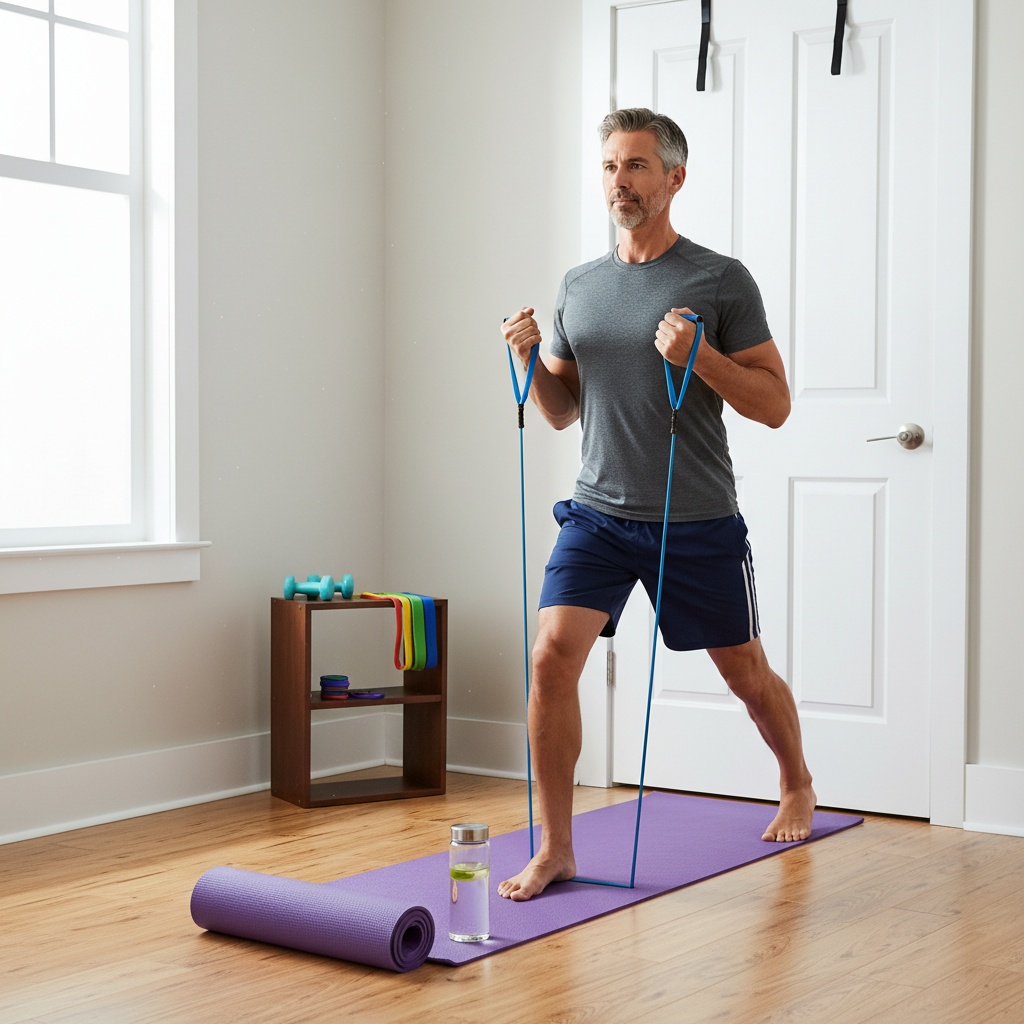
- Resistance band rows
- Shoulder presses with light dumbbells
- Bicep curls
Core:
- Planks (start with 15-20 seconds)
- Bird dogs
- Dead bugs
- Standing side bends


Supporting Your Joints from the Inside
Exercise is only part of the equation. What you put into your body matters just as much for joint health for men over 40.
Key Nutrients for Joint Health
Omega-3 Fatty Acids: Reduce inflammation and support joint lubrication. Found in fatty fish (salmon, mackerel), walnuts, and flaxseeds. If you don’t eat fish regularly, consider a quality fish oil supplement. Look for one with at least 1000mg of combined EPA and DHA. Nordic Naturals Ultimate Omega is a trusted brand.
Glucosamine and Chondroitin: These compounds support cartilage health. Many studies show they can reduce joint pain and slow cartilage breakdown. Glucosamine supplements are widely available and affordable ($15-30/month). Move Free Advanced is a popular option that combines both.
Collagen: The protein that makes up your cartilage, tendons, and ligaments. Collagen powder can be added to coffee, smoothies, or water. Vital Proteins Collagen Peptides is a premium choice, while Sports Research Collagen Peptides offers similar quality at a lower price point.
Vitamin D and Calcium: Essential for bone health, which directly supports your joints. Get sunlight when possible, eat dairy or fortified foods, and consider a Vitamin D3 supplement if you live in a northern climate or don’t get much sun.
Water: We mentioned this earlier, but it bears repeating. Hydration is one of the most important things you can do for your joints.

The Aquasana Claryum® 3-Stage Max Flow is a top-tier water filtration option that removes up to 99% of 78 different contaminants.
Foods That Fight Inflammation
Chronic inflammation is the enemy of healthy joints. Focus on:
- Fatty fish (salmon, sardines, mackerel)
- Leafy greens (spinach, kale)
- Berries (blueberries, strawberries)
- Nuts (walnuts, almonds)
- Olive oil
- Turmeric and ginger
Limit or avoid:
- Processed foods
- Excess sugar
- Fried foods
- Excessive alcohol

Flip 7 Classic Combo – Feel better, fast with one shake a day. FLIP 7 is an unmatched, all-in-one meal replacement SUPER FOOD powder with the most nutrient rich balance of health extending blends formulated to support whole body and mind wellness.
Warning Signs You’re Overdoing It
Even with the best intentions, it’s possible to overdo it. Here’s how to know if I’m injuring my joints and when to back off:
Red Flags to Watch For:
- Sharp or shooting pain during exercise: Stop immediately. This isn’t normal muscle fatigue.
- Joint pain that lasts more than 48 hours: Mild soreness is normal. Pain that persists is a warning sign.
- Swelling around a joint: This indicates inflammation or possible injury.
- Reduced range of motion: If a joint suddenly feels stiffer or can’t move as far as usual, you’ve overdone it.
- Grinding or clicking with pain: Some clicking is normal, but if it’s accompanied by pain, that’s a problem.
- Pain that wakes you up at night: This is your body screaming for rest.
What to Do If You Experience These Signs:
- Rest: Take at least 2-3 days off from the activity that caused the pain.
- Ice: Apply ice for 15-20 minutes several times a day to reduce inflammation.
- Elevate: If possible, keep the affected joint elevated.
- Gentle movement: Complete rest isn’t always best. Gentle, pain-free movement can help recovery.
- See a professional: If pain persists beyond a week or is severe, see a doctor or physical therapist.
Remember: taking three days off now is better than taking three months off later because you pushed through an injury.
Related Article
For a reality check on where you are in your fitness journey and how to adjust your approach, read:

Creating Your Personal Joint Health Action Plan
Knowledge without action is useless. Here’s your step-by-step plan to start protecting your joints today:
Week 1-2: Foundation Building
- Do the five mobility exercises every morning (10 minutes)
- Practice dynamic stretches before any physical activity
- Practice static stretches after showers or before bed
- Focus on drinking enough water
- No formal workouts yet—just build the habits
Week 3-4: Add Movement
- Continue daily mobility work
- Add 2-3 short workouts per week (20-30 minutes)
- Use only bodyweight or very light resistance
- Film yourself to check form
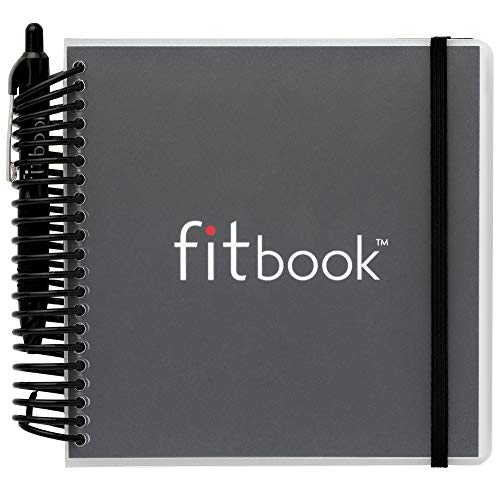
- Start a simple workout log
Week 5-8: Build Consistency
- Increase to 3-4 workouts per week
- Gradually increase resistance or reps
- Add one new exercise every two weeks
- Consider adding joint support supplements
- Track how your joints feel after each workout
Month 3 and Beyond: Progressive Growth
- Now continue increasing intensity gradually
- Every 4-6 weeks, take a “deload week” with lighter workouts
- Reassess your routine and make adjustments
- Celebrate your progress—you’re building a foundation that will last
The Long Game: Building Strength That Lasts
Here’s what most fitness content won’t tell you: the goal isn’t to get ripped in 90 days. The goal is to build a body that serves you well for the next 30-40 years. That requires protecting your joints now so they’re still healthy when you’re 60, 70, and beyond.
Joint health for men over 40 isn’t about restrictions—it’s about smart choices. It’s about understanding that warming up isn’t wasted time; it’s an investment. That starting light isn’t being weak; it’s being strategic. That rest days aren’t laziness; they’re when your body actually gets stronger.
You’re not trying to relive your 20s. It’s about building something better: a sustainable, enjoyable fitness routine that makes you stronger, healthier, and more capable every single year.
Related Article
This connects directly to the broader philosophy we talk about in The Triangle of Well-being—physical wellness is just one pillar, but it’s the foundation that makes everything else possible. When your body feels good, you have the energy and confidence to tackle mental resilience and financial independence.

Your Next Steps

Don’t let this be another article you read and forget. Here’s what to do right now:
- Save this article or bookmark it so you can reference the exercises and stretches.
- Do the five mobility exercises before you go to bed tonight. It takes 10 minutes.
- Order one piece of equipment this week—a foam roller, resistance bands, or a yoga mat. Start with what fits your budget.
- Schedule your first three workouts for next week. Put them in your calendar like any other appointment.
- Tell someone what you’re doing. Accountability matters.
“Take care of your body. It’s the only place you have to live.”
– Jim Rohn
Remember: you don’t need to be perfect. You just need to start. Every mobility exercise you do, every proper warm-up, every workout where you prioritize form over ego—these are deposits in your health bank account. And unlike your actual bank account, this one only grows with time.
Your joints have carried you this far. Now it’s time to return the favor. Start today, stay consistent, and build strength that lasts a lifetime.
Disclosure
This article contains affiliate links. If you choose to make a purchase through these links, we may earn a commission at no additional cost to you.
Important Note: The information in this post is meant to educate and inform, not to replace professional medical advice. While we’ve spent years studying health and wellness, we’re not licensed healthcare providers. Everyone’s body and circumstances are different, so what works for one person might not work for another. Always check with your doctor before starting any new exercise program or making significant lifestyle changes, especially if you have pre-existing conditions. By reading and using this information, you’re taking responsibility for your own health decisions.