Protein Needs for Men Over 40: Are You Getting Enough?
If you’re a man over 40, you’ve probably noticed your body doesn’t respond the same way it used to. Maybe you’re working out but not seeing results. Perhaps you’re tired more often, or you’ve noticed your clothes fitting differently. The culprit might be simpler than you think: you’re probably not getting enough protein.
“Take care of your body. It’s the only place you have to live.”
– Jim Rohn
Most men over 40 need significantly more protein than they’re currently eating, and this gap is quietly sabotaging muscle maintenance, energy levels, and overall health. Let’s fix that.
Disclosure
This article contains affiliate links. If you choose to make a purchase through these links, we may earn a commission at no additional cost to you.
Why Protein Matters More After 40
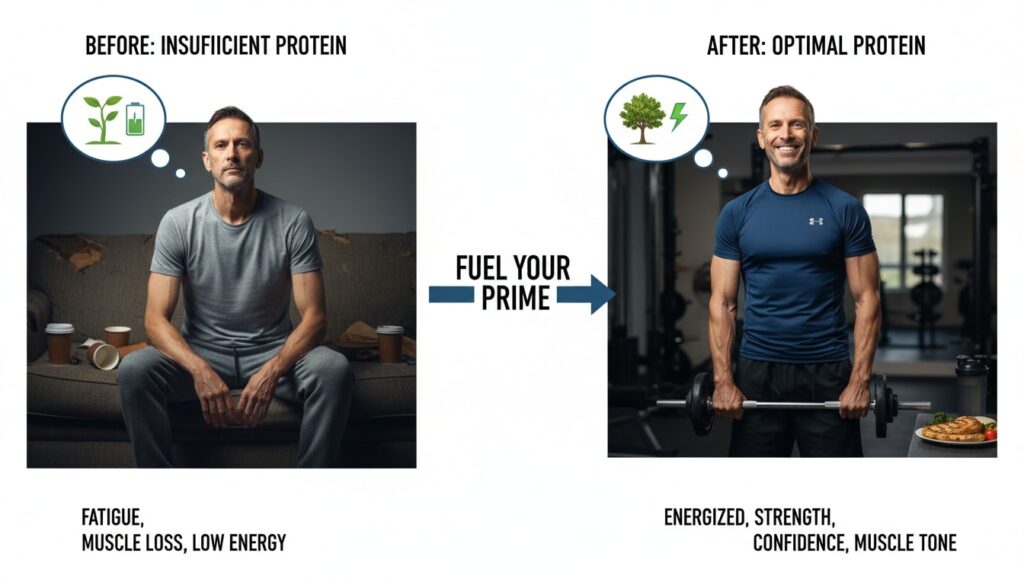
After 40, your body experiences something called age-related muscle loss (doctors call it sarcopenia, but that’s just fancy talk for “losing muscle as you age”). Without enough protein, you can lose 3-8% of your muscle mass per decade after 30, and this accelerates after 60.
Here’s what happens when you don’t get enough protein:
- Muscle loss and weakness
- Slower metabolism and weight gain
- Longer recovery from workouts
- Decreased energy throughout the day
- Weakened immune system
- Poor wound healing
The good news? Getting adequate protein can slow or even reverse this process. Check out our guide on The Over-40 Body Reset to understand how protein fits into your complete transformation strategy.
How Much Protein Do Men Over 40 Really Need?
The old recommendation of 0.8 grams per kilogram of body weight is outdated for men over 40. Research shows you need significantly more to maintain muscle and health.
The Simple Formula:
Aim for 0.7 to 1.0 grams of protein per pound of body weight daily, depending on your activity level.
Quick Reference:
- Sedentary (little exercise): 0.7g per pound
- Moderately Active (exercise 3-4x/week): 0.8g per pound
- Very Active (exercise 5+x/week): 1.0g per pound
Real-World Examples:
- 180-lb man, moderately active: 144g protein daily
- 200-lb man, very active: 200g protein daily
- 160-lb man, sedentary: 112g protein daily
Signs You’re Not Getting Enough Protein
Watch for these warning signs:
- Constant fatigue despite adequate sleep
- Difficulty building or maintaining muscle
- Slow recovery from workouts
- Frequent colds or infections
- Increased cravings for sugary foods
- Thinning hair or brittle nails
- Mood swings or brain fog
If you’re experiencing several of these, increasing your protein intake should be your first priority.
Best Protein Sources for Every Budget
You don’t need expensive supplements or premium cuts of meat. Here are proven protein sources organized by budget:
Budget-Friendly Options ($)
- Eggs: 6g protein per egg, versatile and cheap
- Canned tuna: 20g protein per can
- Chicken thighs: Less expensive than breast, more flavor
- Greek yogurt: 15-20g protein per cup
- Beans and lentils: 15g protein per cup cooked
- Peanut butter: 8g protein per 2 tablespoons
- Cottage cheese: 14g protein per half cup
Recommended: Kirkland Signature Canned Chicken Breast – affordable, shelf-stable, 13g protein per serving
Mid-Range Options ($$)
- Chicken breast: 26g protein per 3 oz
- Ground turkey: 22g protein per 3 oz
- Protein powder: Cost-effective per serving
- Eggs (organic/free-range)
- Milk: 8g protein per cup
Recommended: Optimum Nutrition Gold Standard Whey Protein – trusted brand, 24g protein per scoop, excellent value
Premium Options ($$$)
- Salmon: 22g protein per 3 oz plus omega-3s
- Grass-fed beef: 22g protein per 3 oz
- Specialty protein supplements
Recommended: Wild Planet Wild Albacore Tuna – sustainably caught, higher quality, 14g protein per serving

Flip 7 Chocolate Courage Feel better, fast with one shake a day. FLIP 7 is an unmatched, all-in-one meal replacement SUPER FOOD powder with the most nutrient rich balance of health extending blends formulated to support whole body and mind wellness.
Simple High-Protein Meal Planning
The key to hitting your protein requirements is distributing intake throughout the day. Your body can only process about 25-40g of protein per meal for muscle building.
Sample Daily Meal Plan (150g Protein Target)
Breakfast (35g protein):
- 3 eggs scrambled (18g)
- 2 slices whole grain toast with peanut butter (10g)
- Greek yogurt (7g)
Lunch (40g protein):
- Grilled chicken breast 6oz (52g) – use half here
- Large salad with beans
- Total: 40g
Dinner (45g protein):
- Salmon or lean beef 6oz (44g)
- Quinoa (4g per half cup)
Snacks (30g protein):
- Protein shake (24g)
- Handful of almonds (6g)

Protein Timing: When to Eat for Maximum Benefit
Best Practices:
- Morning: Start with 25-30g protein within an hour of waking
- Post-Workout: Consume 20-40g within 2 hours of exercise
- Evening: Include protein with dinner to prevent overnight muscle breakdown
- Before Bed: Small protein snack (Greek yogurt or casein shake) supports overnight recovery
Learn more about optimizing your daily routine in our Triangle of Well-being guide.
Protein Supplements: Do You Need Them?
Supplements aren’t necessary if you’re hitting targets through whole foods, but they’re convenient and cost-effective per gram of protein.
When Supplements Make Sense:
- Busy schedule with limited meal prep time
- Difficulty eating enough whole food protein
- Post-workout convenience
- Traveling frequently
Types of Protein Powder:
- Whey: Fast-absorbing, ideal post-workout (building blocks your body uses quickly)
- Casein: Slow-absorbing, great before bed
- Plant-based: For dairy-free or vegan diets

Common Protein Myths Debunked
Myth 1
“Too much protein damages your kidneys”
Truth: No evidence in healthy adults. If you have existing kidney disease, consult your doctor.
Myth 2
“You can only absorb 30g per meal”
Truth: Your body absorbs all protein, but 25-40g per meal is optimal for muscle building.
Myth 3
“Plant protein is inferior”
Truth: Combine different plant sources to get complete proteins (all the building blocks your body needs).


Practical Tips for Increasing Protein Intake
- Start every meal with protein – build your plate around it
- Prep protein in bulk – grill several chicken breasts on Sunday
- Keep convenient options ready – hard-boiled eggs, Greek yogurt, protein bars
- Track for one week – use a simple app to see where you actually stand
- Add protein to existing meals – extra egg in breakfast, beans in salad, protein powder in oatmeal
Tracking Tool: Digital food scale makes measuring accurate and easy
Budget-Friendly Protein Strategies
Money-Saving Tips:
- Buy chicken thighs instead of breasts (same protein, half the price)
- Purchase eggs in bulk
- Stock up on canned tuna and chicken when on sale
- Make your own protein snacks (hard-boiled eggs vs. protein bars)
- Buy protein powder in larger containers (better per-serving cost)
- Use beans and lentils as protein base several meals per week
Cost Comparison:
- Protein bar: $2-3 for 20g protein
- Protein shake: $0.75-1.50 for 24g protein
- 3 eggs: $0.60 for 18g protein
- Can of tuna: $1.00 for 20g protein

Your Action Plan: Starting Today
Week 1: Calculate your protein needs and track current intake
Week 2: Identify gaps and add one high-protein food to each meal
Week 3: Experiment with meal prep and new protein sources
Week 4: Fine-tune timing and distribution throughout the day
For a complete approach to transforming your health after 40, explore our Physical Wellness strategies that integrate nutrition, exercise, and sustainable habits.
Final Thoughts

Getting enough protein after 40 isn’t complicated, but it does require intentional planning. Whether you’re working with a tight budget or have more flexibility, there are protein sources that fit your lifestyle and financial situation.
Remember: consistency beats perfection. Start by adding 20-30g more protein daily and build from there. Your muscles, energy levels, and overall health will thank you.
“The groundwork of all happiness is health.”
– Leigh Hunt
Ready to take the next step? Check out our 90-Day Summer Challenge for a complete transformation plan that includes protein optimization, workout strategies, and mindset shifts designed specifically for men over 40.
What’s your biggest challenge with getting enough protein?
Disclosure
This article contains affiliate links. If you choose to make a purchase through these links, we may earn a commission at no additional cost to you.
Important Note: The information in this post is meant to educate and inform, not to replace professional medical advice. While we’ve spent years studying health and wellness, we’re not licensed healthcare providers. Everyone’s body and circumstances are different, so what works for one person might not work for another. Always check with your doctor before starting any new exercise program or making significant lifestyle changes, especially if you have pre-existing conditions. By reading and using this information, you’re taking responsibility for your own health decisions.