Sleep Optimization: Wearables & Routines for Men Over 40
If you’re reading this, chances are sleep isn’t as automatic as it used to be. Maybe you’re waking up at 3 a.m. for no reason, or dragging through the day even after a “full night’s rest.” You’re not alone—especially if you’re a man over 40. Between work, family, and the stress of everyday life, quality sleep can feel like a luxury. But here’s the truth: sleep optimization doesn’t have to be complicated, expensive, or full of confusing “sleep tech” jargon. In this guide, you’ll discover simple routines, easy-to-use wearables, and micro-actions that can help you get better sleep—no matter your budget or background.
“You can’t pour from an empty cup. Prioritize your sleep, and watch everything else level up.”
Let’s be real: after 40, your body doesn’t bounce back the way it used to. Late-night TV, scrolling on your phone, or that “just one more” drink can hit harder the next day. You might even feel stuck in a cycle—tired but wired, wishing sleep came as easy as it did in your twenties. The good news? You don’t need to overhaul your entire life or buy some fancy gadget to see results. With a few practical tweaks and the right tools (think: wearable sleep trackers and simple nighttime routines), you can start stacking small wins—one solid night of rest at a time. This isn’t about chasing perfection; it’s about progress you can actually feel.
This post is part of our ongoing series on The Over-40 Body Reset and Mindset Mastery: Building Mental Toughness in Your Prime Years, where we break down the science and practice of thriving after 40.
Ready to sleep like you mean it? Let’s dig in.
Disclosure
This article contains affiliate links. If you choose to make a purchase through these links, we may earn a commission at no additional cost to you.
What Sleep Optimization Really Means (No Jargon Required)

When you hear “sleep optimization” or “sleep tech,” it might sound like something only athletes or Silicon Valley types care about. But here’s the deal: sleep optimization just means making small, practical changes to help you get better, deeper rest—so you wake up feeling like yourself again. For men over 40, this is less about chasing perfect sleep and more about building routines and using tools that fit your real life.
Think of sleep optimization like tuning up your car. You don’t need a brand-new engine—just regular oil changes, the right fuel, and a few tweaks to keep things running smoothly. In the same way, better sleep is about the basics: a consistent bedtime, a wind-down routine, and maybe a little help from modern sleep tech like a wearable tracker or a white noise machine.
If you’ve ever wondered why you’re waking up groggy, or why your energy crashes mid-afternoon, you’re not alone. The good news? Most sleep problems have simple fixes—no complicated science required. In this guide, we’ll break down exactly what to look for, how to use wearables (like smartwatches or rings), and the routines that actually work for men over 40.
If you want to dive deeper into how your daily habits affect your health, check out our cornerstone article: The Triangle of Well-being: How Health, Mind, and Money Connect.
The Science of Sleep After 40 (And Why It Changes)
Ever notice how you used to sleep through anything—a thunderstorm, a crying baby, even that neighbor’s late-night party? After 40, it’s like your internal sleep switch gets a little rusty. That’s not your imagination. As we age, our bodies produce less melatonin (the sleep hormone), and our natural sleep cycles can get thrown off by stress, late-night screen time, or even just the daily grind.
Here’s a quick analogy: imagine your sleep is like a bank account. In your twenties, you could make a few “withdrawals” (late nights, early mornings) and still bounce back. But after 40, those withdrawals add up—and your body needs more “deposits” (good sleep habits) to stay in the black. The result? You might wake up in the middle of the night, feel groggy in the morning, or struggle to get through the day without a second (or third) cup of coffee.
But don’t worry—this isn’t about chasing some mythical “perfect” sleep. It’s about stacking small wins. That’s where sleep tech and simple routines come in. A wearable sleep tracker, for example, can help you spot patterns you might miss on your own. It’s like having a coach in your corner, quietly tracking your progress and nudging you toward healthier habits.
Related Article
How Wearables Can Help (Even If You’re Not a Gadget Guy)
Let’s clear something up: you don’t need to be a tech whiz to benefit from sleep tech. Today’s wearable sleep trackers are designed to be simple—think of them like a digital notepad for your rest. You wear a small device (like a watch or ring) to bed, and in the morning, you get a quick, easy-to-read summary of how you slept. No complicated graphs or confusing numbers—just real info you can use.
For example, a basic tracker might show you how long you spent in deep sleep versus light sleep, or how often you woke up during the night. Over a week or two, you’ll start spotting patterns: maybe you sleep better on days you walk after dinner, or worse after a late-night snack. These insights help you tweak your routines in ways that actually fit your life.
Micro-action: Try wearing a sleep tracker for one week. Each morning, jot down how rested you feel (just a quick 1-10 rating in your phone or a notebook). After seven days, look for connections between your habits and your sleep quality. Did you sleep better on days you skipped screens before bed? Did a warm shower help you wind down?

Worried about cost? There are plenty of budget-friendly options that work just as well for tracking the basics. The key is to start with what you’re comfortable with—and build from there.
Related Article
Want to see how these sleep changes can impact your overall health? Don’t miss our guide:
Building a Sleep-Optimized Routine (That Fits Real Life)
Let’s be honest: most of us aren’t going to meditate for an hour or give up coffee forever. Real sleep optimization is about small, doable steps you can actually stick with—especially for men over 40 with busy, unpredictable lives. Here’s how to build a routine that works for you, not against you.
Step 1: Set a Consistent Bedtime (Most Nights)
Pick a bedtime you can hit at least five nights a week. Don’t worry about perfection—progress is the goal. Try setting a phone reminder or using your sleep tracker’s “bedtime alert” feature. Even a 15-minute improvement can make a difference.
Step 2: Create a Wind-Down Ritual
Your body needs signals that it’s time to power down. This could be as simple as dimming the lights, reading a few pages of a book, or taking a warm shower. Avoid screens if you can—blue light messes with your sleep hormones. If you’re not sure where to start, check out our Evening Movement Routine for Better Sleep After 40 for easy, no-sweat ideas.
Step 3: Track Small Wins
Use your wearable (or just a notebook) to track how you feel each morning. Did you wake up less during the night? Do you have more energy at work? Celebrate the small wins—they add up. For more on building momentum, check out Mindset Mastery: Building Mental Toughness in Your Prime Years.
Step 4: Adjust as You Go
If a routine isn’t working, tweak it. Maybe you need to move your workout earlier, cut back on late-night snacks, or try a new wind-down ritual. The goal is steady improvement, not perfection.
Want more ideas for healthy nighttime habits? Our post on Nutrition After 40: Eating for Energy and Recovery has tips on evening snacks that actually help (not hurt) your sleep.
Best Sleep Tech & Gadgets for Every Budget
When it comes to sleep optimization and sleep tech, you don’t have to break the bank. There are options for every budget and comfort level—whether you’re just getting started or want to geek out on data. Here are a few tried-and-true gadgets that make a real difference for men over 40:
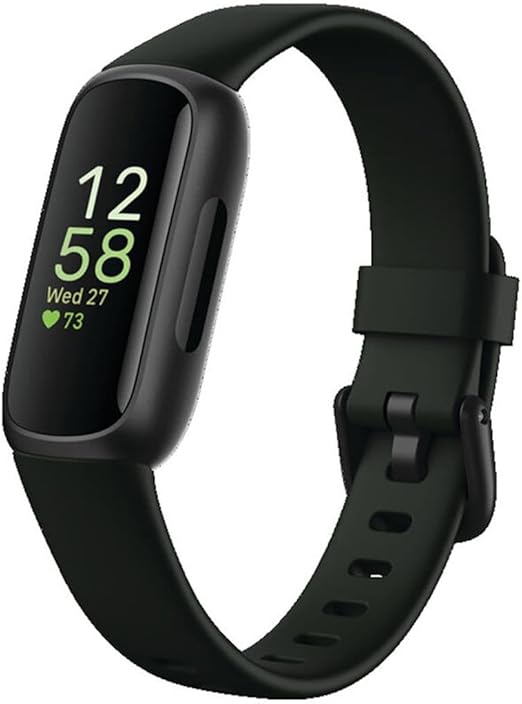
You don’t need a fancy watch to get started. Devices like the Fitbit Inspire 3 are affordable, easy to use, and track your sleep stages, movement, and even heart rate. They’re perfect for building awareness and spotting patterns without feeling overwhelmed.
![Apple Watch SE (2nd Gen) [GPS 44mm] Smartwatch with Midnight Aluminum Case with Midnight Sport Band M/L. Fitness and Sleep Trackers, Crash Detection, Heart Rate Monitor, Retina Display](https://m.media-amazon.com/images/I/318GcaNFixL._SL500_.jpg)
If you want a bit more functionality, a smartwatch like the Apple Watch SE offers detailed sleep monitoring, reminders, and even stress-tracking features. Plus, it doubles as a fitness and productivity tool during the day.
For those who want all the details with zero hassle, the Oura Ring Gen4 is a game-changer. It tracks your sleep cycles, recovery, and daily readiness—all from a simple ring. No screens, no fuss, just actionable insights right to your phone.
Bonus: Simple Sleep Support Tools
Sometimes, the best sleep optimization tools are the simplest. A white noise machine or blackout curtains can make a huge difference in your sleep quality, especially if you’re a light sleeper or work shifts.
Remember, the goal isn’t to collect gadgets—it’s to find what actually helps you sleep better. Start with one tool, track your progress, and adjust as you go. For more tips on choosing the right wellness tech, see our guide: The Over-40 Body Reset.
Troubleshooting Common Sleep Struggles After 40
Even with the best sleep optimization routines and the latest sleep tech, you might still hit a few bumps along the way. That’s normal—especially for men over 40, whose bodies and lifestyles are constantly shifting. Here’s how to handle some of the most common sleep struggles:
Problem 1
Waking Up in the Middle of the Night
This is super common, especially as melatonin levels dip with age. Try a wind-down ritual that includes 10 minutes of gentle stretching or deep breathing before bed. If you wake up, avoid checking your phone—blue light can make it harder to fall back asleep. Instead, keep a notepad by your bed for any racing thoughts.
Problem 2
Trouble Falling Asleep
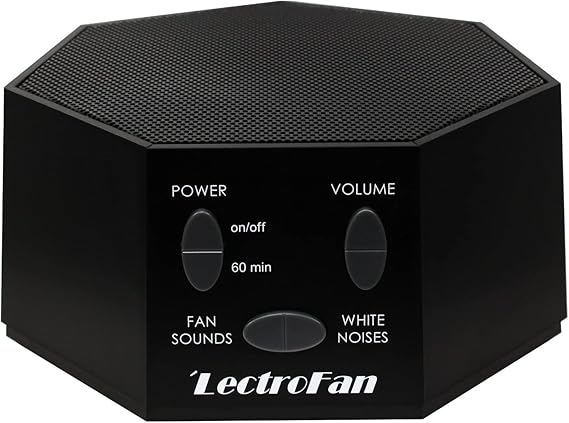
If your mind is racing, consider a simple guided meditation or a white noise machine. The LectroFan White Noise Machine (affiliate) is a favorite for its simplicity and effectiveness. For more on calming your mind, check out our post on Mental Blocks & Decision Making.
Problem 3
Feeling Groggy in the Morning
This can be a sign you’re not getting enough deep sleep, or your sleep schedule is inconsistent. Use your wearable to track your sleep stages and experiment with a consistent wake-up time—even on weekends. Over time, your body will adjust and mornings will feel less brutal.
Problem 4
Shift Work or Irregular Schedules
If you work nights or odd hours, blackout curtains and a white noise machine can be game changers. Stick to a wind-down routine, even if your “night” happens in the middle of the day. For nutrition tips that support better rest, visit our article: Nutrition After 40: Eating for Energy and Recovery.
Frequently Asked Questions: Sleep Optimization & Tech for Men Over 40


Final Thoughts: Sleep Optimization for Real Life
If you’ve made it this far, you’re already ahead of the game. Sleep optimization isn’t about perfection or chasing the latest tech trend—it’s about taking small, practical steps that actually fit your life. Whether you’re using a simple notebook or the newest wearable, what matters most is showing up for yourself, night after night.
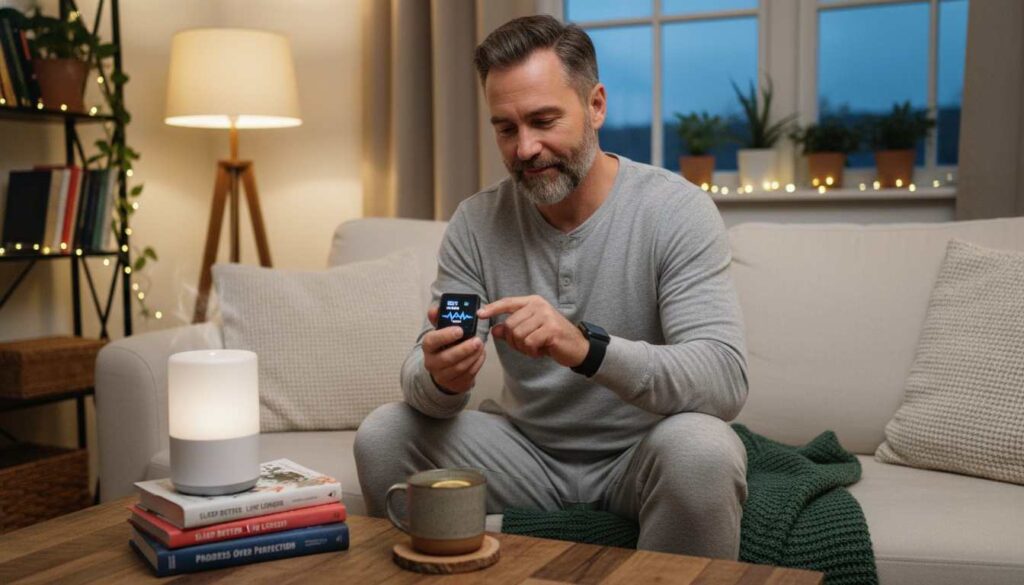
“Progress, not perfection. Every good night’s sleep is a step forward.”
Remember, real progress is built on micro-actions: setting a consistent bedtime, experimenting with a wind-down routine, or just noticing how you feel in the morning. For men over 40, these small wins add up to better mornings, more energy, and a renewed sense of control over your health.
Ready to take the next step? Try one tip from this post tonight—track your sleep, tweak your routine, or invest in a tool that fits your budget. Then, share your experience in the comments or on social media. Your story might be the nudge another guy needs to start his own journey.
For more practical guides and real-world strategies, explore our cornerstone content like The Over-40 Body Reset and The Triangle of Well-being. And don’t forget to check out our Amazon recommendations above for tools that make sleep optimization simple, no matter where you’re starting from.
Here’s to progress, not perfection—and to waking up ready for whatever comes next.
Disclosure
This article contains affiliate links. If you choose to make a purchase through these links, we may earn a commission at no additional cost to you.
Important Note: The information in this post is meant to educate and inform, not to replace professional medical advice. While we’ve spent years studying health and wellness, we’re not licensed healthcare providers. Everyone’s body and circumstances are different, so what works for one person might not work for another. Always check with your doctor before starting any new exercise program or making significant lifestyle changes, especially if you have pre-existing conditions. By reading and using this information, you’re taking responsibility for your own health decisions.