Sunday Planning: Setting Up Your Best Week of December
December is here, and with it comes the final push toward year-end goals, holiday stress, and the temptation to let everything slide until January. But here’s the truth: the men who finish strong don’t wait for motivation—they plan for success every Sunday.
“The secret of getting ahead is getting started. The secret of getting started is breaking your complex overwhelming tasks into small manageable tasks, and starting on the first one.”
– Mark Twain
If you’re in your 40s or 50s and feeling like time is slipping away, this Sunday planning routine will help you reclaim control. We’re focusing on three game-changers: choosing the right equipment without breaking the bank, optimizing whatever space you have, and creating a weekly planning system that actually works.
Let’s make this your best December yet.
Disclosure
This article contains affiliate links. If you choose to make a purchase through these links, we may earn a commission at no additional cost to you.
Why Sunday Planning Changes Everything

Sunday planning isn’t just about making to-do lists. It’s about creating a weekly reset that aligns your physical wellness, mental resilience, and financial independence goals. When you dedicate 30-60 minutes each Sunday to planning, you’re not just organizing tasks—you’re designing the life you want.
For men over 40, this weekly planning routine becomes even more critical. We’re juggling careers, families, health concerns, and the nagging feeling that we should be further along. A solid Sunday planning session eliminates decision fatigue and sets you up for consistent action.
The Triangle of Well-being teaches us that physical, mental, and financial health are interconnected. Your Sunday planning should address all three pillars, and December is the perfect time to refine your approach.
The 15-Minute Space Audit
Before you buy a single piece of equipment or plan your week, you need to know what you’re working with. Grab a notepad and spend 15 minutes walking through your home with fresh eyes.
What to Look For:
Potential Workout Zones:
- Spare bedroom corner (even 6×6 feet works)
- Garage space (can be cleared weekly)
- Living room area (that can be temporarily converted)
- Basement section (even unfinished spaces work)
Planning Headquarters:
- Desk or table with good lighting
- Quiet corner away from TV/distractions
- Kitchen table (if you can claim it Sunday mornings)
Storage Opportunities:
- Wall space for hooks or shelves (vertical storage means using wall space instead of floor space)
- Under-bed storage bins
- Closet corners
- Behind-door organizers
Write down what you find. Don’t judge it—just document it. You’re working with what you have, and that’s enough.
Budget Breakdown: Equipment for Every Income Level
Let’s talk money. Whether you have $25 or $250 to invest this month, you can create a functional setup that supports your December goals. Remember, The Mid-Life Wealth Building Blueprint teaches us that smart spending today creates freedom tomorrow.
Entry-Level Budget ($25-50)
Total Investment: $38-70
Perfect if you’re just starting or money is tight right now. These basic, beginner-friendly items deliver serious results:

These are stretchy bands that create tension when you pull them—think of giant, durable rubber bands. They're perfect for strength training without weights.

A cushioned surface for floor exercises, stretching, and core work. Protects your joints and defines your workout space.

Cardio equipment that fits in your pocket. Burns calories fast and improves coordination.
Mid-Range Budget ($100-150)
Total Investment: $110-205
If you can swing a bit more, these versatile items that serve multiple purposes will expand your options significantly:


Weights you can make heavier or lighter by adding or removing plates. Replaces an entire rack of dumbbells.

Large inflatable ball for core work, balance training, and even as a desk chair alternative.

Cylinder-shaped tool for muscle recovery and flexibility. Helps reduce soreness after workouts.
Investment Budget ($200-300)
Total Investment: $200-310
These high-quality items that last years will serve you well into 2026 and beyond:


Flat or incline bench that opens up dozens of exercise options. Folds for storage.

Thicker, more durable than basic yoga mats. Protects floors and reduces noise.
Space Optimization: Making Any Area Work
You don’t need a dedicated home gym. You need a designated zone—a specific corner or area reserved just for your routine. Here’s how to maximize whatever space you have:
Small Space Solutions (Under 50 sq ft)
Collapsible Equipment:
Choose items that fold, deflate, or stack. Your stability ball deflates, your bench folds, your mats roll.

Install simple hooks for resistance bands, jump ropes, and yoga mats. This keeps equipment visible and accessible without cluttering floors.

A storage bench can hold your dumbbells inside while providing a workout seat. An ottoman can store resistance bands and double as a step platform.
Medium Space Solutions (50-100 sq ft)
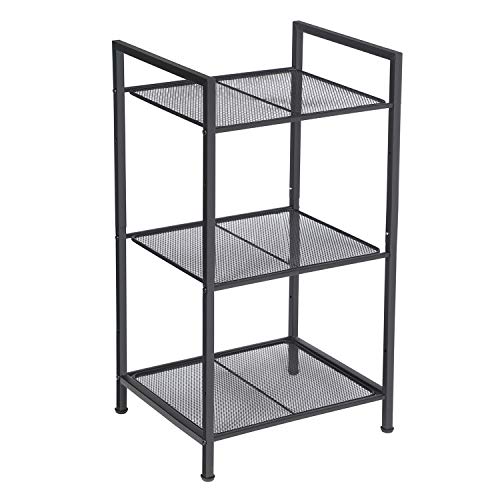
Claim a corner and define it with your workout mat. Add a small shelf unit for equipment and a mirror for form checks.

Keep all equipment on a cart that rolls into a closet when not in use. Takes 30 seconds to set up and put away.
Large Space Solutions (100+ sq ft)

Create a permanent workout area with rubber flooring, wall mirror, and organized storage.

Add a whiteboard or corkboard for tracking progress, posting goals, and maintaining accountability.
The Sunday Planning Template
Now that your space and equipment are sorted, let’s build your actual Sunday planning routine. This 30-minute process sets up your entire week for success across all three pillars of The Triangle of Well-being.
Step 1: Review Last Week (5 minutes)
Pull out your calendar or planner and honestly assess:
- What workouts did you complete?
- What mental resilience practices did you maintain?
- What financial goals did you hit?
- What got in your way?
No judgment—just data. This weekly goal setting habit helps you spot patterns and adjust.
Step 2: Physical Wellness Planning (10 minutes)
Schedule Your Workouts:
Block specific times on your calendar. “Monday, 6:00 AM – 6:30 AM: Resistance Band Workout” is infinitely more effective than “work out sometime Monday.”
Plan Your Movement:
- 3-4 strength sessions using your new equipment
- 2-3 cardio sessions (walking, jump rope, or bodyweight circuits)
- Daily stretching or foam rolling (5-10 minutes)
Prep Your Space:
Lay out your workout mat Sunday evening. Seeing it ready eliminates excuses Monday morning.
Related: Check out The Over-40 Body Reset for specific workout programming.
Step 3: Mental Resilience Planning (8 minutes)
Identify Stress Points:
What’s coming this week that might derail you? Holiday parties? Work deadlines? Family obligations?
Schedule Mental Breaks:
- 10-minute morning meditation or breathing exercises
- Evening journaling (5 minutes before bed)
- One 30-minute “you” activity (reading, hobby, solo walk)
Prepare Your Mindset:
Write down one affirmation or focus phrase for the week. Example: “I make progress, not excuses” or “Small steps compound into big results.”
Related: Mindset Mastery: Why Most Men Stay Stuck dives deeper into mental blocks.
Step 4: Financial Independence Planning (5 minutes)
Review Your Budget:
Quick check of spending from last week. Any surprises? Any wins?
Plan This Week’s Spending:
- Grocery budget
- Holiday spending limits
- Any planned purchases
One Financial Action:
Choose one small financial win for the week:
- Transfer $20 to savings
- Research one side hustle idea
- Cancel one unused subscription
- Sell one unused item
Related: Creating Multiple Income Streams After 40 offers practical strategies.
Step 5: Prep for Success (2 minutes)
Meal Prep Basics:
You don’t need to cook everything, but knowing what you’ll eat for breakfast and lunch eliminates decision fatigue.
Lay Out Clothes:
Monday morning workout clothes go by your bed. Work clothes go in the closet, ready to grab.
Set Your Environment:
Phone on charger away from bed. Water bottle filled. Alarm set. You’re removing friction from your morning routine.
December-Specific Strategies
This month brings unique challenges. Here’s how to adapt your Sunday planning for December productivity:
Holiday Temptations:
Plan your indulgences. If you know there’s a party Friday, you can adjust your week accordingly. Control what you can control.
Shorter Days:
Morning workouts become crucial. Your space is ready, your equipment is accessible, and you’re done before the day derails you.
Year-End Reflection:
Add 10 minutes to your Sunday planning for December goal tracking. Where are you versus January 1st? What can you accomplish by December 31st?
Budget Awareness:
Holiday spending is real. Your Sunday financial check-in prevents January credit card shock.
Common Obstacles and Solutions
Obstacle 1
“I don’t have time for Sunday planning.”
Solution: You have time for what you prioritize. Thirty minutes on Sunday saves hours of wasted effort during the week. This is time management that actually works.
Obstacle 2
“My family interrupts my planning time.”
Solution: Wake up 30 minutes earlier, or claim Sunday evening after everyone’s in bed. Protect this time like you’d protect a doctor’s appointment.
Obstacle 3
“I start strong but fade by Wednesday.”
Solution: Your plan is too ambitious. Scale back. Three 20-minute workouts you actually do beat five 60-minute workouts you skip.
Obstacle 4
“I can’t afford any equipment right now.”
Solution: Start with bodyweight exercises and free resources. Your body is equipment. Push-ups, squats, planks, and walking cost nothing.
Related Articles


Your December Action Plan
This Sunday, commit to this simple productivity system:
- Complete your 15-minute space audit (identify your workout zone and planning area)
- Choose your budget tier (decide what you can invest this month)
- Order your equipment (use the Amazon recommendations above)
- Set up your space (even if equipment hasn’t arrived, define your zone)
- Complete your first Sunday planning session (use the 30-minute template)
By next Sunday, you’ll have completed one full week using this system. By December 31st, you’ll have four weeks of momentum heading into 2026.
The Compound Effect of Sunday Planning
Here’s what most men miss: Sunday planning isn’t about perfection—it’s about consistency.
One Sunday planning session won’t transform your life. But 52 consecutive Sunday sessions? That’s a completely different man by next December.
You’re building a habit tracking system that compounds. Each week, you get slightly better at:
- Estimating your capacity
- Identifying obstacles before they derail you
- Aligning your daily actions with your bigger goals
- Making progress across all three pillars simultaneously
This is how men over 40 create sustainable change. Not through motivation or willpower, but through systems that work even when you don’t feel like it.
Final Thoughts
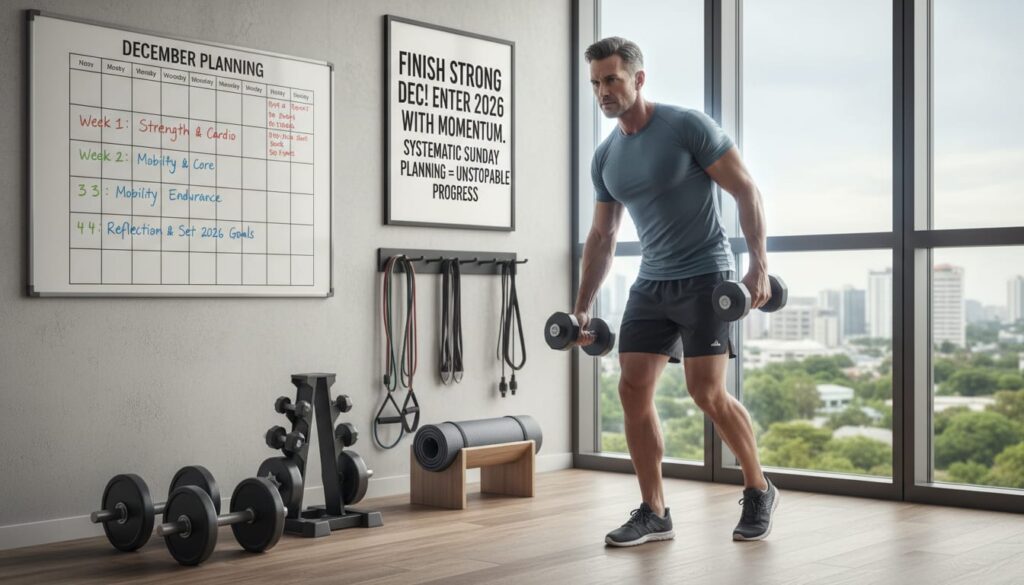
December doesn’t have to be a month of survival. With the right equipment, an optimized space, and a weekly planning routine, you can finish 2025 stronger than you started it.
Your Sunday planning routine is the foundation. Your equipment choices support your physical goals. Your space optimization removes friction. Together, they create an environment where success becomes inevitable.
“You don’t have to be great to start, but you have to start to be great.”
– Zig Ziglar
This Sunday, give yourself 30 minutes. Set up your space, order your equipment, and plan your week. Your future self—the one who finishes December strong and enters 2026 with momentum—will thank you.
Ready to dive deeper? Check out these related articles:
- The Triangle of Well-being
- The Over-40 Body Reset
- Mindset Mastery: Why Most Men Stay Stuck
- The Mid-Life Wealth Building Blueprint
What’s your biggest Sunday planning challenge?
Disclosure
This article contains affiliate links. If you choose to make a purchase through these links, we may earn a commission at no additional cost to you.
Important note: The information provided in this post is for educational and informational purposes only. While we’ve spent over a decade studying health, wellness, and financial strategies, we are not a licensed healthcare provider, mental health professional, or financial advisor. Everyone’s situation is unique, so what works for one person might not work for another. For physical health matters, always consult your doctor before starting any new fitness program. For mental health concerns, please seek qualified mental health professionals. For financial decisions, consult with certified financial advisors who can assess your specific situation. The content here reflects personal research and experience but shouldn’t replace professional advice in any of these areas. By reading and using this information, you’re taking responsibility for your own decisions. Your health, mind, and money deserve professional guidance when needed. Stay awesome!