The Hidden Benefits of Evening Movement: A 40+ Man’s Guide to Better Sleep
Struggling to get quality sleep lately? If you’re a man over 40, you’ve probably noticed that falling asleep isn’t as easy as it used to be. That afternoon coffee lingers longer, your mind races at bedtime, and those old workout habits might actually be keeping you awake.
“Sleep is the best meditation.”
– Dalai Lama
Here’s the thing most guys miss: strategic evening movement – not intense exercise, but intentional, gentle movement – can be your secret weapon for better sleep and recovery. Let’s break down exactly how to use it.
Disclosure
This article contains affiliate links. If you choose to make a purchase through these links, we may earn a commission at no additional cost to you.
Why Evening Movement Matters After 40
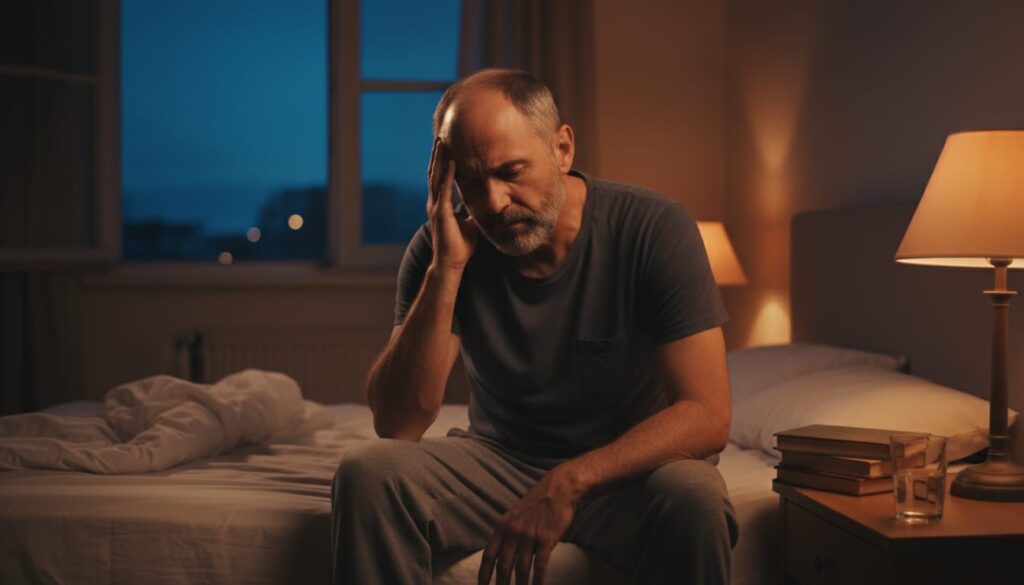
As we mature, our bodies respond differently to exercise and stress. Overcoming common fitness barriers after 40 means understanding these changes and working with them, not against them. That afternoon coffee might be affecting you more than it did in your 30s, and those late-night workout sessions? They might be doing more harm than good.
Here’s what’s happening: your body’s recovery systems slow down, your stress hormones take longer to regulate, and your sleep patterns become more fragile. But here’s the good news – evening movement done right can actually reset these systems and prepare your body for deep, restorative sleep.
The Science Behind Evening Movement and Sleep Quality
Understanding Cortisol (In Plain English)
Think of cortisol as your body’s built-in alarm clock. It’s the hormone (a chemical messenger in your body) that wakes you up in the morning and keeps you alert during the day. But when cortisol stays high at night, it’s like trying to sleep while someone’s shaking your shoulder saying “wake up!”
Evening movement done right helps turn down this internal alarm so your body knows it’s time to rest. This is a key part of managing your body’s natural alarm system for better overall wellness.
Plain English: “Parasympathetic nervous system” is your body’s “rest and digest” mode – the opposite of “fight or flight.” Evening stretches activate this calming system, telling your body it’s safe to relax.
How Evening Movement Improves Sleep Architecture
“Sleep architecture” just means the different stages your body goes through during sleep – like light sleep, deep sleep, and dream sleep. Evening movement helps you spend more time in the deep, restorative stages where your body actually repairs muscle, consolidates memories, and recharges your energy.
Think of it like this: without evening movement, you might sleep 7 hours but only get 4 hours worth of actual rest. With strategic movement, those same 7 hours deliver much better recovery.
The Evening Reset Protocol
This isn’t about getting a workout in before bed – it’s about preparing your body for recovery. The entire routine takes just 15-20 minutes and requires minimal equipment (or none at all if you’re on a budget).
Step 1: The 10-Minute Mobility Routine
This gentle mobility work honors your body’s current capabilities rather than pushing past them. Each movement should feel like a gentle release, not a challenge.
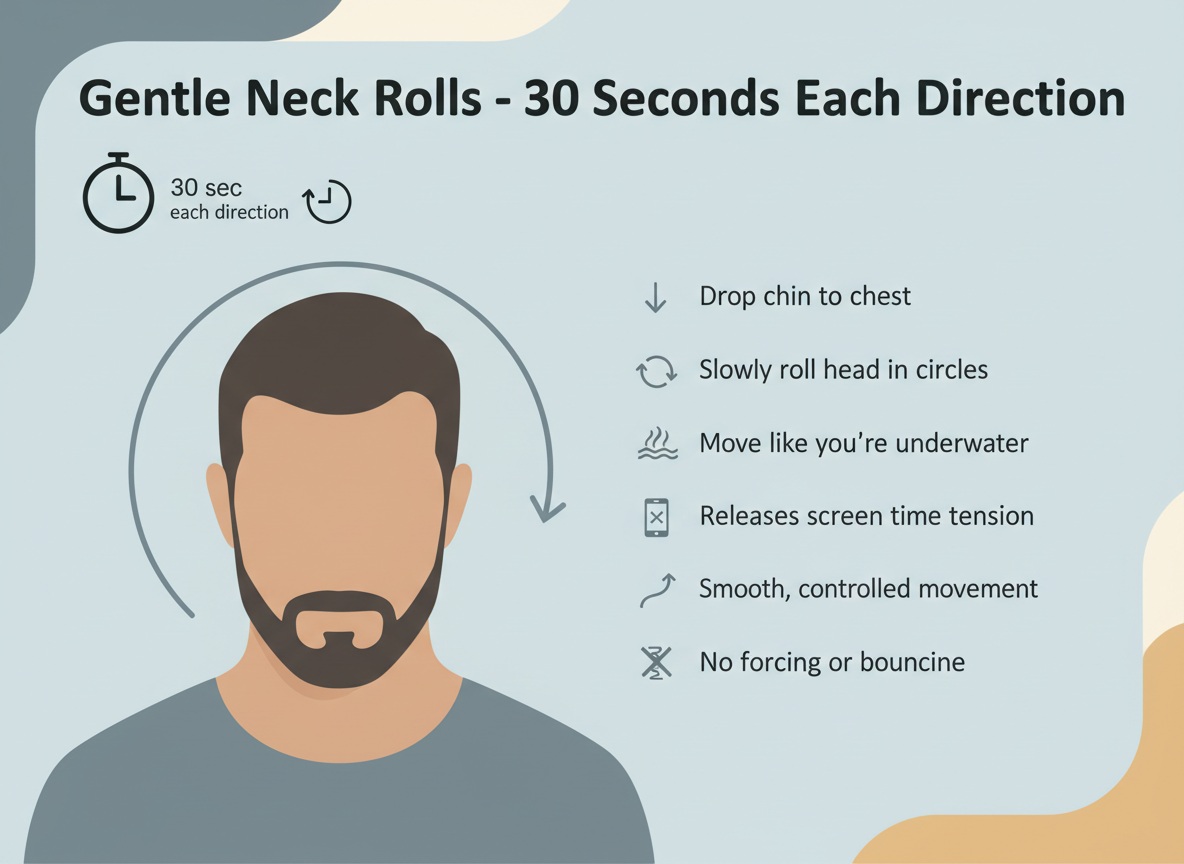
Gentle Neck Rolls (30 seconds each direction)
Drop your chin to your chest, then slowly roll your head to the right, bringing your ear toward your shoulder. Continue the circle backward and to the left. Move like you’re underwater – slow and controlled. This releases the tension we carry from staring at screens all day.
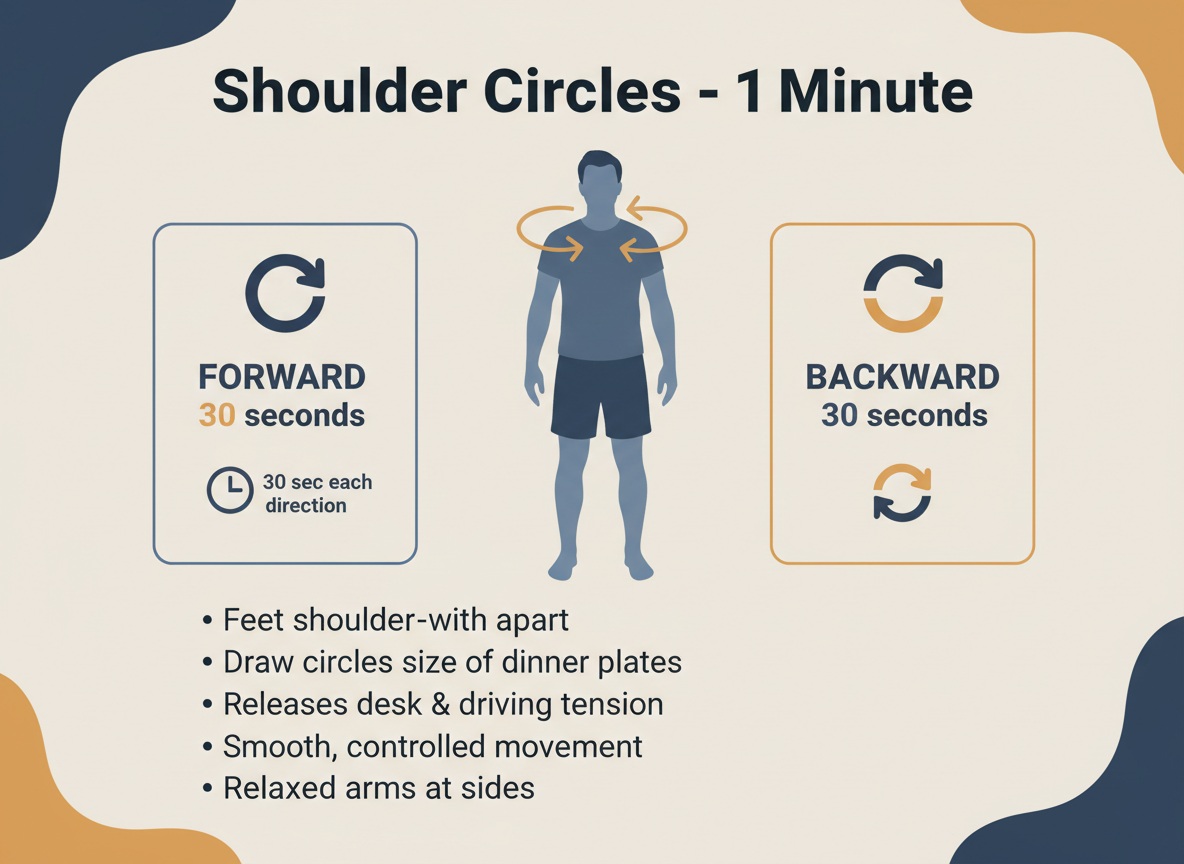
Shoulder Circles (1 minute)
Stand with your feet shoulder-width apart. Roll your shoulders forward in big circles for 30 seconds, then reverse direction. Imagine you’re drawing circles the size of dinner plates. This is especially helpful if you sit at a desk or drive for work.
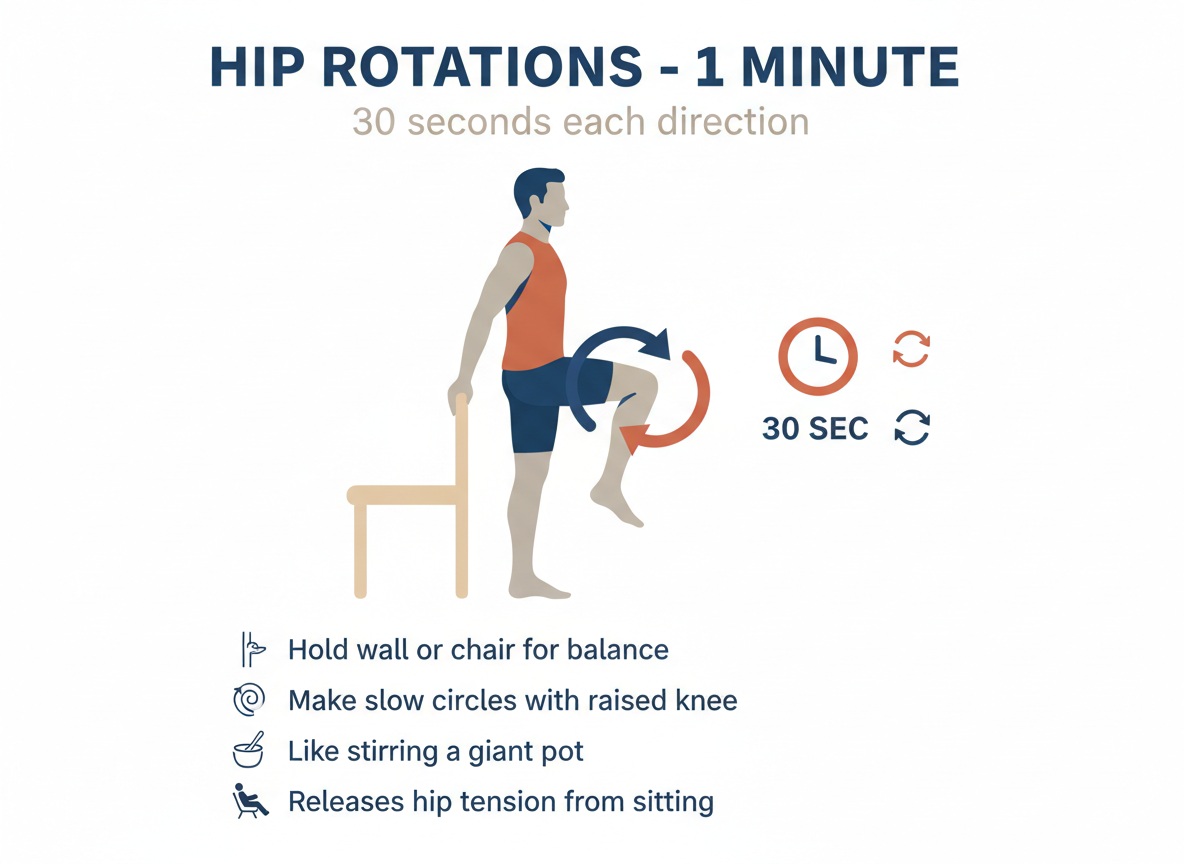
Hip Rotations (1 minute)
Stand on one leg (hold a wall or chair for balance – no shame in that). Make slow circles with your raised knee, like you’re stirring a giant pot. Do 30 seconds each direction, then switch legs. Your hips store stress from sitting, and this releases it.
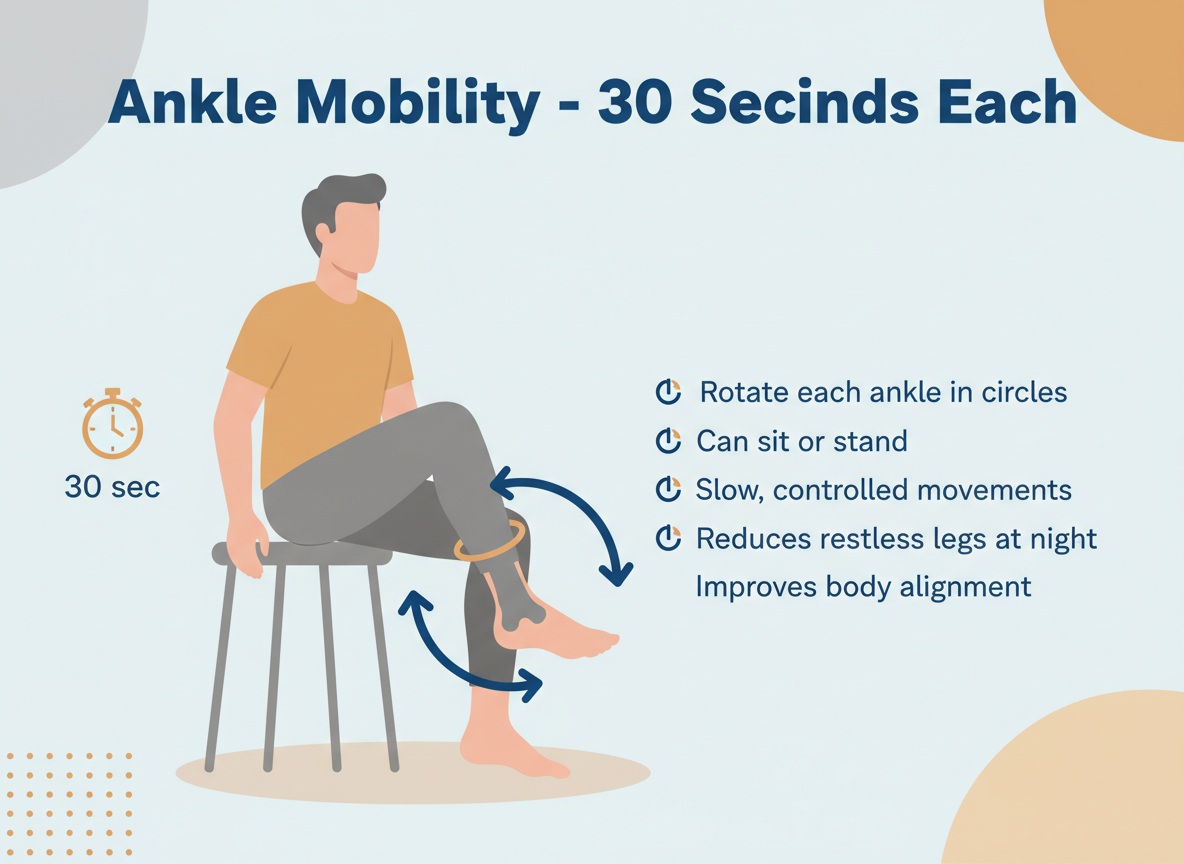
Ankle Mobility (30 seconds each)
Sit or stand and rotate each ankle in circles. This might seem minor, but ankle stiffness affects your entire body’s alignment and can contribute to restless legs at night.
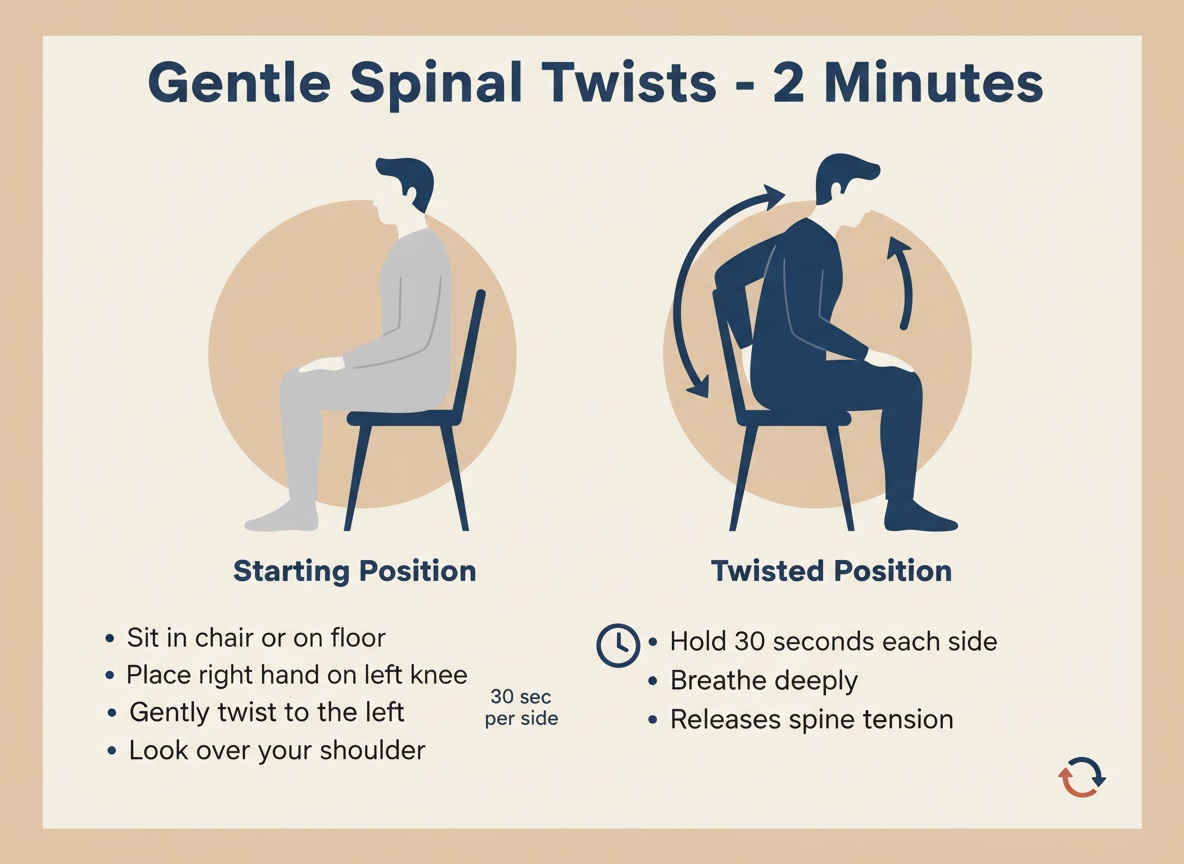
Gentle Spinal Twists (2 minutes)
Sit in a chair or on the floor. Place your right hand on your left knee and gently twist to the left, looking over your left shoulder. Hold for 30 seconds, breathing deeply. Switch sides. This wrings out tension from your spine like squeezing water from a towel.
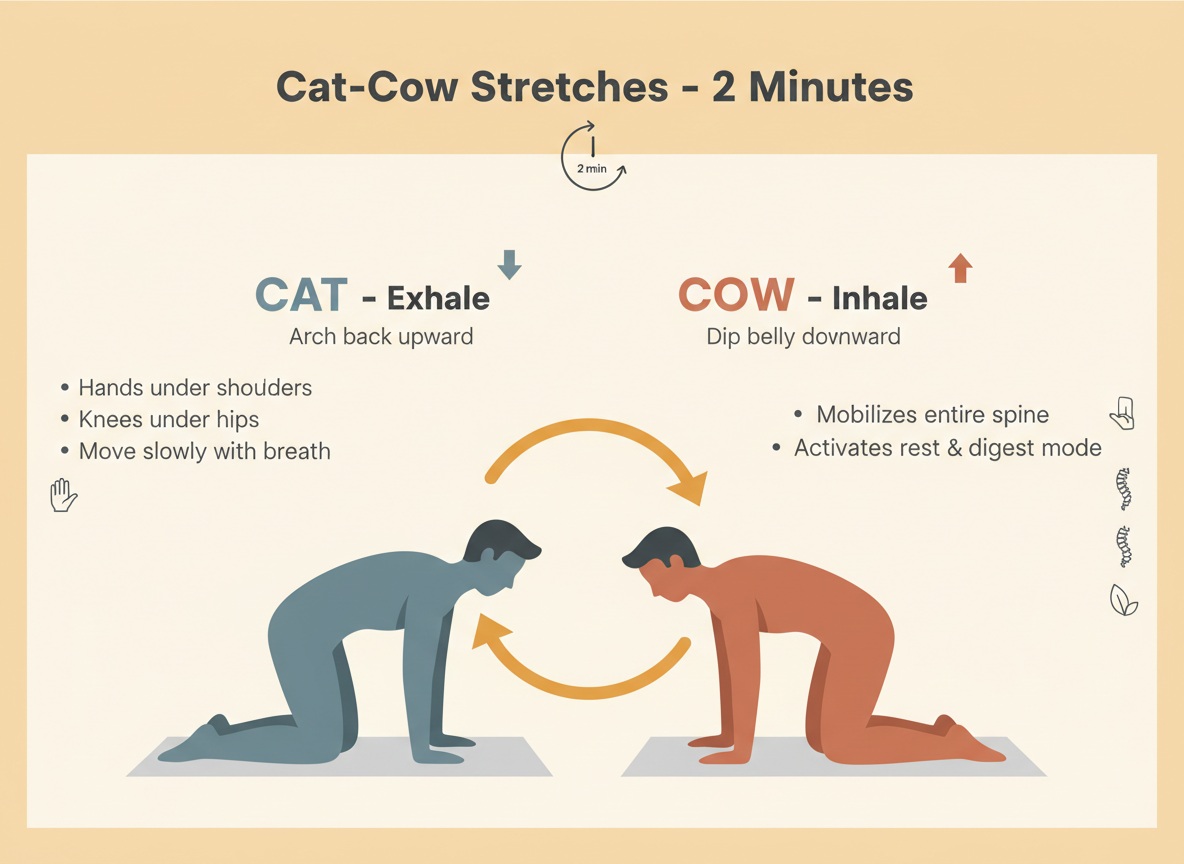
Cat-Cow Stretches (2 minutes)
Get on your hands and knees (use a folded blanket or towel under your knees if the floor is hard). Arch your back like a stretching cat, then dip your belly toward the floor like a cow. Move slowly with your breath – arch on the exhale, dip on the inhale. This mobilizes your entire spine and activates that “rest and digest” system we talked about.
Remember: These movements should feel as natural as everyday activities. If something doesn’t feel right, imagine you’re moving at half speed or make the movement smaller. Think of this as your evening reset, like changing from work clothes into comfortable loungewear.
Budget-Friendly Tools for Evening Movement
You don’t need expensive equipment to improve your sleep. Here are options for every budget:
No-Cost Options (Free)
Instead of a foam roller: Use a tennis ball or rolled-up bath towel for muscle release. Place it under tight spots (like your upper back or calves) and let your body weight do the work.
Instead of a yoga mat: A folded blanket or large beach towel on carpet works perfectly. You’re not doing intense yoga – just gentle stretches.
Instead of a sleep tracker: Use your phone’s free sleep apps (Sleep Cycle for iPhone, Sleep as Android) or simply note how you feel each morning in a notebook. Rate your sleep quality 1-10 and track patterns.
Mid-Range Options ($15-50)
If you can swing $15-30, these tools make the routine more comfortable:
Basic Foam Roller ($15-25)
AmazonBasics High-Density Foam Roller – This is the workhorse option. It’s firm enough to work out knots but not so hard that it hurts. Perfect for rolling out your back, legs, and shoulders before bed.
Standard Yoga Mat ($20-30)
Gaiam Yoga Mat – Provides cushioning for your knees and elbows during floor stretches. The extra padding matters more after 40 when our joints need more protection.
Premium Options (If Budget Allows)

RumbleRoller Textured Muscle Foam Roller
RumbleRoller Textured Muscle Foam Roller – As men over 40, our muscles store the day’s tension like a sponge stores water. This becomes your evening reset secret weapon. Its medium-density foam hits that sweet spot – firm enough to work out those stubborn knots, but not so hard that you feel like you’re rolling on concrete. The textured surface mimics a massage therapist’s fingers, getting deeper into tight spots than smooth rollers.
Think of it as an investment in your sleep quality – it’s like having a massage therapist on call, but without the hourly rate. Use it for 2-3 minutes on your upper back, calves, and any tight areas before starting your mobility routine.
Tatago Extra Thick Yoga Mat – Let’s talk about your foundation for evening movement – and no, that basic carpet or hardwood floor won’t cut it for our 40+ joints. This provides that sweet spot of cushioning our mature joints need without being so soft that it compromises stability during movements like spinal twists or cat-cow stretches.
While it’s marketed as a “yoga mat,” think of it more as your evening comfort zone – a dedicated space that signals to your body it’s time to transition from day to night. The extra thickness (6mm vs standard 3mm) makes a real difference when you’re on your knees or lying on your back.

Tatago Extra Thick Yoga Mat
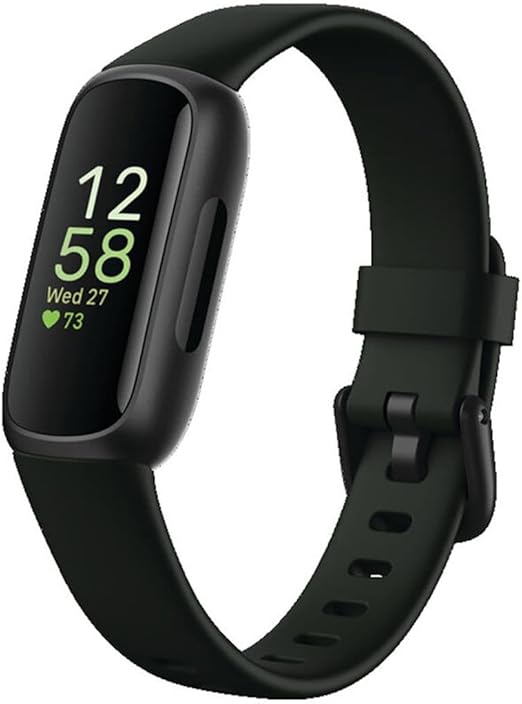
Fitbit Inspire 3 Health & Fitness Tracker
What we particularly value is its ability to show how your evening movement routine actually impacts your sleep quality – you'll literally see the difference between nights when you do your mobility work and nights when you skip it. It tracks the essentials like sleep stages (light, deep, REM) and heart rate, plus gives you practical insights about your optimal sleep window (crucial for us middle-aged guys whose sleep patterns aren't what they used to be).
The battery lasts up to 10 days, so you're not constantly charging it. And here's the kicker – seeing your sleep score improve week over week becomes seriously motivating. Learn more about choosing the right sleep tracking device for your specific needs.
Step 2: Stress-Release Movements
These movements are about releasing tension, not building fitness. Think of it as transitioning from “day mode” to “evening mode,” like changing from work shoes to slippers.
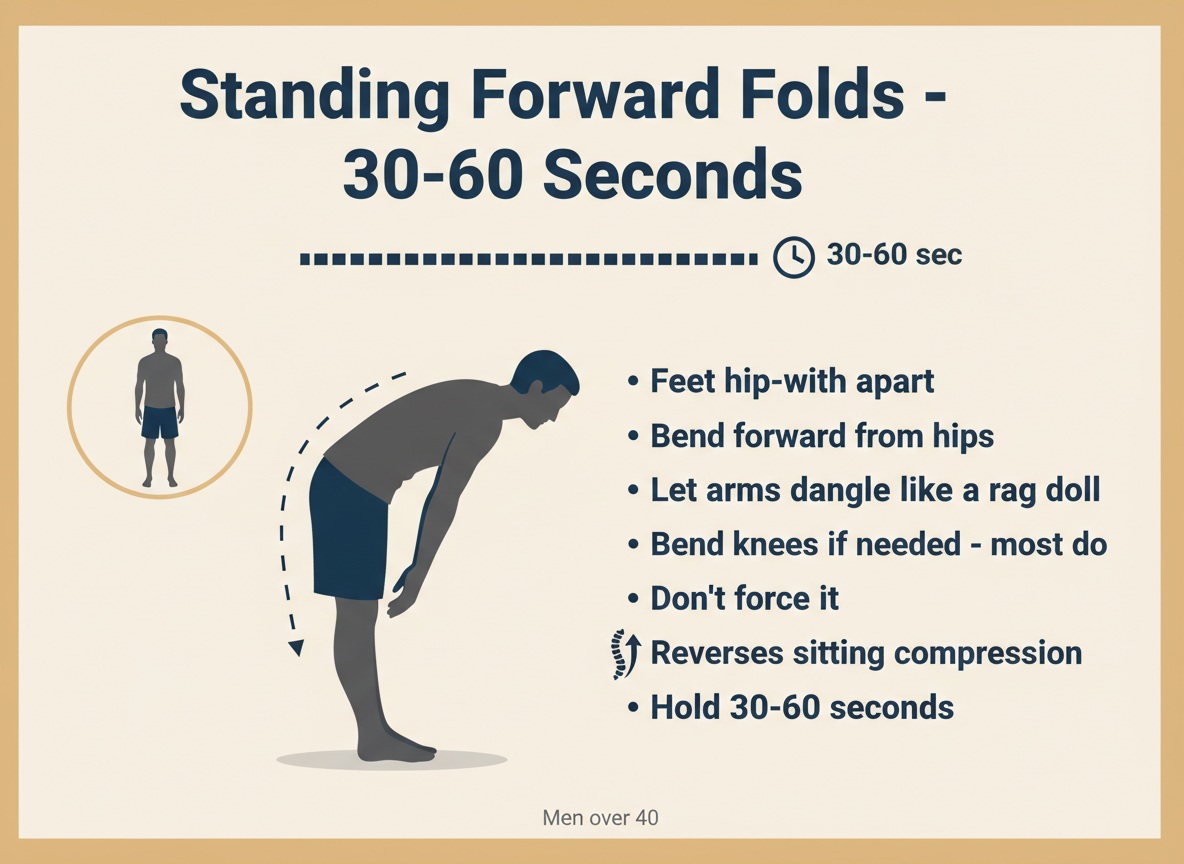
Standing Forward Folds
Stand with feet hip-width apart. Slowly bend forward from your hips, letting your arms dangle toward the floor. Don’t force it – just hang there like a rag doll for 30-60 seconds. Bend your knees slightly if your hamstrings are tight (most of ours are). This reverses the compression from sitting all day.
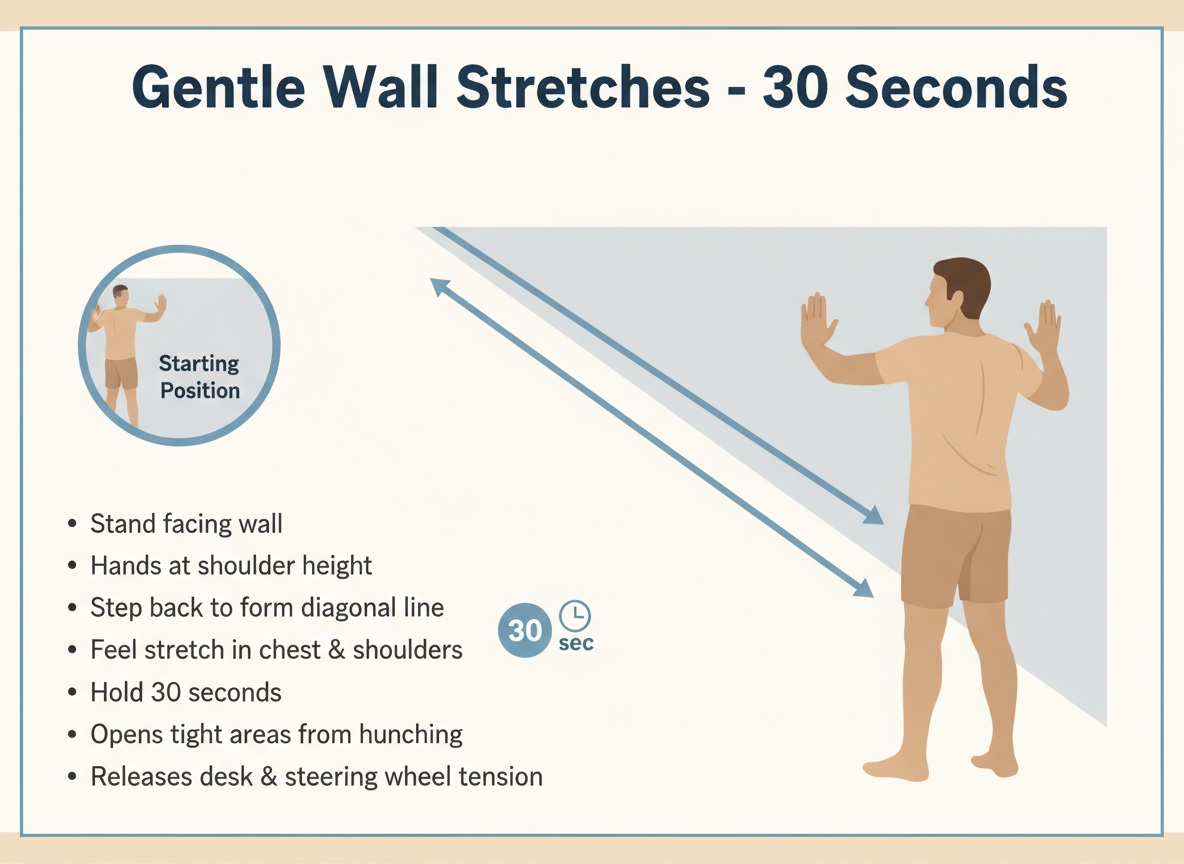
Gentle Wall Stretches
Stand facing a wall, place your hands on it at shoulder height. Step back until your body forms a diagonal line. Hold for 30 seconds. This opens up your chest and shoulders – areas where we store stress from hunching over computers, steering wheels, or workbenches.
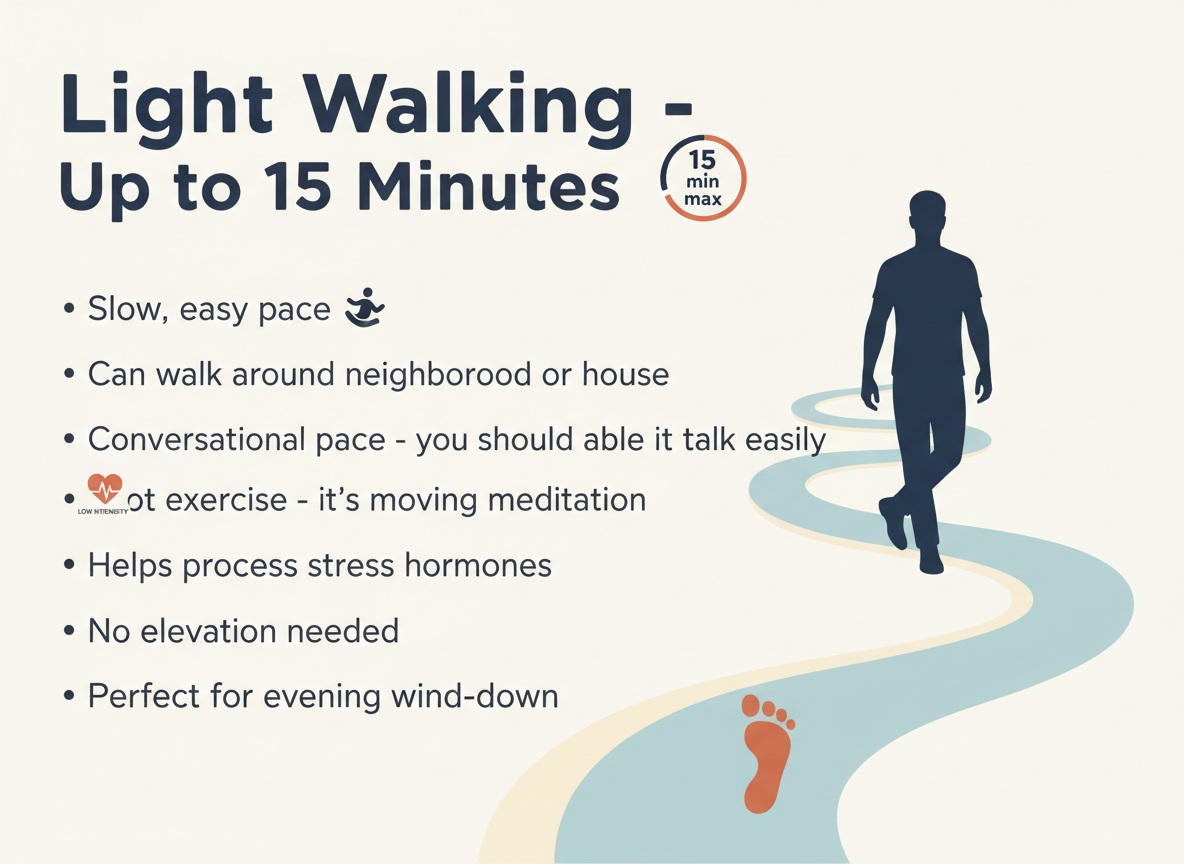
Light Walking (no more than 15 minutes)
A slow, easy walk around your neighborhood or even around your house. This isn’t exercise – it’s a moving meditation. Keep your pace conversational (you should be able to talk easily). This gentle movement helps process the day’s stress hormones without elevating them further.
Step 3: Recovery-Focused Cool Down
This is where the magic happens – you’re actively telling your body “it’s safe to sleep now.”
Deep Breathing Exercises (5 minutes)
Sit or lie comfortably. Breathe in slowly through your nose for 4 counts, hold for 4 counts, exhale through your mouth for 6 counts. The longer exhale is key – it activates that “rest and digest” system.
Think of it like this: your inhale is like pressing the gas pedal, your exhale is the brake. We’re practicing using the brake. This connects directly to energy management for success after 40 – managing your energy means knowing when to rev up and when to wind down.
Progressive Muscle Relaxation (5-7 minutes)
This is simpler than it sounds – you’re just tensing and then relaxing different muscle groups, one at a time. Think of it like squeezing a stress ball and then letting go.
Start with your toes (squeeze for 5 seconds, release), then move to your calves, thighs, buttocks, stomach, chest, arms, hands, neck, and face. Work your way up your body. This teaches your body the difference between tension and relaxation – something many of us have forgotten after years of chronic stress.
Close your eyes and count your breaths backward from 100. When your mind wanders (it will), gently bring it back to counting. Most guys fall asleep before reaching zero – that’s actually perfect.
Remember: This isn’t about achieving perfect zen – it’s about winding down, like turning down the volume on your day. Think of it as switching from your work mindset to your rest mindset, similar to changing into your evening clothes.
The Triangle of Well-being Connection
Quality sleep isn’t just about physical recovery – it’s the foundation of mental resilience. When you’re well-rested, you make better decisions, manage stress more effectively, and maintain the emotional balance needed for life’s challenges. This is a core principle of The Triangle of Well-being – how your physical health, mental resilience, and financial independence all connect.
Here’s something most guys don’t consider: poor sleep costs money. Fatigue leads to impulse purchases (ever order takeout because you’re too tired to cook?), poor financial decisions (signing contracts without reading them), and reduced work performance (missing opportunities or making mistakes). Investing 15 minutes in evening movement can literally improve your financial decision-making the next day.
Common Evening Movement Mistakes Men Over 40 Make
Mistake #1
Exercising Too Close to Bedtime
High-intensity workouts within 2 hours of bed raise your heart rate and body temperature – the opposite of what you need for sleep. Think of it like revving your car engine right before parking it for the night. Your body needs time to cool down and shift into rest mode.
What to do instead: Finish any vigorous exercise at least 3 hours before bed. Save the evening window for gentle movement only.
Mistake #2
Skipping the Cool-Down
Jumping straight from movement to bed is like slamming on the brakes. Your body needs that 5-10 minute transition to shift from “active mode” to “rest mode.” The breathing exercises and progressive muscle relaxation aren’t optional – they’re what actually trigger your sleep systems.
What to do instead: Build in that 10-minute wind-down period. Set a timer if you need to. This is where the sleep benefits actually come from.
Mistake #3
Pushing Through Pain
Evening movement should feel good, not challenging. If something hurts, you’re working too hard. This isn’t about fitness gains – it’s about preparing your body for recovery. Pain triggers stress hormones, which is exactly what we’re trying to reduce.
What to do instead: Cut the range of motion in half, move slower, or skip that movement entirely. There’s no prize for toughing it out.
Mistake #4
Being Inconsistent
Doing this routine once a week won’t help. Your body needs consistent signals that “this is bedtime prep time.” If you’re just getting back into movement, start with just 5 minutes nightly and build from there.
What to do instead: Commit to 5-6 nights per week for at least 3 weeks. That’s when you’ll start seeing real results.


Tracking Your Sleep Improvement Progress
Week 1-2: Establishing the Habit
Don’t expect perfect sleep immediately. Focus on consistency – doing your evening routine 5-6 nights per week. You might notice you fall asleep slightly faster (5-10 minutes), but the big changes come later.
What to track: Just check off each night you complete the routine. Use a simple calendar or notebook.
Week 3-4: Noticing Changes
Most guys report falling asleep 10-15 minutes faster and waking up less during the night. Your body is learning the new routine – it’s starting to recognize these movements as “sleep prep signals.”
What to track: Note how many times you wake up during the night and how long it takes to fall asleep.
Week 5-8: Significant Improvement
This is where the real benefits kick in – deeper sleep, waking up more refreshed, better energy throughout the day. Your sleep tracker (or how you feel) will show the difference. Many guys report needing 30-45 minutes less sleep to feel fully rested.
What to track: Rate your morning energy level on a 1-10 scale. This is the real measure of sleep quality.
Simple Tracking Method (No Tech Required)
Each morning, rate three things on a 1-10 scale in a notebook:
- How easily did you fall asleep? (1 = tossed and turned for hours, 10 = asleep within 10 minutes)
- How many times did you wake up? (Count each time you remember waking)
- How refreshed do you feel? (1 = exhausted, 10 = energized and ready)
Track these for 30 days alongside your evening routine to see patterns. You’ll likely notice your scores improving around week 3-4.
Your Evening Movement Questions Answered
Making It Work For You
Remember, we’re not training for the Olympics here. These movements should feel good – if something doesn’t, modify or skip it. The goal is relaxation, not perfection.
Building consistent evening habits is about creating systems that work for your life, not following rigid rules. Some nights you’ll do the full 20-minute routine. Other nights, you’ll do 5 minutes. Both are valuable.
The key is consistency over intensity. Five minutes done six nights per week beats 30 minutes done once per week.
Getting Started Tonight
“The best bridge between despair and hope is a good night’s sleep.”
– Matthew Walker, Why We Sleep
Start with just 10 minutes tonight. Choose 3-4 movements from the mobility routine that feel right for you, then do 5 minutes of deep breathing. Remember, consistency beats intensity every time.
Your Simple Starting Routine:
- Cat-Cow Stretches (2 minutes)
- Standing Forward Fold (1 minute)
- Gentle Spinal Twists (2 minutes)
- Deep Breathing (5 minutes)
That’s it. Do this for one week, then gradually add more movements as it becomes a habit.
Ready to transform your sleep starting tonight? The tools are simple, the movements are gentle, and the results are real. Your body is ready to sleep better – you just need to give it the right signals.
Learn more about building sustainable physical wellness habits that work with your body, not against it.
Disclosure
This article contains affiliate links. If you choose to make a purchase through these links, we may earn a commission at no additional cost to you.
Important Note: The information in this post is meant to educate and inform, not to replace professional medical advice. While we’ve spent years studying health and wellness, we’re not licensed healthcare providers. Everyone’s body and circumstances are different, so what works for one person might not work for another. Always check with your doctor before starting any new exercise program or making significant lifestyle changes, especially if you have pre-existing conditions. By reading and using this information, you’re taking responsibility for your own health decisions.