The Over-40 Body Reset: Your 30-Day Transformation Plan for Men
Let's be real—you've seen the fitness plans promising overnight transformations. You've watched younger guys in the gym doing things your joints won't tolerate anymore. And you've probably wondered if it's even possible to get back in shape after 40.
Here's the truth: It absolutely is. But not with the same approach that worked in your 20s.
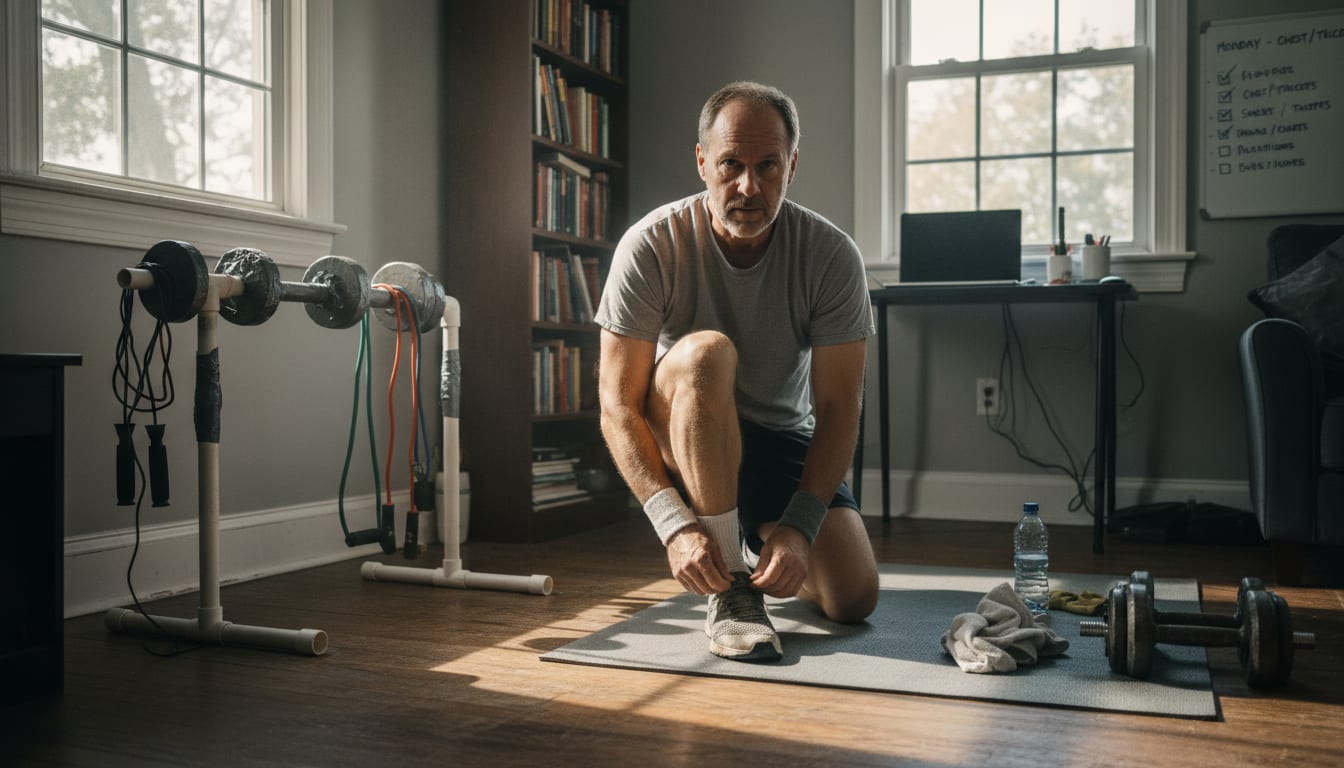
This isn't another cookie-cutter workout plan. This is your 30-day body reset for men over 40—a practical, science-backed transformation designed specifically for guys who are ready to reclaim their physical wellness without destroying their bodies in the process. No gym required. No complicated routines. Just sustainable strategies that work with your body, not against it.
Disclosure
This article contains affiliate links. If you choose to make a purchase through these links, we may earn a commission at no additional cost to you.
Why Traditional Fitness Programs Fail Men Over 40
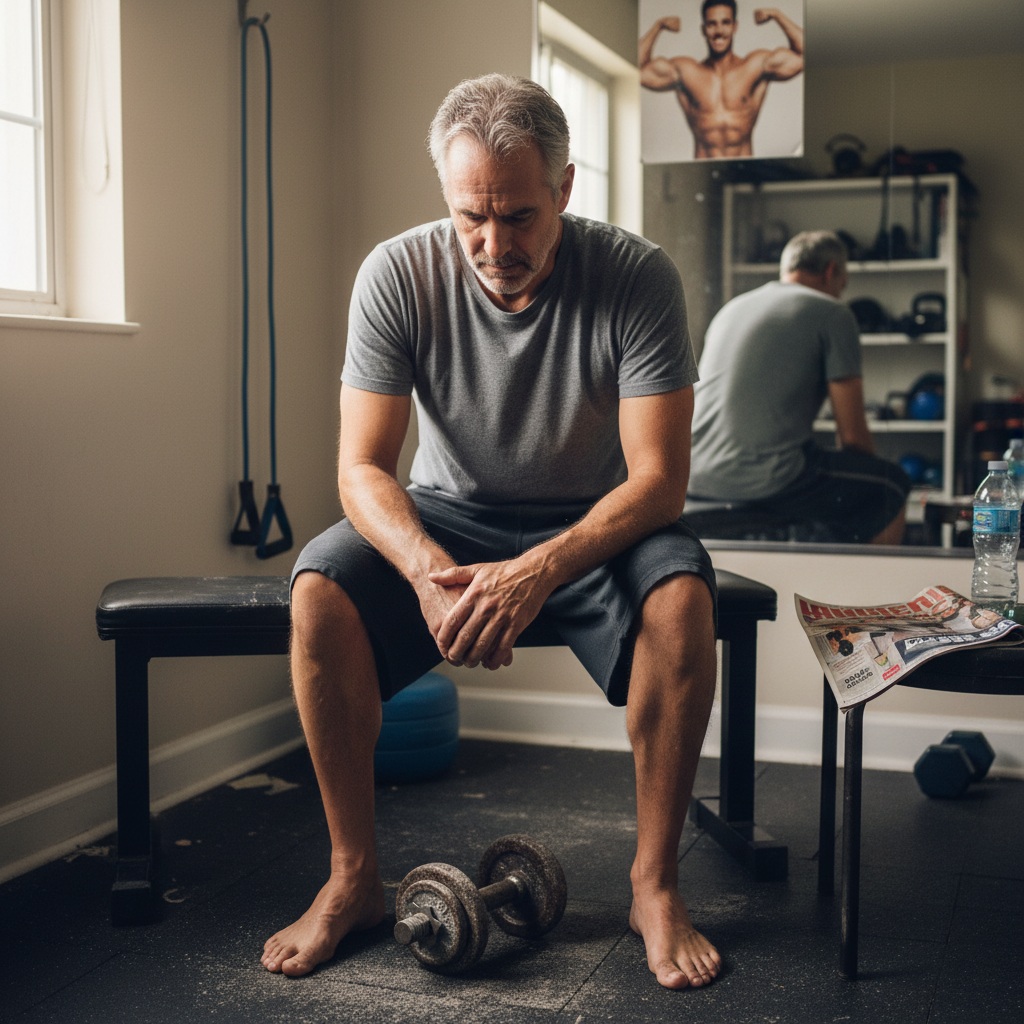
You've probably tried fitness programs before. Maybe you lasted a week, maybe a month. Here's why most plans don't work for guys our age:
They're designed for 25-year-olds. Programs created for younger bodies ignore recovery needs, joint health, and realistic time constraints. You're not lazy for not keeping up—the program was wrong for you.
They go too hard, too fast. Jumping from zero to hero in week one is a recipe for injury and burnout. Your enthusiasm is great. Your joints disagree.
They ignore the mental game. Physical transformation after 40 requires a progressive mindset—focusing on small wins that build momentum, not dramatic overnight changes.
They don't fit real life. You have a job, maybe a family, responsibilities. A program requiring two hours at the gym six days a week isn't sustainable. This plan is different.
Understanding Your Over-40 Body
Before we dive into the 30-day plan, let's talk about what's actually happening in your body after 40—and why the old playbook doesn't work anymore.
What Changes After 40?
Your metabolism slows down. This means your body burns fewer calories at rest than it used to. It's not an excuse—it's biology. But here's the good news: strength training (which we'll cover) can help reverse this.
Your hormones shift. Testosterone levels naturally decline about 1% per year after 30. This affects muscle mass, energy levels, and recovery time. Again, not a death sentence—just something to work with, not against.
Recovery takes longer. That workout that left you sore for a day in your 20s? Now it might take three days to bounce back. This isn't weakness—it's your body asking for smarter training and better recovery strategies.
Your joints need more attention. Years of wear and tear mean you need to prioritize mobility and joint-friendly exercises. High-impact movements that worked before might cause problems now.
The bottom line? Your body after 40 isn't broken—it just needs a different approach. That's where The Triangle of Well-being comes in. Your physical health connects to your mental resilience and even your financial success. When you improve one area, the others benefit too.
The 30-Day Body Reset Framework
This isn't about perfection. It's about progress. Each week builds on the last, creating sustainable habits that'll serve you for years to come.
Week 1: Assessment and Foundation Building
Goal: Understand where you are and build the habit of daily movement.
What "Assessment" Actually Means
Forget complicated fitness tests. Here's what you need to know:
Energy Check: On a scale of 1-10, how's your energy throughout the day? Write it down.
Movement Baseline: Can you comfortably:
- Walk for 10 minutes without getting winded?
- Get up from the floor without using your hands?
- Reach your arms overhead without pain?
These aren't pass/fail tests. They're your starting point.
Sleep Quality: How many hours are you sleeping? Do you wake up feeling rested? This matters more than you think.
Your Week 1 Daily Routine
Morning (5 minutes):
- Gentle stretching: Reach arms overhead, touch your toes (or as far as comfortable), roll your shoulders
- 2-minute walk around your house or yard
- One glass of water
Midday (2 minutes):
- Stand up from your desk every hour
- Do 5-10 bodyweight squats (just sitting down and standing up from a chair counts)
Evening (10 minutes):
- 5-minute easy walk (around the block, through your neighborhood, wherever)
- 5-minute stretching routine (we'll detail this below)
Why Week 1 Matters: You're not just testing your limits—you're building awareness and the habit of daily movement. Most guys skip this step and end up injured or burned out by week three. Not you.
If you haven't exercised in years, check out The 5-Minute Start: Fitness for Men Who Haven't Exercised in Years for additional beginner-friendly guidance.

Week 2: Building Sustainable Strength
Goal: Introduce strength exercises that build muscle without breaking your body.
Simple Home Workout (3-4 days this week)
Warm-up (5 minutes):
- March in place: 1 minute
- Arm circles: 30 seconds forward, 30 seconds backward
- Gentle torso twists: 1 minute
- Leg swings: 10 each leg
Main Exercises (15-20 minutes):
Do 2-3 sets of each exercise. Rest 60-90 seconds between sets.
1. Chair-Supported Squats (10-15 reps)
- Stand in front of a sturdy chair
- Lower yourself like you're going to sit, lightly touch the seat, then stand back up
- Keep your chest up, core tight
- Why it works: Builds leg strength for everyday activities like climbing stairs
2. Wall or Counter Push-Ups (8-12 reps)
- Place hands on a wall or kitchen counter (higher = easier)
- Keep your body straight as you lower your chest toward the surface
- Push back up
- Why it works: Strengthens chest, shoulders, and arms without stressing your joints
3. Standing Rows (10-15 reps)
- Use resistance bands, water jugs, or even canned goods
- Pull your elbows back like you're starting a lawnmower
- Squeeze your shoulder blades together
- Why it works: Improves posture and counteracts desk-sitting
4. Plank Hold (15-30 seconds)
- On your forearms and toes (or knees for easier version)
- Keep your body in a straight line
- Don't hold your breath
- Why it works: Builds core strength that protects your lower back
5. Balance Practice (30 seconds each leg)
- Stand on one foot
- Hold onto a counter if needed
- Why it works: Prevents falls and improves stability
Cool-down (5 minutes):
- Gentle walking
- Stretching (detailed below)
Real Talk: This might feel too easy. That's your ego talking—the same ego that got you injured in the past. Ignore it. This week is about building the foundation that'll carry you through the next 30 days and beyond.

Week 3: Momentum and Progression
Goal: Increase intensity slightly and solidify your routine.
Enhanced Daily Movement
Continue your Week 2 workouts, but add:
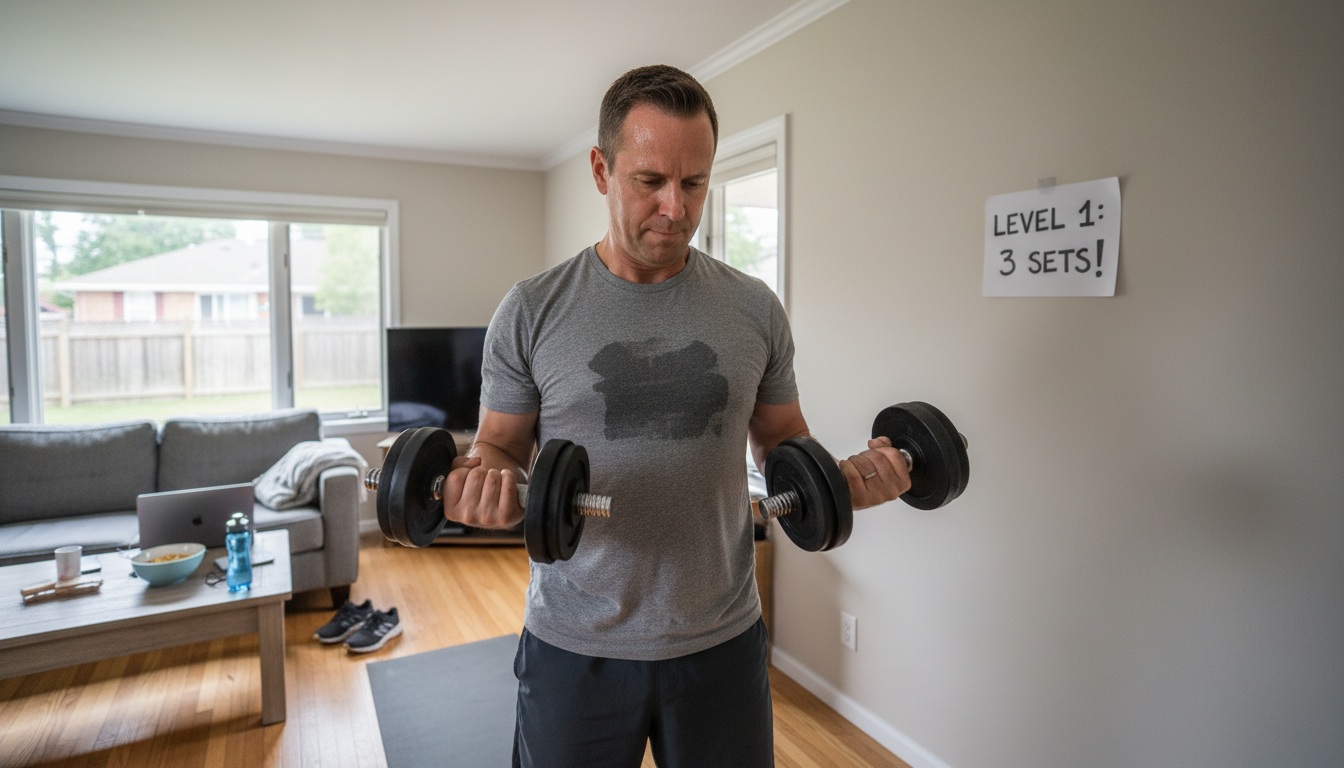
More reps: If you did 10 squats last week, try 12-15 this week
Longer holds: Increase plank time by 5-10 seconds
Extra set: Add one more set to each exercise
Longer walks: Extend your daily walks to 10-15 minutes
New Challenges (Optional)
1. Stair Climbing: If you have stairs, walk up and down 2-3 times
2. Resistance Band Work: Add resistance bands to your rows and squats
3. Balance Progression: Try standing on one foot with eyes closed (carefully!)
Week 3 Truth Bomb: This is where most guys quit. The newness has worn off, results aren't dramatic yet, and your body's sore. Push through. This is where the real transformation begins. Your body is adapting, building strength, and creating new habits.
Need help staying on track? Read about overcoming mental blocks that might be holding you back.

Atomic Habits by James Clear breaks down how tiny mindset changes compound into major transformations. It's written in plain English—no psychology degree needed.
Week 4: Integration and Long-Term Success
Goal: Make this your new normal and plan for beyond 30 days.
Your Evolved Routine
By now, you should have a rhythm. Here's what a typical day looks like:
Morning Routine (10 minutes):
- Wake up, drink water
- 5-minute stretching or light yoga
- 5-minute walk or movement
Workout Days (30-40 minutes, 3-4 times per week):
- Full warm-up
- Strength routine (now with more reps, sets, or resistance)
- Cool-down and stretching
Daily Movement Goals:
- 7,000-10,000 steps (use your phone to track)
- Stand up every hour
- Evening walk or activity
Rest Days (2-3 per week):
- Light stretching
- Easy walking
- Focus on recovery (more on this below)
Exercise Progression (You're Ready For)
Chair-Supported Squats → Bodyweight Squats
- No chair needed now
- Go deeper if comfortable
- Add a pause at the bottom
Wall Push-Ups → Counter Push-Ups → Floor Push-Ups
- Progress to a lower surface
- Eventually, try push-ups from your knees on the floor
Balance Practice → Single-Leg Exercises
- Try single-leg deadlifts (touch your toe while standing on one leg)
- Increase hold time to 60 seconds
Why Week 4 Matters: You're not just working out anymore—you're living a more active life. This is the week where it clicks. You're thinking about month two, maybe month three. You're hooked.
Nutrition Strategy for Body Transformation After 40
You can't out-exercise a bad diet—especially after 40. But "nutrition" doesn't mean complicated meal plans or giving up everything you enjoy. It means eating in a way that supports your goals.
The Simple Approach
Forget calorie counting. Instead, use your hand as a portion guide:
Protein (palm-sized serving, every meal):
- Chicken, fish, beef, pork
- Eggs (2-3 eggs = one serving)
- Greek yogurt
- Beans and lentils
- Why it matters: Protein helps build and maintain muscle, keeps you full longer, and supports recovery
Vegetables (fist-sized serving, every meal):
- Any color, any type
- Fresh, frozen, or canned (low sodium)
- Why it matters: Vitamins, minerals, and fiber that keep your body running smoothly
Carbs (cupped hand serving, most meals):
- Rice, potatoes, oats
- Bread, pasta (whole grain when possible)
- Fruit
- Why it matters: Energy for workouts and daily activities
Healthy Fats (thumb-sized serving, most meals):
- Olive oil, avocado
- Nuts and seeds
- Fatty fish like salmon
- Why it matters: Supports hormone production (including testosterone), keeps you satisfied

Flip 7 Chocolate Courage Feel better, fast with one shake a day. FLIP 7 is an unmatched, all-in-one meal replacement SUPER FOOD powder with the most nutrient rich balance of health extending blends formulated to support whole body and mind wellness.
Easy Meal Ideas (For Every Budget)
Breakfast Options:
- Budget-friendly: Oatmeal with banana and peanut butter, scrambled eggs with toast
- Mid-range: Greek yogurt with berries and granola, veggie omelet
- Higher-end: Smoked salmon with avocado toast, protein smoothie with quality powder
Lunch Ideas:
- Budget-friendly: Tuna sandwich with veggies, chicken and rice bowl
- Mid-range: Grilled chicken salad, turkey wrap with hummus
- Higher-end: Salmon with quinoa and roasted vegetables, grass-fed beef with sweet potato
Dinner Suggestions:
- Budget-friendly: Ground turkey tacos, baked chicken thighs with roasted veggies
- Mid-range: Stir-fry with lean beef and mixed vegetables, baked fish with brown rice
- Higher-end: Grass-fed steak with asparagus, wild-caught fish with Mediterranean salad
Real Talk: You don't need organic, grass-fed, free-range everything. Frozen vegetables are just as nutritious as fresh and often cheaper. Canned tuna and beans are affordable protein sources. Work with your budget.
For more detailed guidance, check out Nutrition After 40: Eating for Energy and Recovery.
Hydration: The Simplest Upgrade
Drink water. Sounds basic, but most guys are chronically dehydrated.
Target: Half your body weight in ounces daily
- 200 lbs = 100 oz of water
- That's about 12-13 glasses
Simple strategy:
- Glass of water when you wake up
- Glass before each meal
- Glass mid-morning and mid-afternoon
- Glass before bed
Read more about Hydration Habits: The Simplest Health Upgrade.
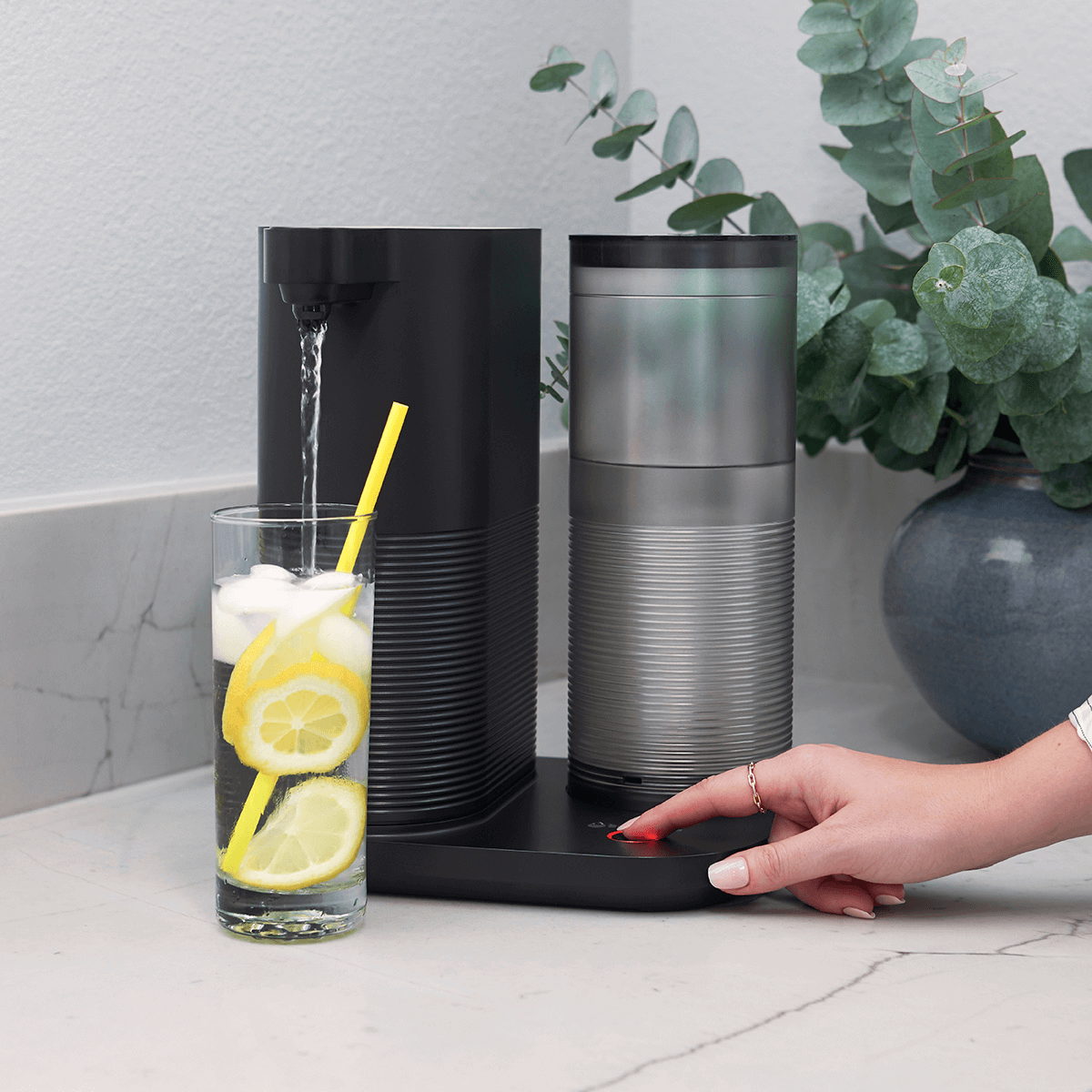
Aquasana's fast-flowing Clean Water Machine removes 78 contaminants including 99% of lead & cysts, 15x more than the leading pitcher filter.
Recovery and Sleep Optimization for Men Over 40
Here's something nobody tells you: Recovery is where the transformation actually happens. Workouts break your muscles down. Recovery builds them back stronger.
Why Recovery Matters More After 40
Your body needs more time to repair and rebuild than it did in your 20s. Skip recovery, and you'll end up injured, exhausted, or both.
The Recovery Toolkit
1. Sleep (7-9 hours nightly)
This is non-negotiable. Poor sleep kills testosterone, increases cortisol (stress hormone), and sabotages fat loss.
Better Sleep Tips:
- Same bedtime every night (yes, weekends too)
- Cool, dark room (65-68°F is ideal)
- No screens 30-60 minutes before bed
- No caffeine after 2 PM
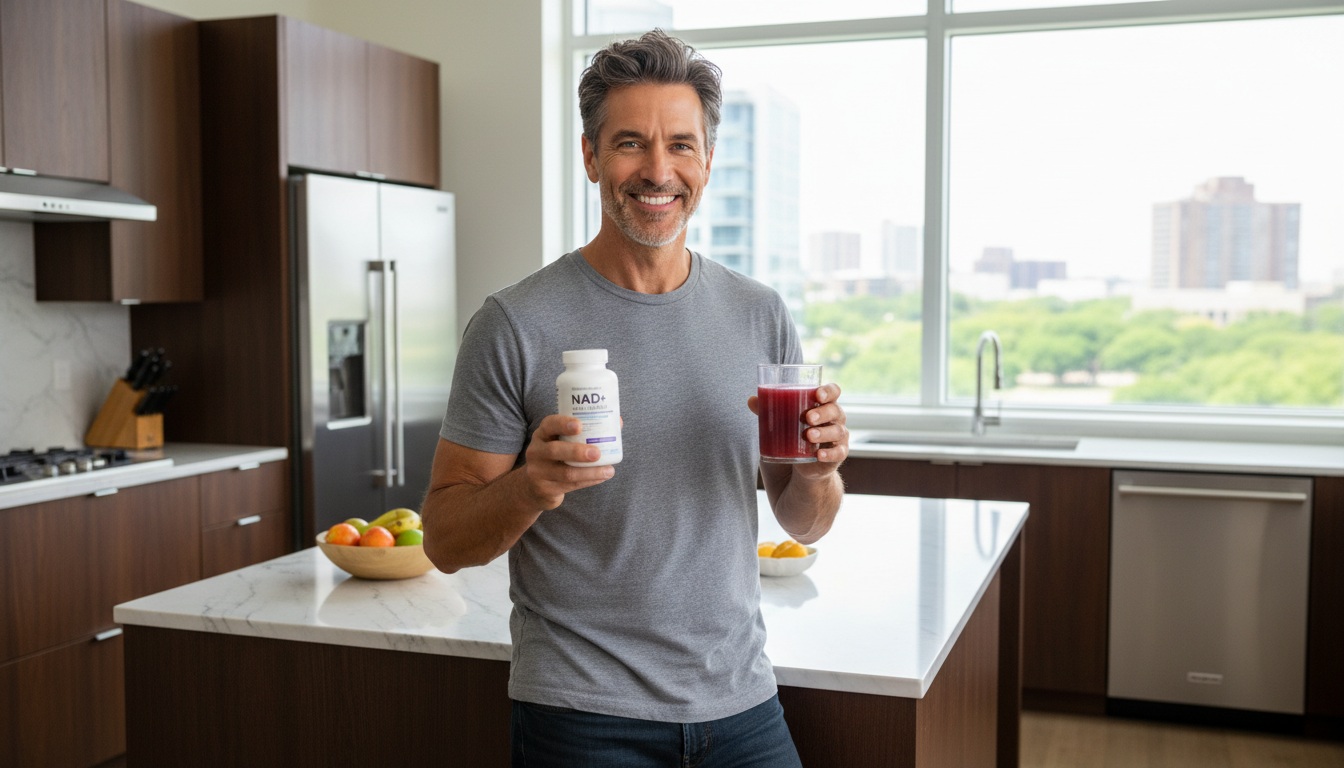
- Consider magnesium supplement (check with your doctor)
For comprehensive sleep strategies, read Sleep Optimization for Mid-Life Physical Performance.
2. Rest Days (2-3 per week)
These aren't "cheat days"—they're part of the plan. Your muscles grow during rest, not during workouts.
What to do on rest days:
- Light walking
- Gentle stretching or yoga
- Foam rolling (if you have one)
- Focus on sleep and nutrition
3. Active Recovery
Light movement helps blood flow and reduces soreness.
Examples:
- 15-20 minute easy walk
- Swimming or water walking
- Gentle bike ride
- Stretching routine (see below)
4. Stress Management
Chronic stress elevates cortisol, which makes it harder to build muscle and easier to store fat. Managing stress isn't just mental health—it's physical health.
Learn more about Energy Management: The Key to Physical, Mental, and Financial Success.
Simple Stretching Routine (10 minutes daily)
Morning (5 minutes):
- Neck rolls: 10 each direction
- Shoulder rolls: 10 forward, 10 backward
- Cat-cow stretch: 10 reps (on hands and knees, arch and round your back)
- Standing hamstring stretch: 30 seconds each leg
- Hip circles: 10 each direction
Evening Relaxation (10 minutes):
- Child's pose: 60 seconds (kneel, sit back on heels, reach arms forward)
- Figure-4 stretch: 30 seconds each side (lying on back, ankle on opposite knee)
- Spinal twist: 30 seconds each side (lying on back, knee across body)
- Chest opener: 60 seconds (lying on back, arms out to sides)
- Deep breathing: 2-3 minutes (inhale 4 counts, hold 4, exhale 6)

Tracking Your Transformation Progress
You can't improve what you don't measure. But tracking doesn't mean obsessing over every detail.
Daily Check-ins (2 minutes)
Morning:
- Energy level (1-10)
- Sleep quality (1-10)
- Any soreness or pain?
Evening:
- Did you complete your movement goal?
- How's your mood?
- One win from today
Weekly Check-in (Every Sunday, 10 minutes)
Physical Measurements:
- Weight (same time, same conditions)
- Waist measurement (at belly button)
- How clothes fit
Performance Tracking:
- How many reps/sets did you complete?
- How long can you hold a plank?
- How far can you walk without getting winded?
Photos (Optional but Powerful):
- Same spot, same lighting, same time of day
- Front, side, back
- You won't see daily changes, but monthly progress is motivating
Reflection Questions:
- What went well this week?
- What was challenging?
- What will I do differently next week?
For accountability strategies, check out Mid-Year Fitness Reality Check: Are You On Track?
What "Success" Actually Looks Like
Week 1: You showed up every day. That's success.
Week 2: You're less sore, movements feel easier. Success.
Week 3: You added reps or time. You didn't quit when it got hard. Success.
Week 4: You're thinking about month two. You've built habits. Success.
Real Results Timeline:
- Days 1-7: Better energy, improved sleep
- Days 8-14: Less soreness, movements feel more natural
- Days 15-21: Noticeable strength gains, clothes fit differently
- Days 22-30: Visible changes, thinking long-term
Related Articles:
Creatine for Men Over 40: Benefits Beyond Muscle Building
If you think creatine is just for 20-something gym bros trying to get huge biceps, think again. Creatine benefits for men over 40 go way beyond the weight room—and the...The 7-Day Meal Prep System for Busy Men Over 40
If you're a busy guy over 40 struggling to eat healthy, you're not alone. Between work, family, and everything else life throws at you, nutrition often takes a backseat. But...


Common Mistakes Men Over 40 Make
Learn from others' failures so you don't repeat them.
Mistake #1
Doing Too Much, Too Soon
Your enthusiasm is great. Your joints disagree. Start slow, build gradually. Injury sets you back weeks or months.
Mistake #2
Ignoring Recovery
You're not 25. Recovery is where the magic happens. Skipping rest days leads to burnout and injury.
Mistake #3
Comparing Yourself to Others
That guy at the gym? Different body, different journey, different starting point. Focus on your progress, not his.
Mistake #4
Giving Up After One Bad Day
Missed a workout? Had a bad meal? That's life. One bad day doesn't erase your progress. Get back on track tomorrow.
Mistake #5
Skipping Nutrition
You can't out-train a bad diet. Period. Especially after 40 when your metabolism is slower.
Mistake #6
Not Addressing Mental Blocks
Physical transformation requires mental resilience. If you're sabotaging yourself, address those mental blocks.
Mistake #7
Ignoring the Financial Connection
Your physical health impacts your earning potential, healthcare costs, and long-term financial security. Read about Health & Wealth: How Physical Wellness Impacts Your Financial Future.
Beyond the 30 Days: Making It Last
This reset isn't just about the next month—it's about creating sustainable habits that serve you for years to come.
Your Month 2 Game Plan
Continue your Week 4 routine, but:
- Add one new exercise each week
- Increase resistance (bands, light dumbbells, or heavier household items)
- Extend workout time to 40-45 minutes
- Challenge yourself with new activities (hiking, swimming, cycling)
Building Long-Term Success
1. Schedule It
Workouts that aren't scheduled don't happen. Block time in your calendar like any other important appointment.
2. Find Your Why
Why are you doing this? Is it to play with your kids? To feel confident? To avoid health problems? Write it down. Refer to it when motivation dips.
3. Build Community
Find a workout buddy, join an online group, or share your progress on social media. Accountability matters.
4. Celebrate Wins
Every rep, every workout, every healthy meal is a win. Acknowledge your progress.
5. Adjust as Needed
Life happens. Travel, illness, busy periods—they're all part of the journey. Adapt your plan, don't abandon it.
Remember
- Progress over perfection. Some movement is better than no movement.
- Consistency beats intensity. Four 20-minute workouts beat one 2-hour session you never repeat.
- Your body is capable of amazing things. Age is just a number. Your effort determines your results.
- This is a lifestyle, not a diet. Quick fixes don't last. Sustainable habits do.
Ready to dive deeper? Explore our complete Physical Wellness section for more strategies, tips, and guidance.
Frequently Asked Questions
Final Thoughts

Look, we get it. Starting something new at 40—or 50, or beyond—can feel intimidating. You might be thinking it's too late, that you've missed your window, or that you're too far gone to make a real change.
But here's what I've learned after years of studying health and wellness: The best time to start was 20 years ago. The second best time is right now.
This 30-day body reset isn't about becoming someone else. It's about becoming the best version of yourself—the guy who has energy to play with his kids, the confidence to take his shirt off at the beach, and the strength to live life on his own terms.
You don't need to be perfect. You don't need expensive equipment or a gym membership. You don't need to overhaul your entire life overnight.
You just need to start. Today. Right now.
Take that first walk. Do those first squats. Drink that glass of water. Small actions, repeated consistently, create extraordinary results.
Your body is capable of more than you think. Your mind is stronger than you realize. And your future self—the one 30, 60, 90 days from now—will thank you for taking this first step.
So what are you waiting for? Your transformation starts now.
Disclosure
This article contains affiliate links. If you choose to make a purchase through these links, we may earn a commission at no additional cost to you.
Important Note: The information in this post is meant to educate and inform, not to replace professional medical advice. While we’ve spent years studying health and wellness, we’re not licensed healthcare providers. Everyone’s body and circumstances are different, so what works for one person might not work for another. Always check with your doctor before starting any new exercise program or making significant lifestyle changes, especially if you have pre-existing conditions. By reading and using this information, you’re taking responsibility for your own health decisions.