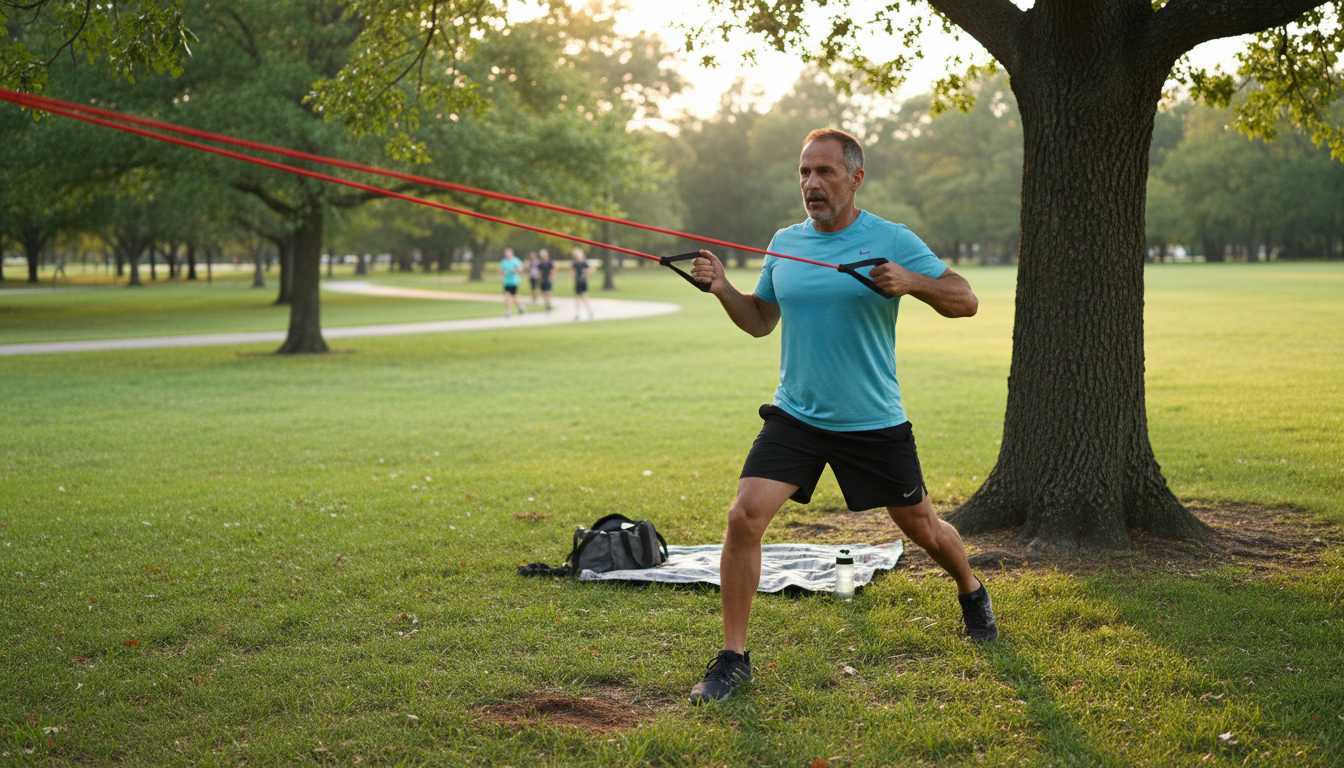
Workout Habit Stacking: Building Unstoppable Fitness Routines
If you’re a man over 40 who’s tired of starting and stopping workout routines, you’re not alone. The good news? There’s a science-backed method called habit stacking for fitness routines men over 40 that can finally help you build exercise habits that stick for life.
“We are what we repeatedly do. Excellence, then, is not an act, but a habit.”
– Aristotle
Habit stacking is simply linking a new habit (like working out) to an existing habit you already do consistently (like drinking your morning coffee). Think of it as creating a chain reaction where one action automatically triggers the next. Instead of relying on willpower alone, you’re building an automatic system that makes exercise feel as natural as brushing your teeth.
Disclosure
This article contains affiliate links. If you choose to make a purchase through these links, we may earn a commission at no additional cost to you.
What Is Workout Habit Stacking?
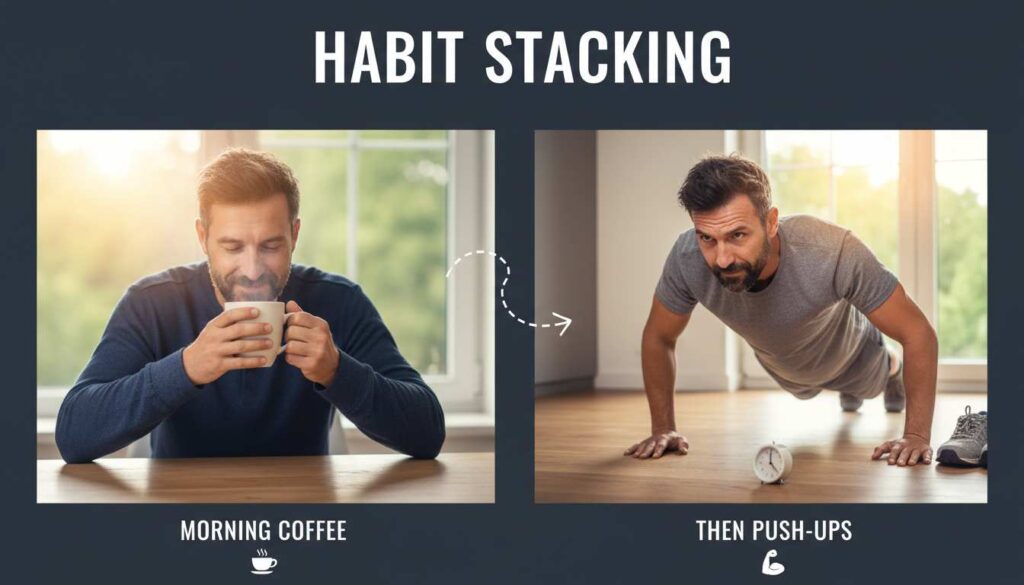
Workout habit stacking is a fitness habit formation technique where you attach your exercise routine to something you already do every day without thinking about it. This method works because it uses your brain’s existing neural pathways – the mental highways that make certain behaviors automatic.
Here’s a simple example: “After I pour my first cup of coffee, I will do 10 push-ups in the kitchen.” The coffee (existing habit) becomes the trigger for the push-ups (new habit).
This approach is particularly powerful for building exercise habits because it removes the decision-making process. You’re not asking yourself “Should I work out today?” Instead, you’re following a predetermined sequence that feels natural and effortless.
The Science Behind Habit Stacking for Consistent Exercise
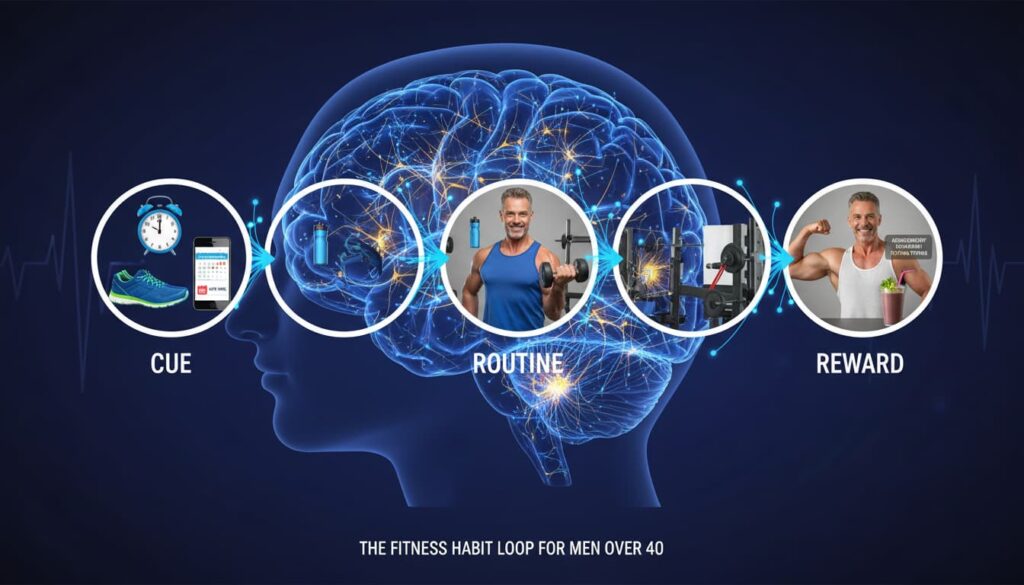
Research shows that habit loops consist of three parts: a cue (trigger), a routine (the behavior), and a reward (the benefit you get). Traditional fitness approaches often ignore the cue, leaving you to rely on motivation alone. Habit stacking method provides that crucial trigger.
When you stack habits, you’re essentially borrowing the strength of an established routine to power a new one. This creates what behavioral scientists call “behavioral momentum” – once you start one action, it’s easier to continue with the next.
For men over 40, this is especially important because our lives are often packed with responsibilities. We need workout consistency strategies that work with our existing schedules, not against them.

Related Article
The Unstoppable Fitness Framework: Your 4-Step System
Step 1: Identify Your Anchor Habits
Start by listing 5-10 things you do every single day without fail. These become your potential “anchors” for fitness habit stacking techniques.
Common examples include:
- Drinking your first cup of coffee
- Checking your phone when you wake up
- Brushing your teeth
- Getting dressed for work
- Eating lunch
- Walking through your front door after work
Choose anchors that happen at times when you could realistically exercise. If you’re not a morning person, don’t try to stack a workout onto your morning coffee routine.
Step 2: Start Ridiculously Small
This is where most people go wrong. They try to stack a 45-minute gym session onto their morning routine and wonder why it doesn’t stick. Instead, start with what we call “micro-workouts” – exercises so small they feel almost silly not to do.
Examples of sustainable workout habits to start with:
- 5 push-ups after brushing teeth
- 1-minute plank after morning coffee
- 10 bodyweight squats before dinner
- 30-second wall sit while waiting for coffee to brew

Related Article
For more on starting small, check out:
Step 3: Create Your Habit Stack Protocol
Write out your exercise habit formation plan using this simple formula:
“After I [existing habit], I will [new micro-workout] in [specific location].”
Examples:
- “After I pour my morning coffee, I will do 10 push-ups in the kitchen.”
- “After I sit down at my desk, I will do 20 desk push-ups against my office wall.”
- “After I park my car at home, I will walk around the block once.”
The key is being specific about the trigger, the action, and the location. Vague plans like “I’ll exercise more” don’t work. Specific fitness routine automation does.
Step 4: Build Your Consistency Blueprint
Once your micro-workout becomes automatic (usually 2-4 weeks), you can gradually expand it.
This might mean:
- Adding 5 more push-ups
- Including a second exercise
- Extending your walk by 5 minutes
The key is being specific about the trigger, the action, and the location. Vague plans like “I’ll exercise more” don’t work. Specific fitness routine automation does.

Advanced Habit Stacking Strategies
The 2-Minute Rule for Fitness
If your stacked habit takes longer than 2 minutes, it’s too big to start with. This rule, popularized by productivity expert James Clear, ensures you’re building workout habits that stick rather than overwhelming yourself.
A 2-minute workout might include:
- 10 push-ups and 10 squats
- 1-minute plank
- Walking up and down your stairs twice
- 30 jumping jacks

Environmental Design for Automatic Exercise
Make your environment work for you by removing friction from good habits and adding friction to bad ones. This is part of routine optimization.
Reduce friction for exercise:
- Keep workout clothes visible
- Set up a designated workout space
- Have equipment easily accessible
A compact home gym setup like resistance bands and a suspension trainer can turn any small space into a workout area.


Related Article
Learn more about environmental design in Creating Your Personal Success Ecosystem
The Compound Habit Stack
Once you’ve mastered basic stacking, you can create longer chains.
For example:
“After I pour my morning coffee, I will do 10 push-ups, then I will do 10 squats, then I will do a 30-second plank, then I will drink my coffee while reviewing my daily goals.”
This creates a powerful morning routine that combines physical activity with mental preparation.
Troubleshooting Common Habit Stacking Challenges
Challenge 1
“I Keep Forgetting”
The Solution: Your trigger isn’t strong enough or specific enough. Choose a more obvious anchor habit and write your stack formula somewhere visible.
Challenge 2
“I Don’t Have Time”
The Solution: Your stacked habit is too big. Remember, we’re building daily workout habits, not marathon training sessions. Scale back to something that takes 60 seconds or less.
Challenge 3
“I Miss Days When My Schedule Changes”
The Solution: Create multiple stacks for different scenarios. Have a “work day stack,” a “weekend stack,” and even a “travel stack” for when you’re away from home.
Challenge 4
“It Feels Too Easy”
The Solution: That’s the point! Easy habits become automatic habits. Resist the urge to make it harder until the current level feels completely effortless.
Related Article
For more on overcoming fitness obstacles, read:
Building Your Personal Habit Architecture
Think of habit stacking as building the foundation of a house. You wouldn’t start with the roof – you’d start with a solid foundation and build up gradually. Your fitness habit architecture should follow the same principle.
Foundation Level (Weeks 1-4): Single micro-workouts stacked onto strong anchor habits
Structure Level (Weeks 5-8): Compound stacks with 2-3 exercises
Expansion Level (Weeks 9-12): Longer routines and multiple daily stacks
This progressive approach ensures you’re creating automatic fitness routines that can withstand life’s inevitable disruptions.
One of the biggest advantages of workout habit stacking is that it works regardless of your income level. You don’t need expensive gym memberships or fancy equipment to build unstoppable fitness routines.
No-Budget Options:
- Bodyweight exercises (push-ups, squats, lunges)
- Walking or jogging
- Stair climbing
- Household item workouts (water jugs as weights)
Low-Budget Options ($20-50):
- Resistance bands set – provides full-body workout options
- Jump rope – excellent cardio in minimal space
- Yoga mat – makes floor exercises more comfortable
Moderate-Budget Options ($50-200):
- Adjustable dumbbells – space-efficient strength training
- Pull-up bar – doorway-mounted for upper body work
- Kettlebell – versatile for strength and cardio
Measuring Success: Your Habit Stack Metrics
Traditional fitness focuses on outcomes like weight loss or muscle gain. Habit stacking for fitness focuses on process metrics – the behaviors that lead to those outcomes.
Track these process metrics:
- Consistency percentage (days completed vs. days planned)
- Stack completion rate (finishing your entire routine)
- Habit strength (how automatic it feels on a 1-10 scale)
- Expansion readiness (when current level feels effortless)
Advanced Habit Stacking: The Compound Effect
Once you’ve mastered basic fitness habit formation, you can create what we call “compound habit stacks” – routines that address multiple aspects of your well-being simultaneously.
Example Compound Stack: “After I pour my morning coffee, I will do 10 push-ups (physical), then I will write down three things I’m grateful for (mental), then I will review my daily financial goal (financial), then I will drink my coffee while planning my day.”
Related Article
This approach aligns with The Triangle of Well-being philosophy, addressing physical wellness, mental resilience, and financial awareness in one efficient routine.
The Social Element: Habit Stacking with Accountability
While habit stacking is designed to work independently, adding a social element can accelerate your success. This doesn’t mean you need a workout buddy for every session, but having some form of accountability helps.
Simple Accountability Options:
- Share your daily stack completion on social media
- Text a friend when you complete your routine
- Join online communities focused on habit formation
- Use apps that connect you with others building similar habits
Related Article
Learn more about sustainable change:
Troubleshooting Plateaus and Motivation Dips
Even with the best habit stacking method, you’ll face challenges. The key is having strategies ready before you need them.
When Motivation Drops:
- Return to your smallest possible version
- Focus on maintaining the trigger, even if you skip the exercise
- Remember that consistency matters more than intensity
- Review your “why” – the deeper reasons you started
When Progress Stalls:
- Gradually increase difficulty or duration
- Add variety within your established framework
- Stack additional healthy habits onto your exercise routine
- Celebrate small wins and consistency streaks
Your Next Steps: Implementing Your Habit Stack Today
Starting today, choose one anchor habit and one micro-workout. Write it down using the formula: “After I [existing habit], I will [micro-workout] in [specific location].”
This week: Focus only on consistency, not intensity. Your goal is to complete your stack 7 days in a row, even if the workout feels ridiculously easy.
Next week: If your stack feels automatic, consider adding 30 seconds or 5 more repetitions.
This month: Once your first stack is solid, consider adding a second stack at a different time of day.
Remember, you’re not just building exercise habits – you’re developing a skill that will serve you for life. The ability to create automatic, positive behaviors is one of the most valuable skills you can develop, especially as a man over 40 navigating life’s increasing complexities.
The Compound Benefits: Beyond Physical Fitness
Workout habit stacking creates benefits that extend far beyond physical fitness. When you successfully build one automatic habit, you develop confidence in your ability to change other areas of your life. This is what psychologists call “self-efficacy” – the belief that you can successfully perform behaviors necessary to produce specific outcomes.
Men who master fitness habit formation often report improvements in:
- Work productivity and focus
- Stress management and emotional regulation
- Sleep quality and energy levels
- Confidence in tackling other life challenges
- Overall sense of control and life satisfaction
This ripple effect is why starting with something as simple as 10 daily push-ups can transform your entire life trajectory.
Final Thoughts: Your Unstoppable Future
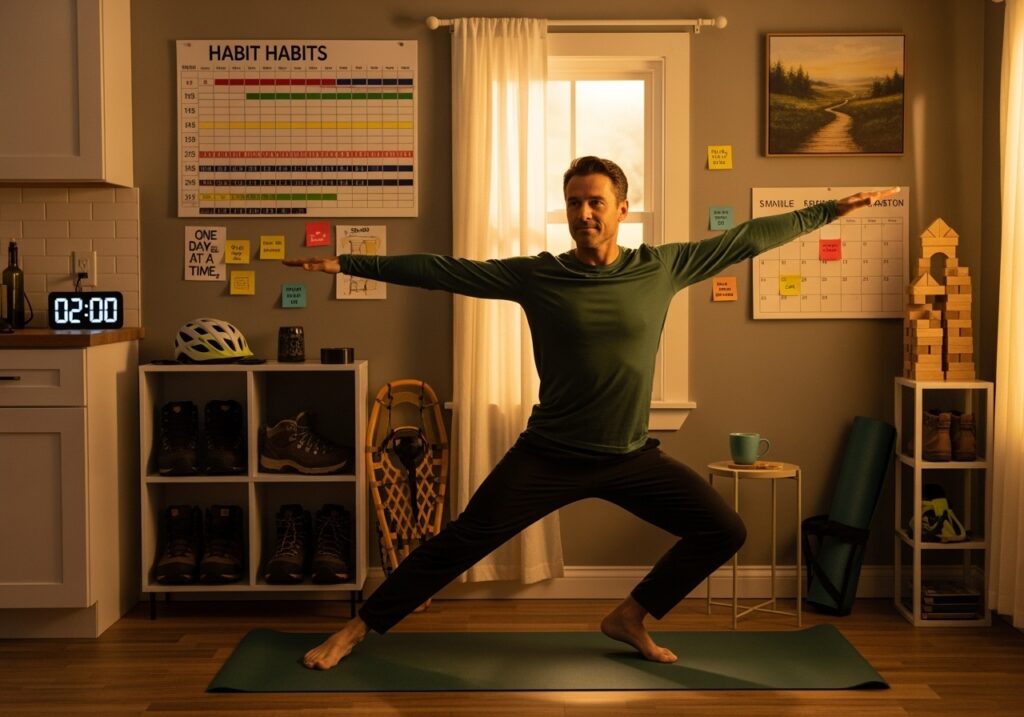
The path to unstoppable fitness routines isn’t about finding the perfect workout plan or summoning superhuman willpower. It’s about understanding how your brain works and designing systems that make success inevitable.
“Success is the sum of small efforts repeated day in and day out.”
– Robert Collier
Habit stacking for fitness routines men over 40 works because it respects the reality of your busy life while leveraging the power of compound growth. Every day you complete your stack, you’re not just getting stronger physically – you’re building the mental muscle of consistency.
Six months from now, you could be looking back at this moment as the turning point when you finally cracked the code on sustainable fitness. The question isn’t whether this approach works – the science is clear. The question is whether you’ll give it the 30 days it needs to become automatic.
Your future self is counting on the decision you make today. Start small, be consistent, and trust the process. Your unstoppable fitness routine is just one habit stack away.
Disclosure
This article contains affiliate links. If you choose to make a purchase through these links, we may earn a commission at no additional cost to you.
Important Note: The information in this post is meant to educate and inform, not to replace professional medical advice. While we’ve spent years studying health and wellness, we’re not licensed healthcare providers. Everyone’s body and circumstances are different, so what works for one person might not work for another. Always check with your doctor before starting any new exercise program or making significant lifestyle changes, especially if you have pre-existing conditions. By reading and using this information, you’re taking responsibility for your own health decisions.