Book Review: Mindset by Carol Dweck – Rewiring Your Brain for Success After 40
If you’re a man over 40 feeling stuck in your career or wondering if it’s too late to make significant changes, Carol Dweck’s “Mindset: The New Psychology of Success” might just be the game-changer you’ve been searching for. This isn’t just another self-help book – it’s a scientifically-backed roadmap for developing a growth mindset for career success after 40.
Why This Book Matters for Men Over 40
Let’s be honest – by the time we hit our 40s, many of us have developed some pretty fixed ideas about our capabilities. “I’m not good with technology,” “I’m too old to learn new skills,” or “I’ve missed my chance for a career change” are thoughts that plague many middle-aged men. Dweck’s research on mindset transformation midlife, challenges these limiting beliefs head-on.
Disclosure
This article contains affiliate links. If you choose to make a purchase through these links, we may earn a commission at no additional cost to you.
The book introduces two fundamental ways of thinking: the fixed mindset (believing abilities are static) and the growth mindset (believing abilities can be developed). For men navigating career transition mindset challenges, this distinction is absolutely crucial.
Key Takeaway #1 – Fixed vs. Growth Mindset in Career Transitions
One of the most powerful sections of the book deals with how our mindset affects our approach to career changes. Dweck explains that people with a fixed vs growth mindset career approach face vastly different outcomes when pivoting professionally.
Fixed Mindset in Career Transitions:
- Avoids challenges that might expose weaknesses
- Views setbacks as proof of inadequacy
- Gives up easily when faced with obstacles
- Sees effort as a sign of low ability
Growth Mindset in Career Transitions:
- Embraces challenges as opportunities to learn
- Views setbacks as temporary and informative
- Persists through difficulties
- Sees effort as the path to mastery
For men over 40 considering a career change, adopting a growth-oriented thinking patterns approach means viewing your age and experience as assets, not limitations. Your decades of life experience become the foundation for learning new skills, not barriers to overcome.
Key Takeaway #2: Embracing Challenges as Learning Opportunities
Dweck’s research shows that embracing challenges after 40 is not just possible – it’s essential for continued growth and success. The book provides compelling evidence that our brains remain plastic throughout our lives, capable of forming new neural pathways and developing new capabilities.
This concept of neuroplasticity is particularly relevant for men in their 40s and 50s who may have been told they’re “set in their ways.” The truth is, your brain is still capable of remarkable adaptation and growth.
Practical Application:
- Instead of avoiding unfamiliar tasks at work, volunteer for projects outside your comfort zone
- View technology challenges as puzzles to solve rather than obstacles to endure
- Approach networking events as learning opportunities rather than necessary evils
- See industry changes as chances to develop new expertise
The book emphasizes that learning opportunities midlife are everywhere – you just need to train yourself to recognize and embrace them.

Key Takeaway #3: Reframing Failure as Feedback
Perhaps the most transformative concept in Dweck’s book is the idea of reframing failure as feedback. For many men over 40, past failures can feel like permanent marks against their capabilities. Dweck shows us how to transform this failure-to-feedback transformation mindset.
Traditional Fixed Mindset Response to Failure:
- “I failed because I’m not smart enough”
- “This proves I shouldn’t have tried”
- “I’m too old to learn new things”
Growth Mindset Response to Failure:
- “I failed because I haven’t learned this skill yet”
- “This shows me what I need to work on”
- “I’m gaining valuable experience for next time”
This shift in perspective is crucial for men navigating career pivot mindset challenges. Every rejection, setback, or mistake becomes data for improvement rather than evidence of inadequacy.
Key Takeaway #4: Teaching Growth Mindset to Family Members
One of the most practical sections of the book focuses on teaching growth mindset family principles. As men over 40, many of us are raising children or influencing younger family members. Dweck provides specific strategies for modeling and teaching growth mindset principles.
Key Strategies for Family Mindset Coaching:
- Praise effort and process, not just results
- Use “yet” language (“You haven’t mastered this yet”)
- Share your own learning struggles and growth
- Celebrate mistakes as learning opportunities
- Model curiosity and continuous learning
This approach not only benefits your family but reinforces your own mindset transformation midlife journey. Teaching others helps solidify these concepts in your own thinking.
Real-World Applications for Men Over 40

The beauty of Dweck’s work lies in its practical applications. Here’s how you can implement these adaptive thinking strategies in your daily life:
In Your Career:
- Approach performance reviews as growth opportunities
- Volunteer for challenging projects
- Seek feedback actively rather than avoiding it
- View younger colleagues as learning partners, not threats
In Personal Development:
- Set learning goals alongside performance goals
- Celebrate progress, not just achievements
- Document your growth journey
- Embrace the midlife learning renaissance mindset
In Relationships:
- Model growth mindset for your children
- Share your learning journey with your partner
- Support others’ growth rather than feeling threatened by it
The Science Behind the Mindset
What sets this book apart from typical self-help literature is its solid scientific foundation. Dweck’s decades of research at Stanford University provide compelling evidence that our beliefs about our abilities directly impact our actual performance and growth potential.
The concept of cognitive flexibility – our ability to adapt our thinking to new situations – is particularly relevant for men over 40 facing career transitions or life changes. The book demonstrates that this flexibility can be developed at any age.
Ready to Transform Your Mindset?
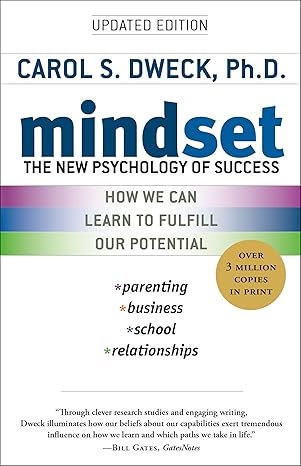
Get Your Copy Today!
Don’t let another day pass wondering “what if” about your potential for growth and success. Carol Dweck’s “Mindset” has already transformed millions of lives, and it’s time for yours to be next. Whether you’re facing a career transition, wanting to break through mental barriers, or simply ready to unlock your full potential after 40, this book provides the scientifically-proven roadmap you need.
Click below to order your copy of “Mindset” on Amazon today and start your journey toward a growth-oriented life. Your future self – and your family – will thank you for taking this crucial step toward personal transformation. Remember, it’s not about where you are now; it’s about where you’re willing to grow. The time to start is now.
Why This Book Is Essential Reading After 40
As men in our 40s and 50s, we often face unique challenges:
- Career plateaus or the need for reinvention
- Rapidly changing technology and workplace dynamics
- Balancing family responsibilities with personal growth
- Overcoming decades of fixed mindset conditioning
“Mindset” addresses each of these challenges with research-backed solutions and practical strategies. It’s not about positive thinking – it’s about rewiring your brain for success through deliberate practice and mindset shifts.
Related Articles
For more strategies on optimizing your daily routine and achieving sustainable success after 40, explore our cornerstone articles.


Final Thoughts

Carol Dweck’s “Mindset” isn’t just a book – it’s a blueprint for personal transformation that’s particularly powerful for men over 40. The research is solid, the writing is accessible, and the applications are immediately practical.
If you’re feeling stuck, facing a career transition, or simply want to model better thinking patterns for your family, this book provides the scientific foundation and practical tools you need.
The journey from fixed to growth mindset isn’t always easy, but as Dweck demonstrates, it’s absolutely possible at any age. Your 40s and 50s can be the beginning of your most productive and fulfilling years – if you’re willing to embrace the growth mindset principles outlined in this essential book.
Remember: You don’t have to be perfect. You just have to be consistent. Start with one small habit today, and let the compound effect work its magic.
Disclosure
This article contains affiliate links. If you choose to make a purchase through these links, we may earn a commission at no additional cost to you.
Important Note: The information in this post is meant to educate and inform, not to replace professional mental health care or psychological advice. While we’ve spent years studying mental resilience and personal development, we’re not licensed mental health professionals or therapists. Everyone’s life circumstances and mental health journey are unique, so what works for one person might not work for another. If you’re experiencing serious mental health challenges, please reach out to a qualified mental health professional. Some of the strategies discussed may not be suitable for everyone, and it’s important to assess your own situation carefully. By reading and using this information, you’re taking responsibility for your own decisions. Remember, seeking help is a sign of strength, not weakness. Stay resilient!