Book Review: Rich Dad Poor Dad by Robert Kiyosaki – Financial Lessons Every Man Should Know
If you’re a man over 40 who’s been grinding away at the same job for years, watching your paycheck disappear into bills and wondering when you’ll finally get ahead financially, Robert Kiyosaki’s “Rich Dad Poor Dad” might just be the wake-up call you need. This isn’t just another finance book collecting dust on your shelf – it’s a complete mindset overhaul that challenges everything you’ve been taught about money.
“The single most powerful asset we all have is our mind. If it is trained well, it can create enormous wealth.”
– Robert Kiyosaki
We understand the unique financial pressures facing men in their prime years, we’ve seen how the traditional “work hard, save money, retire at 65” playbook often leaves us feeling trapped and financially stressed. Kiyosaki’s Rich Dad Poor Dad financial lessons for men over 40 offer a different path – one that’s particularly relevant when you’re juggling mortgages, kids’ college funds, and the growing realization that your current trajectory might not lead to the financial freedom you want.
Disclosure
This article contains affiliate links. If you choose to make a purchase through these links, we may earn a commission at no additional cost to you.
Why Every Man Over 40 Needs These Financial Lessons

Let’s be honest – by the time we hit our 40s, most of us have figured out that working harder isn’t necessarily the answer to our financial problems. We’ve climbed the corporate ladder, earned promotions, and increased our salaries, yet somehow we’re still living paycheck to paycheck or barely building any real wealth.
Kiyosaki’s book addresses this frustration head-on by introducing concepts that most of us were never taught in school or at home. The Robert Kiyosaki financial lessons focus on financial education for busy professionals who don’t have time for complex investment strategies but desperately need to understand how money really works.
What makes this book particularly powerful for men over 40 is that it acknowledges we’re at a critical juncture. We have enough life experience to understand that time is our most valuable asset, yet we still have enough runway to implement meaningful changes. The book doesn’t just tell you to “invest more” – it fundamentally changes how you think about money, work, and wealth creation.
The Game-Changing Assets vs. Liabilities Mindset

Here’s where Kiyosaki drops the biggest truth bomb in the entire book, and it’s something that completely revolutionized my understanding of personal finance.
The assets vs liabilities explained concept is deceptively simple but incredibly powerful:
Assets put money in your pocket. Liabilities take money out of your pocket.
Sounds obvious, right? But here’s where it gets interesting – and where most of us have been getting it wrong for decades. That house you’re so proud of? The one you’ve been told is your biggest asset? According to Kiyosaki, if you’re living in it and making mortgage payments, it’s actually a liability because it’s taking money out of your pocket every month.
This financial mindset shift hits differently when you’re over 40 because you’ve likely spent years accumulating what you thought were assets. Your primary residence, that boat you bought for weekend relaxation, the expensive car with the hefty monthly payment – these might all be liabilities disguised as assets.
The real assets are things like:
- Rental properties that generate monthly cash flow
- Dividend-paying stocks
- Business investments that produce passive income
- Royalties from intellectual property
- Any investment that puts money in your pocket without requiring your active participation
For busy professionals juggling demanding careers and family responsibilities, this distinction becomes crucial. Instead of working harder to afford more liabilities, the focus shifts to acquiring assets that work for you, even while you sleep.
Creating Multiple Income Streams: Kiyosaki’s Blueprint
One of the most practical aspects of Rich Dad Poor Dad is how it breaks down the concept of multiple income streams for men who are already stretched thin with their primary careers.
Kiyosaki introduces the Cash Flow Quadrant, which categorizes all income into four types:
E
(Employee)
S
(Self-Employed)
B
(Business Owner)
I
(Investor)
Most men over 40 find themselves stuck in the E quadrant, maybe dabbling in the S quadrant with some side consulting. But the real wealth, according to Kiyosaki, comes from moving into the B and I quadrants.
Here’s how this applies practically:
Starting Small with the I Quadrant:
- Begin with dividend-paying stocks or index funds
- Consider REITs (Real Estate Investment Trusts) for real estate exposure without direct property management
- Look into peer-to-peer lending platforms
- Explore high-yield savings accounts and CDs as stepping stones
Building Toward the B Quadrant:
- Create systems in your current expertise area that can run without your constant involvement
- Consider franchise opportunities in proven business models
- Develop digital products or courses based on your professional knowledge
- Build affiliate marketing streams (something I’m personally exploring in the health and wellness space)
The beauty of this approach is that it doesn’t require you to quit your day job immediately. Instead, you’re building these income streams gradually while maintaining your primary income source.

Financial Education for the Time-Strapped Professional

Let’s address the elephant in the room – you’re busy. Between work demands, family obligations, and trying to maintain some semblance of personal time, when exactly are you supposed to become a financial expert?
Kiyosaki’s approach to financial education for busy professionals is refreshingly practical. He doesn’t expect you to become a day trader or spend hours analyzing stock charts.
Instead, he focuses on developing your “financial IQ” through understanding basic principles:
- Financial Literacy: Understanding financial statements, cash flow, and basic accounting principles
- Investment Strategies: Learning to evaluate opportunities and understand risk
- Market Understanding: Recognizing trends and timing in various markets
- Legal Knowledge: Understanding tax advantages, corporate structures, and legal protections
The key insight is that you don’t need to master all of these immediately. Start with financial literacy – understanding how money flows in and out of your life. Then gradually build your knowledge in the other areas as opportunities arise.
For busy professionals, Kiyosaki recommends:
- Reading financial statements of companies you’re considering investing in (start with 15 minutes a week)
- Attending local real estate investment meetings
- Finding mentors who are already successful in areas you want to explore
- Starting small with investments to gain practical experience

Real Estate and Investment Strategies That Actually Work

While the book covers various investment approaches, Kiyosaki’s real estate investing lessons are particularly relevant for men over 40. By this stage in life, you likely have some equity in your primary residence, decent credit, and enough income to qualify for investment property loans.
Building Wealth Through Real Estate:
The strategy isn’t about flipping houses or becoming a full-time real estate mogul. Instead, it’s about acquiring rental properties that generate positive cash flow – meaning the rental income exceeds all expenses including mortgage, taxes, insurance, and maintenance.
Here’s a simplified approach:
- Start by analyzing your local rental market
- Look for properties where the monthly rent covers all expenses plus provides cash flow
- Use financing to leverage your investment (letting the bank’s money work for you)
- Reinvest the cash flow into additional properties
- Build a portfolio that generates substantial passive income
Investment Portfolio Diversification:
Beyond real estate, Kiyosaki emphasizes building a diversified investment portfolio:
- Index funds for broad market exposure
- Individual stocks in companies you understand
- Bonds for stability and income
- Commodities for inflation protection
- International investments for global diversification

Overcoming the Mental Barriers That Keep Men Stuck

What we found most valuable about Rich Dad Poor Dad wasn’t just the practical advice, but how it addresses the psychological barriers that keep us trapped in financial mediocrity.
As men over 40, we often carry limiting beliefs about money that were formed decades ago:
“Investing is too risky” – Kiyosaki argues that NOT investing is the real risk, especially with inflation eroding the purchasing power of cash over time.
“I don’t have enough money to start” – The book shows how to start small and use leverage and other people’s money to build wealth.
“I’m too old to change” – Actually, being over 40 gives you advantages: experience, established credit, higher income, and the wisdom to avoid get-rich-quick schemes.
“I don’t understand finance” – Kiyosaki breaks down complex concepts into understandable principles that anyone can learn.
The wealth mindset transformation isn’t about becoming greedy or money-obsessed. It’s about taking control of your financial future so you can provide better for your family, have more choices in life, and ultimately achieve the freedom to pursue what matters most to you.
Key Takeaways for Your Financial Transformation
After absorbing Kiyosaki’s lessons, here are the most actionable steps for men over 40:
Immediate Actions (This Month):
- Track your current cash flow – know exactly where your money goes
- List all your current “assets” and honestly evaluate whether they’re putting money in your pocket or taking it out
- Open an investment account if you don’t already have one
- Read one financial statement from a company you’re interested in
Short-term Goals (Next 6 Months):
- Build an emergency fund of 3-6 months expenses
- Start investing a fixed amount monthly in index funds
- Educate yourself about one investment area that interests you (real estate, stocks, bonds)
- Find a mentor or join an investment group
Long-term Vision (1-5 Years):
- Develop at least one additional income stream
- Acquire your first cash-flowing asset
- Increase your financial IQ through continued education
- Work toward financial independence where your assets cover your living expenses
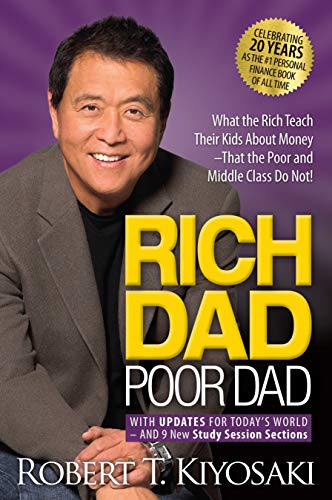
Transform Your Financial Future Today!
Here’s the truth: you can read every finance book ever written, but nothing changes until you take action. Rich Dad Poor Dad provides the mindset shift and practical framework you need, but the implementation is up to you.
Don’t wait for the “perfect time” to start building wealth – there isn’t one. Whether you’re 42 or 52, you have more runway ahead of you than behind you. The strategies in this book work regardless of your current financial situation, but they require time to compound and grow.
If you’re tired of living paycheck to paycheck despite earning a decent income, if you’re worried about having enough money for retirement, or if you simply want more financial options in your life, this book is your starting point.
Get your copy of Rich Dad Poor Dad today and begin your journey toward financial independence. The lessons inside have helped millions of people transform their relationship with money – and they can do the same for you.
Your future self will thank you for taking this step today. The question isn’t whether you can afford to buy this book – it’s whether you can afford not to learn these lessons that could change your financial trajectory forever.
The Bottom Line: Why This Book Matters More at 40+

Rich Dad Poor Dad isn’t just about getting rich – it’s about escaping the rat race and creating options for yourself and your family. When you’re over 40, you understand that time is finite and that working harder isn’t always the answer. You need your money to work for you, not the other way around.
Kiyosaki’s lessons about passive income strategies and building wealth after 40 are particularly relevant because they acknowledge that you can’t just rely on your job and a 401k to create the lifestyle you want. The book provides a roadmap for creating financial security through assets that generate income, whether you’re working or not.
“In the real world, the smartest people are people who make mistakes and learn. In school, the smartest people don’t make mistakes.”
– Robert Kiyosaki
What makes this book essential reading for men in their prime years is that it doesn’t require you to start over – it shows you how to redirect your existing resources and energy toward building real wealth instead of just accumulating more stuff.
Remember: You don’t have to be perfect. You just have to be consistent. Start with one small habit today, and let the compound effect work its magic.
Disclosure
This article contains affiliate links. If you choose to make a purchase through these links, we may earn a commission at no additional cost to you.
Important Note: The information in this post is meant to educate and inform, not to replace professional mental health care or psychological advice. While we’ve spent years studying mental resilience and personal development, we’re not licensed mental health professionals or therapists. Everyone’s life circumstances and mental health journey are unique, so what works for one person might not work for another. If you’re experiencing serious mental health challenges, please reach out to a qualified mental health professional. Some of the strategies discussed may not be suitable for everyone, and it’s important to assess your own situation carefully. By reading and using this information, you’re taking responsibility for your own decisions. Remember, seeking help is a sign of strength, not weakness. Stay resilient!